
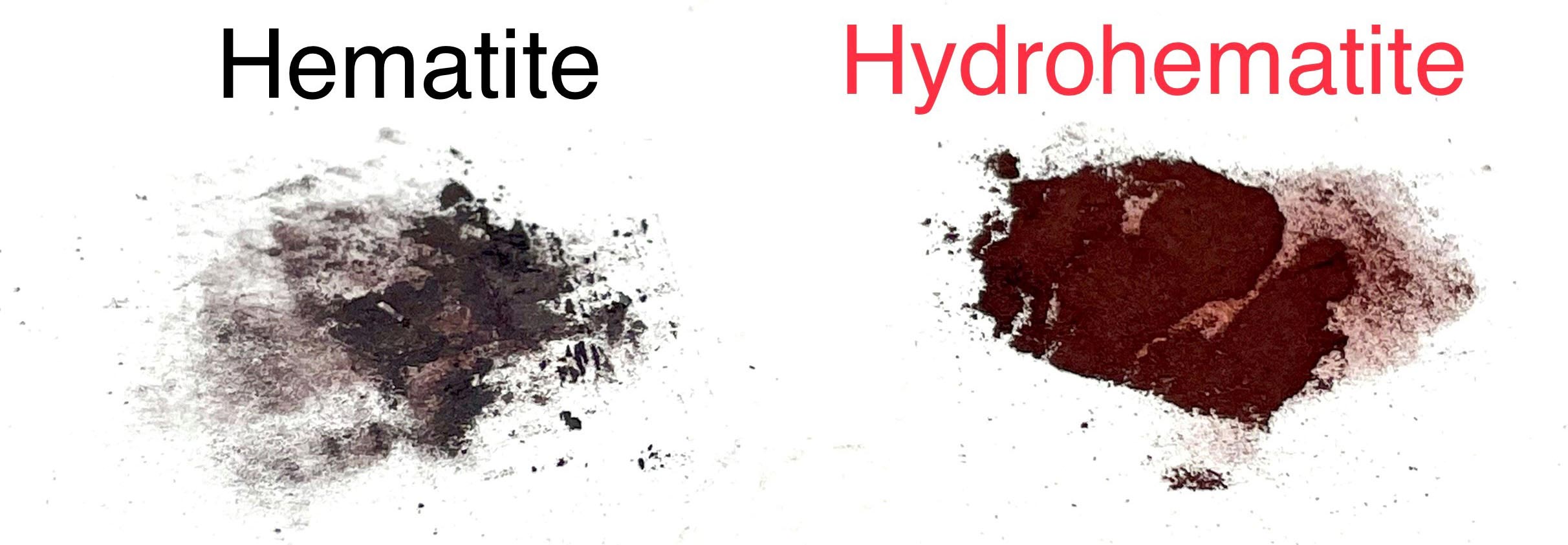
Water-bearing hydrohematite may be widespread on Mars, hinting at hidden reservoirs and a wetter past.
A combination of a once-debunked 19th-century identification of a water-carrying iron mineral and the fact that these rocks are extremely common on Earth, suggests the existence of a substantial water reservoir on Mars, according to a team of geoscientists.
“One of my students’ experiments was to crystallize hematite,” said Peter J. Heaney, professor of geosciences, Penn State. “She came up with an iron-poor compound, so I went to Google Scholar and found two papers from the 1840s where German mineralogists, using wet chemistry, proposed iron-poor versions of hematite that contained water.”
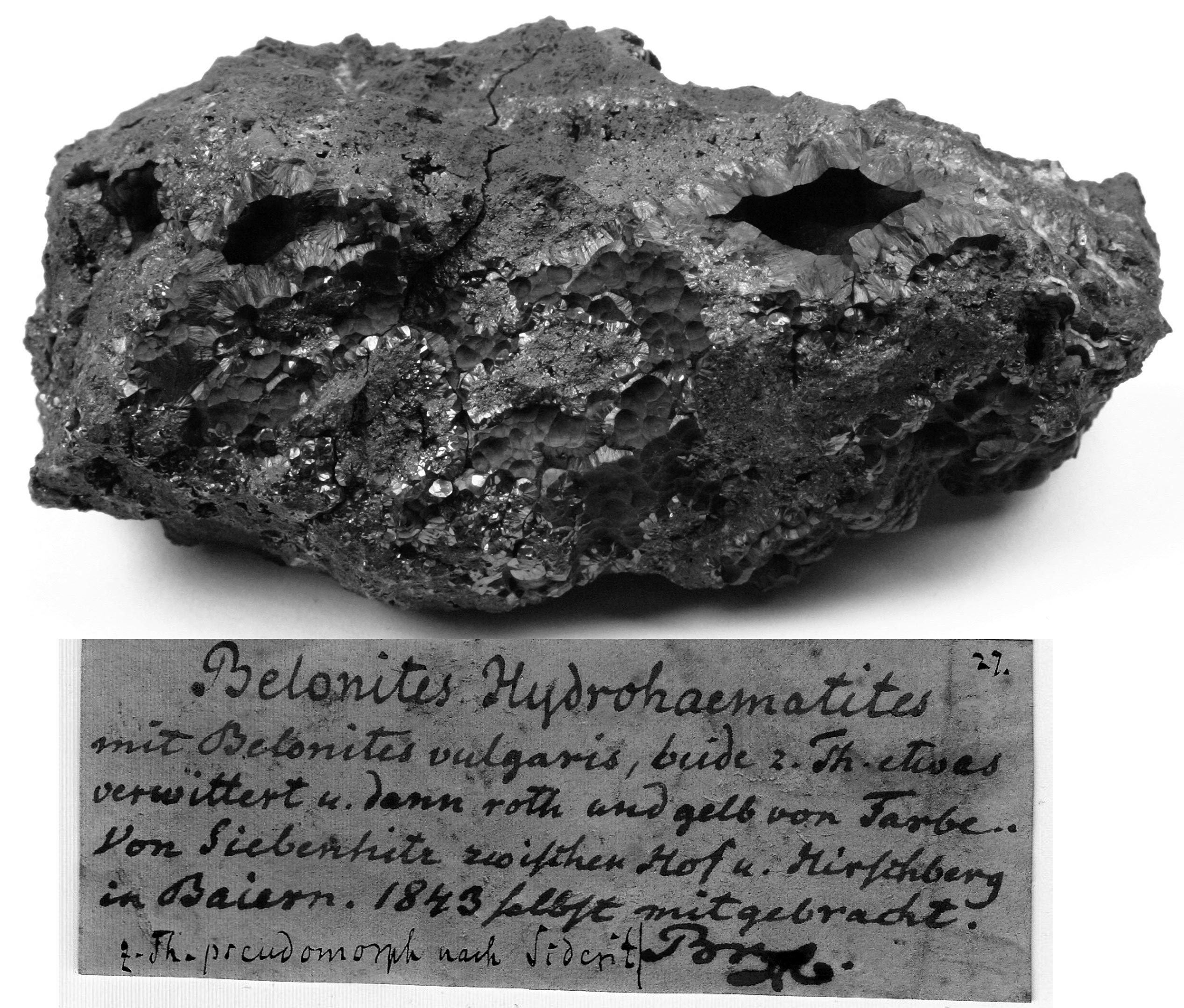
In 1844, Rudolf Hermann named his mineral turgite and in 1847 August Breithaupt named his hydrohematite. According to Heaney, in 1920, other mineralogists, using the then newly developed X-ray diffraction technique, declared these two papers incorrect. But the nascent technique was too primitive to see the difference between hematite and hydrohematite.
Water containing hydrohematite on Earth and on Mars. Credit: Earth & Mineral Sciences, Penn State
Si Athena Chen, Heaney’s doctoral student in geosciences, began by acquiring a variety of old samples of what had been labeled as containing water. Heaney and Chen obtained a small piece of Breithaupt’s original sample, a sample labeled as turgite from the Smithsonian Institution, and, surprisingly, five samples that were in Penn State’s own Frederick Augustus Genth collection.
Modern Techniques Confirm Old Hypotheses
After multiple examinations using a variety of instruments including infrared spectroscopy and synchrotron X-ray diffraction, a more sensitive, refined method than used in the mid-19th century, Chen showed that these minerals were indeed light on iron and had hydroxyl — a hydrogen and oxygen group — substituted for some of the iron atoms. The hydroxyl in the mineral is stored water.
The researchers recently proposed in the journal Geology “that hydrohematite is common in low-temperature occurrences of iron oxide on Earth, and by extension it may inventory large quantities of water in apparently arid planetary environments, such as the surface of Mars.”
“I was trying to see what were the natural conditions to form iron oxides,” said Chen. “What were the necessary temperatures and pH to crystallize these hydrous phases and could I figure out a way to synthesize them.”
She found that at temperatures lower than 300 degrees Fahrenheit (149 degrees Celsius), in a watery, alkaline environment the hydrohematite can precipitate out, forming sedimentary layers.
Martian Implications: A Water-Rich Past
“Much of Mars’ surface apparently originated when the surface was wetter and iron oxides precipitated from that water,” said Heaney. “But the existence of hydrohematite on Mars is still speculative.”
The “blueberries” found in 2004 by NASA’s Opportunity rover are hematite. Although the latest Mars rovers do have X-ray diffraction devices to identify hematite, they are not sophisticated enough to differentiate between hematite and hydrohematite.

“On Earth, these spherical structures are hydrohematite, so it seems reasonable to me to speculate that the bright red pebbles on Mars are hydrohematite,” said Heaney.
Color Clues and Water Content
The researchers note that anhydrous hematite — lacking water — and hydrohematite — containing water — are two different colors, with hydrohematite being redder or containing dark red streaks.
Chen’s experiments found that naturally occurring hydrohematite contained 3.6% to 7.8% by weight of water and that goethite contained about 10% by weight of water. Depending on the amount of hydrated iron minerals found on Mars, the researchers believe there could be a substantial water reserve there.
Mars is called the red planet because of its color, which comes from iron compounds in the Martian dirt. According to the researchers, the presence of hydrohematite on Mars would provide additional evidence that Mars was once a watery planet, and water is the one compound necessary for all life forms on Earth.
Reference: “Superhydrous hematite and goethite: A potential water reservoir in the red dust of Mars?” by Si Athena Chen, Peter J. Heaney, Jeffrey E. Post, Timothy B. Fischer, Peter J. Eng and Joanne E. Stubbs, 20 July 2021, Geology.
DOI: 10.1130/G48929.1
Other researchers involved in this project include Jeffrey E. Post, mineralogist and curator in charge of gems and minerals, Smithsonian Institution; Timothy B. Fischer, Chevron, Houston; Peter J. Eng, research professor, Consortium for Advanced Radiation Sources and the James Franck Institute, University of Chicago; and Joanne E. Stubbs, research associate professor, Consortium for Advanced Radiation Sources, University of Chicago.
The National Science Foundation and the U.S. Department of Energy supported this research.
Never miss a breakthrough: Join the SciTechDaily newsletter.
Follow us on Google and Google News.
7 Comments
Hydrohematite is only different from hematite by a few Fe vacancies. There is very little if any structural water in either one. Adsorbed water is a different situation. But that is unlikely to be very much on Mars…even if this mineral could be detected using the rover XRD capabilities. They might have better luck looking for hysdrous ferric oxides like goethite or ferrihydrite.
Regardless of the comparative study the only way to be sure is actually test for it. The current batch of rovers are only looking for has been life instead of whether or not Mars can support life. You need excavators, drills, and specific scientific testing equipment on site to run extensive tests for H2O, H, & O to maintain any presence there as hoped. Only actual proof instead of theory will determine further possible study.
If we view the ” so called ” Mars images howcome nobody mentions the sky colour? Why fool the masses with this real images of earth and pretend that it’s Mars?
Pretty nice photo of Nevada
A cell found on Mars is considered a celebration of life.
A growing baby in the womb, is considered unworthy of life.
what’s the point wasting time and money on Mars, where life is not possible
I enjoy the science denialist-conspiracist comments, the neo-luddite expression of backward beliefs is entertaining at least.