
Close Menu
    Facebook X (Twitter) Instagram
    SciTechDaily
    • Biology
    • Chemistry
    • Earth
    • Health
    • Physics
    • Science
    • Space
    • Technology
    Facebook X (Twitter) Pinterest YouTube RSS
    SciTechDaily
    Home»Earth»NASA Satellite Finds Haishen Now a Super Typhoon – With a 31 Mile-Wide Eye
    Earth

    NASA Satellite Finds Haishen Now a Super Typhoon – With a 31 Mile-Wide Eye

    By Rob Gutro, NASA’s Goddard Space Flight CenterSeptember 4, 20201 Comment2 Mins Read
    Facebook Twitter Pinterest Telegram LinkedIn WhatsApp Email Reddit
    Share
    Facebook Twitter LinkedIn Pinterest Telegram Email Reddit
    Super Typhoon Haishen
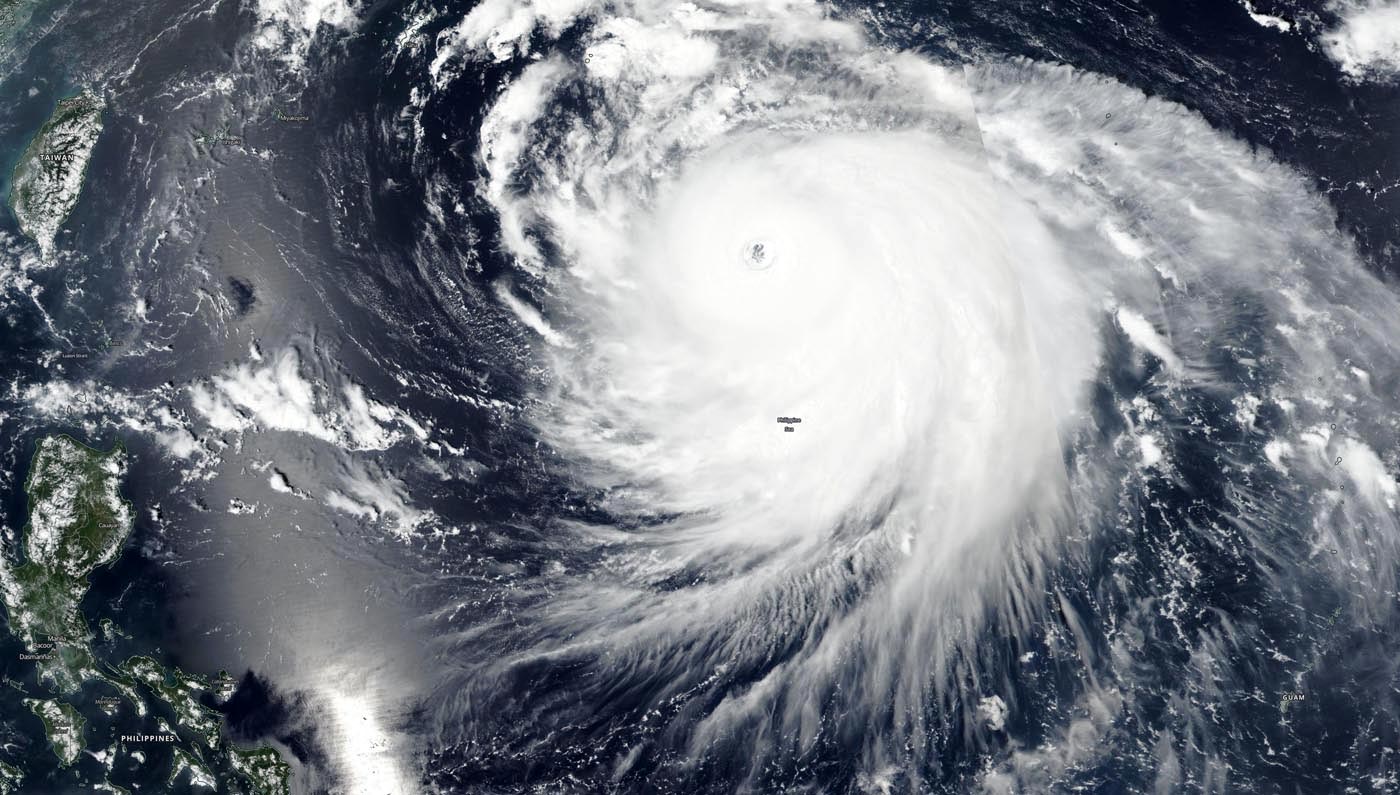
    NASA-NOAA’s Suomi NPP satellite captured a visible image of Super Typhoon Haishen moving through the Philippine Sea on September 4. Credit: NASA Worldview, Earth Observing System Data and Information System (EOSDIS)

    NASA-NOAA’s Suomi NPP satellite passed over the Philippine Sea on September 4 and provided a visible image of Haishen that had strengthened into a super typhoon.

    The Visible Infrared Imaging Radiometer Suite (VIIRS) instrument aboard Suomi NPP provided a visible image of Haishen that revealed a large, circular, organized structure of strong thunderstorms circling the open eye. The eyewall, the strong thunderstorms that circle the open eye, is estimated to be 81 nautical miles-wide. Satellite data indicate the eye is about 31 nautical miles wide. The storm is at least 450 miles in diameter, as tropical storm-force winds extend up to 225 miles from the center.

    The Joint Typhoon Warning Center (JTWC) in Honolulu, Hawaii noted at 5 a.m. EDT (0900 UTC) on September 4, that Super Typhoon Haishen had maximum sustained winds near 135 knots (155 mph/250 kph). It is currently a Category 4 hurricane/typhoon. It was centered near latitude 22.2 degrees north and longitude 134.3 degrees east, about 439 nautical miles southeast of Kadena Air Base, Okinawa Island, Japan. The storm was moving to the northwest.

    JTWC forecasters expect Haishen will turn to the north-northwest while intensifying more. It is expected to peak later on September 4 with sustained winds near 140 knots (161 mph/259 kph) which would make it equivalent to a Category 5 hurricane on the Saffir-Simpson Hurricane Wind Scale. JWTC forecasts Haishen to pass west of Kyushu, Japan and make landfall in South Korea after 3 days.

    NASA Researches Tropical Cyclones

    Hurricanes/tropical cyclones are the most powerful weather events on Earth. NASA’s expertise in space and scientific exploration contributes to essential services provided to the American people by other federal agencies, such as hurricane weather forecasting.

    For more than five decades, NASA has used the vantage point of space to understand and explore our home planet, improve lives and safeguard our future. NASA brings together technology, science, and unique global Earth observations to provide societal benefits and strengthen our nation. Advancing knowledge of our home planet contributes directly to America’s leadership in space and scientific exploration.

    Never miss a breakthrough: Join the SciTechDaily newsletter.
    Follow us on Google and Google News.

    NASA NASA Goddard Space Flight Center Typhoon Weather
    Share. Facebook Twitter Pinterest LinkedIn Email Reddit

    Related Articles

    Clear Picture of Wind Shear Battering Omar From NASA’s Terra Satellite

    Mystery of Auroral Beads Uncovered With NASA’s THEMIS Spacecraft

    NASA Sees Hanna Strengthen into First Atlantic Hurricane of 2020

    Massive Saharan Dust Aerosol Blanket Analyzed by NASA-NOAA Suomi NPP Satellite

    Massive Saharan Dust Plume Over Atlantic Ocean Observed by NASA

    Stunning Satellite Images As Rain Brings Relief to Australia’s Fires

    NASA Satellite’s Infrared Eye Analyzes Typhoon Lingling

    NASA Study Reveals Multi-Year Ice Declining Faster than Perennial Ice that Surrounds It

    NASA’s GISS Releases Data Showing 2011 was Ninth-Warmest Year on Record

    1 Comment

    1. Richie on September 4, 2020 11:18 am

      Note to copy ed: The 31 miles cited in the headline are nautical miles. FWIW, this equals 35.65 statute miles, the sort of miles usually cited in headlines. Also, story fails to give a figure for the circumference of the area affected by hurricane-force winds. Generally, the stronger the wind field, the smaller the wind field in areal coverage; it is customary to give this figure in stories about hurricanes. The last graph is pure boilerplate and should be cut.

      Reply
    Leave A Reply Cancel Reply

    • Facebook
    • Twitter
    • Pinterest
    • YouTube

    Don't Miss a Discovery

    Subscribe for the Latest in Science & Tech!

    Trending News

    Collapsing Plasma May Hold the Key to Cosmic Magnetism

    This Breakthrough Solar Panel Generates Power From Both Sunlight and Raindrops

    Scientists Uncover New Metabolic Effects Beyond Weight Loss of Mounjaro

    Scientists Discover Cancer Tumors Are “Addicted” to This Common Antioxidant

    1,800 Miles Down: Scientists Uncover Mysterious Movements at the Edge of Earth’s Core

    Scientists Discover Hidden “Good Fats” in Green Rice That Could Transform Nutrition

    Your Child’s Clothes Could Contain Toxic Lead, Study Finds

    Researchers Break a 150-Year-Old Math Law With a Surprising Donut Discovery

    Follow SciTechDaily
    • Facebook
    • Twitter
    • YouTube
    • Pinterest
    • Newsletter
    • RSS
    SciTech News
    • Biology News
    • Chemistry News
    • Earth News
    • Health News
    • Physics News
    • Science News
    • Space News
    • Technology News
    Recent Posts
    • The Mystery of the Notes: Why No One Knows How This 120-Year-Old Song Should Sound
    • Scientists Discover 132-Million-Year-Old Dinosaur Tracks on South Africa’s Coast
    • Scientists Uncover the Secret Ingredient Behind the Spark That May Have Started Life on Earth
    • Natural Oils vs. Antibiotics: The Swine Study That Could Change Farming
    • The Biggest Volcanic Event in Earth’s History Transformed an Entire Oceanic Plate
    Copyright © 1998 - 2026 SciTechDaily. All Rights Reserved.
    • Science News
    • About
    • Contact
    • Editorial Board
    • Privacy Policy
    • Terms of Use

    Type above and press Enter to search. Press Esc to cancel.