Close Menu
    Facebook X (Twitter) Instagram
    SciTechDaily
    • Biology
    • Chemistry
    • Earth
    • Health
    • Physics
    • Science
    • Space
    • Technology
    Facebook X (Twitter) Pinterest YouTube RSS
    SciTechDaily
    Home»Earth»Massive Saharan Dust Aerosol Blanket Analyzed by NASA-NOAA Suomi NPP Satellite
    Earth

    Massive Saharan Dust Aerosol Blanket Analyzed by NASA-NOAA Suomi NPP Satellite

    By NASA’s Goddard Space Flight CenterJune 28, 20201 Comment6 Mins Read
    Facebook Twitter Pinterest Telegram LinkedIn WhatsApp Email Reddit
    Share
    Facebook Twitter LinkedIn Pinterest Telegram Email Reddit
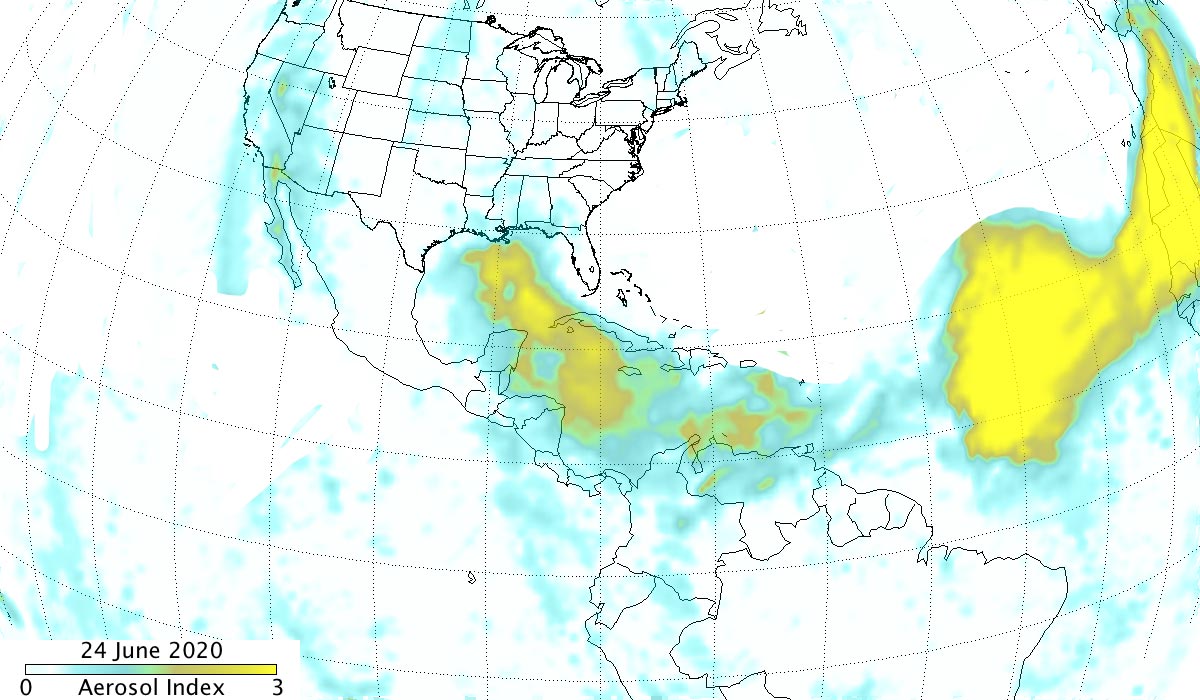
    Suomi NPP OMPS Aerosol Index June 24 2020
    This June 24, 2020 image is from the Suomi NPP OMPS aerosol index. The dust plume moved over the Yucatan Peninsula and up through the Gulf of Mexico. The largest and thickest part of the plume is visible over the eastern and central Atlantic. Credit: NASA/NOAA, Colin Seftor

    Dust storms from Africa’s Saharan Desert traveling across the Atlantic Ocean are nothing new, but the current dust storm has been quite expansive and NASA satellites have provided a look at the massive June plume. NASA-NOAA’s Suomi NPP satellite showed the blanket of dust had moved over the Gulf of Mexico and extended into Central America and over part of the eastern Pacific Ocean.

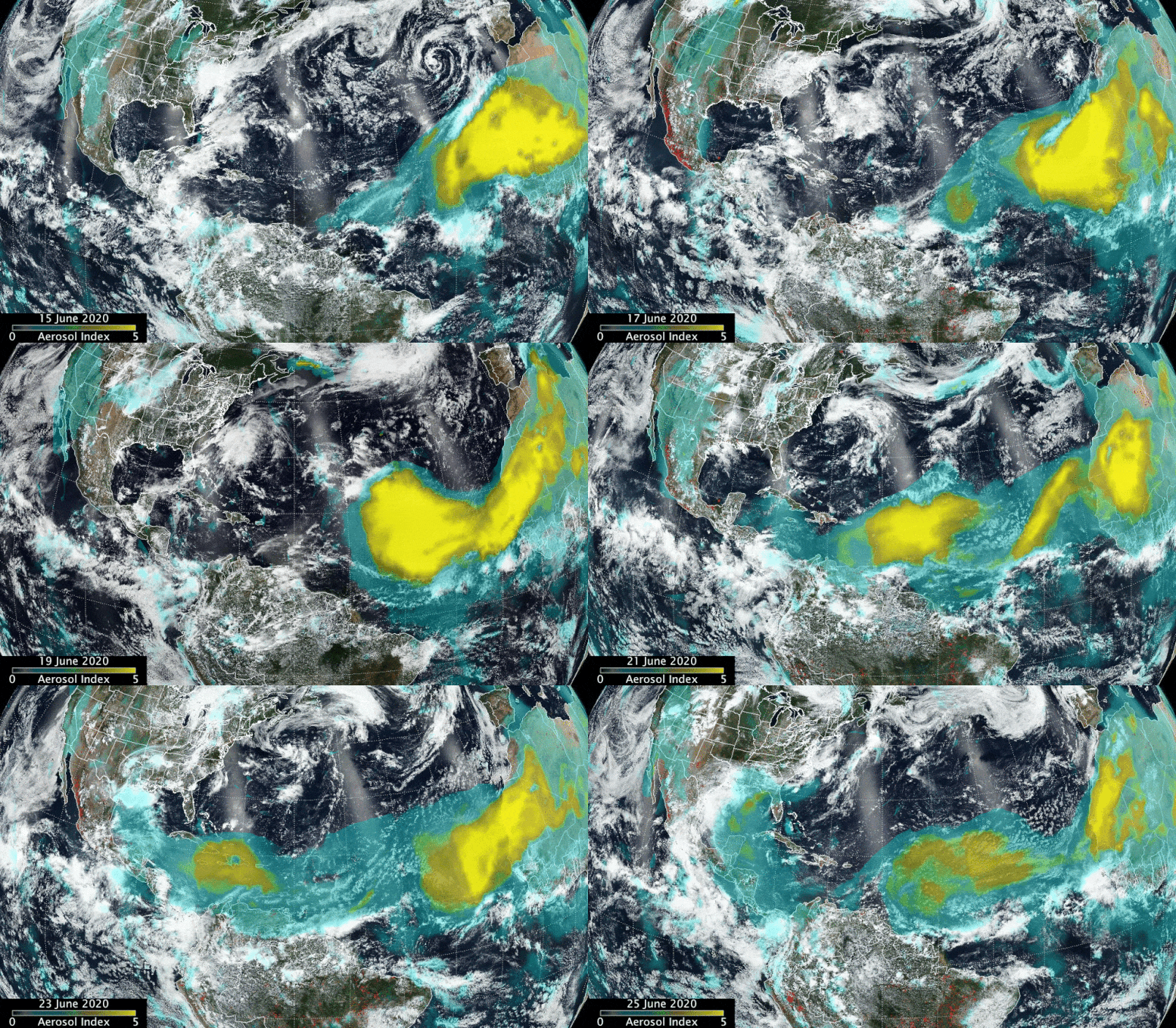
    NASA uses satellites and other resources to track aerosol particles made of desert dust, smoke, and volcanic ash. The Visible Infrared Imaging Radiometer Suite (VIIRS) instrument aboard Suomi NPP provided a visible image while the Ozone Mapping and Profiling Suite (OMPS) Nadir-Mapper (NM) instrument aboard the Suomi-NPP satellite provided absorbing aerosol index values. The OMPS index indicates the presence of light-absorbing aerosol particles (ultraviolet (UV)-absorbing particles in the air) such as desert dust. The absorbing aerosol index is related to both the thickness and height of the aerosol layer.

    The Absorbing Aerosol Index is useful for identifying and tracking the long-range transport of volcanic ash from volcanic eruptions, smoke from wildfires or biomass burning events, and dust from desert dust storms. These aerosol particles can even be tracked over clouds and areas covered by snow and ice.

    Suomi NPP Composite June 24 2020
    This image is a composite of the OMPS aerosol index and the VIIRS visible image both from NASA/NOAA’s Suomi NPP satellite on June 24. The image shows the dust plume moved over the Yucatan Peninsula and up through the Gulf of Mexico. Credit: NASA/NOAA, Colin Seftor

    Colin Seftor, an atmospheric scientist at NASA’s Goddard Space Flight Center in Greenbelt, Md., created imagery from the Suomi NPP OMPS absorbing aerosol index and visible imagery from the VIIRS instrument He said that on June 23 and 24 the dust plume had moved completely over Mexico’s Yucatan Peninsula, up through the Gulf of Mexico and into southern Texas. “At that point, the situation becomes more complicated because the absorbing aerosol index signal seen further north into Texas, Oklahoma, Nebraska, etc., is probably a mix of dust and smoke from the numerous fires burning in the southwest U.S. You can also see that the dust traveled over Central America and out into the Eastern Pacific Ocean.”

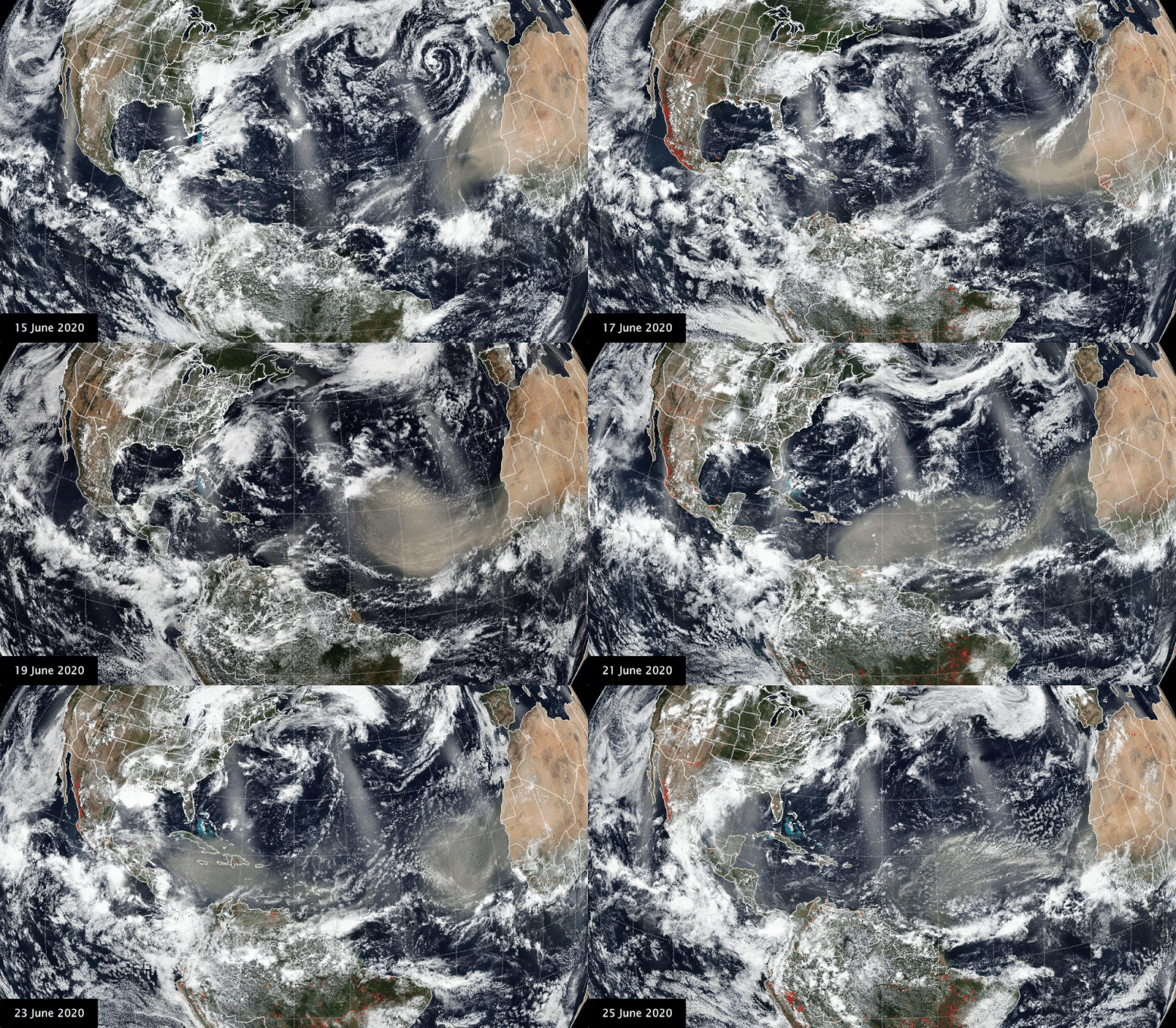
    On June 25, an animation that combined OMPS aerosol index and VIIRS visible imagery from NASA/NOAA’s Suomi NPP satellite was created at NASA Goddard showing the movement of the Saharan dust cloud from June 15 to 25, 2020. The animation showed the dust plume streaming from Africa’s west coast over the Atlantic into the Caribbean Sea and up through the Gulf of Mexico over some of the Gulf states.

    Aerosol particles absorb and scatter incoming sunlight, which reduces visibility and increases the optical depth. Aerosol particles have an effect on human health, weather, and the climate. Aerosol particles are produced from many events including human activities such as pollution from factories and natural processes such as smoke from fires, dust from dust storms, sea salt from breaking waves, and volcanic ash from volcanoes. Aerosol particles compromise human health when inhaled by people with asthma or other respiratory illnesses. Aerosol particles also affect weather and climate by cooling or warming the earth as well as enhancing or preventing cloud formation.
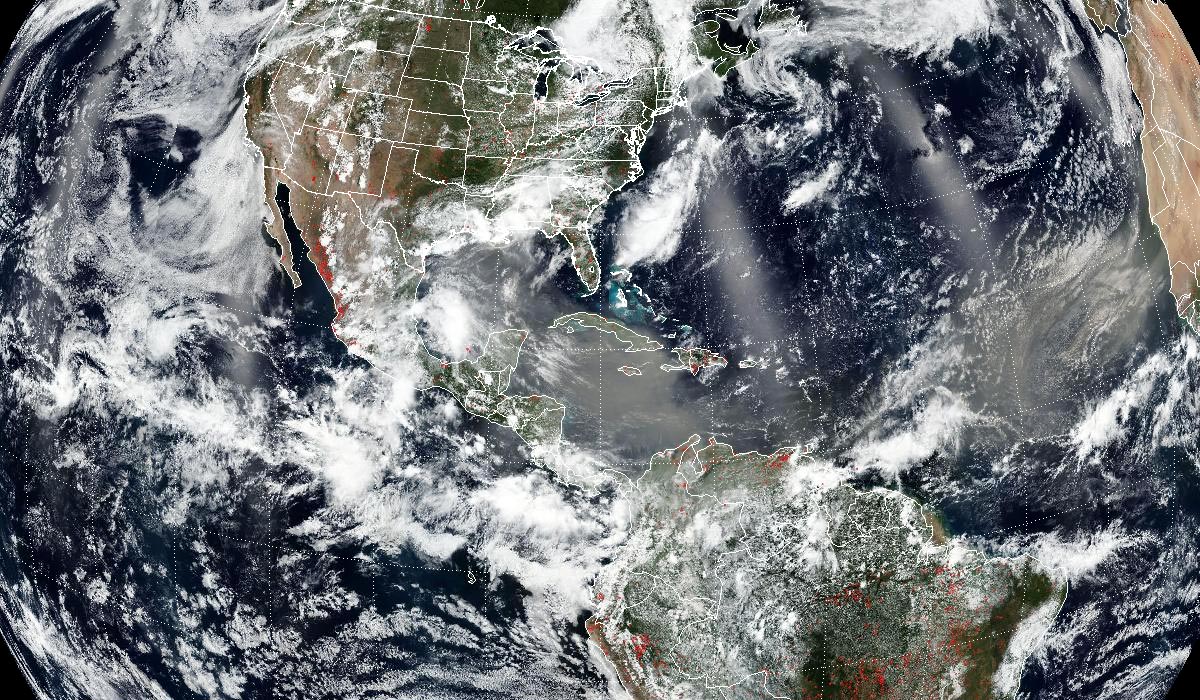
    Saharan Dust Plume June 24 2020
    This “true-color” composite image of the Saharan Dust plume was captured by the VIIRS instrument aboard NASA/NOAA’s Suomi NPP satellite on June 24, 2020. The bright streaks seen at regular intervals are due to sun glint off of the ocean surface. Credit: NASA/NOAA, Colin Seftor

    On June 18, NASA’s Earth Observatory noted the thickest parts of the plume appeared to stretch about 2,500 kilometers (1,500 miles) across the Atlantic Ocean. By June 24, the plume extended over 5,000 miles.

    Dust from Africa can affect air quality as far away as North and South America if it is mixed down to ground level. But dust can also play an important ecological role, such as fertilizing soils in the Amazon and building beaches in the Caribbean. The dry, warm, and windy conditions associated with Saharan Air Layer outbreaks from Africa can also suppress the formation and intensification of tropical cyclones.

    “While Saharan dust transport across the ocean to the Americas is not uncommon, the size and strength of this particular event is quite unusual,” Seftor said. “Also, if you look off the coast of Africa you can see yet another large cloud coming off the continent, continuing to feed the long chain of dust traveling across the Atlantic.”

    Animated GIFs of the dust storm’s activity:
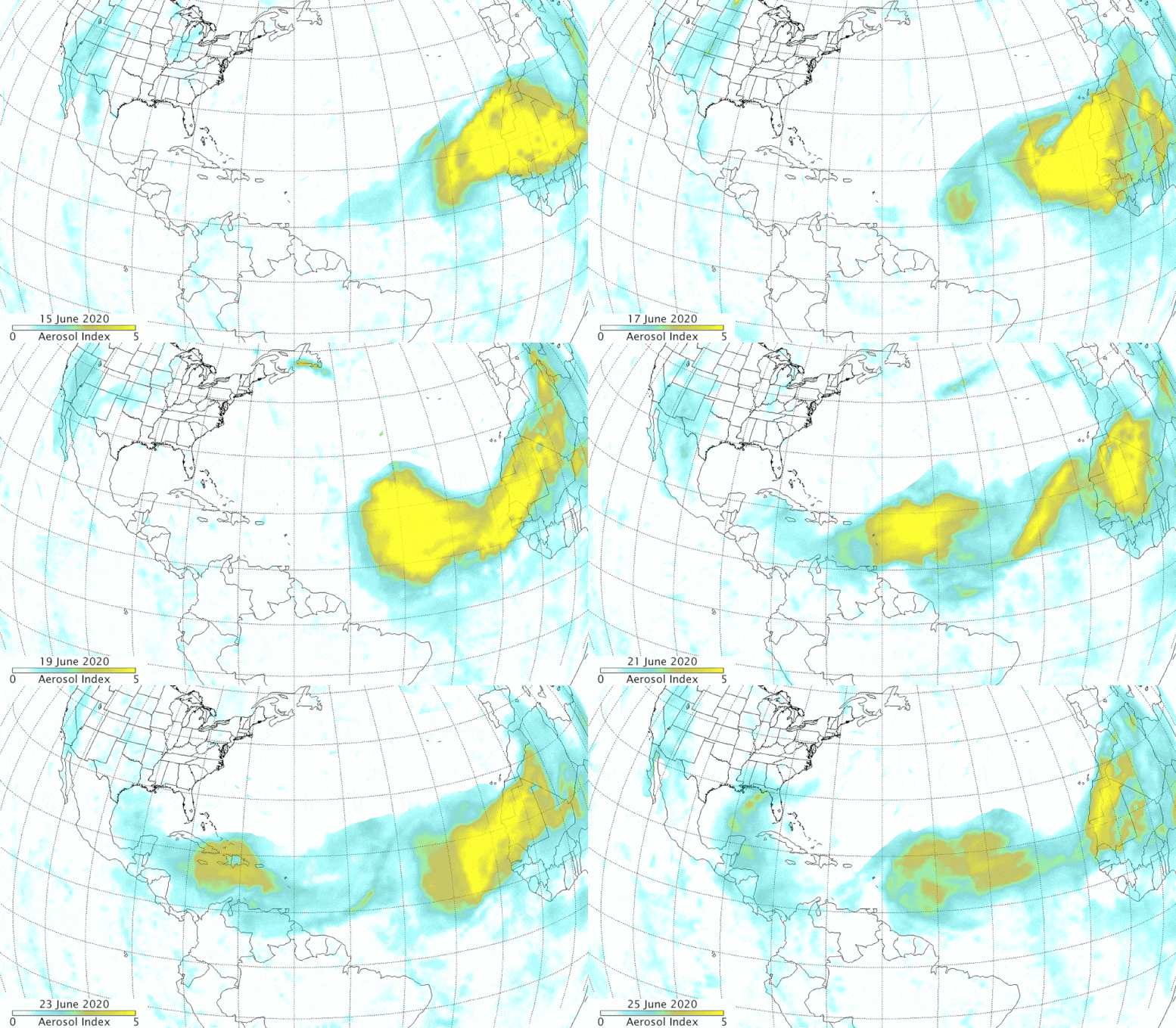
    Saharan Dust Plume Aerosols
    This animation shows the aerosols in the Saharan dust plume from June 15 to 25, 2020. It was created from the Suomi NPP OMPS aerosol index. The dust plume moved from Africa’s west coast over the Atlantic Ocean into the Caribbean Sea and up through the Gulf of Mexico. The largest and thickest part of the plume is visible over the eastern and central Atlantic. Credit: NASA/NOAA, Colin Seftor
    Saharan Dust Plume Composite
    This “true-color” composite animation of visible satellite imagery shows the movement of the Saharan Dust plume from June 15 to 25, 2020. It was captured by the VIIRS instrument aboard NASA/NOAA’s Suomi NPP satellite. The bright streaks seen at regular intervals are due to the sun glint off the ocean surface. Credit: NASA/NOAA, Colin Seftor

    Saharan Dust Cloud Progression
    This animation of the progression of Saharan dust cloud across the Atlantic Ocean from June 15 to 25, 2020 combines OMPS aerosol index and VIIRS visible imagery from NASA/NOAA’s Suomi NPP satellite. The dust plume moved from Africa’s west coast over the Atlantic into the Caribbean Sea and up through the Gulf of Mexico. The largest and thickest part of the plume is visible over the eastern and central Atlantic Ocean. Credit: NASA/NOAA, Colin Seftor

    Never miss a breakthrough: Join the SciTechDaily newsletter.
    Follow us on Google and Google News.

    NASA NASA Goddard Space Flight Center NOAA Weather
    Share. Facebook Twitter Pinterest LinkedIn Email Reddit

    Related Articles

    Devastating Landslides Are Common in High Mountain Asia – Climate Change Could Trigger More

    Stunning Satellite Images As Rain Brings Relief to Australia’s Fires

    Satellite Imagery Shows Ferocious Fires in Australia Intensify

    Antarctic Ozone Hole Is the Smallest on Record Since Its Discovery [Video]

    NASA Analyzes Tropical Storm Dorian Day and Night

    NASA Satellite Image: Amazon Fires Shroud South America in Smoke

    New NASA/NOAA Animations Reveal Water Vapor Over Oceans

    NASA Study Reveals Multi-Year Ice Declining Faster than Perennial Ice that Surrounds It

    NASA’s GISS Releases Data Showing 2011 was Ninth-Warmest Year on Record

    1 Comment

    1. Alex Gladstone on January 14, 2024 10:25 am

      Good work.

      Reply
    Leave A Reply Cancel Reply

    • Facebook
    • Twitter
    • Pinterest
    • YouTube

    Don't Miss a Discovery

    Subscribe for the Latest in Science & Tech!

    Trending News

    Breakthrough Bowel Cancer Trial Leaves Patients Cancer-Free for Nearly 3 Years

    Natural Compound Shows Powerful Potential Against Rheumatoid Arthritis

    100,000-Year-Old Neanderthal Fossils in Poland Reveal Unexpected Genetic Connections

    Simple “Gut Reset” May Prevent Weight Gain After Ozempic or Wegovy

    2.8 Days to Disaster: Scientists Warn Low Earth Orbit Could Suddenly Collapse

    Common Food Compound Shows Surprising Power Against Superbugs

    5 Simple Ways To Remember More and Forget Less

    The Atomic Gap That Could Cost the Semiconductor Industry Billions

    Follow SciTechDaily
    • Facebook
    • Twitter
    • YouTube
    • Pinterest
    • Newsletter
    • RSS
    SciTech News
    • Biology News
    • Chemistry News
    • Earth News
    • Health News
    • Physics News
    • Science News
    • Space News
    • Technology News
    Recent Posts
    • After 37 Years, the World’s Longest-Running Soil Warming Experiment Uncovers a Startling Climate Secret
    • NASA Satellite Captures First-Ever High-Res View of Massive Pacific Tsunami
    • ADHD Isn’t Just a Deficit: Study Reveals Powerful Hidden Strengths
    • Scientists Uncover “Astonishing” Hidden Property of Light
    • Scientists Discover Stem Cells That Could Regrow Teeth and Bone
    Copyright © 1998 - 2026 SciTechDaily. All Rights Reserved.
    • Science News
    • About
    • Contact
    • Editorial Board
    • Privacy Policy
    • Terms of Use

    Type above and press Enter to search. Press Esc to cancel.