
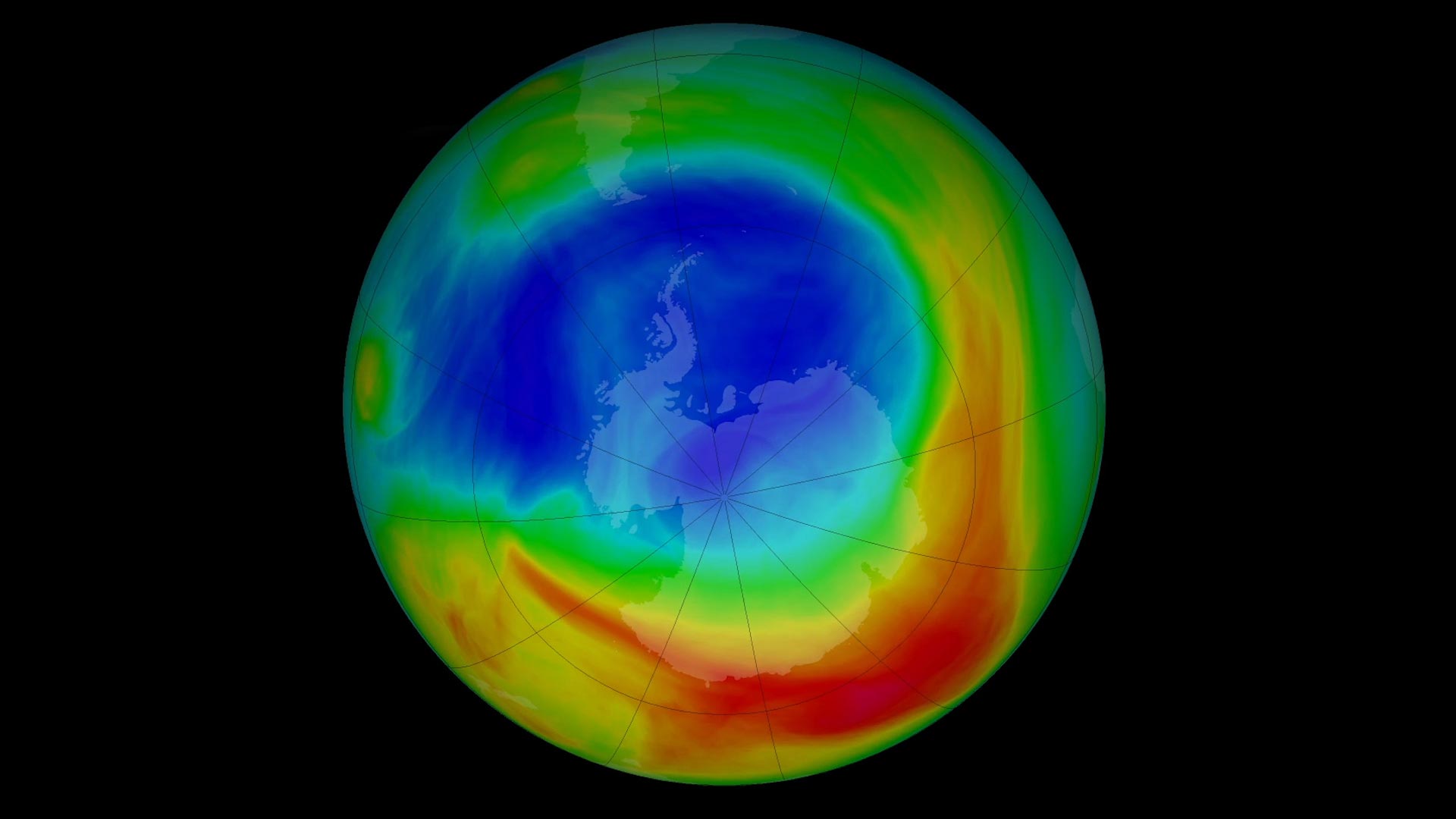
Abnormal weather patterns in the upper atmosphere over Antarctica dramatically limited ozone depletion in September and October, resulting in the smallest ozone hole observed since 1982, NASA and NOAA scientists reported today.
The annual ozone hole reached its peak extent of 6.3 million square miles (16. 4 million square kilometers) on September 8, and then shrank to less than 3.9 million square miles (10 million square kilometers) for the remainder of September and October, according to NASA and NOAA satellite measurements. During years with normal weather conditions, the ozone hole typically grows to a maximum area of about 8 million square miles (20.7 million square kilometers) in late September or early October.
“It’s great news for ozone in the Southern Hemisphere,” said Paul Newman, chief scientist for Earth Sciences at NASA’s Goddard Space Flight Center in Greenbelt, Maryland. “But it’s important to recognize that what we’re seeing this year is due to warmer stratospheric temperatures. It’s not a sign that atmospheric ozone is suddenly on a fast track to recovery.”
Scientists from NASA and NOAA work together to track the ozone layer throughout the year and determine when the hole reaches its annual maximum extent. This year, unusually strong weather patterns caused warm temperatures in the upper atmosphere above the South Pole region of Antarctic, which resulted in a small ozone hole. Credit: NASA Goddard/ Katy Mersmann
Ozone is a highly reactive molecule comprised of three oxygen atoms that occurs naturally in small amounts. Roughly seven to 25 miles (11 to 40 kilometers) above Earth’s surface, in a layer of the atmosphere called the stratosphere, the ozone layer is a sunscreen, shielding the planet from potentially harmful ultraviolet radiation that can cause skin cancer and cataracts, suppress immune systems and also damage plants.
The Antarctic ozone hole forms during the Southern Hemisphere’s late winter as the returning Sun’s rays start ozone-depleting reactions. These reactions involve chemically active forms of chlorine and bromine derived from man-made compounds. The chemistry that leads to their formation involves chemical reactions that occur on the surfaces of cloud particles that form in cold stratospheric layers, leading ultimately to runaway reactions that destroy ozone molecules. In warmer temperatures, fewer polar stratospheric clouds form and they don’t persist as long, limiting the ozone-depletion process.
NASA and NOAA monitor the ozone hole via complementary instrumental methods.
Satellites, including NASA’s Aura satellite, the NASA-NOAA Suomi National Polar-orbiting Partnership satellite, and NOAA’s Joint Polar Satellite System NOAA-20 satellite, measure ozone from space. The Aura satellite’s Microwave Limb Sounder also estimates levels of ozone-destroying chlorine in the stratosphere.
At the South Pole, NOAA staff launch weather balloons carrying ozone-measuring “sondes” which directly sample ozone levels vertically through the atmosphere. Most years, at least some levels of the stratosphere, the region of the upper atmosphere where the largest amounts of ozone are normally found, are found to be completely devoid of ozone.
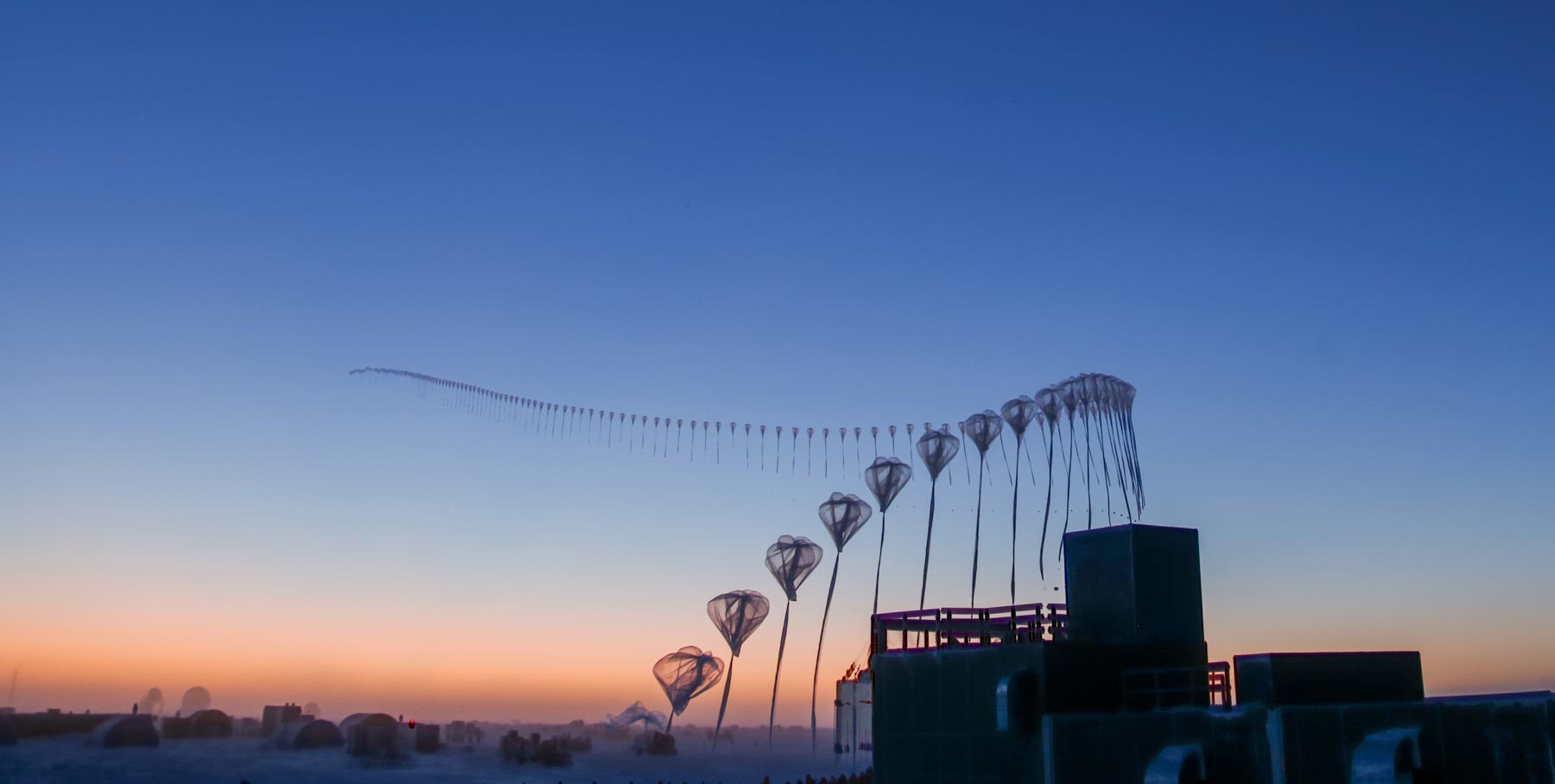
“This year, ozonesonde measurements at the South Pole did not show any portions of the atmosphere where ozone was completely depleted,” said atmospheric scientist Bryan Johnson at NOAA’s Earth System Research Laboratory in Boulder, Colorado.
Uncommon but not unprecedented
This is the third time in the last 40 years that weather systems have caused warm temperatures that limit ozone depletion, said Susan Strahan, an atmospheric scientist with Universities Space Research Association, who works at NASA Goddard. Similar weather patterns in the Antarctic stratosphere in September 1988 and 2002 also produced atypically small ozone holes, she said.
“It’s a rare event that we’re still trying to understand,” said Strahan. “If the warming hadn’t happened, we’d likely be looking at a much more typical ozone hole.”
There is no identified connection between the occurrence of these unique patterns and changes in climate.
The weather systems that disrupted the 2019 ozone hole are typically modest in September, but this year they were unusually strong, dramatically warming the Antarctic’s stratosphere during the pivotal time for ozone destruction. At an altitude of about 12 miles (20 kilometers), temperatures during September were 29 degrees F (16˚C) warmer than average, the warmest in the 40-year historical record for September by a wide margin. In addition, these weather systems also weakened the Antarctic polar vortex, knocking it off its normal center over the South Pole and reducing the strong September jet stream around Antarctica from a mean speed of 161 miles (259 kilometers) per hour to a speed of 67 miles (108 kilometers) per hour. This slowing vortex rotation allowed air to sink into the lower stratosphere where ozone depletion occurs, where it had two impacts.
The ozone hole grew reached its annual maximum on September 8, 2019. Every year, NASA and NOAA track the hole in the ozone layer over Antarctica as it grows to its annual winter maximum. This year, the hole was smaller than expected, due to an unusual weather pattern in the stratosphere. Credit: NASA’s Goddard Space Flight Center
First, the sinking warmed the Antarctic lower stratosphere, minimizing the formation and persistence of the polar stratospheric clouds that are a main ingredient in the ozone-destroying process. Second, the strong weather systems brought ozone-rich air from higher latitudes elsewhere in the Southern Hemisphere to the area above the Antarctic ozone hole. These two effects led to much higher than normal ozone levels over Antarctica compared to ozone hole conditions usually present since the mid-1980s.
As of October 16, 2019, the ozone hole above Antarctica remained small but stable and is expected to gradually dissipate in the coming weeks.
Antarctic ozone slowly decreased in the 1970s, with large seasonal ozone deficits appearing in the early 1980s. Researchers at the British Antarctic Survey discovered the ozone hole in 1985, and NASA’s satellite estimates of total column ozone from the Total Ozone Mapping Spectrometer confirmed the 1985 event, revealing the ozone hole’s continental scale.
Thirty-two years ago, the international community signed the Montreal Protocol on Substances that Deplete the Ozone Layer. This agreement regulated the consumption and production of ozone-depleting compounds. Atmospheric levels of man-made ozone-depleting substances increased up to the year 2000. Since then, they have slowly declined but remain high enough to produce significant ozone loss. The ozone hole over Antarctica is expected to gradually become less severe as chlorofluorocarbons— banned chlorine-containing synthetic compounds that were once frequently used as coolants—continue to decline. Scientists expect the Antarctic ozone to recover back to the 1980 level around 2070.
Never miss a breakthrough: Join the SciTechDaily newsletter.
Follow us on Google and Google News.
1 Comment
Does chlorine in pools and bodies of water get lifted up during evaporation? And is that the chlorine effecting the ozone?