
Close Menu
    Facebook X (Twitter) Instagram
    SciTechDaily
    • Biology
    • Chemistry
    • Earth
    • Health
    • Physics
    • Science
    • Space
    • Technology
    Facebook X (Twitter) Pinterest YouTube RSS
    SciTechDaily
    Home»Earth»Massive Saharan Dust Plume Over Atlantic Ocean Observed by NASA
    Earth

    Massive Saharan Dust Plume Over Atlantic Ocean Observed by NASA

    By NASA’s Goddard Space Flight CenterJune 20, 2020No Comments3 Mins Read
    Facebook Twitter Pinterest Telegram LinkedIn WhatsApp Email Reddit
    Share
    Facebook Twitter LinkedIn Pinterest Telegram Email Reddit
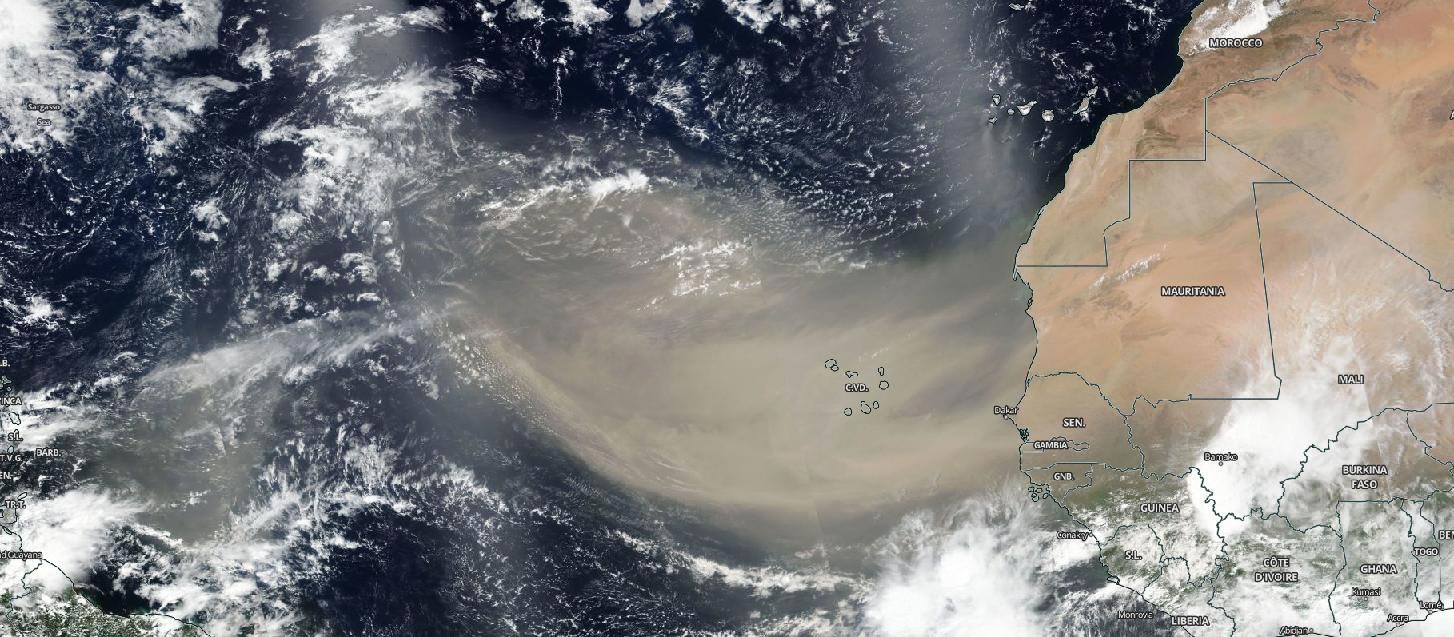
    Saharan Dust Over North Atlantic Ocean
    On June 18, 2020, NASA-NOAA’s Suomi NPP satellite captured this visible image of the large light brown plume of Saharan dust over the North Atlantic Ocean. The image showed that the dust from Africa’s west coast extended almost to the Lesser Antilles in the western North Atlantic Ocean. Credit: NASA Worldview

    NASA-NOAA’s Suomi NPP satellite observed a huge Saharan dust plume streaming over the North Atlantic Ocean, beginning on June 13. Satellite data showed the dust had spread over 2,000 miles (3,200 kilometers).

    At NASA’s Goddard Space Flight Center in Greenbelt, Maryland, Colin Seftor, an atmospheric scientist, created an animation of the dust and aerosols from the plume using data from instruments that fly aboard the Suomi NPP satellite.

    “The animation runs from June 13 to 18 and shows a massive Saharan dust cloud that formed from strong atmospheric updrafts that was then picked up by the prevailing westward winds and is now being blown across the Atlantic and, eventually over North and South America,” Seftor said. “The dust is being detected by the aerosol index measurements from the Suomi-NPP Suomi NPP satellite’ s Ozone Mapping and Profiler Suite (OMPS) data overlaid over visible imagery from the Visible Infrared Imaging Radiometer Suite (VIIRS).”
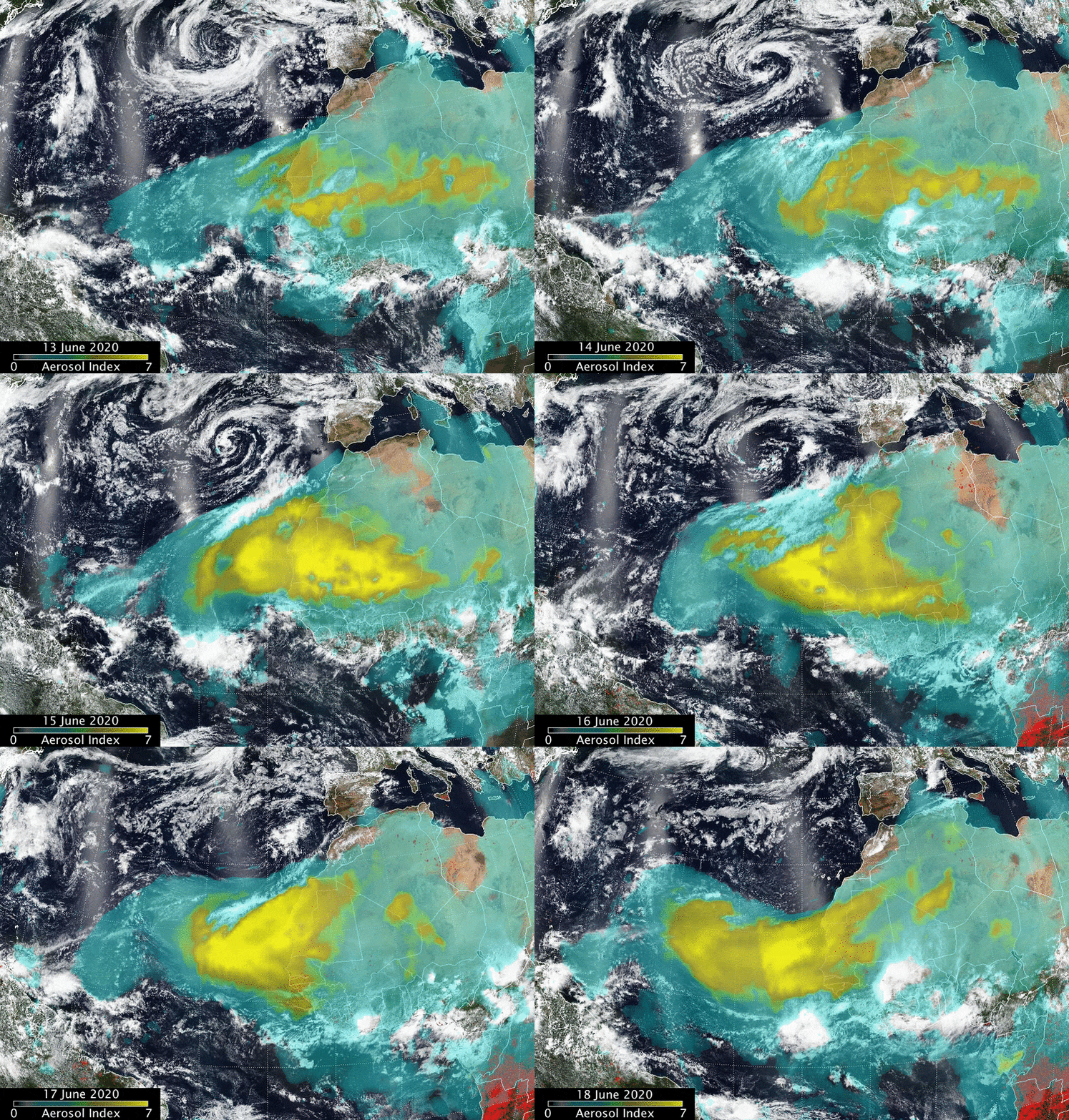
    Saharan Dust Over North Atlantic Ocean
    This animation shows the aerosols in the giant plume of Saharan Dust blowing off the western coast of Africa on June 13 through 18, 2020. This aerosol index was created from the NASA-NOAA Suomi NPP satellite’s Ozone Mapping and Profiler Suite (OMPS) data overlaid over visible imagery from the Visible Infrared Imaging Radiometer Suite (VIIRS). Credit: NASA/NOAA, Colin Seftor

    On June 18, 2020, the VIIRS instrument aboard NASA-NOAA’s Suomi NPP satellite captured a visible image of the large light brown plume of Saharan dust over the North Atlantic Ocean. The image showed that the dust from Africa’s west coast extended almost to the Lesser Antilles in the eastern North Atlantic Ocean. The image showed that the dust had spread over 2,000 miles across the Atlantic.

    Normally, hundreds of millions of tons of dust are picked up from the deserts of Africa and blown across the Atlantic Ocean each year. That dust helps build beaches in the Caribbean and fertilizes soils in the Amazon. It can also affect air quality in North and South America.

    NASA continues to study the role of African dust in tropical cyclone formation. In 2013, one of the purposes of NASA’s HS3 field mission addressed the controversial role of the hot, dry, and dusty Saharan Air Layer in tropical storm formation and intensification and the extent to which deep convection in the inner-core region of storms is a key driver of intensity change.

    Suomi NPP represents a critical first step in building the next-generation Earth-observing satellite system that will collect data on long-term climate change and short-term weather conditions. NPP is the result of a partnership between NASA, the National Oceanic and Atmospheric Administration, and the Department of Defense.

    For more than five decades, NASA has used the vantage point of space to understand and explore our home planet, improve lives and safeguard our future. NASA brings together technology, science, and unique global Earth observations to provide societal benefits and strengthen our nation. Advancing knowledge of our home planet contributes directly to America’s leadership in space and scientific exploration.

    Never miss a breakthrough: Join the SciTechDaily newsletter.
    Follow us on Google and Google News.

    NASA NASA Goddard Space Flight Center Weather
    Share. Facebook Twitter Pinterest LinkedIn Email Reddit

    Related Articles

    NASA Satellite Finds Haishen Now a Super Typhoon – With a 31 Mile-Wide Eye

    Hurricane Nana Caught Making Landfall Under Cover of Night by NASA-NOAA Satellite

    Clear Picture of Wind Shear Battering Omar From NASA’s Terra Satellite

    Mystery of Auroral Beads Uncovered With NASA’s THEMIS Spacecraft

    NASA Sees Hanna Strengthen into First Atlantic Hurricane of 2020

    Massive Saharan Dust Aerosol Blanket Analyzed by NASA-NOAA Suomi NPP Satellite

    Stunning Satellite Images As Rain Brings Relief to Australia’s Fires

    NASA Study Reveals Multi-Year Ice Declining Faster than Perennial Ice that Surrounds It

    NASA’s GISS Releases Data Showing 2011 was Ninth-Warmest Year on Record

    Leave A Reply Cancel Reply

    • Facebook
    • Twitter
    • Pinterest
    • YouTube

    Don't Miss a Discovery

    Subscribe for the Latest in Science & Tech!

    Trending News

    The Strange “Spacetime Crystal” That Can Suddenly Turn Into a Black Hole

    The Surprising Way Asteroids May Have Helped Life Begin on Earth

    Vast Hidden Structure Discovered Under Miles of Ice in East Antarctica

    A Surprising Discovery Suggests Autism Is Not One Condition

    New Alzheimer’s Discovery Could Change How Scientists Fight the Disease

    Yale Discovery Overturns Long-Held “Evolutionary Dead End” Theory

    UCLA Scientists Uncover a “Hidden Weakness” in Some of the World’s Deadliest Cancers

    Humpback Whale Stuns Scientists With 15,000 Kilometer Journey Across Oceans

    Follow SciTechDaily
    • Facebook
    • Twitter
    • YouTube
    • Pinterest
    • Newsletter
    • RSS
    SciTech News
    • Biology News
    • Chemistry News
    • Earth News
    • Health News
    • Physics News
    • Science News
    • Space News
    • Technology News
    Recent Posts
    • Scientists Reveal the Hidden Way Caffeine Sabotages Sleep
    • Your Gut Microbes May Decide How Many Calories You Really Absorb
    • Millions Take This Joint Supplement but Scientists Found a Concerning Alzheimer’s Link
    • Scientists Uncover What Kept Humanity’s First Campfires Burning 780,000 Years Ago
    • Why Evolution Stalled for Millions of Years Before Suddenly Exploding
    Copyright © 1998 - 2026 SciTechDaily. All Rights Reserved.
    • Science News
    • About
    • Contact
    • Editorial Board
    • Privacy Policy
    • Terms of Use

    Type above and press Enter to search. Press Esc to cancel.