
Close Menu
    Facebook X (Twitter) Instagram
    SciTechDaily
    • Biology
    • Chemistry
    • Earth
    • Health
    • Physics
    • Science
    • Space
    • Technology
    Facebook X (Twitter) Pinterest YouTube RSS
    SciTechDaily
    Home»Health»New COVID Antibody Detection Method Does Not Require a Blood Sample
    Health

    New COVID Antibody Detection Method Does Not Require a Blood Sample

    By Institute of Industrial Science, The University of TokyoJuly 1, 2022No Comments3 Mins Read
    Facebook Twitter Pinterest Telegram LinkedIn WhatsApp Email Reddit
    Share
    Facebook Twitter LinkedIn Pinterest Telegram Email Reddit
    Coronavirus Antibody Detection Method
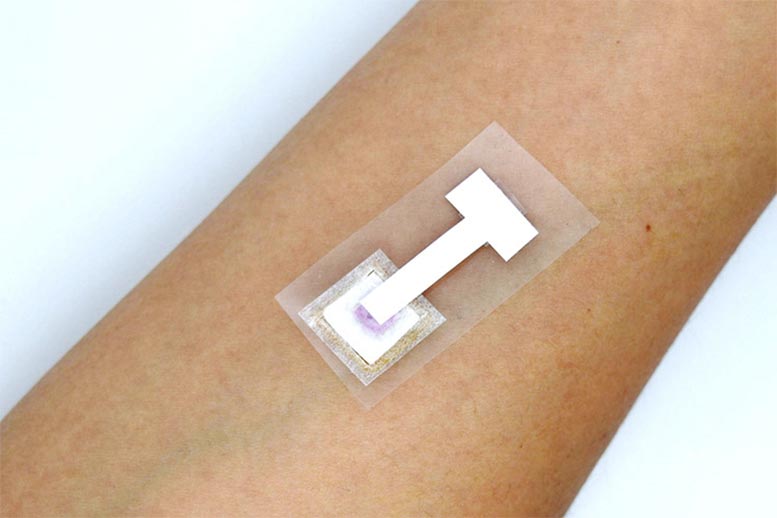
    Scientists developed a new, minimally invasive, antibody-based detection method for SARS-CoV-2 (the coronavirus that causes COVID-19) that could lead to the blood sample-free detection of many diseases. Credit: Institute of Industrial Science, The University of Tokyo

    The global COVID-19 pandemic is not over, despite significant and stunning advances in vaccine technology. A key challenge in limiting the spread of severe acute respiratory syndrome coronavirus 2 (SARS-CoV-2) has been quickly and accurately identifying infected individuals. Now, investigators from Japan have developed a new antibody-based technique for the rapid and reliable detection of SARS-CoV-2 that does not require a blood sample.

    The global response to the COVID-19 pandemic has been severely limited by the ineffective identification of SARS-CoV-2-infected individuals, and the high rate of asymptomatic infections (16%–38%) has exacerbated this situation. Thus far, the predominant detection method collects samples by swabbing the nose and throat. However, the application of this method has been limited by its long detection time (4–6 hours), high cost, and requirement for specialized equipment and medical personnel, particularly in resource-limited countries.

    An alternative and complementary method for confirming COVID-19 infection involves the detection of SARS-CoV-2-specific antibodies. Testing strips based on gold nanoparticles are currently in widespread use for point-of-care testing in many countries. They produce sensitive and reliable results within just 10–20 minutes, but they require blood samples collected via a finger prick using a lancing device. This can be painful and increases the risk of infection or cross-contamination. Plus, the used kit components present a potential biohazard risk. 

    Sampling Interstitial Fluid (ISF)

    Lead author Leilei Bao from the Institute of Industrial Science, The University of Tokyo, explains: “To develop a minimally invasive detection assay that would avoid these drawbacks, we explored the idea of sampling and testing the interstitial fluid (ISF), which is located in the epidermis and dermis layers of human skin. Although the antibody levels in the ISF are approximately 15%–25% of those in blood, it was still feasible that anti-SARS-CoV-2 IgM/IgG antibodies could be detected and that ISF could act as a direct substitute for blood sampling.”

    After demonstrating that ISF could be suitable for antibody detection, the researchers developed an innovative approach to both sample and test the ISF. “First, we developed biodegradable porous microneedles made of polylactic acid that draws up the ISF from human skin,” explains Beomjoon Kim, senior author. “Then, we constructed a paper-based immunoassay biosensor for the detection of SARS-CoV-2-specific antibodies.” By integrating these two elements, the researchers created a compact patch capable of on-site detection of the antibodies within 3 minutes (result from in vitro tests).

    This novel detection device has great potential for the rapid screening of COVID-19 and many other infectious diseases that is safe and acceptable to patients. It holds promise for use in many countries regardless of their wealth, which is a key aim for the global management of infectious diseases.

    Reference: “Anti SARS CoV 2 IgM/IgG antibodies detection using a patch sensor containing porous microneedles and a paper based immunoassay” by Leilei Bao, Jongho Park, Boyu Qin and Beomjoon Kim, 1 July 2022, Scientific Reports.
    DOI: 10.1038/s41598-022-14725-6

    Never miss a breakthrough: Join the SciTechDaily newsletter.
    Follow us on Google and Google News.

    Biotechnology COVID-19 Public Health University of Tokyo Virology
    Share. Facebook Twitter Pinterest LinkedIn Email Reddit

    Related Articles

    New COVID-19 Vaccine: Nanoparticle Immunization Technology Could Protect Against Many Strains of Coronaviruses

    New Portable Analyzer Can Detect Antivirus Antibody in Just 20 Minutes

    Groundbreaking Development in Rapid Large-Scale COVID-19 Testing

    Companies Affiliated With MIT Take On COVID-19 Pandemic Using Technology

    Scientific Estimates of Spread of Coronavirus Much Higher Than Official Reports

    Confirmed Coronavirus Cases Climb to 6065 Globally – 132 Deaths in China

    Potential Global Spread of New Coronavirus Mapped by New Study

    Three Cases of Novel Coronavirus Reported in France – Virus Recently Emerged in China

    “Snake Pneumonia” – Coronavirus Outbreak in China Traced to Snakes by Genetic Analysis

    Leave A Reply Cancel Reply

    • Facebook
    • Twitter
    • Pinterest
    • YouTube

    Don't Miss a Discovery

    Subscribe for the Latest in Science & Tech!

    Trending News

    Popular Sugar-Free Sweetener Linked to Liver Disease, Study Warns

    What Is Hantavirus? The Deadly Disease Raising Alarm Worldwide

    Scientists Just Discovered How the Universe Builds Monster Black Holes

    Scientists Unveil New Treatment Strategy That Could Outsmart Cancer

    A Simple Vitamin May Hold the Key to Treating Rare Genetic Diseases

    Scientists Think the Real Fountain of Youth May Be Hiding in Your Gut

    Ravens Don’t Follow Wolves, They Predict Them

    This Common Knee Surgery May Be Doing More Harm Than Good

    Follow SciTechDaily
    • Facebook
    • Twitter
    • YouTube
    • Pinterest
    • Newsletter
    • RSS
    SciTech News
    • Biology News
    • Chemistry News
    • Earth News
    • Health News
    • Physics News
    • Science News
    • Space News
    • Technology News
    Recent Posts
    • Scientists Revive Ancient Chemistry Trick To Engineer Next-Generation Glass
    • Scientists Use AI To Supercharge Ultrafast Laser Simulations by More Than 250x
    • Scientists Just Found a Surprising Way To Destroy “Forever Chemicals”
    • Popular Supplement Ingredient Linked to Shorter Lifespan in Men
    • Scientists May Have Found a Way To Repair Nerve Damage in Multiple Sclerosis
    Copyright © 1998 - 2026 SciTechDaily. All Rights Reserved.
    • Science News
    • About
    • Contact
    • Editorial Board
    • Privacy Policy
    • Terms of Use

    Type above and press Enter to search. Press Esc to cancel.