
Close Menu
    Facebook X (Twitter) Instagram
    SciTechDaily
    • Biology
    • Chemistry
    • Earth
    • Health
    • Physics
    • Science
    • Space
    • Technology
    Facebook X (Twitter) Pinterest YouTube RSS
    SciTechDaily
    Home»Science»MIT Professor and Astrophysicist Sara Seager Appointed Officer to the Order of Canada
    Science

    MIT Professor and Astrophysicist Sara Seager Appointed Officer to the Order of Canada

    By Lauren Hinkel, MIT EAPSDecember 27, 20207 Comments3 Mins Read
    Facebook Twitter Pinterest Telegram LinkedIn WhatsApp Email Reddit
    Share
    Facebook Twitter LinkedIn Pinterest Telegram Email Reddit
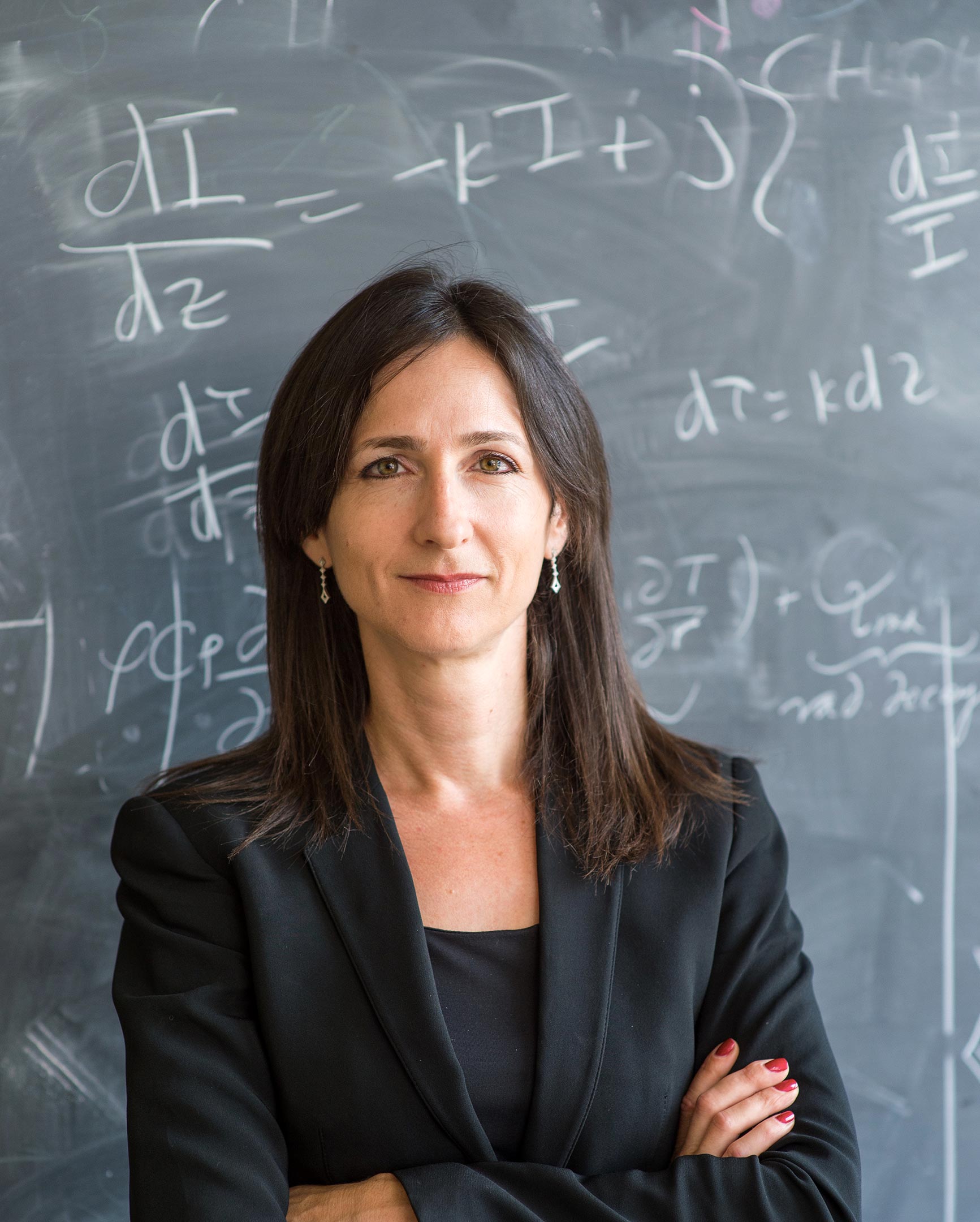
    Sara Seager
    Raised in Ontario, Canada, Sara Seager holds dual U.S. and Canadian citizenship, as well as academic appointments in MIT’s departments of Earth, Atmospheric and Planetary Sciences; Physics; and Aeronautics and Astronautics. Credit: Photo courtesy of the John D. and Catherine T. MacArthur Foundation.

    Pioneer in exoplanet research helped transform the burgeoning field into one of the fastest-growing and most exciting in space science.

    MIT’s Class of 1941 Professor of Planetary Sciences Sara Seager has been named an officer of the Order of Canada, one of the country’s highest civilian honors. Announced by the governor general of Canada last month, the nomination recognizes Seager “for her multidisciplinary research that has contributed to transforming the study of extrasolar planets into a full-fledged planetary science.”

    Raised in Ontario, Canada, Seager holds dual U.S. and Canadian citizenship, as well as academic appointments in MIT’s departments of Earth, Atmospheric and Planetary Sciences; Physics; and Aeronautics and Astronautics. She joins 114 new appointees to the Order of Canada, which include eight companions, 21 officers, one honorary member, and 84 members.

    As a planetary scientist and astrophysicist, Seager is at the forefront of exoplanet research. When Seager began her graduate studies at Harvard University in the mid-1990s, extrasolar planetary research was an emerging field, largely based on theory. However, her cutting-edge work on planetary atmospheres, planetary interiors, and exoplanet transits led to numerous firsts for the little-known field and helped to launch it into existence. Her current research uses theoretical models to examine, in detail, exoplanet atmospheres, their internal structure and composition, potential habitable zones, and gaseous signatures indicating life. 

    Her work on exoplanets, and motivation to find the first Earth-like world, has led her to take leading roles in numerous space science missions, including the MIT-led NASA mission Transiting Exoplanet Survey Satellite (TESS), which launched in April 2018, and the Starshade Rendezvous Mission, a space-based mission concept under technology development for direct imaging discovery and characterization of Earth analogs.

    Seager’s work has earned her extensive acclaim, including a MacArthur Fellowship, the Raymond and Beverly Sackler Prize in the Physical Sciences, and election to the American Philosophical Society, the American Academy of Arts and Sciences, and the National Academy of Sciences.

    She joins more than 7,000 people, from across all sectors of Canadian society, who have received appointments to the Order of Canada, recognizing “outstanding achievement, dedication to the community and service to the nation.” The incoming class of honorees will be invited to accept the order’s iconic snowflake insignia at a ceremony to be held in the future.

    Never miss a breakthrough: Join the SciTechDaily newsletter.
    Follow us on Google and Google News.

    Astrophysics MIT
    Share. Facebook Twitter Pinterest LinkedIn Email Reddit

    Related Articles

    MIT Researchers Use Mathematical Model to Predict Speed of Spreading Valleys

    Researchers Develop Method for Making High-Temperature Photonic Crystals

    Researchers Use Genetic Programming to Figure out What Tastes Good

    MIT Neuroscientists Study Brain Activity to Learn About Empathy

    MIT Researchers Study Theoretical Speed Limit of Flight

    New Algorithm Faster Than Fourier Transform

    Nature’s Sunflower May Help Increase Solar Efficiency in CSP Plants

    MIT Neuroscientists Research Brain Activity Related to Face Recognition

    Neuroscientists Predict Which Parts of the Fusiform Gyrus are Face-Selective

    7 Comments

    1. The 10th Man on December 28, 2020 5:59 am

      My mother was like this woman. So strong! She was afraid of nothing!

      Reply
    2. Bill Grady on December 28, 2020 11:39 am

      So Sara was in MIT class of 1941, eh…?!
      (I understand, misprints happen.)
      Best,
      Bill

      Reply
    3. Peter M Foster on December 28, 2020 4:33 pm

      The iconic snowflake insignia, now imagine that. . The fine line in between the appendages of seemingly echoing wnergiescoiling their way to and fro or the areas outside of the gatherings of our sight, that which is in between the exterior of the appendages… either way where would we be… if we said we can build one or not. Congratulations and i like the iconic, like the coupling of ions forming the focus of a microwave so we live in a world of radiation… buzz, lightywar?

      Reply
    4. Paula on December 28, 2020 6:23 pm

      Is there a typo erroro here .,1941 ??

      “MIT’s Class of 1941 Professor of Planetary Sciences Sara Seager has been named an officer of the Order of Canada, one of the country’s highest civilian honors. “

      Reply
      • Bruce on December 28, 2020 7:44 pm

        My guess is that is the class of 1941 endowed the Planetary Sciences chair.

        Reply
    5. Ryan on December 29, 2020 6:01 pm

      She doesn’t look 100 years old.

      Reply
    6. Joseph OConnor on December 29, 2020 6:04 pm

      Remarkable how non-critical thinkers just pop off a comment without any perception as to how silly that comment will eventually look. Of COURSE it’s endowed by the class of 1941. I suspect the good professor’s parents hadn’t even been born by 1941.

      Reply
    Leave A Reply Cancel Reply

    • Facebook
    • Twitter
    • Pinterest
    • YouTube

    Don't Miss a Discovery

    Subscribe for the Latest in Science & Tech!

    Trending News

    Why Popular Diabetes Drugs Like Ozempic Don’t Work for Everyone: The “Genetic Glitch”

    Scientists Stunned After Finding Plant Thought Extinct for 60 Years

    Scientists Discover Tiny New Spider That Hunts Prey 6x Its Size

    Natural Component From Licorice Shows Promise for Treating Inflammatory Bowel Disease

    Scientists Warn: Popular Sweetener Linked to Dangerous Metabolic Effects

    Monster Storms on Jupiter Unleash Lightning Beyond Anything on Earth

    Scientists Create “Liquid Gears” That Spin Without Touching

    The Simple Habit That Could Help Prevent Cancer

    Follow SciTechDaily
    • Facebook
    • Twitter
    • YouTube
    • Pinterest
    • Newsletter
    • RSS
    SciTech News
    • Biology News
    • Chemistry News
    • Earth News
    • Health News
    • Physics News
    • Science News
    • Space News
    • Technology News
    Recent Posts
    • Scientists Teach AI To Think Like a Professional Chemist
    • Scientists Were Wrong About This Strange “Rule-Breaking” Particle
    • Webb Space Telescope Uncovers Unexpected Ice Clouds on a Jupiter-Like World
    • 289-Million-Year-Old Reptile Mummy Reveals Origin of Human Breathing System
    • New Brain Discovery Challenges Long-Held Theory of Teenage Brain Development
    Copyright © 1998 - 2026 SciTechDaily. All Rights Reserved.
    • Science News
    • About
    • Contact
    • Editorial Board
    • Privacy Policy
    • Terms of Use

    Type above and press Enter to search. Press Esc to cancel.