
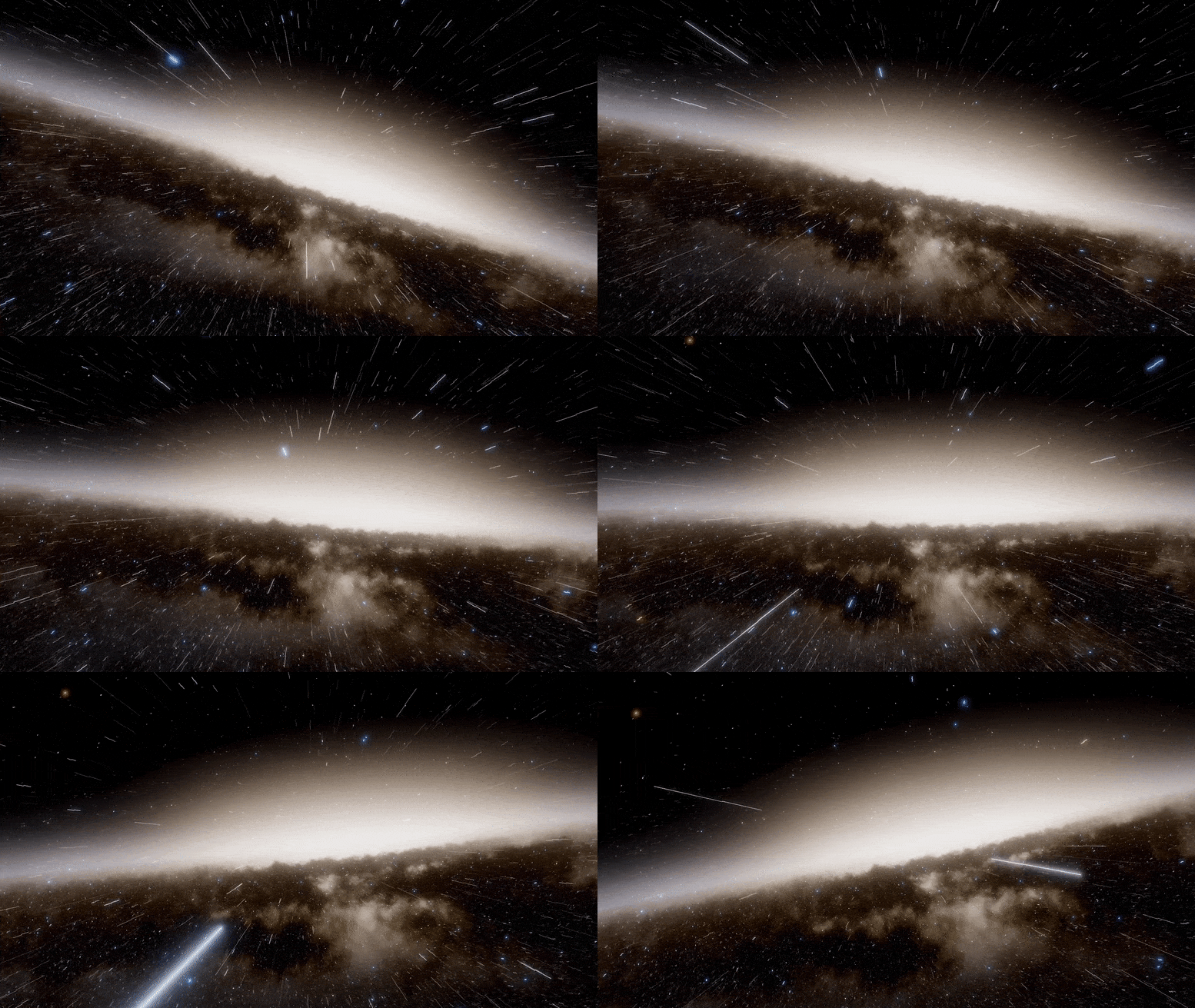
An international team of researchers has discovered a dense, cold gas that’s been shot out from the center of the Milky Way “like bullets.”
Exactly how the gas has been ejected is still a mystery, but the research team, including Professor Naomi McClure-Griffiths from The Australian National University (ANU), say their findings could have important implications for the future of our galaxy.
“Galaxies can be really good at shooting themselves in the foot,” Professor McClure-Griffiths said.
“When you drive out a lot of mass, you’re losing some of the material that could be used to form stars, and if you lose enough of it, the galaxy can’t form stars at all anymore.
“So, to be able to see hints of the Milky Way losing this star forming gas is kind of exciting — it makes you wonder what’s going to happen next!”
The study also raises new questions about what’s happening in our galactic center right now.
“The wind at the center of the Milky Way has been the topic of plenty of debate since the discovery a decade ago of the so-called Fermi Bubbles — two giant orbs filled with hot gas and cosmic rays,” Professor McClure-Griffiths said.
“We’ve observed there’s not only hot gas coming from the center of our galaxy, but also cold and very dense gas.
“This cold gas is much heavier, so moves around less easily.”
The center of the Milky Way is home to a massive black hole, but it’s unclear whether this black hole has expelled the gas, or whether it was blown by the thousands of massive stars at the center of the galaxy.
“We don’t know how either the black hole or the star formation can produce this phenomenon. We’re still looking for the smoking gun, but it gets more complicated the more we learn about it,” lead author Dr. Enrico Di Teodoro from Johns Hopkins University said.
“This is the first time something like this has been observed in our galaxy. We see these kinds of processes happening in other galaxies. But, with external galaxies you get much more massive black holes, star formation activity is higher, which makes it easier for the galaxy to expel material.
“And these other galaxies are obviously a long way away, we can’t see them in a lot of detail.
“Our own galaxy is almost like a laboratory that we can actually get into and try to understand how things work by looking at them up close.”
The research has been published in the journal Nature.
Reference: “Cold gas in the Milky Way’s nuclear wind” by Enrico M. Di Teodoro, N. M. McClure-Griffiths, Felix J. Lockman and Lucia Armillotta, 19 August 2020, Nature.
DOI: 10.1038/s41586-020-2595-z
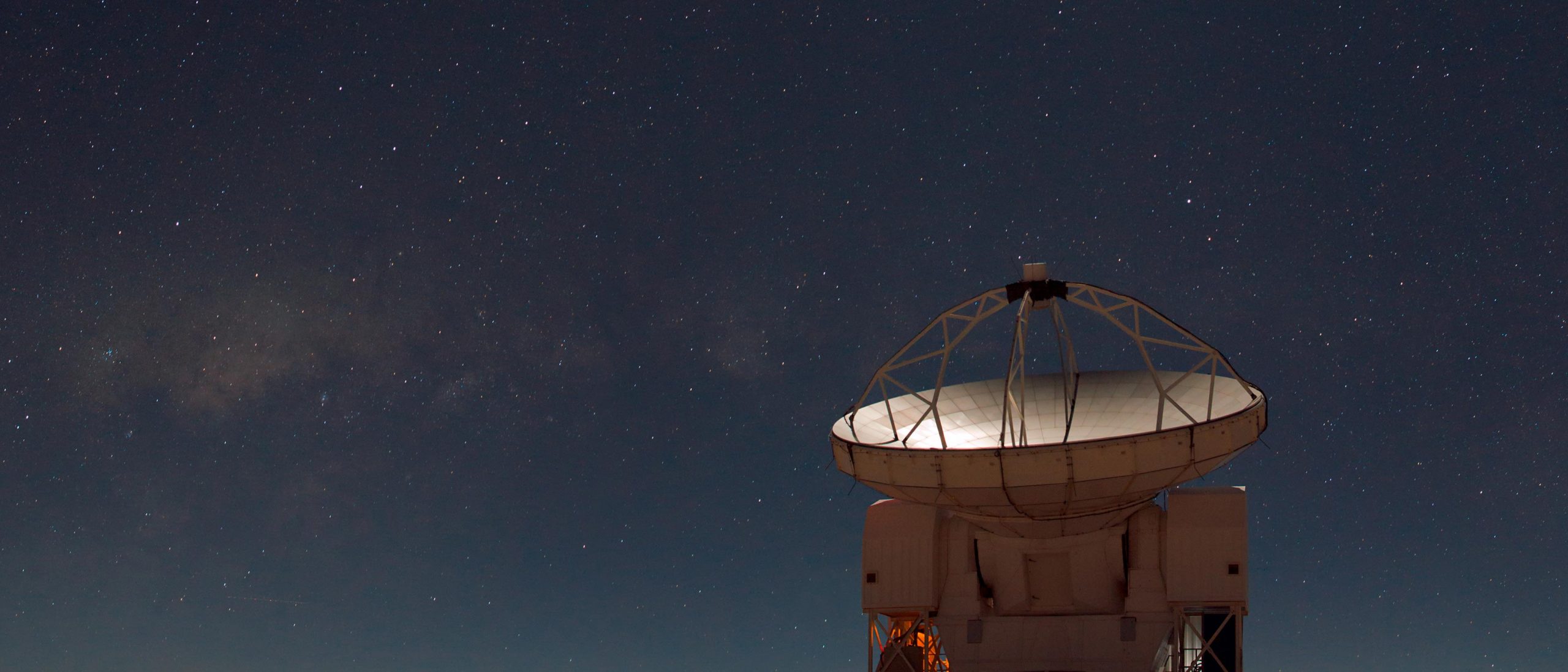
The gas was observed using the Atacama Pathfinder EXperiment (APEX) operated by the European Southern Observatory (ESO) in Chile.
Never miss a breakthrough: Join the SciTechDaily newsletter.
Follow us on Google and Google News.
7 Comments
Be sure that there is gas what so ever can firm a consistant star… Your are lost by such conclusion… And you are yiur time and money in this field of research… And dropped from the list of real scientists….
Be sure that there is no gas what so ever can form a consistant star… Your are lost by such conclusion… And you are wasting your time and money in this field of research… And your are for sure dropped from the list of real scientists….
What do you even mean? Stars are gas (well kinda a plasma ball in a ball of gas but still)
“Fermi bubbles” and there dynamics have been documented in laboratories and are easily explained, if these scientists bothered to take a look…
https://www.thunderbolts.info/wp/2020/05/29/does-gravity-make-light-bulbs-glow-space-news/
Did you not even read your own citation? They are still a big unknown. As there’s few galaxy’s with them
You mean where the citation goes into detail outlining how electromagnetic science where fermi bubbles have been documented as electrical phenomena for decades in laboratories, including the gamma rays at the edges of the bubbles that totally baffle mainstream cosmologist? Then the detailed explanation of the fermi bubbles based on countless electromagnetic experimentation and indisputable electrical scientific principles? Yeah, I read it, well, it’s a video, so watched it. Doesn’t seem you did though.
Fermi bubbles,Gas bubbles..Scientists should study my bathwater