
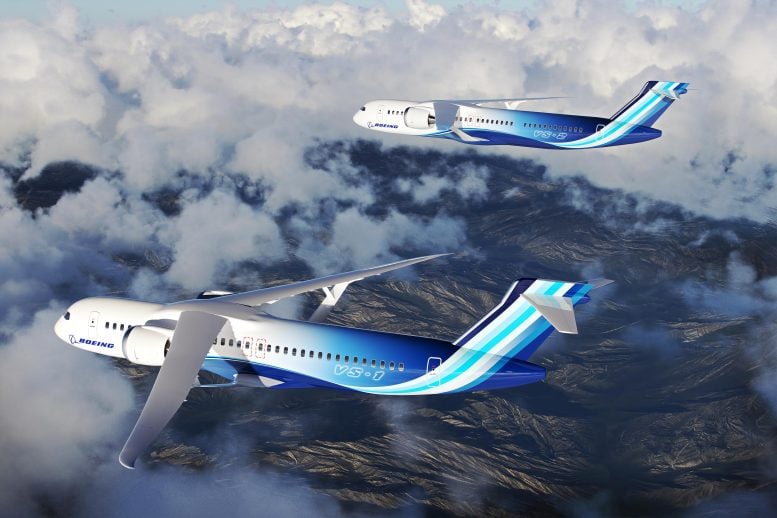
NASA and Boeing Collaborate on the Sustainable Flight Demonstrator Project
NASA announced Wednesday it has issued an award to The Boeing Company for the agency’s Sustainable Flight Demonstrator project, which seeks to inform a potential new generation of green single-aisle airliners.
Under a Funded Space Act Agreement, Boeing will work with NASA to build, test, and fly a full-scale demonstrator aircraft and validate technologies aimed at lowering emissions.
Over seven years, NASA will invest $425 million, while the company and its partners will contribute the remainder of the agreement funding, estimated at about $725 million. As part of the agreement, the agency also will contribute technical expertise and facilities.
Goals and Benefits of the Demonstrator Project
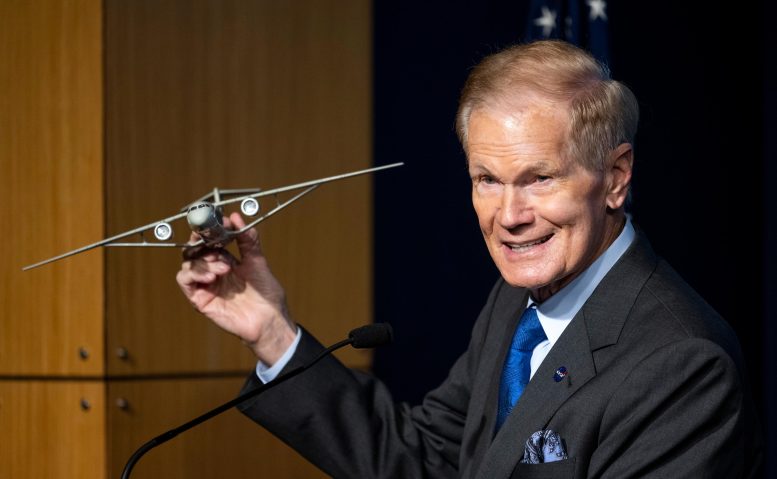
“Since the beginning, NASA has been with you when you fly. NASA has dared to go farther, faster, higher. And in doing so, NASA has made aviation more sustainable and dependable. It is in our DNA,” said NASA Administrator Bill Nelson. “It’s our goal that NASA’s partnership with Boeing to produce and test a full-scale demonstrator will help lead to future commercial airliners that are more fuel efficient, with benefits to the environment, the commercial aviation industry, and to passengers worldwide. If we are successful, we may see these technologies in planes that the public takes to the skies in the 2030s.”
Single-aisle aircraft are the workhorse of many airline fleets, and due to their heavy usage, account for nearly half of worldwide aviation emissions. NASA plans to complete testing for the project by the late 2020s, so that technologies and designs demonstrated by the project can inform industry decisions about the next generation of single-aisle aircraft that could enter into service in the 2030s.
Transonic Truss-Braced Wing Concept
Through the Sustainable Flight Demonstrator project, Boeing and its industry team will partner with NASA to develop and flight-test a full-scale Transonic Truss-Braced Wing demonstrator aircraft.
The Transonic Truss-Braced Wing concept involves an aircraft with extra-long, thin wings stabilized by diagonal struts. This design results in an aircraft that is much more fuel efficient than a traditional airliner due to a shape that would create less drag – resulting in its burning less fuel.
“NASA is working toward an ambitious goal of developing game-changing technologies to reduce aviation energy use and emissions over the coming decades toward an aviation community goal of net-zero carbon emissions by 2050,” said Bob Pearce, NASA associate administrator for the Aeronautics Research Mission Directorate. “The Transonic Truss-Braced Wing is the kind of transformative concept and investment we will need to meet those challenges and, critically, the technologies demonstrated in this project have a clear and viable path to informing the next generation of single-aisle aircraft, benefiting everyone that uses the air transportation system.”
NASA’s goal is that the technology flown on the demonstrator aircraft, when combined with other advancements in propulsion systems, materials, and systems architecture, would result in fuel consumption and emissions reductions of up to 30% relative to today’s most efficient single-aisle aircraft, depending on the mission.
Through separate efforts, NASA has worked with Boeing and other industry partners on advanced sustainable aviation concepts, including the Transonic Truss-Braced Wing concept.
“We’re honored to continue our partnership with NASA and to demonstrate technology that significantly improves aerodynamic efficiency resulting in substantially lower fuel burn and emissions,” said Todd Citron, Boeing chief technology officer. “Boeing has been advancing a multipronged sustainability strategy, including fleet renewal, operational efficiency, renewable energy, and advanced technologies to support the U.S. Aviation Climate Action Plan and meet the industry objective of net zero carbon emissions by 2050. The Sustainable Flight Demonstrator builds on more than a decade of NASA, Boeing, and our industry partners’ investments to help achieve these objectives.”
The new Funded Space Act agreement allows NASA to capitalize on private industry knowledge and experience, with Boeing and its partners laying out a proposed technical plan. NASA will provide access to its aeronautics facilities and expertise. NASA will not procure an aircraft or any other hardware for its missions. The agency will obtain access to certain ground and flight data that can be used to validate the airframe configuration and associated technologies.
The Sustainable Flight Demonstrator will help the United States achieve net-zero carbon emissions from aviation by 2050 – one of the environmental goals articulated in the White House’s U.S. Aviation Climate Action Plan. The International Civil Aviation Organization also has set a goal of net-zero carbon emissions by 2050.
The project is an activity under NASA’s Integrated Aviation Systems Program and a key element of the Sustainable Flight National Partnership, which focuses on developing new sustainable aviation technologies.
Never miss a breakthrough: Join the SciTechDaily newsletter.
Follow us on Google and Google News.