
Close Menu
    Facebook X (Twitter) Instagram
    SciTechDaily
    • Biology
    • Chemistry
    • Earth
    • Health
    • Physics
    • Science
    • Space
    • Technology
    Facebook X (Twitter) Pinterest YouTube RSS
    SciTechDaily
    Home»Space»NASA Continues Artemis I Preparations at Launch Pad Wet Dress Rehearsal Test
    Space

    NASA Continues Artemis I Preparations at Launch Pad Wet Dress Rehearsal Test

    By NASAMarch 23, 20222 Comments2 Mins Read
    Facebook Twitter Pinterest Telegram LinkedIn WhatsApp Email Reddit
    Share
    Facebook Twitter LinkedIn Pinterest Telegram Email Reddit
    Artemis I at Pad 39B Sunrise
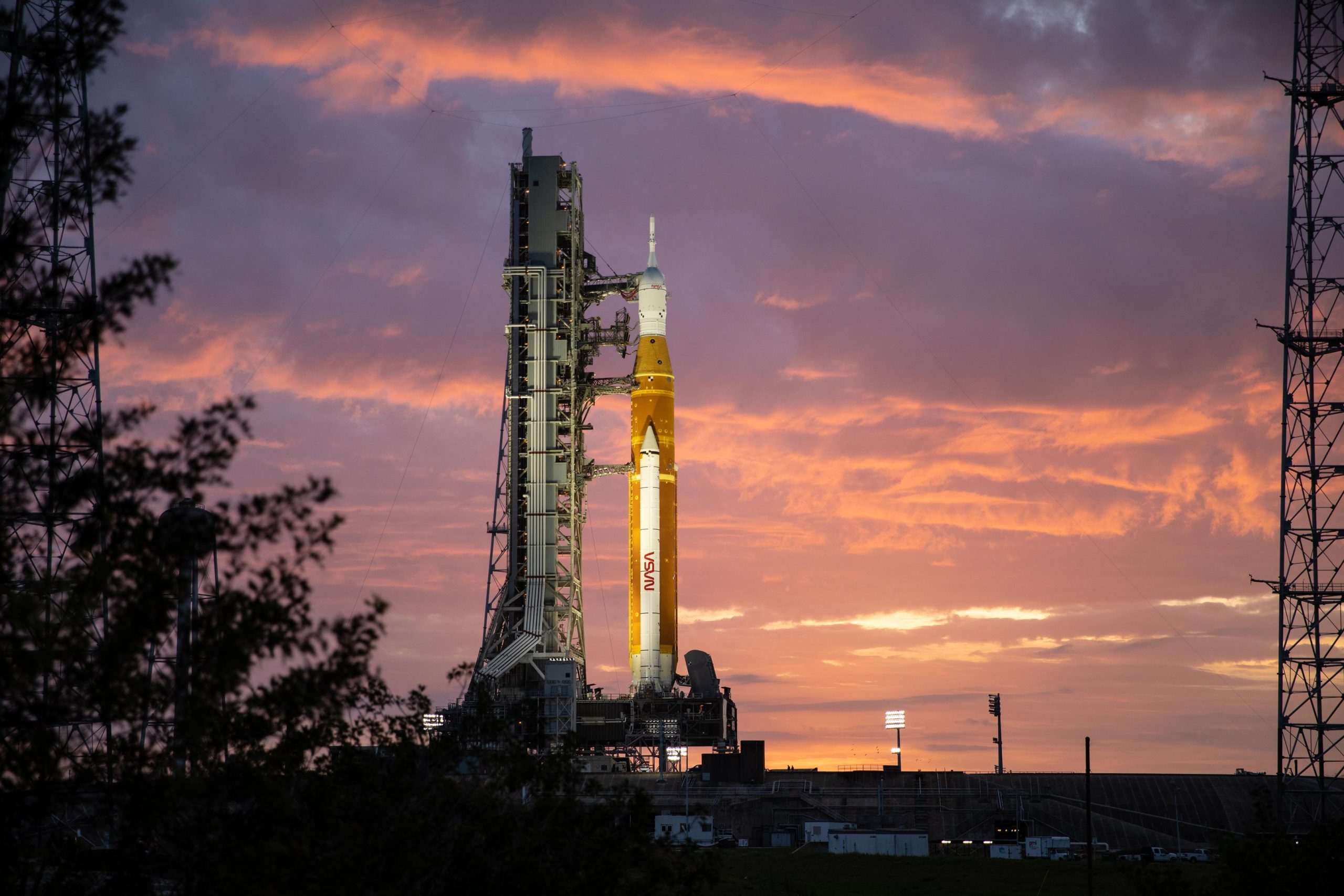
    The sunrise casts a golden glow on the Artemis I Space Launch System (SLS) and Orion spacecraft at Launch Pad 39B at NASA’s Kennedy Space Center in Florida on March 23, 2022. The SLS and Orion atop the mobile launcher were transported to the pad on crawler-transporter 2 for a prelaunch test called a wet dress rehearsal. Artemis I will be the first integrated test of the SLS and Orion spacecraft. In later missions, NASA will land the first woman and the first person of color on the surface of the Moon, paving the way for a long-term lunar presence and serving as a stepping stone on the way to Mars. Credit: NASA/Ben Smegelsky

    Following the arrival of the Space Launch System rocket and Orion spacecraft for Artemis I at Launch Pad 39B at NASA’s Kennedy Space Center in Florida on March 18, teams have connected numerous ground support equipment elements to the rocket and spacecraft, including electrical, fuel environmental control system ducts, and cryogenic propellant lines. Teams successfully powered up all elements of the integrated system at the pad for the first time on March 21 in preparation for the wet dress rehearsal test planned for April 1-3.

    Engineering testing is underway to ensure systems continue to operate as planned with the rocket and spacecraft now configured at the pad. Additionally, technicians will don self-contained atmospheric protective ensemble suits, or SCAPE suits, to practice operations in the event of an emergency at the pad during fueling and launch. After checkouts at the pad are complete next week, the team will start system walkdowns ahead of the test.

    The approximately two-day wet dress rehearsal test will demonstrate the team’s ability to load cryogenic, or super-cold, propellants into the rocket, conduct a launch countdown, and practice safely removing propellants at the launch pad. After wet dress rehearsal, engineers will roll the rocket and spacecraft back to the Vehicle Assembly Building for final checkouts before launch.

    Never miss a breakthrough: Join the SciTechDaily newsletter.
    Follow us on Google and Google News.

    ARTEMIS Mission NASA Rocket Space Launch System
    Share. Facebook Twitter Pinterest LinkedIn Email Reddit

    Related Articles

    NASA’s Artemis II Is on the Launch Pad and the Moon Is Next

    NASA Fires Up RS-25 at 111% Power for Artemis Moon Launches

    NASA Artemis I Space Launch System (SLS) Rocket and Orion Spacecraft Integrated Testing Update

    NASA Awards Artemis Contract for Future SLS Mega Moon Rocket Boosters

    NASA to Roll Out Artemis Mega Moon Rocket for First Time

    NASA’s Powerful SLS Rocket Fully Stacked for Artemis I Moon Mission – Liftoff for Deep Space in February 2022

    One Step Closer: Orion Spacecraft Stacked on Top SLS Rocket for NASA’s Artemis I Mission

    Final Piece of Rocket Hardware Added to Artemis I Stack

    NASA Readies for Future Artemis Moon Missions With SLS Rocket Engine Test Series

    2 Comments

    1. Sekar on March 24, 2022 3:45 am

      Very interesting.

      Triggered the following thoughts

      1. Rocket fuel for main engine is hydrogen gas. Liquid oxygen is oxidizer. The booster uses aluminium as fuel with ammonium perchlorate as an oxidizer,mixed with a binder which is the solid fuel propellant.

      2.Nuclear fusion reactor requires high temperature and pressure.

      Normally, temperature required for fusion is ~ 50 million degrees and atmosphere pressure of 2 atmospheres plus.

      3.The thermodynamics of a fusion requirements of Deuterium and Tritium to helium plus energy requires high energy input at high pressure, to produce extra energy greter than energy input released due to the fusion.

      4. At the lowest point in the ocean of earth , we can achieve a pressure of 1071 atmosphere’s. At such high pressure in the depth of the ocean, if the same can be transferred to the fusion reactor, we can achieve fusion of deuterium and tritium at much lower temperatures.

      Views expressed are personal and not binding on anyone.

      Reply
    2. Sekar on March 25, 2022 1:07 am

      Further to the above.

      1. A McKinsey Adviser on strategy advised that it is not smart to boil the ocean. Good message.

      2. However, the high pressures of the weight of the ocean on the sea-bed is a opportunity. If we can figure out how to use this in a fusion reactor.

      3. Another way of looking at these high pressures at the bottom of the ocean is as Potential energy of the ocean. The waves at the shore are the kinetic energy of the ocean on the surface of the ocean.

      4. If we can transfer the potential energy {Pressure} at the bottom of the ocean to the internal environment of fusion reactor placed their, we could enable practical fusion at much lower temperatures than 50 million degrees celsius.

      5. Hydrogen gas is plasma in liquid phase and hydrogen metal in solid phase. Energy output being greater than energy input in a fusion reaction is a result of higher isotopes of hydrogen . Deuterium and Tritium.

      6. The correct combination of pressure and temperatures required for sustained and controlled chain reaction , to produce helium, is the critical parameter for maximum efficiency and effectiveness of fusion power.

      Views expressed are personal and not binding on anyone

      Reply
    Leave A Reply Cancel Reply

    • Facebook
    • Twitter
    • Pinterest
    • YouTube

    Don't Miss a Discovery

    Subscribe for the Latest in Science & Tech!

    Trending News

    Bone-Strengthening Discovery Could Reverse Osteoporosis

    Scientists Uncover Hidden Trigger Behind Stem Cell Aging

    Scientists Find Way to Reverse Fatty Liver Disease Without Changing Diet

    Could Humans Regrow Limbs? New Study Reveals Promising Genetic Pathway

    Scientists Reveal Eating Fruits and Vegetables May Increase Your Risk of Lung Cancer

    Scientists Reverse Brain Aging With Simple Nasal Spray

    Scientists Uncover Potential Brain Risks of Popular Fish Oil Supplements

    Scientists Discover a Surprising Way To Make Bread Healthier and More Nutritious

    Follow SciTechDaily
    • Facebook
    • Twitter
    • YouTube
    • Pinterest
    • Newsletter
    • RSS
    SciTech News
    • Biology News
    • Chemistry News
    • Earth News
    • Health News
    • Physics News
    • Science News
    • Space News
    • Technology News
    Recent Posts
    • Scientists Unlock Hidden Secrets of 2,300-Year-Old Mummies Using Cutting-Edge CT Scanner
    • Men vs. Women: Scientists Uncover Dramatic Differences in How the Immune System Ages
    • Eating Chili Peppers Linked to Longer Life
    • Bread Might Be Making You Gain Weight Even Without Eating More
    • 4,000-Year-Old Tablets Reveal Lost Magic, Medicine, and Ancient Kings
    Copyright © 1998 - 2026 SciTechDaily. All Rights Reserved.
    • Science News
    • About
    • Contact
    • Editorial Board
    • Privacy Policy
    • Terms of Use

    Type above and press Enter to search. Press Esc to cancel.