

A NASA-led study reveals that the pattern of rainfall throughout the year—specifically the frequency and intensity of rain events—is nearly as significant to global vegetation health as the total amount of annual rainfall.
The research indicates that less frequent but heavier rainfalls can benefit plants in arid regions like the U.S. Southwest, while potentially harming those in wetter ecosystems such as the Central American rainforests due to longer intervals of dryness.
Impact of Rainfall Patterns on Global Vegetation
A NASA-led study has revealed that the way rain falls throughout the year is almost as crucial for the world’s vegetation as the total amount of rainfall. Published on December 11 in Nature, the research shows that even when yearly rainfall totals are similar, plant growth can vary significantly depending on whether the rain comes in fewer, heavier downpours or more frequent, lighter showers.
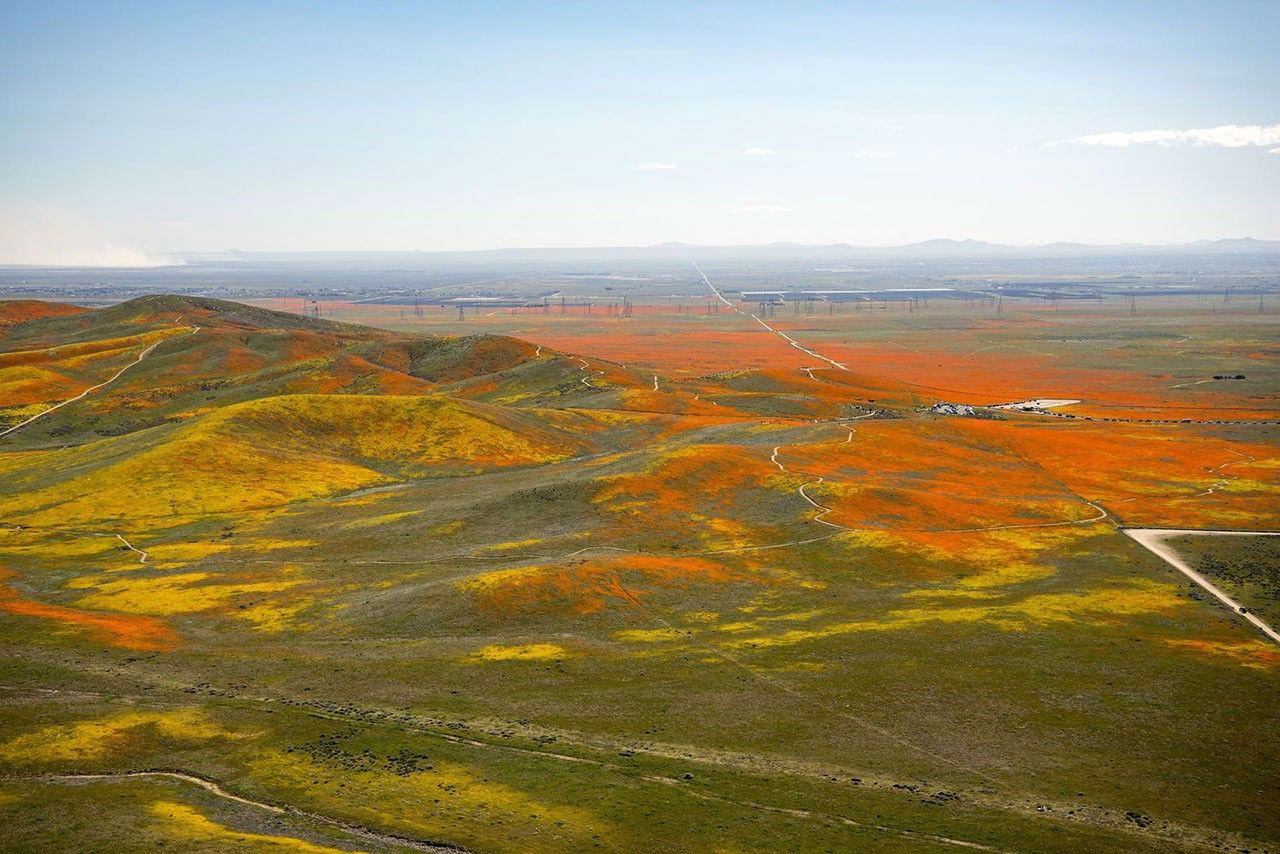
Plants in dry environments, such as the U.S. Southwest, tended to thrive when rain fell in concentrated bursts, benefiting from the intense but occasional soakings. In contrast, vegetation in humid regions like the Central American rainforest often struggled under these conditions, likely due to an inability to withstand longer dry spells between storms.
The Role of Rainfall Variability
Scientists have previously estimated that almost half of the world’s vegetation is driven primarily by how much rain falls in a year. Less well understood is the role of day-to-day variability, said lead author Andrew Feldman, a hydrologist and ecosystem scientist at NASA’s Goddard Space Flight Center in Greenbelt, Maryland. Shifting precipitation patterns are producing stronger rainstorms — with longer dry spells in between — compared to a century ago.
“You can think of it like this: if you have a house plant, what happens if you give it a full pitcher of water on Sunday versus a third of a pitcher on Monday, Wednesday, and Friday?” said Feldman. Scale that to the size of the U.S. Corn Belt or a rainforest and the answer could have implications for crop yields and ultimately how much carbon dioxide plants remove from the atmosphere.
Insights from Advanced Satellite Analysis
The team, including researchers from the U.S. Department of Agriculture and multiple universities, analyzed two decades of field and satellite observations, spanning millions of square miles. Their study area encompassed diverse landscapes from Siberia to the southern tip of Patagonia.
They found that plants across 42% of Earth’s vegetated land surface were sensitive to daily rainfall variability. Of those, a little over half fared better — often showing increased growth — in years with fewer but more intense wet days. These include croplands as well as drier landscapes like grasslands and deserts.
In contrast, broadleaf (e.g., oak, maple, and beech) forests and rainforests in lower and middle latitudes tended to fare worse under those conditions. The effect was especially pronounced in Indo-Pacific rainforests, including in the Philippines and Indonesia.
Statistically, daily rainfall variability was nearly as important as annual rainfall totals in driving growth worldwide.
Growing plants emit a form of light detectable by NASA satellites orbiting hundreds of miles above Earth. Parts of North America appear to glimmer in this visualization, depicting an average year. Gray indicates regions with little or no fluorescence; red, pink, and white indicate high fluorescence. Credit: NASA Scientific Visualization Studio
Red Light, Green Light
The new study relied primarily on a suite of NASA missions and datasets, including the Integrated Multi-satellitE Retrievals for GPM (IMERG) algorithm, which provides rain and snowfall rates for most of the planet every 30 minutes using a network of international satellites.
To gauge plant response day to day, the researchers calculated how green an area appeared in satellite imagery. “Greenness”, also known asthe Normalized Difference Vegetation Index, is commonly used to estimate vegetation density and health. They also tracked a faint reddish light that plants emit during photosynthesis, when a plant absorbs sunlight to convert carbon dioxide and water into food, its chlorophyll “leaks” unused photons. This faint light is called solar-induced fluorescence, and it’s a telltale sign of flourishing vegetation.
Not visible bythe naked eye, plant fluorescence can be detected by instruments aboard satellites such as NASA’s Orbiting Carbon Observatory-2 (OCO-2). Launched in 2014, OCO-2 has observed the U.S. Midwest fluorescing strongly during the growing season.
Feldman said the findings highlight the vital role that plants play in moving carbon around Earth — a process called the carbon cycle. Vegetation, including crops, forests, and grasslands, forms a vast carbon “sink,” absorbing excess carbon dioxide from the atmosphere.
“A finer understanding of how plants thrive or decline day to day, storm by storm, could help us better understand their role in that critical cycle,” Feldman said.
Reference: “Large global-scale vegetation sensitivity to daily rainfall variability” by Andrew F. Feldman, Alexandra G. Konings, Pierre Gentine, Mitra Cattry, Lixin Wang, William K. Smith, Joel A. Biederman, Abhishek Chatterjee, Joanna Joiner and Benjamin Poulter, 11 December 2024, Nature.
DOI: 10.1038/s41586-024-08232-z
The study also included researchers from NASA’s Jet Propulsion Laboratory (JPL) in Southern California, USDA Agricultural Research Service, Stanford University, Columbia University, Indiana University, and the University of Arizona.
Never miss a breakthrough: Join the SciTechDaily newsletter.
Follow us on Google and Google News.
1 Comment
“Plants in dry environments, such as the U.S. Southwest, tended to thrive when rain fell in concentrated bursts, benefiting from the intense but occasional soakings.”
That is probably because the plants have evolved in an ecosystem adapted to monsoon-season cloudbursts. Cacti like the saguaro have wide-spread, shallow roots that are able to absorb water quickly, and store tons of water in a body that can expand like an accordion. It shouldn’t be a surprise that deciduous trees on the East Coast have a different phenology when the regional climate is different.