
HERMES has moved into its final design phase after a successful review, aiming for a 2024 launch. It will enable crucial space weather observations from the Moon’s orbit, supporting future deep-space human exploration.
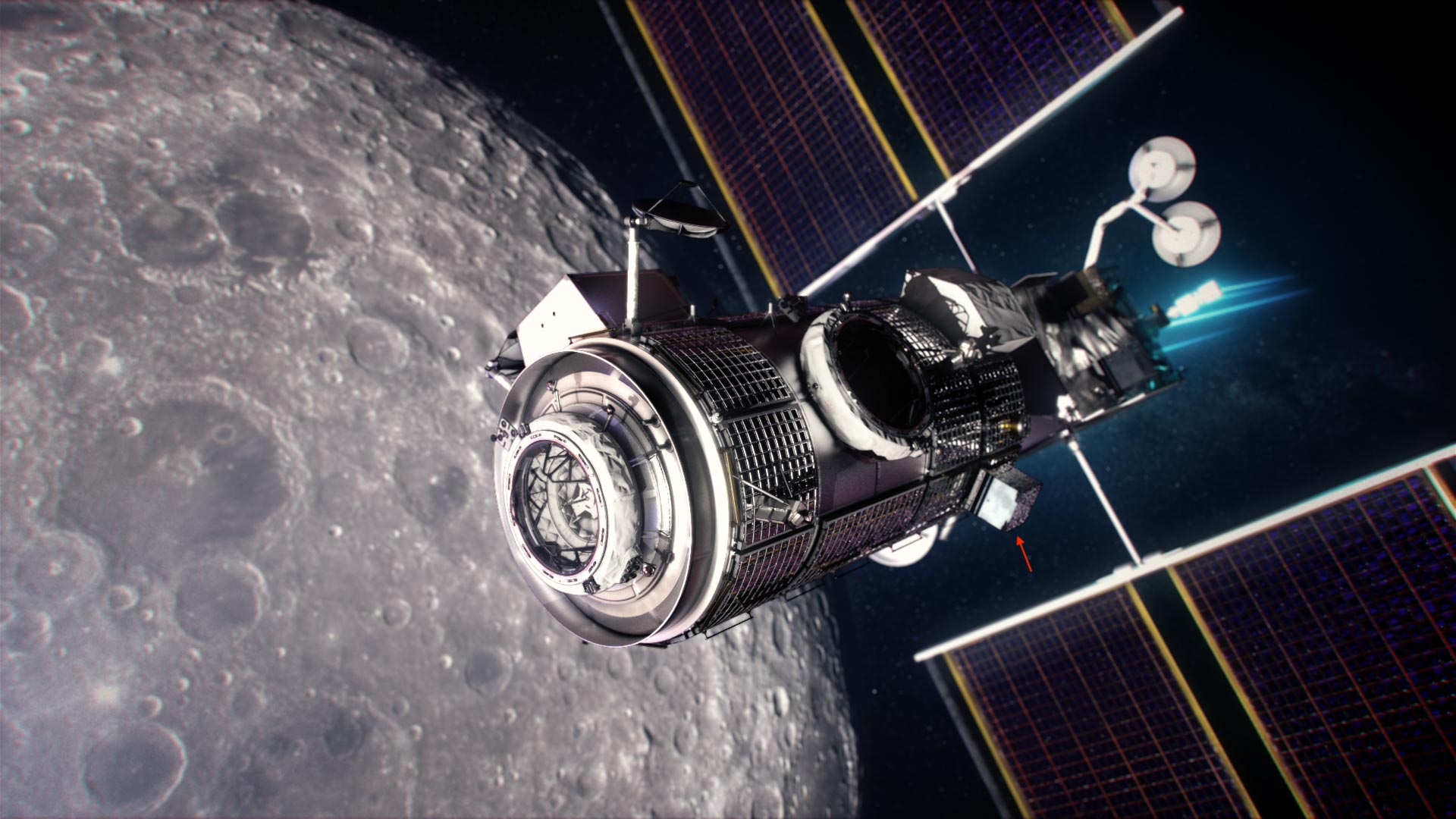
NASA’s HERMES mission – a four-instrument suite to be mounted outside NASA’s Moon-orbiting Gateway – has passed a critical mission review on January 27, 2022.
The review, Key Decision Point C, evaluated the mission’s preliminary design and program plan to achieve launch by its target launch readiness date no earlier than November 2024. With the successful review, HERMES now moves into Phase C, which includes the final design of the mission.
“HERMES will be a critical part of the Artemis mission and NASA’s goals to create a permanent presence on the Moon,” said Jamie Favors, HERMES program executive at NASA Headquarters in Washington, D.C. “We’re very excited to pass this critical milestone and move closer to launch.”
Role of HERMES in Space Weather Monitoring
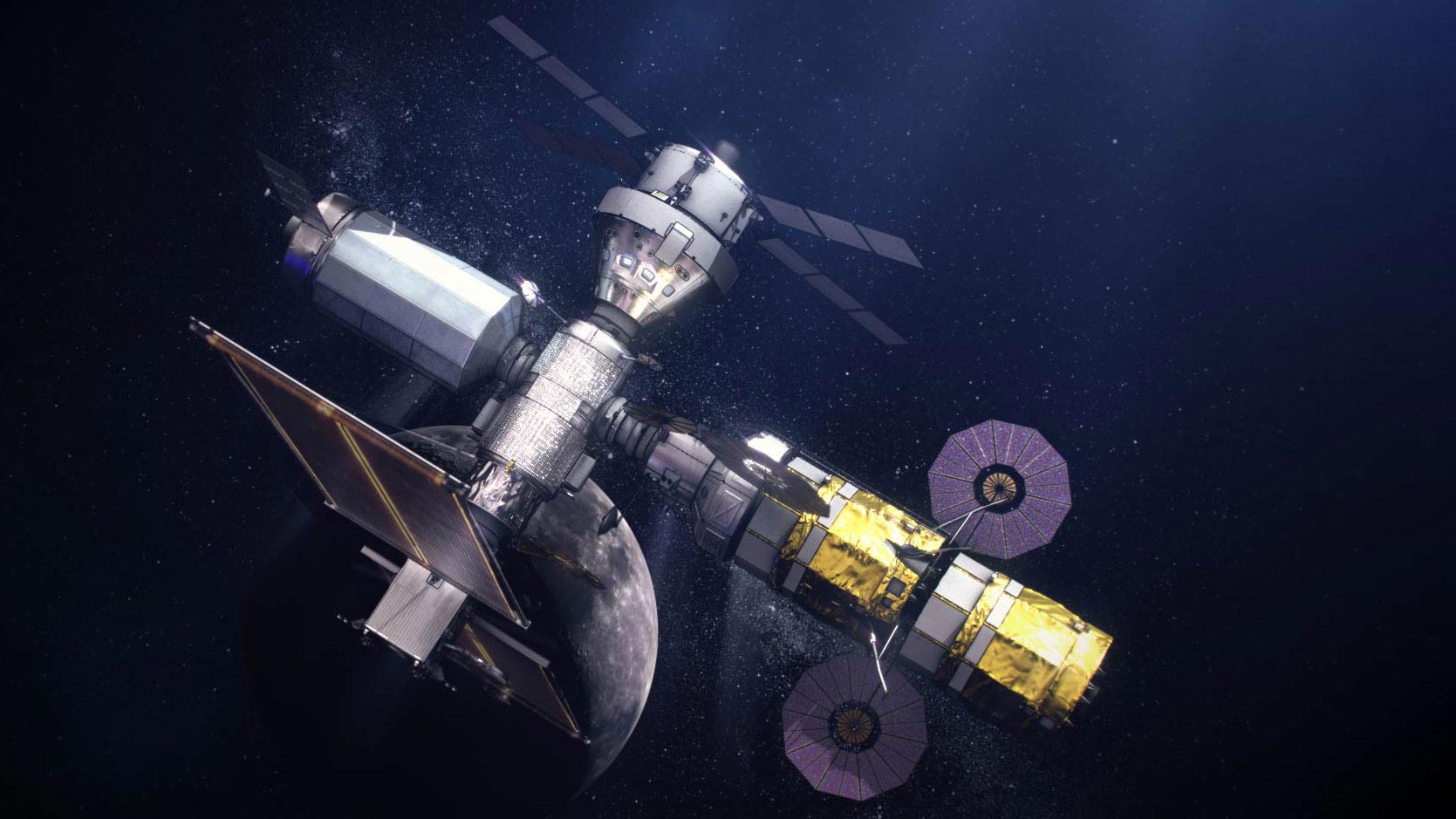
HERMES, short for Heliophysics Environmental and Radiation Measurement Experiment Suite, will be mounted outside the Habitation and Logistics Outpost module of NASA’s Gateway outpost. Gateway will be where Artemis astronauts live and work as they orbit the Moon, supporting scientific experiments and technology development applicable for both lunar and future deep space human exploration.
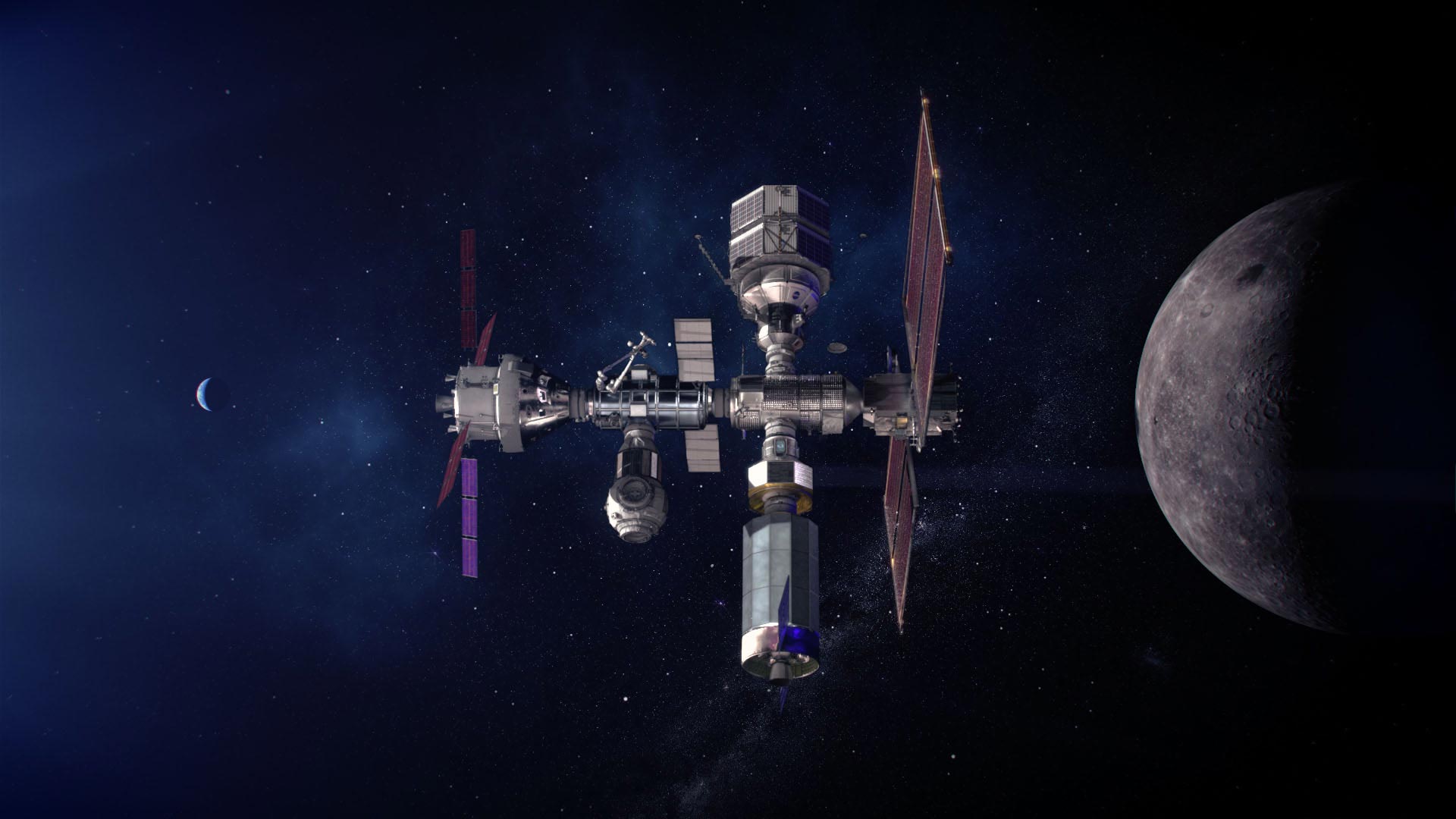
“The Gateway Program is proud to be collaborating with SMD on the HERMES payload,” said Tim Horvath, Gateway payload integration lead. “This close partnership will enable HERMES to successfully achieve groundbreaking science objectives from the unique cislunar viewing location of the Gateway spacecraft.”
Understanding Space Weather and Its Impacts
HERMES will monitor space weather, the fluctuating conditions in space driven by the Sun. Space weather includes the continuous stream of particles and magnetic fields, known as the solar wind; blasts of billion-ton gas clouds known as coronal mass ejections; flashes of ultra-bright light from solar flares; and the disturbances each of these creates in the near-Earth environment. Some of these events pose dangers to astronauts and robotic missions – but all of them are exciting scientific opportunities to understand our Sun and the space around us.
HERMES will study space weather in an especially variable environment. As the Moon orbits Earth each month, it spends about one week inside Earth’s long magnetotail, the portion of our magnetic field blown back from the Sun like a windsock. When inside the magnetotail, HERMES will be flooded by particles and magnetic fields that have interacted with Earth. The remaining three weeks, the Moon confronts the unfiltered Sun, measuring the solar wind and space weather in conditions closer to pristine interplanetary space.
Technical Challenges and Collaborative Opportunities
“It’s been an exciting challenge to make HERMES as compact yet flexible as it needs to be,” said Kristen Brown, HERMES deputy project manager at NASA’s Goddard Space Flight Center in Greenbelt, Maryland. “We’ve had to package all the instruments into an extremely small volume without interfering with each other and while making sure the payload meets the Gateway interface requirements.”
“HERMES is the first space weather monitoring platform on a crewed spacecraft to venture outside Earth’s protective magnetic field,” said Jim Spann, HERMES program scientist at NASA Headquarters. “What we learn from HERMES will be critical to protecting astronauts as we venture forth with the Artemis mission.”
HERMES will contribute to a number of joint observation campaigns with other spacecraft. The European Radiation Sensors Array or ERSA provided by the European Space Agency will be mounted nearby on the Gateway Power and Propulsion Element, or PPE, where it will measure higher-energy particles in the solar wind. Together they provide Artemis astronauts with a fuller picture of the space weather conditions they are flying through. HERMES will also collaborate with the two THEMIS/ARTEMIS spacecraft already in orbit around the Moon, adding another data point to help measure smaller-scale structures in the solar wind and magnetotail. Finally, as a new asset in NASA’s Heliophysics System Observatory, it contributes to an ever-growing fleet of spacecraft monitoring space weather conditions throughout the solar system.
“This is a great opportunity to be part of historic human spaceflight missions while expanding the possibilities for new science with international partners,” said Bill Paterson, HERMES project scientist at Goddard.
HERMES is led by NASA’s Goddard Space Flight Center in Greenbelt, Maryland. HERMES includes four specialized instruments: NEMISIS, or the Noise Eliminating Magnetometer Instrument in a Small Integrated System, which measures the magnetic fields around Gateway; the Miniaturized Electron pRoton Telescope, or MERiT, which measures ions and electrons; the Electron Electrostatic Analyzer, or EEA, which measures the lower energy electrons that make up most of the solar wind; and the Solar Probe Analyzer for Ions, or SPAN-I, which measures protons and ions including oxygen. Goddard is providing the NEMISIS, MERiT and EEA instruments. SPAN-I is provided by the University of California, Berkeley.
Never miss a breakthrough: Join the SciTechDaily newsletter.
Follow us on Google and Google News.