
Close Menu
    Facebook X (Twitter) Instagram
    SciTechDaily
    • Biology
    • Chemistry
    • Earth
    • Health
    • Physics
    • Science
    • Space
    • Technology
    Facebook X (Twitter) Pinterest YouTube RSS
    SciTechDaily
    Home»Space»NASA Loses Two TROPICS Satellites in Astra Rocket Failure
    Space

    NASA Loses Two TROPICS Satellites in Astra Rocket Failure

    By NASAJune 13, 2022No Comments4 Mins Read
    Facebook Twitter Pinterest Telegram LinkedIn WhatsApp Email Reddit
    Share
    Facebook Twitter LinkedIn Pinterest Telegram Email Reddit
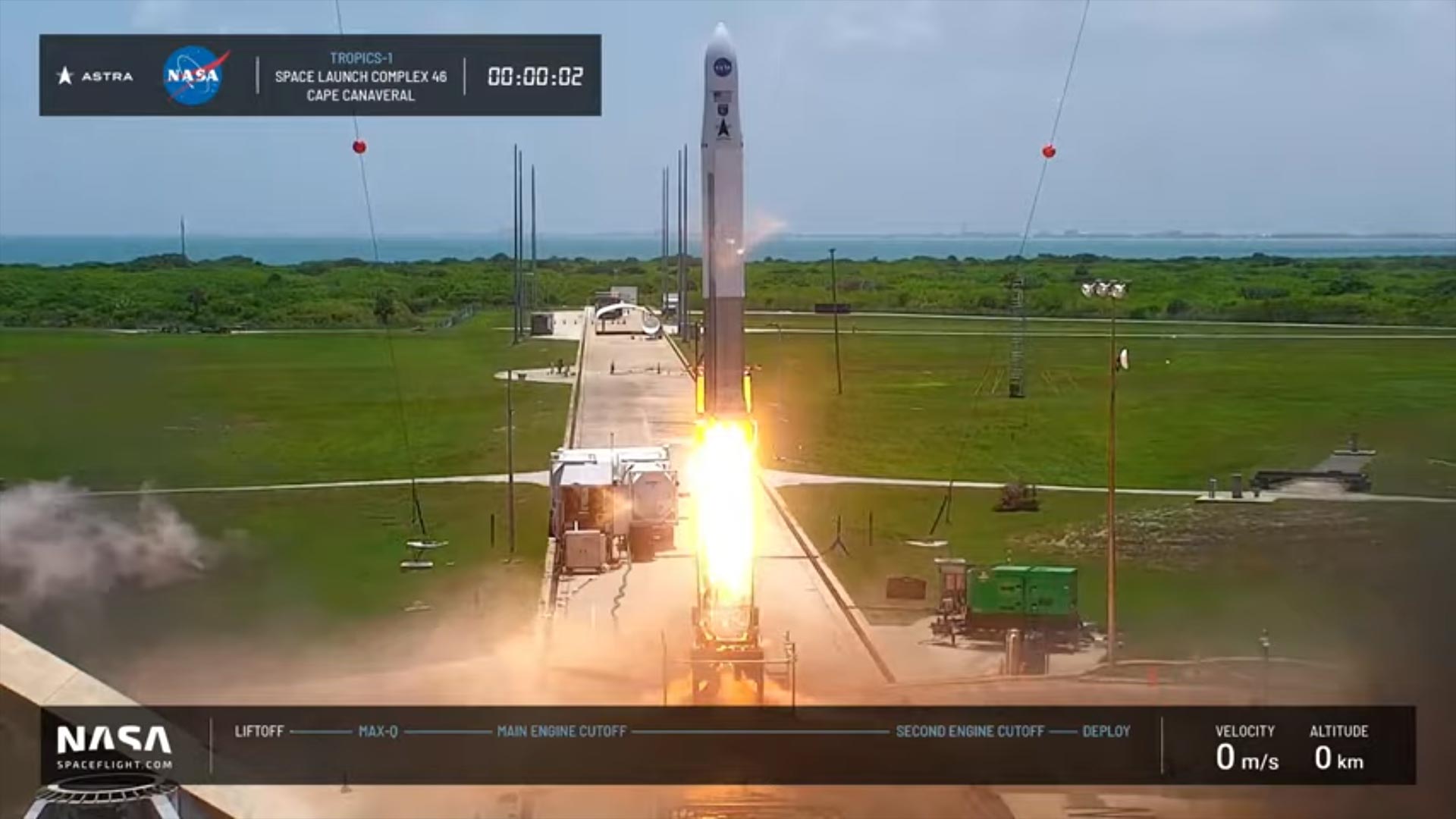
    Astra Rocket Liftoff
    Two TROPICS CubeSats lift off atop an Astra Rocket 3 from Space Launch Complex 46 at Cape Canaveral Space Force Station. Credit: NASASpaceflight/Astra

    NASA’s TROPICS mission lost two CubeSats in a failed Astra launch, but the mission continues with four remaining satellites as investigations proceed.

    NASA’s Time-Resolved Observations of Precipitation structure and storm Intensity with a Constellation of Smallsats (TROPICS) mission is a constellation of state-of-the-science observing platforms that will measure temperature, humidity, and precipitation at high resolution and with unprecedented frequency.

    Two TROPICS CubeSats lifted off atop an Astra Rocket 3 from Space Launch Complex 46 at Cape Canaveral Space Force Station in Florida yesterday, June 12, 2022. The launch occurred at approximately 1:43 p.m. EDT. Things seemed to be going well at first, but after a nominal first stage flight, the upper stage of the rocket shut down early and failed to deliver the TROPICS CubeSats to orbit.

    Soon after the failure, Astra tweeted: “We had a nominal first stage flight. The upper stage shut down early and we did not deliver the payloads to orbit. We have shared our regrets with @NASA and the payload team. More information will be provided after we complete a full data review.”
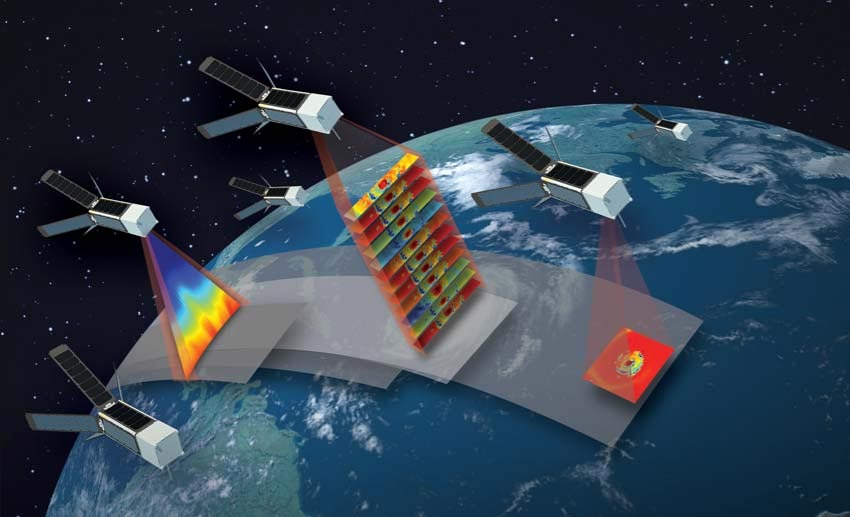
    NASA TROPICS Constellation
    Three pairs of satellites comprise the TROPICS constellation and will work in concert to provide microwave observations of storms on Earth, measuring precipitation, temperature, and humidity of a storm as often as every 50 minutes. Credit: NASA

    Impact on the TROPICS Mission Objectives

    NASA reports that while they are disappointed in the loss of the two TROPICS CubeSats, the mission is part of NASA’s Earth venture program, which provides opportunities for lower-cost, higher-risk missions. Despite a loss of the first two of six satellites, the TROPICS constellation will still meet its science objectives with the four remaining CubeSats distributed in two orbits. With four satellites, TROPICS will still provide improved time-resolved observations of tropical cyclones compared to traditional observing methods.

    TROPICS is an Earth venture mission — science-driven, competitively selected, low-cost missions that provide an opportunity for investment in innovative Earth science to enhance our capability to better understand the current state of the Earth system and to enable continual improvement in the prediction of future changes.
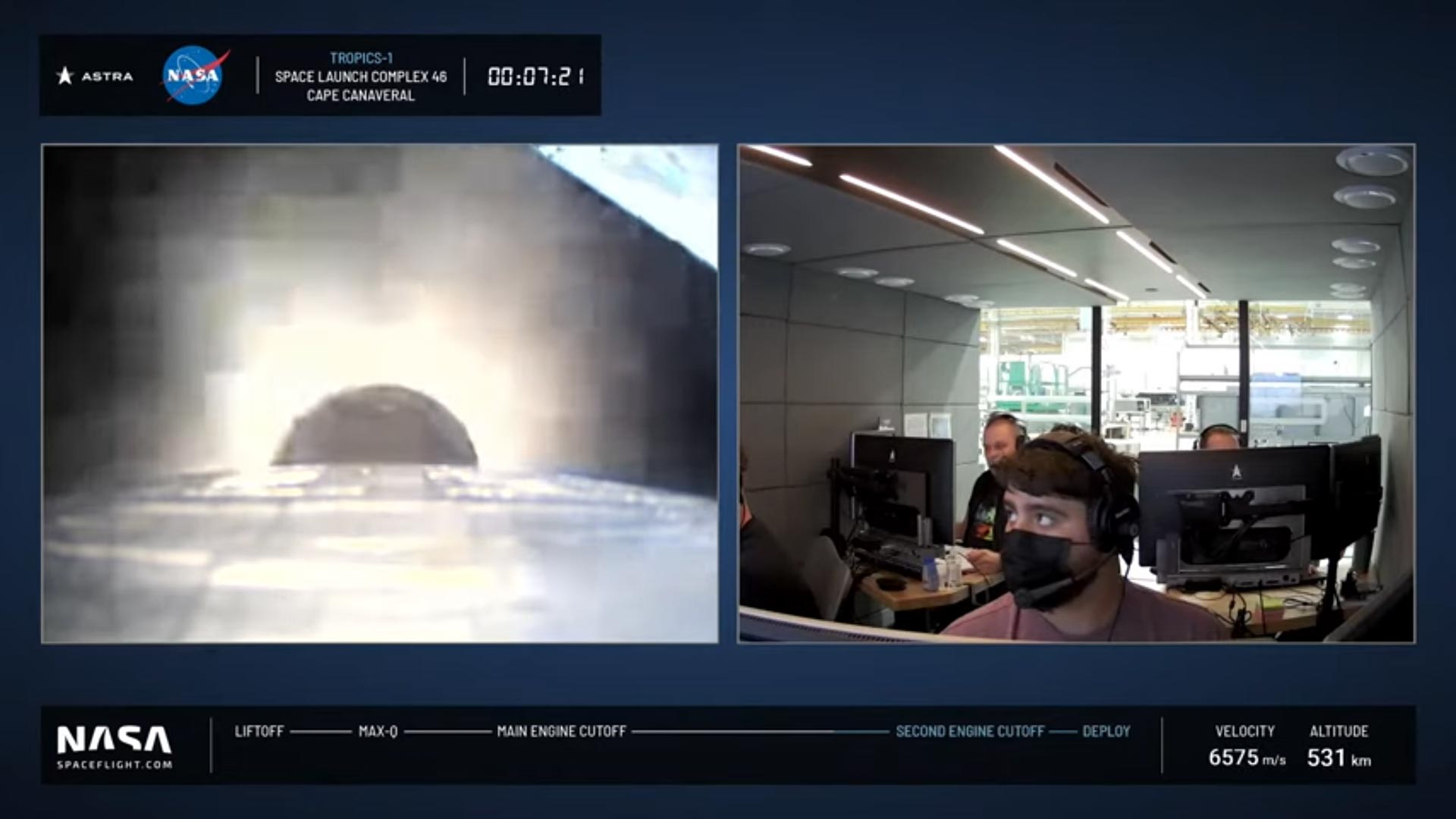
    Astra Rocket Failure
    A camera on the rocket shows an exhaust plume at the time the engine shut down early. Credit: NASASpaceflight/Astra

    As the agency works with emerging launch providers for cost-effective launch capabilities to space, these types of missions are important to expand our scientific knowledge while fostering the U.S. commercial launch industry.

    Investigation and Future Launch Efforts

    As a Federal Aviation Administration (FAA) licensed mission, the FAA and Astra will lead the investigation to understand what happened during the TROPICS-1 launch. NASA will lend any expertise needed but would expect to pause the launch effort with Astra while an investigation is being conducted to ensure we move forward when ready.

    NASA’s Launch Services Program, which is managing the launch service for the mission, continues to work with emerging launch providers to deliver low-cost science missions into orbit with contracts that align with commercial practices, using less NASA oversight to achieve lower launch costs. Small satellites and Class D payloads tolerate relatively high risk and serve as an ideal platform for technical and architecture innovation, contributing to NASA’s science research and technology development.

    Thanks to the transparency displayed by Astra, NASA has been involved in the investigation of Astra’s previous launch. Additionally, we have been engaged in discussions about lessons learned and corrective actions. We recognize the risks inherent in a new launch provider and will lend our assistance as needed.


    NASASpaceflight and Astra partnered to broadcast this mission launch.

    Never miss a breakthrough: Join the SciTechDaily newsletter.
    Follow us on Google and Google News.

    NASA Rocket
    Share. Facebook Twitter Pinterest LinkedIn Email Reddit

    Related Articles

    Liftoff! NASA’s Artemis II Launch Sends Astronauts Around the Moon for First Time in 50 Years

    NASA’s Artemis II Is on the Launch Pad and the Moon Is Next

    NASA Fires Up RS-25 at 111% Power for Artemis Moon Launches

    NASA Lucy Launched on Atlas V Rocket – Asteroid Mission to “Fossils” of Planet Formation

    Final Piece of Rocket Hardware Added to Artemis I Stack

    NASA Readies for Future Artemis Moon Missions With SLS Rocket Engine Test Series

    FORTIS Rocket Ready for Launch, Set to Study Extra-Galactic Dust

    Unmanned Orbital Sciences Corp Spacecraft Explodes During Launch

    NASA Confiscates Stolen Rocket Engine

    Leave A Reply Cancel Reply

    • Facebook
    • Twitter
    • Pinterest
    • YouTube

    Don't Miss a Discovery

    Subscribe for the Latest in Science & Tech!

    Trending News

    Millions Take These IBS Drugs, But a New Study Finds Serious Risks

    Scientists Unlock Hidden Secrets of 2,300-Year-Old Mummies Using Cutting-Edge CT Scanner

    Bread Might Be Making You Gain Weight Even Without Eating More Calories

    Scientists Discover Massive Magma Reservoir Beneath Tuscany

    Europe’s Most Active Volcano Just Got Stranger – Here’s Why Scientists Are Rethinking It

    Alzheimer’s Symptoms May Start Outside the Brain, Study Finds

    Millions Take This Popular Supplement – Scientists Discover a Concerning Link to Heart Failure

    The Universe Is Expanding Too Fast and Scientists Can’t Explain Why

    Follow SciTechDaily
    • Facebook
    • Twitter
    • YouTube
    • Pinterest
    • Newsletter
    • RSS
    SciTech News
    • Biology News
    • Chemistry News
    • Earth News
    • Health News
    • Physics News
    • Science News
    • Space News
    • Technology News
    Recent Posts
    • Scientists Say a Hidden Structure May Exist Inside Earth’s Core
    • Doctors Surprised by the Power of a Simple Drug Against Colon Cancer
    • Why Popular Diabetes Drugs Like Ozempic Don’t Work for Everyone: The “Genetic Glitch”
    • Scientists Create Improved Insulin Cells That Reverse Diabetes in Mice
    • Scientists Stunned After Finding Plant Thought Extinct for 60 Years
    Copyright © 1998 - 2026 SciTechDaily. All Rights Reserved.
    • Science News
    • About
    • Contact
    • Editorial Board
    • Privacy Policy
    • Terms of Use

    Type above and press Enter to search. Press Esc to cancel.