
Close Menu
    Facebook X (Twitter) Instagram
    SciTechDaily
    • Biology
    • Chemistry
    • Earth
    • Health
    • Physics
    • Science
    • Space
    • Technology
    Facebook X (Twitter) Pinterest YouTube RSS
    SciTechDaily
    Home»Space»NASA’s Mars Perseverance Rover: Cloudy Sols Are Here Again
    Space

    NASA’s Mars Perseverance Rover: Cloudy Sols Are Here Again

    By NASAFebruary 7, 2023No Comments4 Mins Read
    Facebook Twitter Pinterest Telegram LinkedIn WhatsApp Email Reddit
    Share
    Facebook Twitter LinkedIn Pinterest Telegram Email Reddit
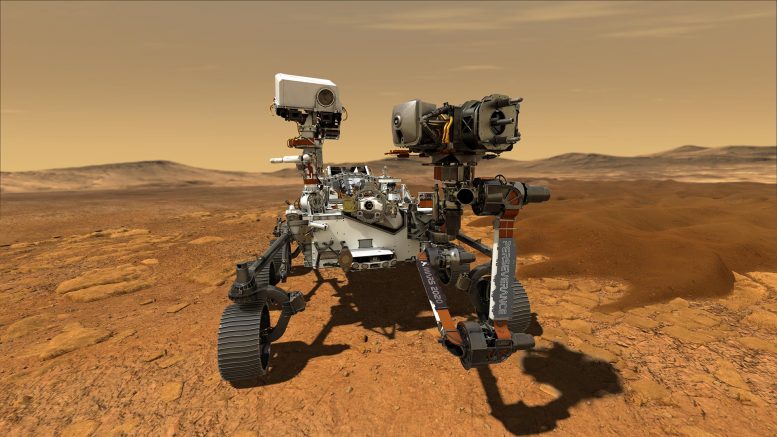
    NASA Perseverance Rover
    This illustration depicts NASA’s Perseverance rover operating on the surface of Mars. Credit: NASA/JPL-Caltech

    Martian Water-Ice Clouds Offer Key Insights Into Atmospheric and Water Cycle Dynamics

    Mars clouds are very much like Earth’s cirrus clouds but thinner. While Earth clouds can contain liquid water, the low temperatures and pressures on Mars only allow for water-ice (and CO2 ice) clouds to form. However, these water-ice clouds are optically thin because of the low amounts of water present in the Martian atmosphere; if all the water were on the surface, it would make a layer thinner than a single strand of hair.

    Studying clouds helps us to understand the atmosphere and how the water cycle works on Mars today, such as how water vapor is transported by the atmospheric circulation and how temperatures and water abundances vary with height. By observing the motion of clouds, we can also learn about wind speeds and directions high in the atmosphere, which we have no way of measuring otherwise. Despite being thin, these clouds still have an impact on heating and cooling of the present-day atmosphere, and in the past clouds may have played a much larger role in sustaining a warmer atmosphere that allowed liquid water to flow on the surface of Mars.
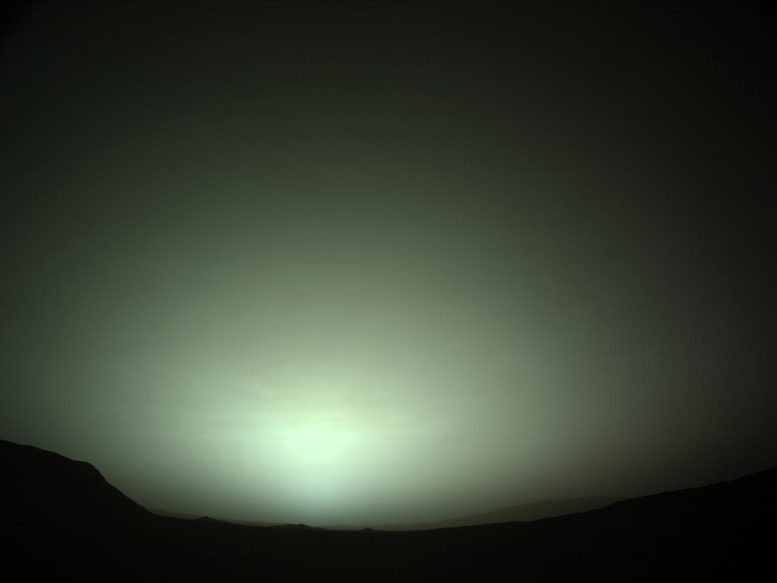
    Mars Perseverance Sol 691
    Mars Perseverance Sol 691 – Left Navigation Camera: This image was taken just before sunrise, pointing east. NASA’s Mars Perseverance rover acquired this image using its onboard Left Navigation Camera (Navcam). The camera is located high on the rover’s mast and aids in driving. This image was acquired on January 29, 2023 (Sol 691) at the local mean solar time of 06:14:49. Credit: NASA/JPL-Caltech

    There are seasonal patterns to Martian clouds. For a few months around northern summer solstice, orbital spacecraft observe a lot of cloud activity between ~10° south and 30° north latitude. Because Perseverance is exploring Jezero crater, which is located at about 18° north, we’re in a great place to observe these clouds from the surface! We’re currently over a month before the nominal start of this cloudy season, but are already starting to see more cloud activity. The image shown was taken by the rover’s Navigation camera (Navcam) on sol 691 of the mission, shortly before sunrise looking to the east, and shows thin cloud layers illuminated by the rising Sun.

    We regularly take Navcam images and movies to study the timing, motion, and morphology of clouds above Jezero crater. When there are lots of clouds around, we also take Mastcam-Z images (which contain more spectral information) to learn more about the makeup of these clouds, such as the average particle size. We also monitor clouds using Mars Environmental Dynamics Analyzer (MEDA) sensors. MEDA’s Radiation and Dust Sensor (RDS) measures incoming solar radiation at different wavelengths and can detect when clouds are blocking or scattering some of the sunlight reaching the sensors. MEDA’s Thermal Infrared Sensor (TIRS) measures thermal radiation from the sky and from the surface and can also provide information on clouds. For example, if clouds are present around sunset, the surface temperature falls more slowly than usual after the Sun goes down, because even these thin clouds emit enough downward thermal radiation to continue warming the surface. Finally, MEDA’s upward-pointing Skycam camera takes images looking for clouds on a daily basis.

    We expect it to get increasingly cloudy as we approach and enter the cloudy season, so we will be on the lookout for interesting cloud activity in our observations. Near the end of last year’s cloudy season, we saw something that had never previously been found beyond Earth: a halo around the Sun, which lasted for several hours. Halos are caused by light being refracted and reflected by big ice crystals, which can form only when there is a large enough concentration of water vapor. We’ll certainly be watching for halos again when we reach the same time this Mars years, which will be around the end of October.

    Written by Priya Patel (UCL, JPL), Leslie Tamppari (JPL), Claire Newman (Aeolis Research), and Mark Lemmon (SSI)

    Never miss a breakthrough: Join the SciTechDaily newsletter.
    Follow us on Google and Google News.

    JPL Mars Mars 2020 Perseverance Rover NASA Planets
    Share. Facebook Twitter Pinterest LinkedIn Email Reddit

    Related Articles

    Lasers, Gas Blasts, and Hidden Water: How Perseverance Cracked Mars’ Stubborn Rock

    Inside Krokodillen: NASA Hunts Signs of Life in Mars’ Oldest Rocks

    NASA’s Perseverance Mars Rover Hits a Geologic Goldmine at Jezero Crater Rim

    From Light Stones to Dark Mysteries: Perseverance’s Thrilling Hunt on Mars

    Dark, Pitted, and Possibly Alien: The Skull Hill Rock That Has Scientists Stumped

    Shocking Spherules on Mars: NASA’s Perseverance Rover Finds a Rock That Defies Explanation

    NASA’s Perseverance Rover Captures Rare Martian Dust Devil Collision in Stunning Detail

    NASA’s Perseverance Mars Rover To Begin Epic Climb up Steep Martian Crater Rim

    Charting the Red Planet: How Open Science Fuels Mars Exploration

    Leave A Reply Cancel Reply

    • Facebook
    • Twitter
    • Pinterest
    • YouTube

    Don't Miss a Discovery

    Subscribe for the Latest in Science & Tech!

    Trending News

    Monster Storms on Jupiter Unleash Lightning Beyond Anything on Earth

    Scientists Create “Liquid Gears” That Spin Without Touching

    The Simple Habit That Could Help Prevent Cancer

    Millions Take These IBS Drugs, But a New Study Finds Serious Risks

    Scientists Unlock Hidden Secrets of 2,300-Year-Old Mummies Using Cutting-Edge CT Scanner

    Bread Might Be Making You Gain Weight Even Without Eating More Calories

    Scientists Discover Massive Magma Reservoir Beneath Tuscany

    Europe’s Most Active Volcano Just Got Stranger – Here’s Why Scientists Are Rethinking It

    Follow SciTechDaily
    • Facebook
    • Twitter
    • YouTube
    • Pinterest
    • Newsletter
    • RSS
    SciTech News
    • Biology News
    • Chemistry News
    • Earth News
    • Health News
    • Physics News
    • Science News
    • Space News
    • Technology News
    Recent Posts
    • Scientists Discover Plants “Scream” – We Just Couldn’t Hear Them Until Now
    • 25-Year Study Uncovers Hidden Paths and Early Warning Signs of Blood Cancer
    • Not Just Snoring – New Research Reveals Sleep Apnea May Be Damaging Your Muscles
    • Scientists Discover a Surprising Reason Intermittent Fasting Extends Life
    • Scientists Discover a New Meteor Shower From a Mysterious Crumbling Asteroid
    Copyright © 1998 - 2026 SciTechDaily. All Rights Reserved.
    • Science News
    • About
    • Contact
    • Editorial Board
    • Privacy Policy
    • Terms of Use

    Type above and press Enter to search. Press Esc to cancel.