
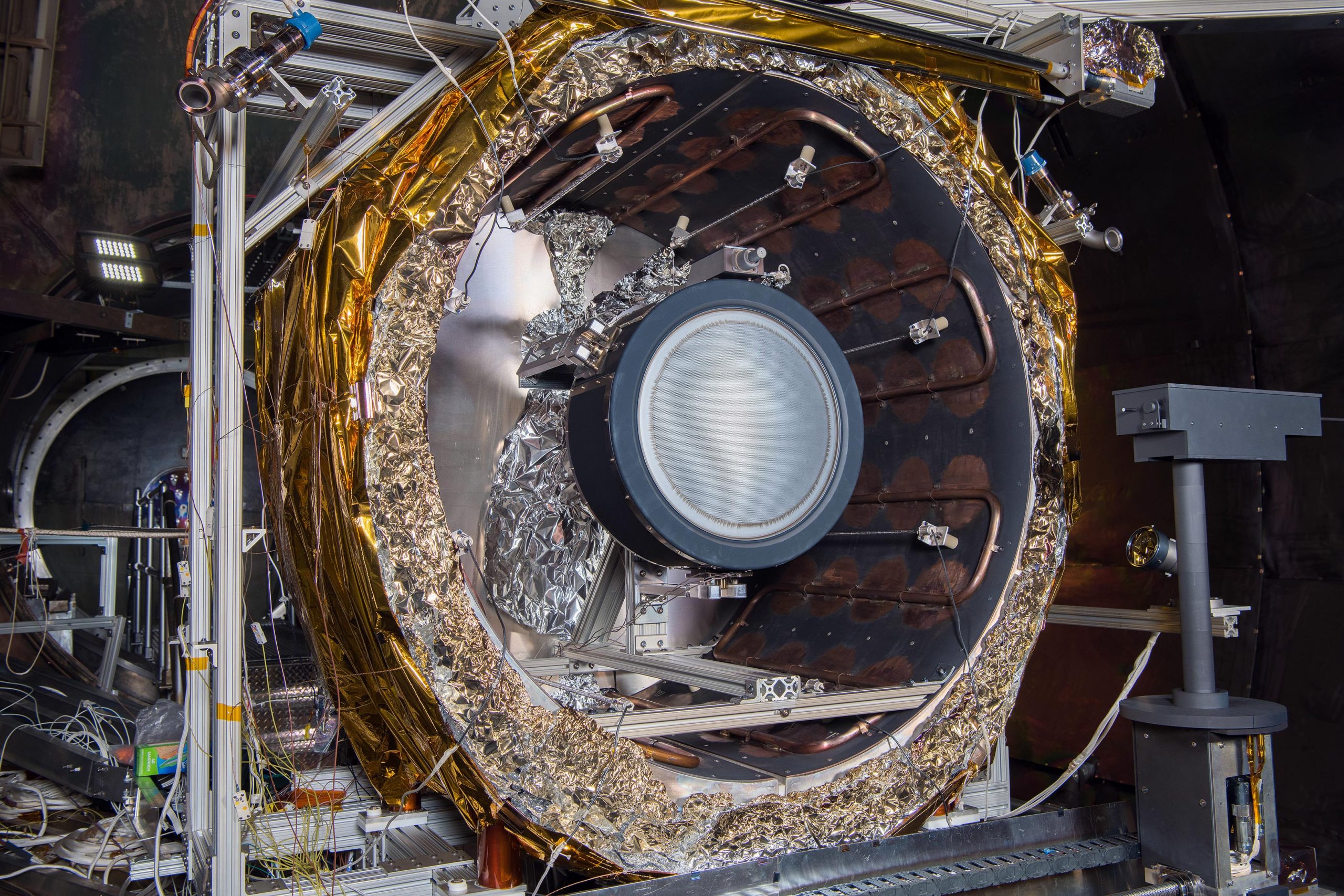
After undergoing a series of performance and environmental tests, NASA’s Evolutionary Xenon Thruster – Commercial (NEXT-C) is being prepared for the Double Asteroid Redirection Test (DART) Mission, which will launch next year.
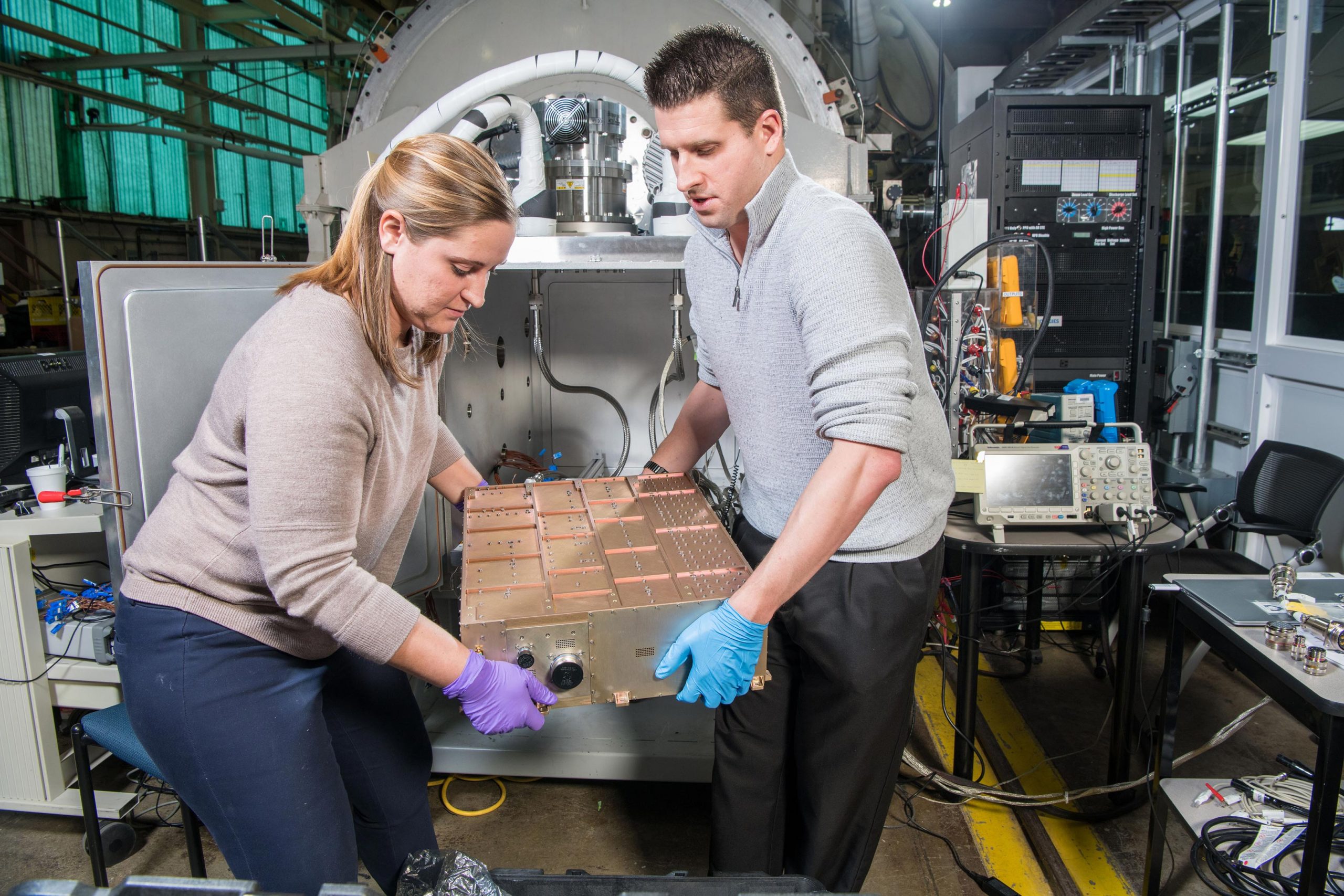
In the past few months, the thruster, developed at NASA’s Glenn Research Center in Cleveland and designed and built by Aerojet Rocketdyne, was put through vibration, thermal vacuum and performance tests and then integrated with its power processing unit. The environmental testing verified that NEXT-C could withstand the extreme launch vibrations and temperatures of spaceflight.
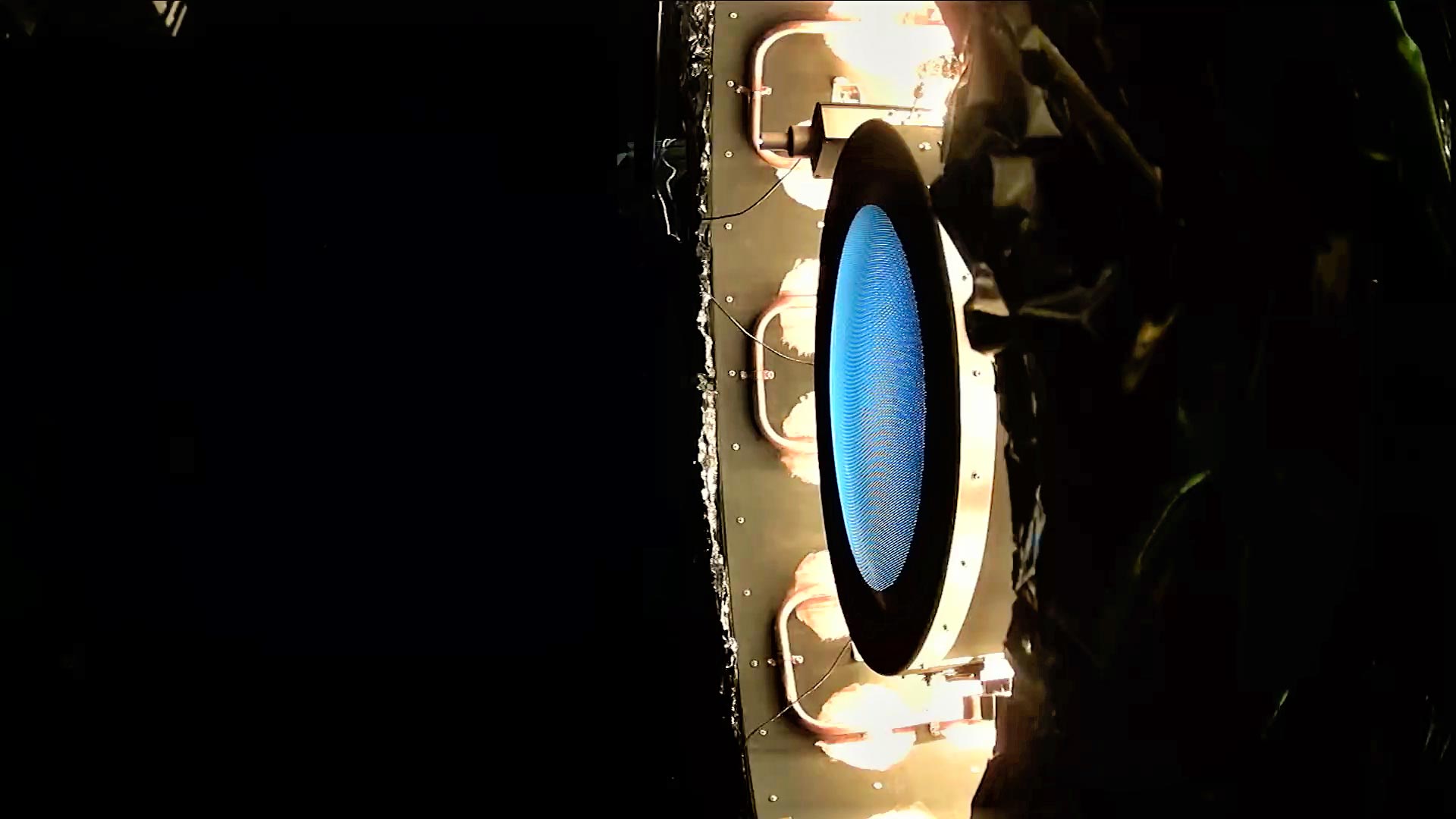
DART will be the first space mission to demonstrate asteroid deflection by kinetic impact, a technique that could prevent a hazardous asteroid from impacting Earth by changing the motion of the asteroid in space. NEXT-C’s propulsion system will be tested on that mission, along with several other technologies.
When the propulsion system is successfully demonstrated on DART, NEXT-C will be considered on a variety of 10 to 15 year-long, uncrewed missions that could include going to other asteroids, comets or planets such as Venus.
Never miss a breakthrough: Join the SciTechDaily newsletter.
Follow us on Google and Google News.
3 Comments
Unfortunately, “imitation of ebullient activity” for the development and testing of asteroid deflection methods is continued…
With accounting of the results of computer simulations (see, for example: Deflecting by kinetic impact: sensitivity to asteroid properties, Bruck Syal, Megan; Michael Owen, J.; Miller, Paul L. Icarus, Volume 269, p. 50-61, 2016), I can agree with numerous doubts about the expected effectiveness of the impact approach to asteroid deflection. Moreover, the “porosity of very loose aggregates” of all NEAs (through and through!) is not at all the “monolith porosity” used in the model. The detailed photos and probe impacting of asteroids Bennu and Ryugu revealed and confirmed their natural rubble-pile properties. Such an internal structure will completely prevent shock wave propagation and proper impulse transfer. The low-velocity ejection of asteroid material will most likely also not lead to a sufficient push for the same reasons – it will require escaping of many thousands of tons to achieve it. By the way, it seems strange the lack of preliminary conducting much cheaper laboratory/field experimental tests with compliance of the scale of masses and velocities. For example, a bullet shot at a very large “bag” with stones of various sizes and interferometric measurements of its possible displacement. Therefore it is unlikely that the kinetic impact will work being neither effective nor scalable even to asteroids capable of country-wide destruction.
As of now, based on system analysis, it is clear that asteroid ablation using highly concentrated sunlight is the only method that meets all of the following criteria: scalability up to global-threat sizes and any type of hazardous bodies as well as low cost and environmental friendliness. This method converts the asteroid to a “natural rocket”, providing more than enough thrust without fuel and energy concerns.
An improved concept for such solar-based deflection using an innovative solar collector was proposed and substantiated back in 2013 – see https://link.springer.com/article/10.1007%2Fs11038-012-9410-2
and also a short demo-video
https://www.youtube.com/watch?v=9u7V-MVeXtM
I hate sport and sporting metaphors but in this case….. I hope the “goalie” doesn’t help the asteroid score a goal rather than deflect it away.
Why do you persist in the view of being cutting edge science information, when your website is happy to be subsidised by the blatantly criminal activities of scam artists, like the one I just saw about Hemsworth advertising a bitcoin investment scheme. It’s a lie, look it up- it’s on the internet. If I know they’re ripping people off, then obviously you do too. Ask all the scientists in your stories what they they think about that.. Obviously you’ll be publishing this email.. no?