
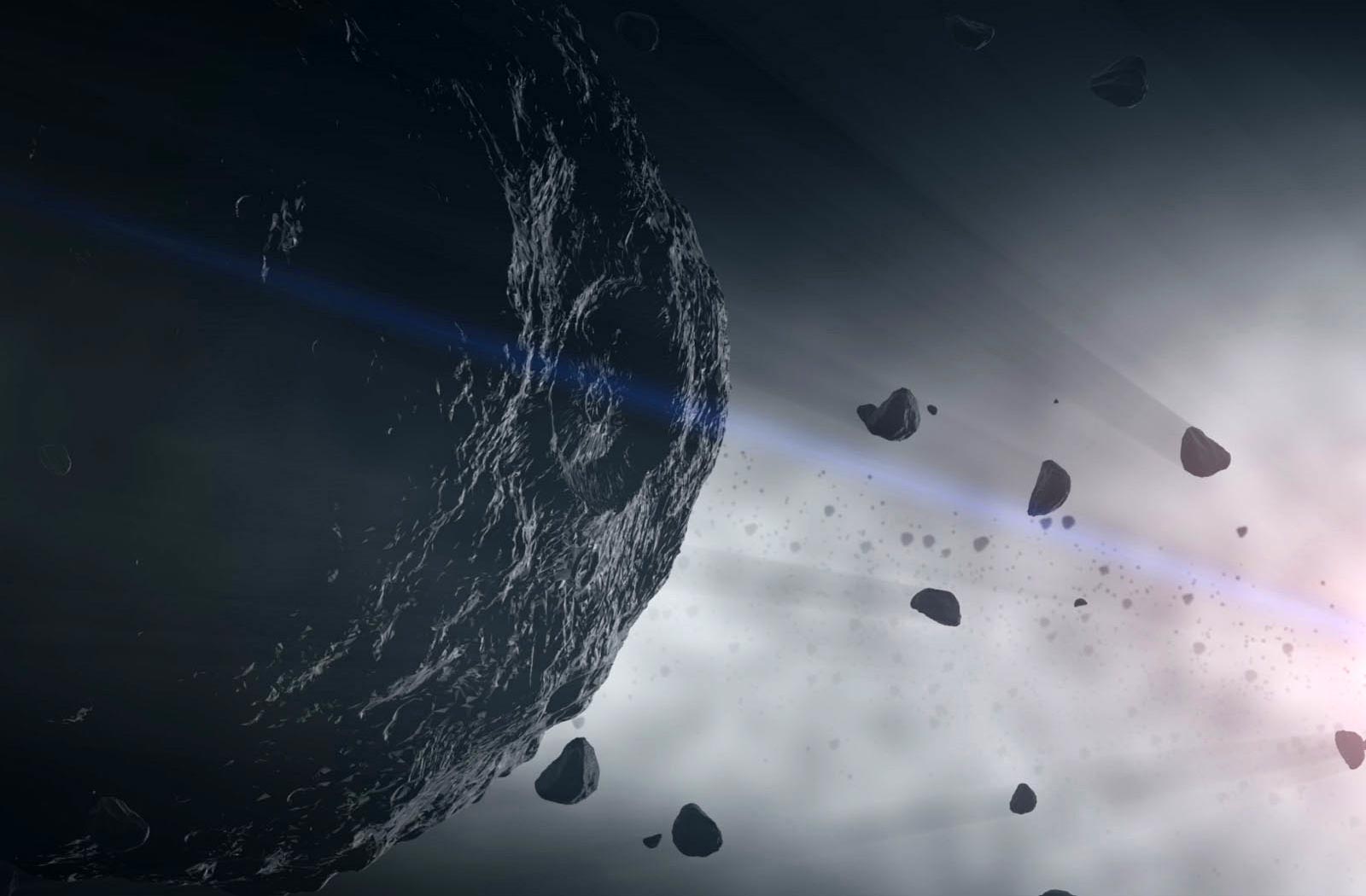
The DART mission demonstrated that kinetic impactor technology effectively alters asteroid trajectories.
Since NASA’s Double Asteroid Redirection Test (DART) successfully impacted its target nearly five months ago, on September 26 — altering the orbit of the asteroid moonlet Dimorphos by 33 minutes — the DART team has been hard at work analyzing the data collected from the world’s first planetary defense test mission.
The DART mission employed an asteroid-deflection technique known as a “kinetic impactor,” which in simplest terms means smashing a thing into another thing — in this case, a spacecraft into an asteroid. From the data, the DART investigation team, led by the Johns Hopkins Applied Physics Laboratory (APL) in Laurel, Maryland, found that a kinetic impactor mission like DART can be effective in changing the trajectory of an asteroid, a big step toward the goal of preventing future asteroid strikes on Earth. These findings were published in four papers in the journal Nature.
“I cheered when DART slammed head-on into the asteroid for the world’s first planetary defense technology demonstration, and that was just the start,” said Nicola Fox, associate administrator for the Science Mission Directorate at NASA Headquarters in Washington. “These findings add to our fundamental understanding of asteroids and build a foundation for how humanity can defend Earth from a potentially hazardous asteroid by altering its course.”
The first paper[1] reports DART’s successful demonstration of kinetic impactor technology in detail: reconstructing the impact itself, reporting the timeline leading up to impact, specifying in detail the location and nature of the impact site, and recording the size and shape of Dimorphos.
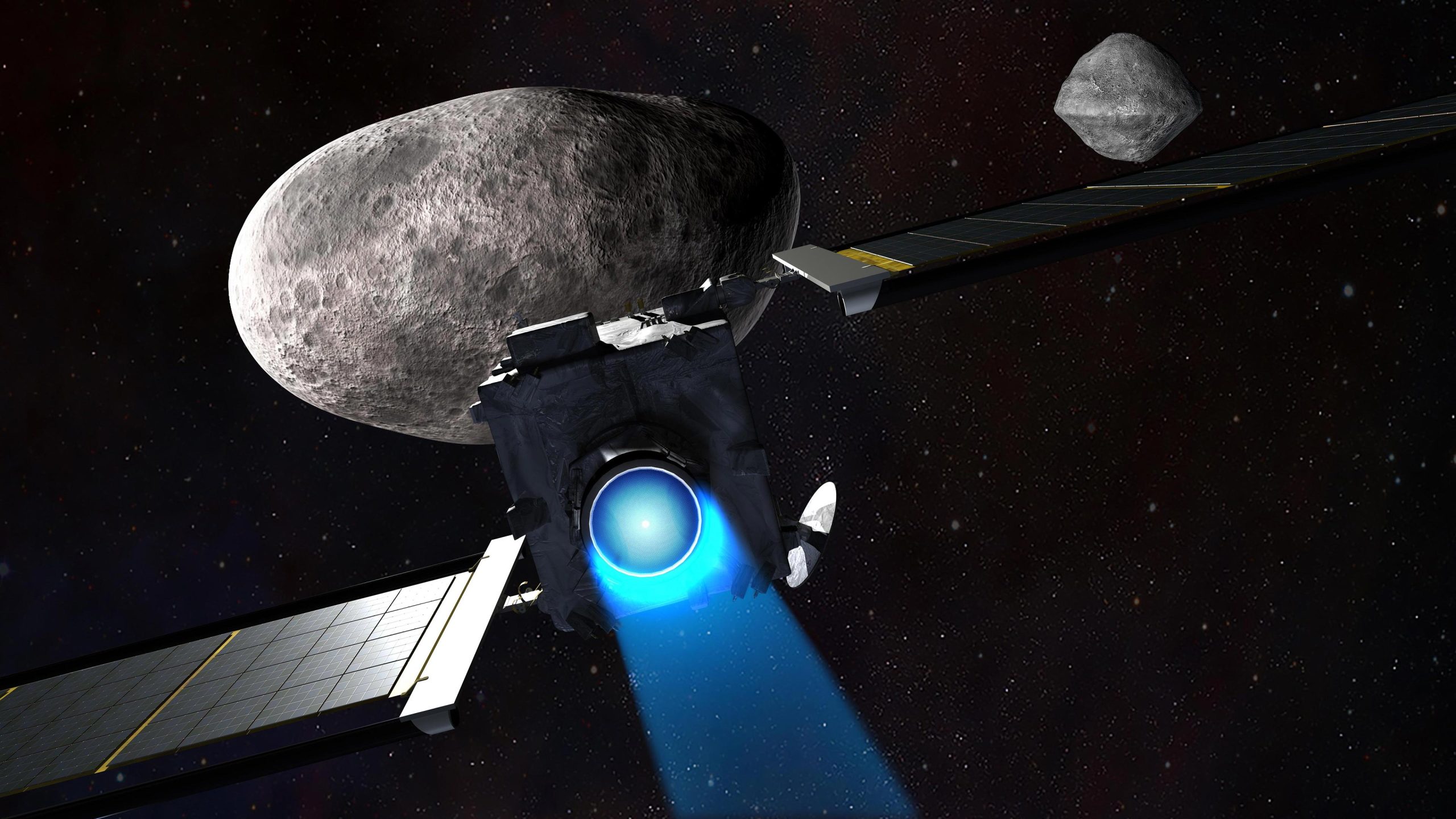
The authors, led by Terik Daly, Carolyn Ernst, and Olivier Barnouin of APL, note DART’s successful autonomous targeting of a small asteroid, with limited prior observations, is a critical first step on the path to developing kinetic impactor technology as a viable operational capability for planetary defense.
Their findings show intercepting an asteroid with a diameter of around half a mile, such as Dimorphos, can be achieved without an advance reconnaissance mission, though advance reconnaissance would give valuable information for planning and predicting the outcome. What is necessary is sufficient warning time — several years at a minimum, but preferably decades. “Nevertheless,” the authors state in the paper, DART’s success “builds optimism about humanity’s capacity to protect the Earth from an asteroid threat.”
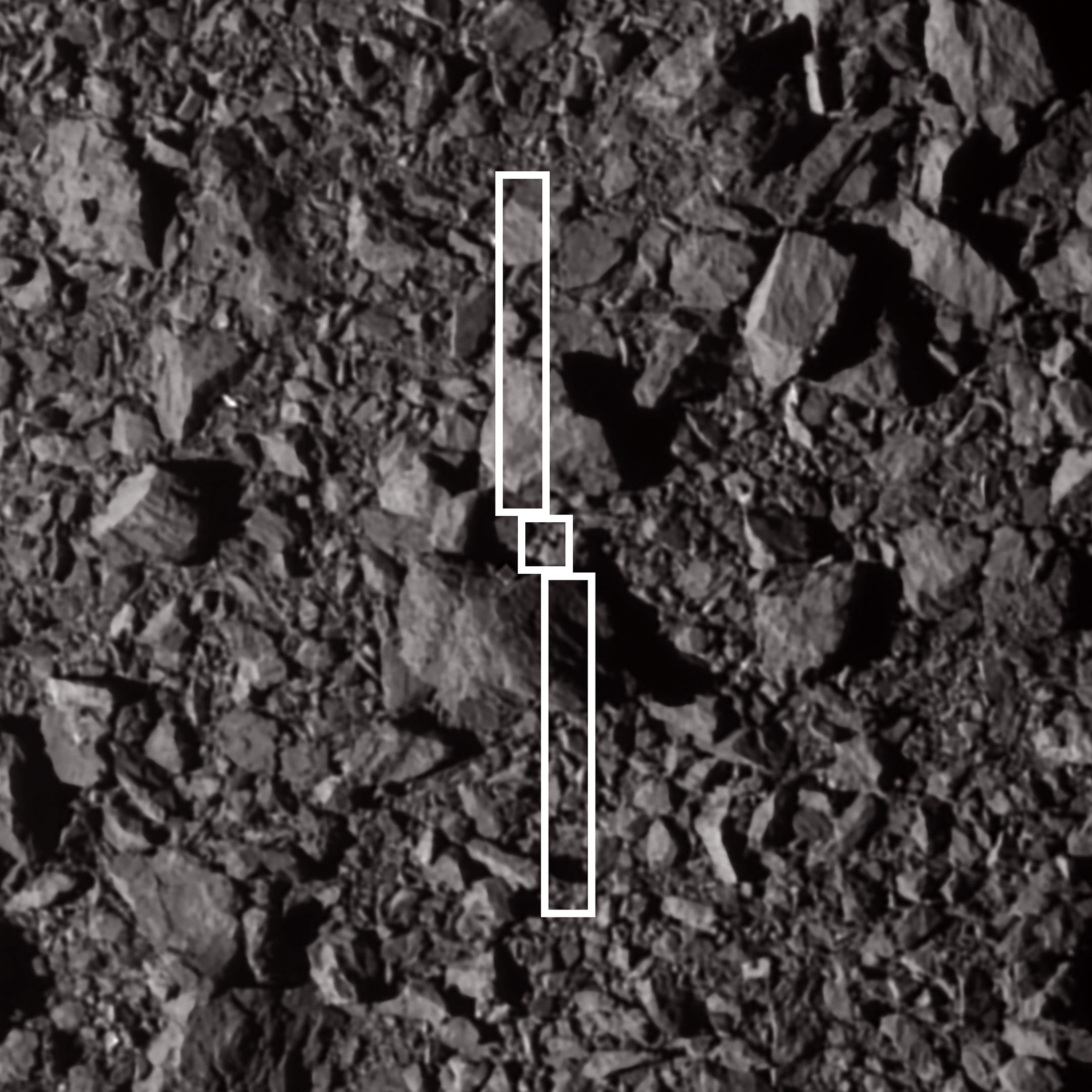
The second paper[2] uses two independent approaches based on Earth-based lightcurve and radar observations. The investigation team, led by Cristina Thomas of Northern Arizona University, arrived at two consistent measurements of the period change from the kinetic impact: 33 minutes, plus or minus one minute. This large change indicates the recoil from material excavated from the asteroid and ejected into space by the impact (known as ejecta) contributed significant momentum change to the asteroid, beyond that of the DART spacecraft itself.
The key to kinetic impact is that the push to the asteroid comes not only from colliding spacecraft, but also from this ejecta recoil. The authors conclude: “To serve as a proof-of-concept for the kinetic impactor technique of planetary defense, DART needed to demonstrate that an asteroid could be targeted during a high-speed encounter and that the target’s orbit could be changed. DART has successfully done both.”
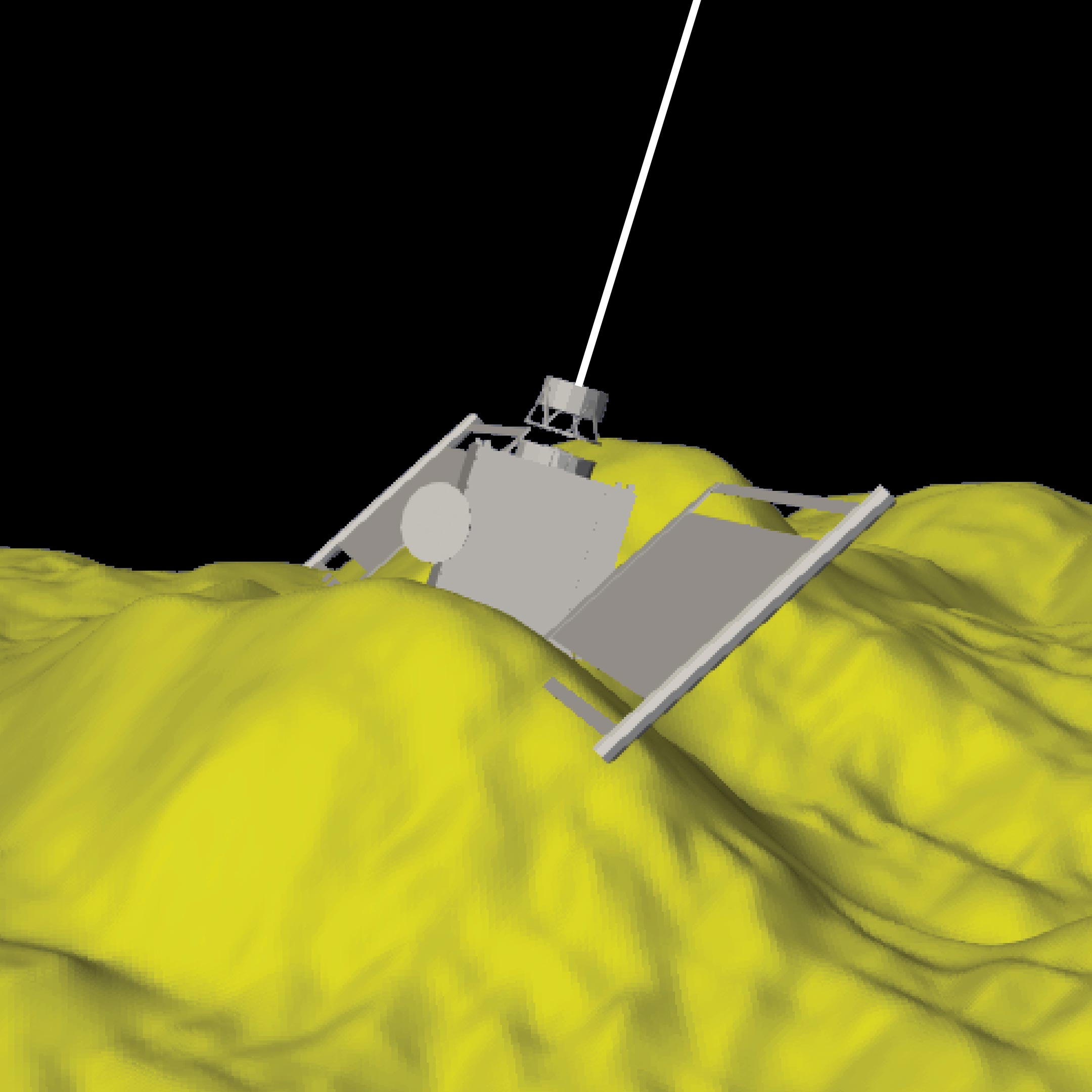
In the third paper,[3] the investigation team, led by Andrew Cheng of APL, calculated the momentum change transferred to the asteroid as a result of DART’s kinetic impact by studying the change in the orbital period of Dimorphos. They found the impact caused an instantaneous slowing in Dimorphos’ speed along its orbit of about 2.7 millimeters per second — again indicating the recoil from ejecta played a major role in amplifying the momentum change directly imparted to the asteroid by the spacecraft. That momentum change was amplified by a factor of 2.2 to 4.9 (depending on the mass of Dimorphos), indicating the momentum change transferred because of ejecta production significantly exceeded the momentum change from the DART spacecraft alone.
This finding “[validates] the effectiveness of kinetic impact for preventing future asteroid strikes on the Earth,” the authors conclude.
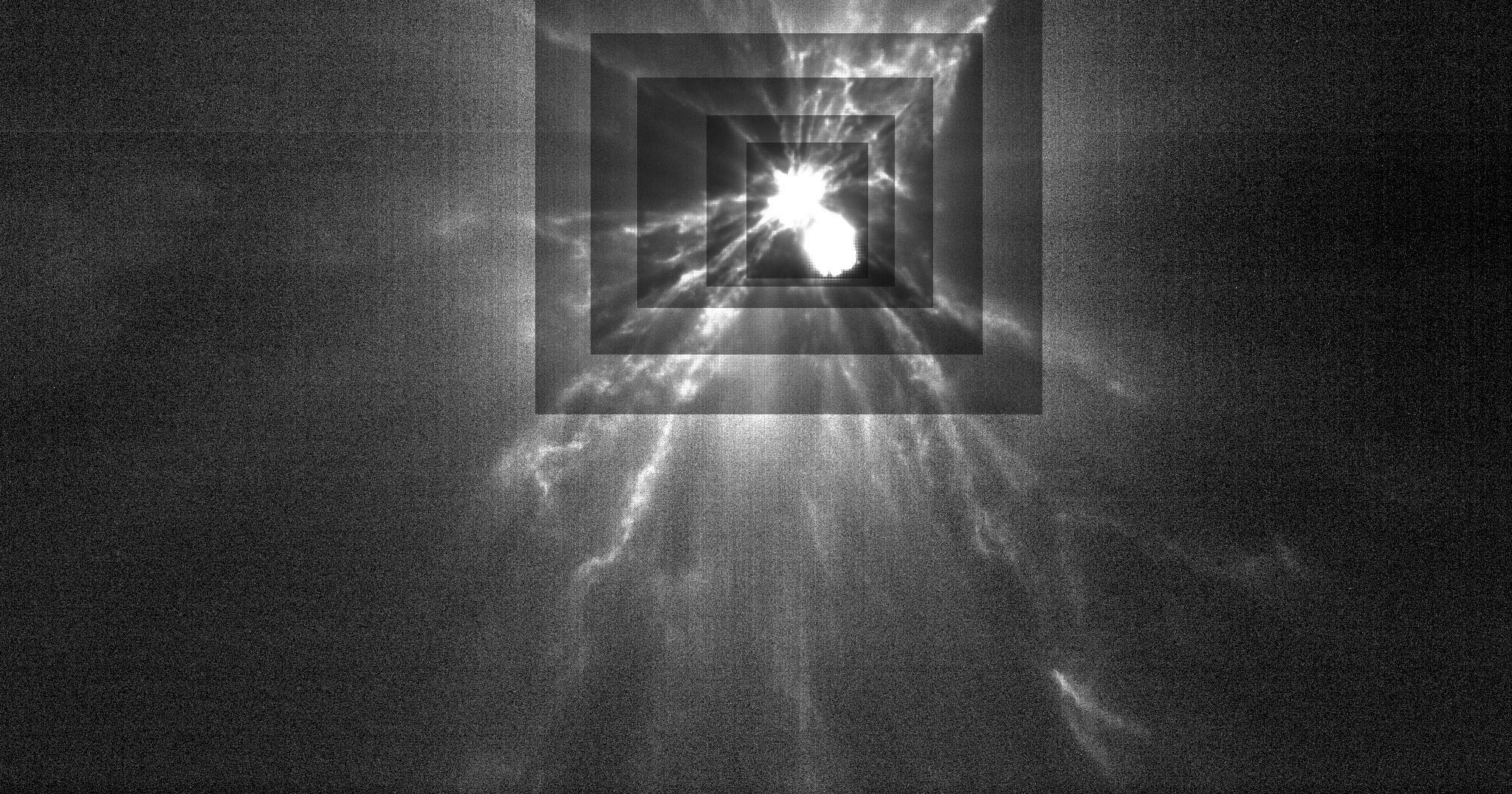
DART’s scientific value goes beyond validating kinetic impactor as a means of planetary defense. By smashing into Dimorphos, the mission has broken new ground in the study of asteroids. DART’s impact made Dimorphos an “active asteroid” — a space rock that orbits like an asteroid but has a tail of material like a comet – which is detailed in the fourth paper led by Jian-Yang Li of the Planetary Science Institute.
Although scientists had proposed that some active asteroids are the result of impact events, until now no one had ever observed the activation of an asteroid. The DART mission activated Dimorphos under precisely known and carefully observed impact conditions,[4] enabling the detailed study of the formation of an active asteroid for the first time.
“DART, as a controlled, planetary-scale impact experiment, provides a detailed characterization of the target, the ejecta morphology, and the entire ejecta evolution process,” the authors write. “DART will continue to be the model for studies of newly discovered asteroids that show activity caused by natural impacts.”
DART’s Legacy Begins
“We are so proud of the DART team and the investigation’s latest results,” said Jason Kalirai, Civil Space Mission Area Executive at APL. “With the core analysis activities starting after the impact of Dimorphos, the results demonstrate how successful the kinetic impactor technique can be — paving the way for a bright future for planetary defense.”
References:
- “Successful Kinetic Impact into an Asteroid for Planetary Defense” by R. Terik Daly, Carolyn M. Ernst, Olivier S. Barnouin, Nancy L. Chabot, Andrew S. Rivkin, Andrew F. Cheng, Elena Y. Adams, Harrison F. Agrusa, Elisabeth D. Abel, Amy L. Alford, Erik I. Asphaug, Justin A. Atchison, Andrew R. Badger, Paul Baki, Ronald-L. Ballouz, Dmitriy L. Bekker, Julie Bellerose, Shyam Bhaskaran, Bonnie J. Buratti, Saverio Cambioni, Michelle H. Chen, Steven R. Chesley, George Chiu, Gareth S. Collins, Matthew W. Cox, Mallory E. DeCoster, Peter S. Ericksen, Raymond C. Espiritu, Alan S. Faber, Tony L. Farnham, Fabio Ferrari, Zachary J. Fletcher, Robert W. Gaskell, Dawn M. Graninger, Musad A. Haque, Patricia A. Harrington-Duff, Sarah Hefter, Isabel Herreros, Masatoshi Hirabayashi, Philip M. Huang, Syau-Yun W. Hsieh, Seth A. Jacobson, Stephen N. Jenkins, Mark A. Jensenius, Jeremy W. John, Martin Jutzi, Tomas Kohout, Timothy O. Krueger, Frank E. Laipert, Norberto R. Lopez, Robert Luther, Alice Lucchetti, Declan M. Mages, Simone Marchi, Anna C. Martin, Maria E. McQuaide, Patrick Michel, Nicholas A. Moskovitz, Ian W. Murphy, Naomi Murdoch, Shantanu P. Naidu, Hari Nair, Michael C. Nolan, Jens Ormö, Maurizio Pajola, Eric E. Palmer, James M. Peachey, Petr Pravec, Sabina D. Raducan, K. T. Ramesh, Joshua R. Ramirez, Edward L. Reynolds, Joshua E. Richman, Colas Q. Robin, Luis M. Rodriguez, Lew M. Roufberg, Brian P. Rush, Carolyn A. Sawyer, Daniel J. Scheeres, Petr Scheirich, Stephen R. Schwartz, Matthew P. Shannon, Brett N. Shapiro, Caitlin E. Shearer, Evan J. Smith, R. Joshua Steele, Jordan K. Steckloff, Angela M. Stickle, Jessica M. Sunshine, Emil A. Superfin, Zahi B. Tarzi, Cristina A. Thomas, Justin R. Thomas, Josep M. Trigo-Rodríguez, B. Teresa Tropf, Andrew T. Vaughan, Dianna Velez, C. Dany Waller, Daniel S. Wilson, Kristin A. Wortman and Yun Zhang, 1 March 2023, Nature.
DOI: 10.1038/s41586-023-05810-5 - “Orbital Period Change of Dimorphos Due to the DART Kinetic Impact” by Cristina A. Thomas, Shantanu P. Naidu, Peter Scheirich, Nicholas A. Moskovitz, Petr Pravec, Steven R. Chesley, Andrew S. Rivkin, David J. Osip, Tim A. Lister, Lance A. M. Benner, Marina Brozović, Carlos Contreras, Nidia Morrell, Agata Rożek, Peter Kušnirák, Kamil Hornoch, Declan Mages, Patrick A. Taylor, Andrew D. Seymour, Colin Snodgrass, Uffe G. Jørgensen, Martin Dominik, Brian Skiff, Tom Polakis, Matthew M. Knight, Tony L. Farnham, Jon D. Giorgini, Brian Rush, Julie Bellerose, Pedro Salas, William P. Armentrout, Galen Watts, Michael W. Busch, Joseph Chatelain, Edward Gomez, Sarah Greenstreet, Liz Phillips, Mariangela Bonavita, Martin J. Burgdorf, Elahe Khalouei, Penélope Longa-Peña, Markus Rabus, Sedighe Sajadian, Nancy L. Chabot, Andrew F. Cheng, William H. Ryan, Eileen V. Ryan, Carrie E. Holt and Harrison F. Agrusa, 1 March 2023, Nature.
DOI: 10.1038/s41586-023-05805-2 - “Momentum Transfer from the DART Mission Kinetic Impact on Asteroid Dimorphos” by Andrew F. Cheng, Harrison F. Agrusa, Brent W. Barbee, Alex J. Meyer, Tony L. Farnham, Sabina D. Raducan, Derek C. Richardson, Elisabetta Dotto, Angelo Zinzi, Vincenzo Della Corte, Thomas S. Statler, Steven Chesley, Shantanu P. Naidu, Masatoshi Hirabayashi, Jian-Yang Li, Siegfried Eggl, Olivier S. Barnouin, Nancy L. Chabot, Sidney Chocron, Gareth S. Collins, R. Terik Daly, Thomas M. Davison, Mallory E. DeCoster, Carolyn M. Ernst, Fabio Ferrari, Dawn M. Graninger, Seth A. Jacobson, Martin Jutzi, Kathryn M. Kumamoto, Robert Luther, Joshua R. Lyzhoft, Patrick Michel, Naomi Murdoch, Ryota Nakano, Eric Palmer, Andrew S. Rivkin, Daniel J. Scheeres, Angela M. Stickle, Jessica M. Sunshine, Josep M. Trigo-Rodriguez, Jean-Baptiste Vincent, James D. Walker, Kai Wünnemann, Yun Zhang, Marilena Amoroso, Ivano Bertini, John R. Brucato, Andrea Capannolo, Gabriele Cremonese, Massimo Dall’Ora, Prasanna J. D. Deshapriya, Igor Gai, Pedro H. Hasselmann, Simone Ieva, Gabriele Impresario, Stavro L. Ivanovski, Michèle Lavagna, Alice Lucchetti, Elena M. Epifani, Dario Modenini, Maurizio Pajola, Pasquale Palumbo, Davide Perna, Simone Pirrotta, Giovanni Poggiali, Alessandro Rossi, Paolo Tortora, Marco Zannoni and Giovanni Zanotti, 1 March 2023, Nature.
DOI: 10.1038/s41586-023-05878-z - “Ejecta from the DART-produced active asteroid Dimorphos” by Jian-Yang Li, Masatoshi Hirabayashi, Tony L. Farnham, Jessica M. Sunshine, Matthew M. Knight, Gonzalo Tancredi, Fernando Moreno, Brian Murphy, Cyrielle Opitom, Steve Chesley, Daniel J. Scheeres, Cristina A. Thomas, Eugene G. Fahnestock, Andrew F. Cheng, Linda Dressel, Carolyn M. Ernst, Fabio Ferrari, Alan Fitzsimmons, Simone Ieva, Stavro L. Ivanovski, Teddy Kareta, Ludmilla Kolokolova, Tim Lister, Sabina D. Raducan, Andrew S. Rivkin, Alessandro Rossi, Stefania Soldini, Angela M. Stickle, Alison Vick, Jean-Baptiste Vincent, Harold A. Weaver, Stefano Bagnulo, Michele T. Bannister, Saverio Cambioni, Adriano Campo Bagatin, Nancy L. Chabot, Gabriele Cremonese, R. Terik Daly, Elisabetta Dotto, David A. Glenar, Mikael Granvik, Pedro H. Hasselmann, Isabel Herreros, Seth Jacobson, Martin Jutzi, Tomas Kohout, Fiorangela La Forgia, Monica Lazzarin, Zhong-Yi Lin, Ramin Lolachi, Alice Lucchetti, Rahil Makadia, Elena Mazzotta Epifani, Patrick Michel, Alessandra Migliorini, Nicholas A. Moskovitz, Jens Ormö, Maurizio Pajola, Paul Sánchez, Stephen R. Schwartz, Colin Snodgrass, Jordan Steckloff, Timothy J. Stubbs and Josep M. Trigo-Rodríguez, 1 March 2023, Nature.
DOI: 10.1038/s41586-023-05811-4
Johns Hopkins APL manages the DART mission for NASA’s Planetary Defense Coordination Office as a project of the agency’s Planetary Missions Program Office. The LICIACube project is managed by ASI Robotic Exploration Mission Office, with industrial contractor Argotec S.r.I. and a scientific team from the National Institute of Astrophysics, Polytechnic University of Milan, the University of Bologna, the University of Naples Parthenope, and CNR-IFAC.
Never miss a breakthrough: Join the SciTechDaily newsletter.
Follow us on Google and Google News.
3 Comments
The United States has gained and deserves humanity’s applause and esteem. This news is incredible and it touches one’s heartstrings!!Bravo again America!!
Way to go NASA. Read the “stars” book series (e.g. Falling Stars by Michael Flynn) and see how close Flynn’s stories were to the real thing.
News this old is not even News.