
Close Menu
    Facebook X (Twitter) Instagram
    SciTechDaily
    • Biology
    • Chemistry
    • Earth
    • Health
    • Physics
    • Science
    • Space
    • Technology
    Facebook X (Twitter) Pinterest YouTube RSS
    SciTechDaily
    Home»Space»NASA Releases List of Stunning Cosmic Targets for Webb Telescope’s First Images
    Space

    NASA Releases List of Stunning Cosmic Targets for Webb Telescope’s First Images

    By Thaddeus Cesari, NASA’s Goddard Space Flight CenterJuly 10, 20221 Comment3 Mins Read
    Facebook Twitter Pinterest Telegram LinkedIn WhatsApp Email Reddit
    Share
    Facebook Twitter LinkedIn Pinterest Telegram Email Reddit
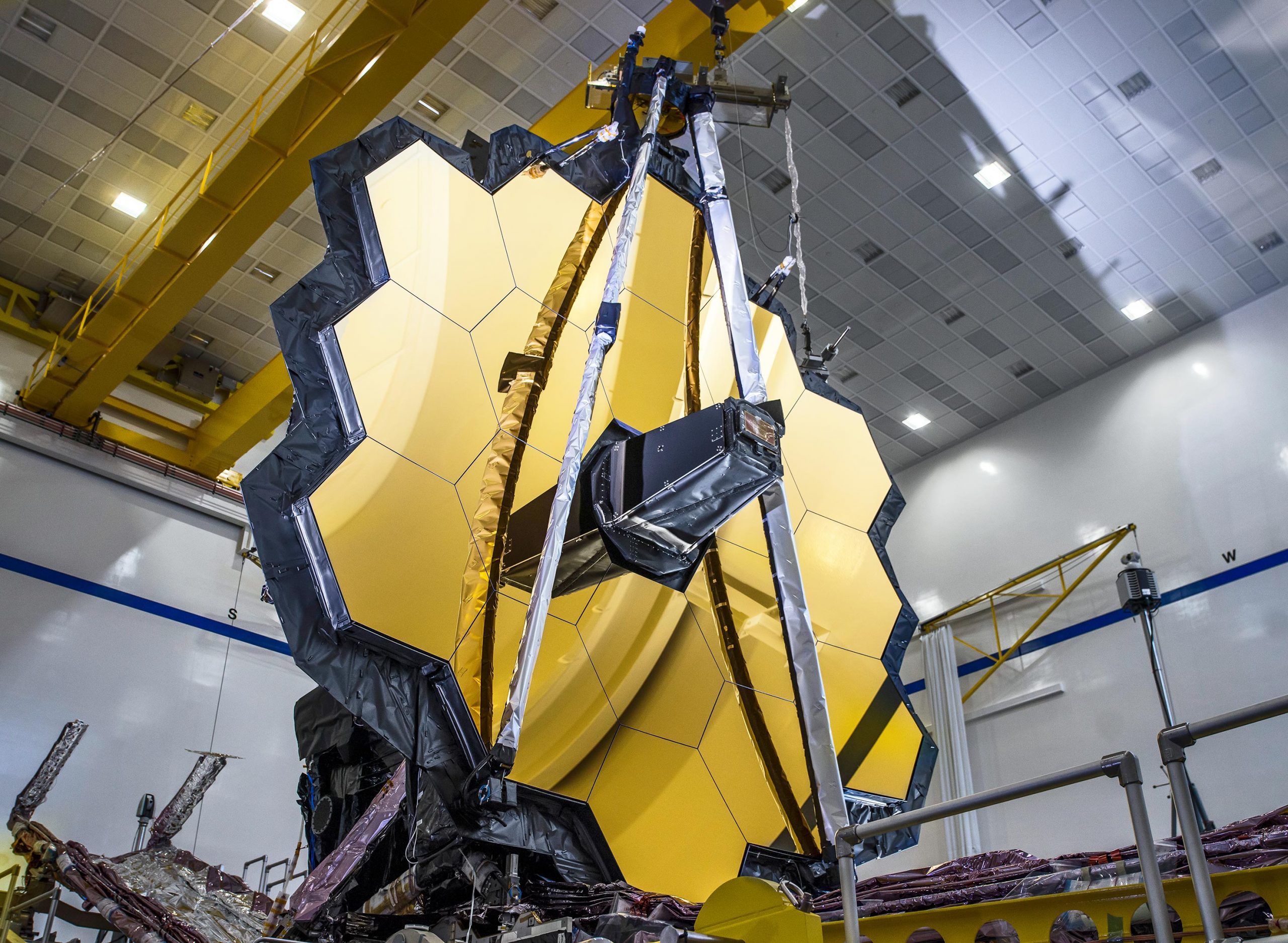
    James Webb Space Telescope Mirror Deployed
    NASA’s James Webb Space Telescope fully deployed its primary mirror into the same configuration it will have when in space during a deployment test in March of 2020. Credit: NASA/Chris Gunn

    NASA’s James Webb Space Telescope will soon reveal unprecedented and detailed views of the universe, with the upcoming release of its first full-color images and spectroscopic data. For a hint at the incredible views, see the preview from Webb’s Fine Guidance Sensor.

    Below is the list of cosmic objects that Webb targeted for these first observations, which will be released in NASA’s live broadcast beginning at 10:30 a.m. EDT (7:30 a.m. PDT) Tuesday, July 12. Each image will simultaneously be made available on social media as well as on the agency’s website. Webb is a partnership with ESA (European Space Agency) and CSA (Canadian Space Agency).

    These targets listed below represent the first wave of full-color scientific images and spectra the observatory has gathered and the official beginning of Webb’s general science operations. They were selected by an international committee of representatives from NASA, ESA, CSA, and the Space Telescope Science Institute.
    Mystic Mountain Carina Nebula
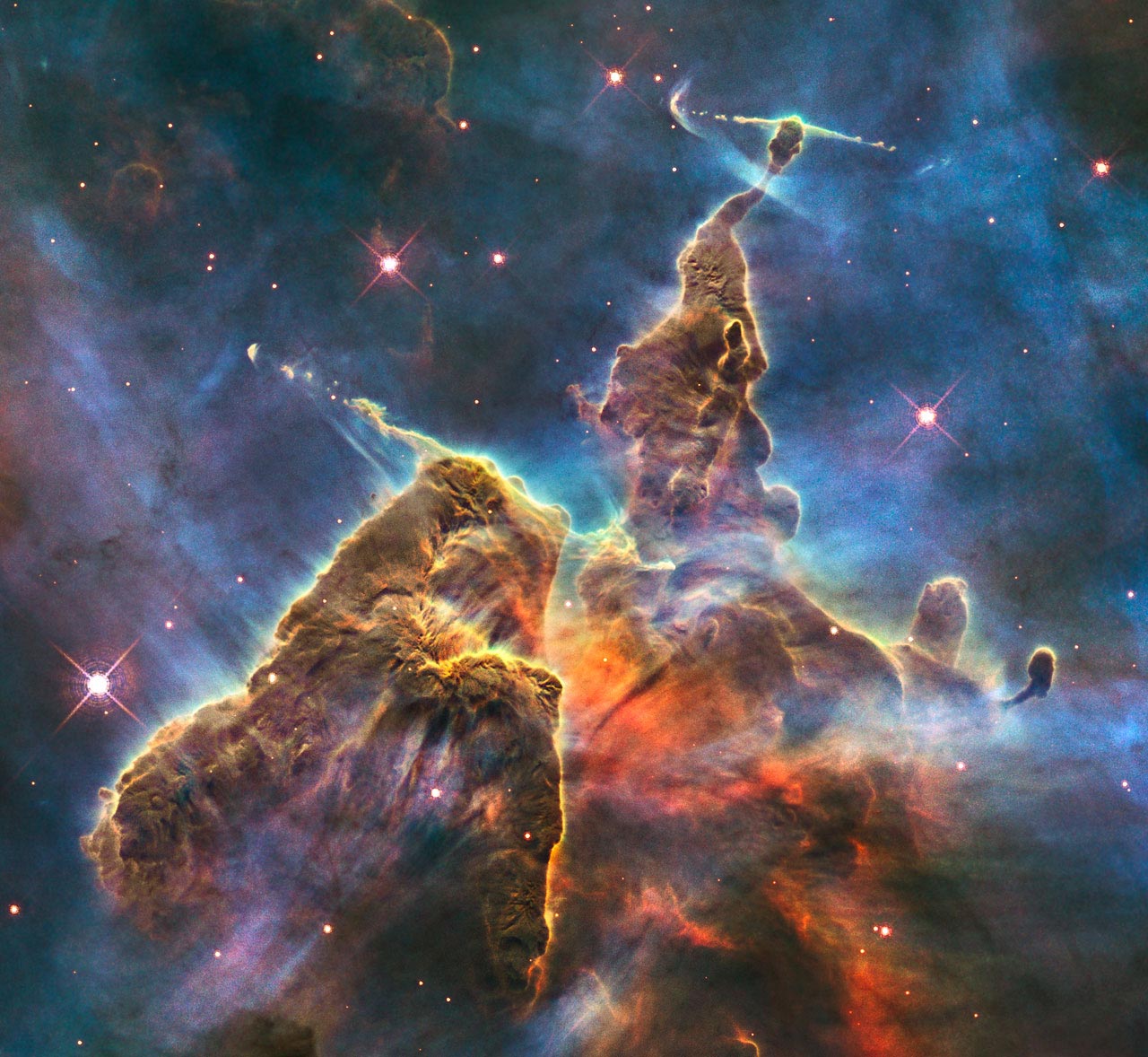
    Hubble Space Telescope image of a turbulent cosmic pinnacle that lies within a tempestuous stellar nursery called the Carina Nebula, located 7600 light-years away in the southern constellation of Carina. One of Webb’s first released images will feature the Carina Nebula. Credit: NASA, ESA, M. Livio and the Hubble 20th Anniversary Team (STScI)
    • Carina Nebula. Located approximately 7,600 light-years away in the southern constellation Carina, the Carina Nebula is one of the largest and brightest nebulae in the sky. Nebulae are stellar nurseries where stars form. The Carina Nebula is home to many massive stars, several times larger than the Sun.
    • WASP-96 b (spectrum). WASP-96 b is a giant planet outside our solar system, composed mainly of gas. The exoplanet, located nearly 1,150 light-years from Earth, orbits its star every 3.4 days. It has about half the mass of Jupiter, and its discovery was announced in 2014.
    • Southern Ring Nebula. The Southern Ring, or “Eight-Burst” nebula, is a planetary nebula – an expanding cloud of gas, surrounding a dying star. It is located approximately 2,000 light-years away from Earth and is nearly half a light-year in diameter.
     Stephan's Quintet
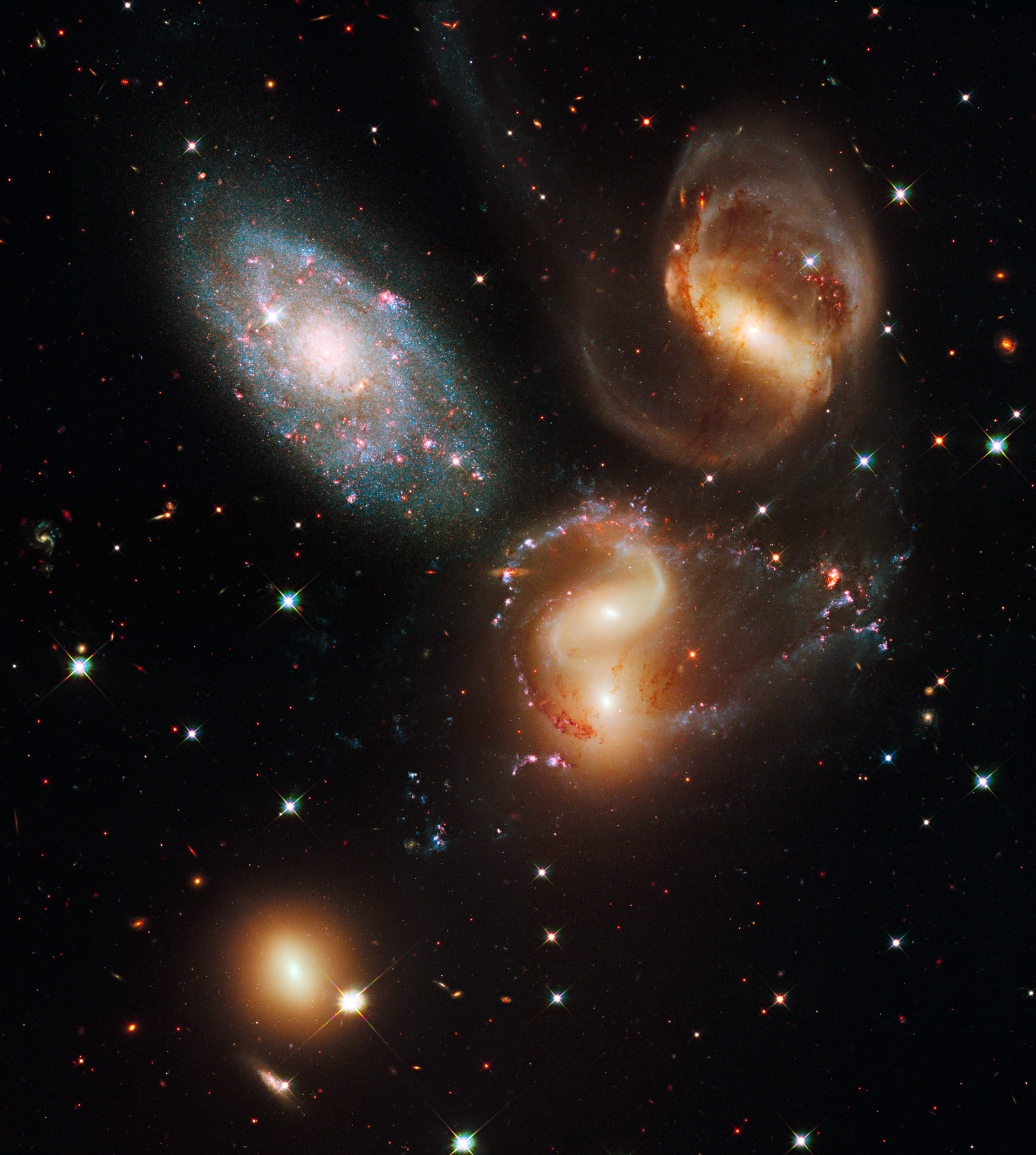
    Hubble Space Telescope image of galaxy group Stephan’s Quintet, which is located in the constellation Pegasus. How will Webb’s view compare? Credit: NASA, ESA, and the Hubble SM4 ERO Team
    • Stephan’s Quintet: About 290 million light-years away, Stephan’s Quintet is located in the constellation Pegasus. It is notable for being the first compact galaxy group ever discovered in 1877. Four of the five galaxies within the quintet are locked in a cosmic dance of repeated close encounters.
    • SMACS 0723: Massive foreground galaxy clusters magnify and distort the light of objects behind them, permitting a deep field view into both the extremely distant and intrinsically faint galaxy populations.

    The release of these first images marks the official beginning of Webb’s science operations, which will continue to explore the mission’s key science themes. Teams have already applied through a competitive process for time to use the telescope, in what astronomers call its first “cycle,” or first year of observations.

    For more about Webb’s status, visit the “Where Is Webb?” tracker.

    The James Webb Space Telescope is the world’s premier space science observatory. Webb will solve mysteries in our solar system, look beyond to distant worlds around other stars, and probe the mysterious structures and origins of our universe and our place in it.

    Never miss a breakthrough: Join the SciTechDaily newsletter.
    Follow us on Google and Google News.

    Astronomy Astrophysics James Webb Space Telescope NASA NASA Goddard Space Flight Center
    Share. Facebook Twitter Pinterest LinkedIn Email Reddit

    Related Articles

    Webb Telescope Uncovers Star Birth Struggles in a Magnetic Maze at the Milky Way’s Core

    Webb Space Telescope Rewrites the Origin Story of the Crab Nebula’s Supernova

    Surprising Cosmic Alignment Unveiled: Webb Telescope Reveals Stunning Stellar Jets in Serpens Nebula

    Webb Explores Cosmic Dawn: Witnessing the First Galaxies Feeding on Cold Gas

    Webb Is a Supernova Discovery Machine: 10x More Supernovae in Early Universe

    Record-Breaking Galactic Discovery: Webb Space Telescope’s Glimpse of Cosmic Dawn

    Webb Space Telescope Cracks Case of Puffy “Microwaved Marshmallow” Exoplanet

    Super-Earth Surprise: Webb Finds Atmosphere on Rocky Exoplanet For the First Time

    Webb Space Telescope Reveals Extreme Starburst Galaxy’s Hidden Secrets

    1 Comment

    1. James Conlon on July 11, 2022 4:15 pm

      Also get the damn big bang dumbasses

      Reply
    Leave A Reply Cancel Reply

    • Facebook
    • Twitter
    • Pinterest
    • YouTube

    Don't Miss a Discovery

    Subscribe for the Latest in Science & Tech!

    Trending News

    What Causes Chronic Pain? Scientists Identify Key Culprit in the Brain

    Semaglutide Shows Surprising Mental Health Benefits in Massive 100,000-Person Study

    This Liquid Snapped Instead of Flowing and Scientists Were Shocked

    Breakthrough Alzheimer’s Drug Rewires the Brain Instead of Just Clearing Plaques

    Scientists Discover Hidden “Footprint of Death” That Could Transform How We Fight Disease

    A Simple Nose Swab Could Detect Alzheimer’s Years Before Symptoms Appear

    Scientists Just Rewrote the Timeline of Complex Life on Earth

    Teenager’s Fossil Find Leads to Discovery of Shark Teeth in 5 Million-Year-Old Whale Skull

    Follow SciTechDaily
    • Facebook
    • Twitter
    • YouTube
    • Pinterest
    • Newsletter
    • RSS
    SciTech News
    • Biology News
    • Chemistry News
    • Earth News
    • Health News
    • Physics News
    • Science News
    • Space News
    • Technology News
    Recent Posts
    • Even “Failed” Diets May Deliver Long-Term Health Gains, Study Finds
    • Childhood Junk Food May Rewire the Brain for Life
    • NIH Scientists Discover Powerful New Opioid That Relieves Pain Without Dangerous Side Effects
    • Breakthrough Study Reveals Why Damaged Nerves Struggle To Heal
    • 20-Year Study Reveals Cholera’s Surprising Weakness
    Copyright © 1998 - 2026 SciTechDaily. All Rights Reserved.
    • Science News
    • About
    • Contact
    • Editorial Board
    • Privacy Policy
    • Terms of Use

    Type above and press Enter to search. Press Esc to cancel.