
Close Menu
    Facebook X (Twitter) Instagram
    SciTechDaily
    • Biology
    • Chemistry
    • Earth
    • Health
    • Physics
    • Science
    • Space
    • Technology
    Facebook X (Twitter) Pinterest YouTube RSS
    SciTechDaily
    Home»Earth»NASA Satellite Captures Stunning Mid-Atlantic Phytoplankton Bloom
    Earth

    NASA Satellite Captures Stunning Mid-Atlantic Phytoplankton Bloom

    By Adam Voiland, NASA Earth ObservatoryMay 20, 20211 Comment2 Mins Read
    Facebook Twitter Pinterest Telegram LinkedIn WhatsApp Email Reddit
    Share
    Facebook Twitter LinkedIn Pinterest Telegram Email Reddit
    Mid-Atlantic Phytoplankton Bloom Annotated
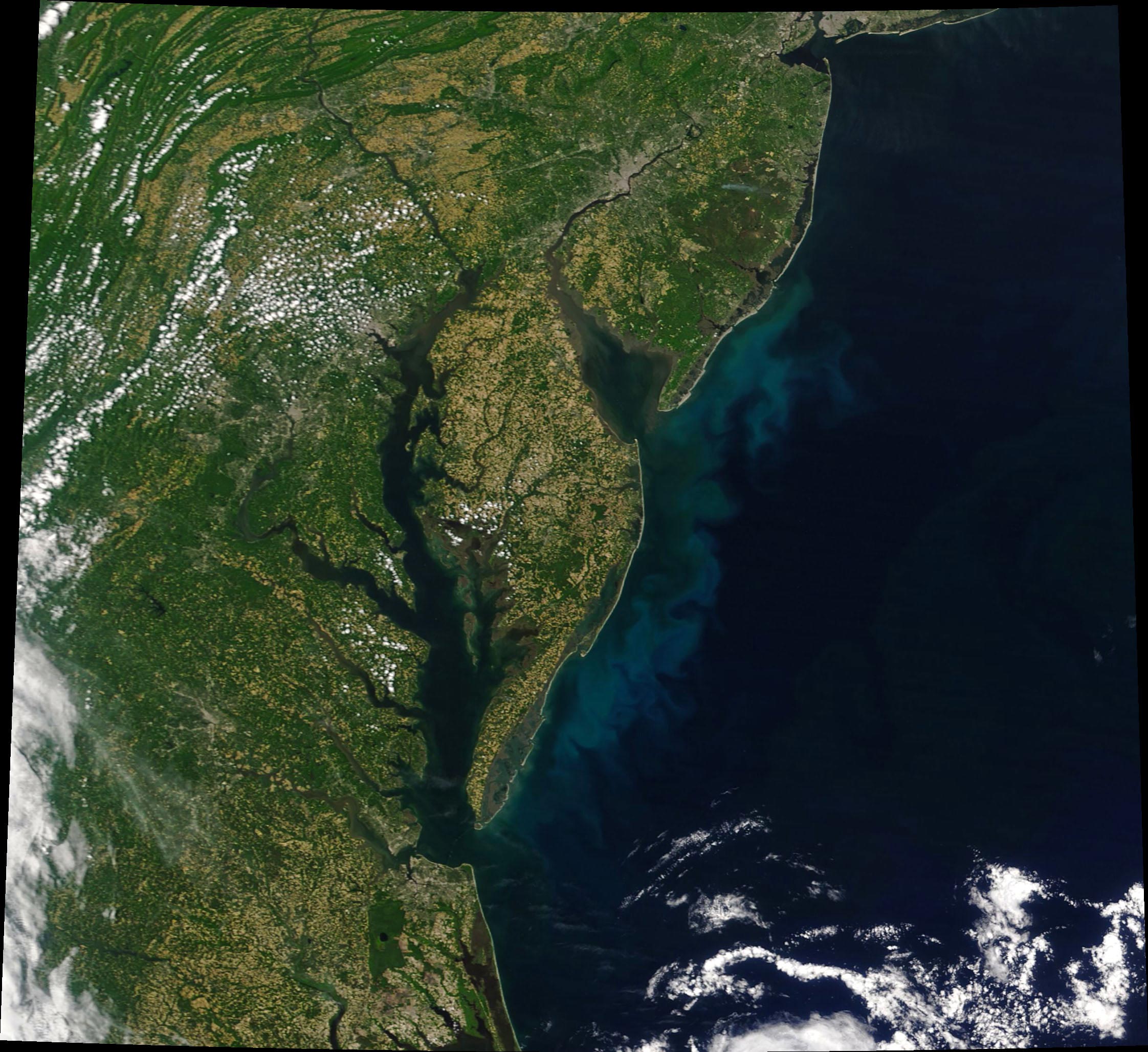
    Mid-Atlantic Phytoplankton Bloom, May 18, 2021. Credit: NASA Earth Observatory image by Joshua Stevens, using MODIS data from NASA EOSDIS LANCE and GIBS/Worldview.

    A May phytoplankton bloom left its mark on Mid-Atlantic waters.

    Given adequate sunlight and nutrients, phytoplankton populations can multiply into blooms large enough to be visible from space. On the morning of May 18, 2021, the Moderate Resolution Imaging Spectroradiometer (MODIS) on NASA’s Terra satellite acquired this natural-color image of a phytoplankton bloom along the coast of New Jersey, Delaware, Maryland, and Virginia.

    Some of the nutrients that fueled the bloom likely came from runoff from the Delaware River watershed. Farms, wastewater treatment plants, urban and suburban areas, and other sources all contribute nutrients that can encourage blooms.

    “It’s always a challenge to be definitive about what MODIS is picking up in the coastal zone. There are a lot of things that provide color to the coastal ocean, including sediment, chromoporhic dissolved organic matter (CDOM), and phytoplankton,” explained Bob Chant, an oceanographer at Rutgers University. “But in this case, it sure looks like we are seeing the Delaware River plume, which contains all three of those elements of color, plus enough nutrients to fuel and sustain large blooms.”

    The Delaware River plume may have also gotten some help from below the waterline. “Winds from the south often drive surface waters offshore due to Earth’s rotation and Ekman Transport,” said Chant. “This often causes nutrient-rich water to well up toward the surface in the summer.”

    The tides likely also contributed to the appearance of this bloom. “The image occurred during a neap tide, a period with more moderate tides when the bay discharges more fresh water and the plume becomes larger,” said Chant.

    On a global scale, phytoplankton are responsible for nearly half of Earth’s primary production, turning carbon dioxide, sunlight, and nutrients into the food that ultimately fuels almost everything in the sea, from finfish to shellfish and from zooplankton to whales.


    Never miss a breakthrough: Join the SciTechDaily newsletter.
    Follow us on Google and Google News.

    NASA NASA Earth Observatory Phytoplankton
    Share. Facebook Twitter Pinterest LinkedIn Email Reddit

    Related Articles

    Toxic Tides: Satellites Capture Lake Erie’s Alarming Transformation

    Stunning Phytoplankton Bloom Stretches for Hundreds of Miles Across the North Atlantic

    Green Menace: Toxic Algae and Environmental Neglect at California’s Clear Lake

    Biological Brilliance: Filaments of Phytoplankton in Australia

    Twists of Nature: Spectacular Swirls in the Sky and Sea Around Norway’s Remote Bear Island

    Blown Away: How Desert Dust Fuels Ocean Life

    Red Tide off Rio – “It Is Very Worrying”

    Spied by Satellite: Phytoplankton Factory in the Argentine Sea

    Beguiling Phytoplankton Bloom in the Baltic Sea Looks Incredible

    1 Comment

    1. Eddy Zszcomy on March 28, 2025 1:02 pm

      A warning to the world.becaus Tunisia get worse

      Reply
    Leave A Reply Cancel Reply

    • Facebook
    • Twitter
    • Pinterest
    • YouTube

    Don't Miss a Discovery

    Subscribe for the Latest in Science & Tech!

    Trending News

    Scientists Uncover Potential Brain Risks of Popular Fish Oil Supplements

    Scientists Discover a Surprising Way To Make Bread Healthier and More Nutritious

    After 60 Years, Scientists Uncover Unexpected Brain Effects of Popular Diabetes Drug Metformin

    New Research Uncovers Hidden Side Effects of Popular Weight-Loss Drugs

    Scientists Rethink Extreme Warming After Surprising Ocean Discovery

    Landmark Study Links Never Marrying to Significantly Higher Cancer Risk

    Researchers Discover Unknown Beetle Species Just Steps From Their Lab

    Largest-Ever Study Finds Medicinal Cannabis Ineffective for Anxiety, Depression, PTSD

    Follow SciTechDaily
    • Facebook
    • Twitter
    • YouTube
    • Pinterest
    • Newsletter
    • RSS
    SciTech News
    • Biology News
    • Chemistry News
    • Earth News
    • Health News
    • Physics News
    • Science News
    • Space News
    • Technology News
    Recent Posts
    • Students Build Dark Matter Detector and Set New Experimental Limits
    • Scientists Discover Caffeine Can Repair Key Memory Circuits After Sleep Loss
    • Strange 65-Foot Dinosaur Discovered in Argentina
    • Researchers Uncover Source of Strange Deformation in Earth’s Largest Continental Rift
    • Scientists Solve Mystery of Where the Colorado River Vanished Millions of Years Ago
    Copyright © 1998 - 2026 SciTechDaily. All Rights Reserved.
    • Science News
    • About
    • Contact
    • Editorial Board
    • Privacy Policy
    • Terms of Use

    Type above and press Enter to search. Press Esc to cancel.