
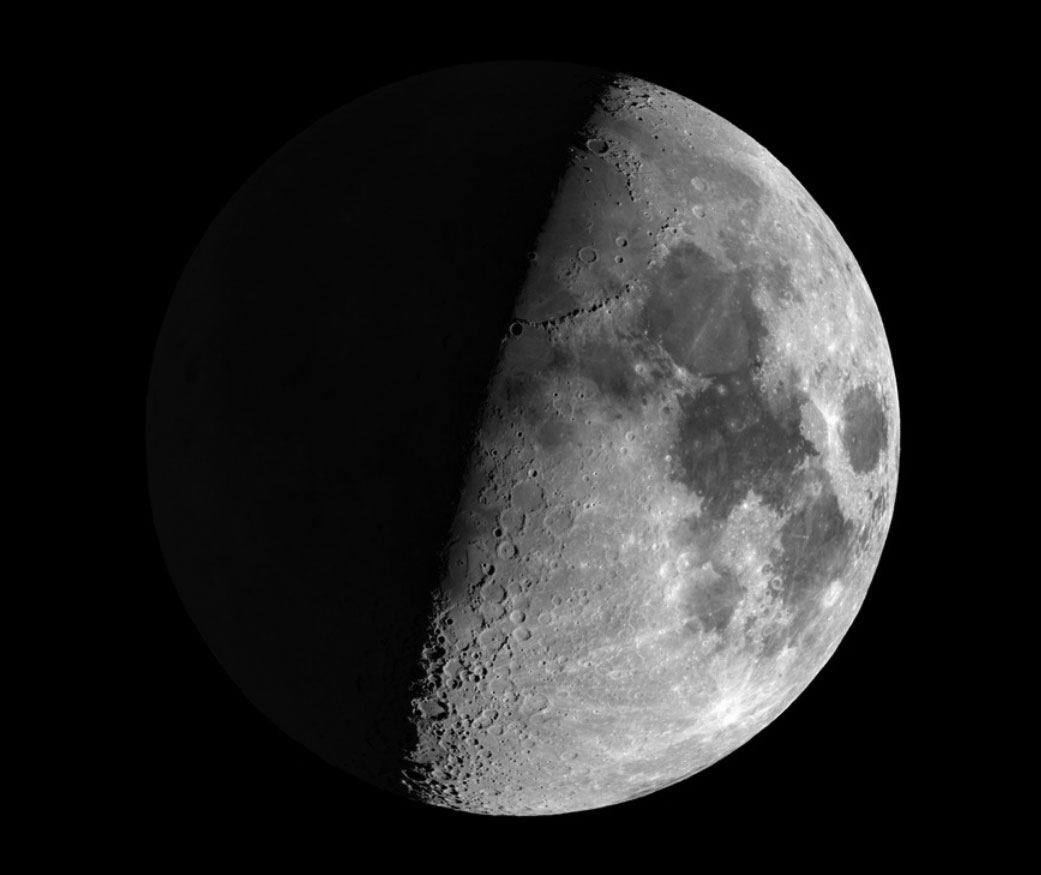
NASA is looking at how the Lunar Orbital Platform-Gateway can create value for both robotic and human exploration in deep space.
In late 2017, the agency asked the global science community to submit ideas leveraging the gateway in lunar orbit to advance scientific discoveries in a wide range of fields. NASA received more than 190 abstracts covering topics human health and performance, Earth observation, astrophysics, heliophysics, and lunar and planetary sciences, as well as infrastructure suggestions to support breakthrough science.
Although it is too early to select specific research for the gateway, the workshop marks the first time in more than a decade the agency’s human spaceflight program brought scientists from a variety of disciplines together to discuss future exploration.
“We are in the early design and development stages for the gateway, and we were curious about the level of interest in using this platform for science including the scale and scope of instrumentation scientists might want to see onboard,” said Jason Crusan, director, Advanced Exploration Systems at NASA Headquarters in Washington. “We were impressed by the breadth of the abstract responses and invited scientists and engineers to a workshop to learn more.”
Gateway assembly is targeted to begin in 2022, with the launch of the power and propulsion element. Habitation, logistics, and airlock capabilities would follow incrementally and establish the gateway’s core functionalities. Initially, NASA will send crew to the gateway once per year, so most investigations will require high levels of autonomy, and/or teleoperations.
Most concepts were based on the gateway’s location in lunar orbit, outside of Earth’s magnetosphere. This locale permits interesting observations, not possible in Earth orbit, in the fields of astrophysics, heliophysics, and Earth science. At the same time, exposure to the deep space environment introduces risk to astronauts, electronics, and hardware, due to high-energy radiation and space debris exposure. Understanding and mitigating these risks was a topic often discussed across scientific domains.
Science Opportunities Abound
“Science investigations are a critical element of our agency-wide exploration initiatives to the Moon,” said Thomas Zurbuchen, associate administrator, NASA’s Science Mission Directorate. “We’ve studied our Earth companion for decades with robotic spacecraft and we’re eager for new innovative lunar research opportunities that also will help us learn more about our solar system and beyond.”
Scientists identified a broad range of instruments that could be used inside the gateway, as well as attached to the outside of the spacecraft, or free-flying nearby. Inside, the gateway could be outfitted with instruments to evaluate radiation effects on electronics and other susceptible materials. Monitors could be activated during crew visits, to evaluate behavioral health, neurocognitive functions, and radiation and microgravity effects. Robotic helpers were discussed to support visiting crews, and also maintain operations when the gateway is uncrewed.
Outside the gateway, scientists suggested materials research platforms as permanent, fixed panels that could host interchangeable experiments with standardized attachments. Earth observation experts saw opportunities to use Earth as proxy for exoplanet detection, and noted the capability for “full disk” imaging of Earth, as well as regular views of polar regions. With a view to the Sun, advanced solar activity characterizations are possible, and could improve our understanding of solar cycles and their effects on Earth as well as the possible risks to astronauts and spacecraft systems.
The gateway also could be used to deploy increasingly more capable CubeSats to conduct a multitude of experiments. The gateway’s infrastructure could support nearby spacecraft servicing, wide-aperture telescope assembly, and serve as a communications relay for large data returns to Earth from small probes or satellites in the lunar environment.
Other ideas included robotically collecting lunar samples to investigate aboard the gateway or preserve for return to Earth, and astronauts aboard the gateway could remotely operate rovers on the surface to characterize resources, or venture to the never-before explored lunar far side.
All-in-all, the workshop provided NASA’s human spaceflight team what they needed: a basic understanding of the science that could be conducted from the vantage point of lunar orbit, and the potential spacecraft resources that would be required to do so.
“The gateway will help us return humans to the lunar surface, and expand human presence into the solar system. We now see the endless opportunities for it to play an important role for science in cislunar space as well,” said Crusan. “The enthusiasm from this workshop was awesome, and we look forward to keeping the conversation going.”
Never miss a breakthrough: Join the SciTechDaily newsletter.
Follow us on Google and Google News.