
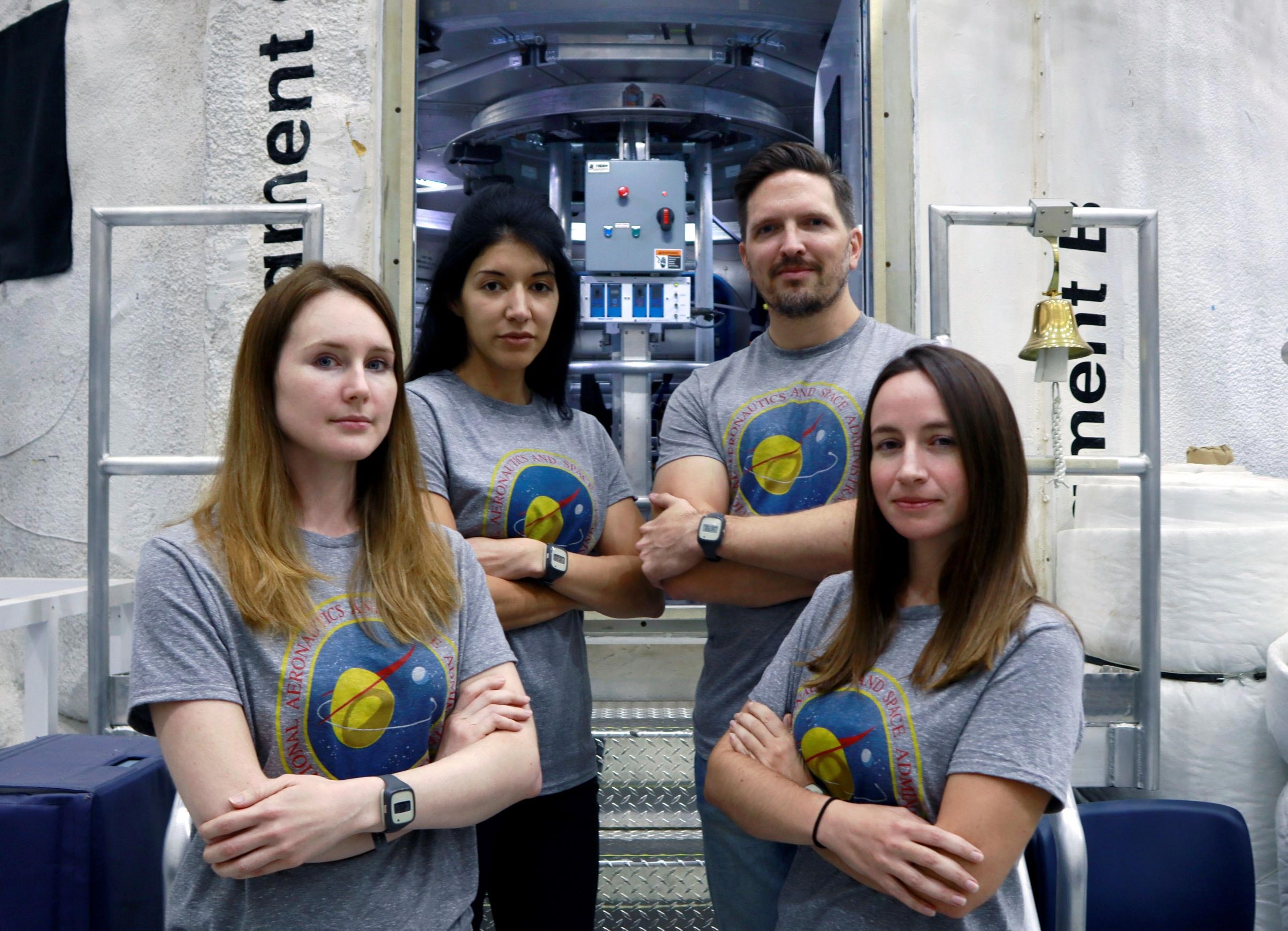
Have you ever wondered what it would be like to head deep into space, all the way to Mars? Through a simulated journey, four volunteer research subjects will soon have a chance to find out.
Beginning October 1, 2021, four people will live and work for 45 days inside a unique, ground-based habitat at NASA’s Johnson Space Center in Houston. Designed to serve as an analog for isolation, confinement, and remote conditions in exploration scenarios, this small habitat is called the Human Exploration Research Analog, or HERA.
HERA will house crew members who will simulate the long trek to Mars’ moon Phobos. Similar to other HERA missions, once the habitat’s doors close, the crew will need to stay inside for 45 days until the mission ends on November 15.
As the simulated journey takes crew members closer to Phobos, those inside will experience increasing delays in communicating with the outside world. When the simulation successfully brings the crew to Phobos, this delay will last up to five minutes each way. Such delays will force the crew — and those coordinating their journey — to practice communicating in ways that minimize impacts to mission operations, and allow the crew sufficient autonomy to accomplish the mission.
The upcoming mission signals the start of HERA’s Campaign 6. Three additional missions will follow as part of the campaign, with the final egress set for September 12, 2022.
NASA’s Human Research Program will perform 15 total studies throughout the missions, with seven returning and eight new investigations. The data collected as part of these missions will continue to help prepare humans for Artemis exploration missions to the Moon, trips to the planned lunar Gateway, and long-duration missions to Mars.
Four of the candidates below will form the primary crew of HERA Campaign 6, Mission 1, with the other two as backups. Learn more about each crew member:
Primary Crew
Lauren Cornell

Dr. Lauren Cornell is a graduate of Texas A&M University, University of Texas at San Antonio, and University of Texas at Austin. She holds a Bachelor of Science in Genetics, and a master’s degree in Biomedical Engineering. Her PhD focused on translational science, which is the process of turning research insights into public interventions.
As a research scientist, Cornell has studied the genetics of human evolution, investigated the use of carbon nanotubes for guided neuronal growth, and used magnetic nanoparticles to regenerate ocular tissue resulting from battlefield injuries. She conducted the latter research at the Sensory Trauma Department of the U.S. Army’s Institute of Surgical Research.
Cornell is also the co-founder of NovoThelium, a company focused on improving women’s health care, with a specific focus on modernizing nipple reconstruction post-mastectomy. She has served as a fellow at the Center for Drug Evaluation and Research at the Food and Drug Administration and advocated to U.S. Congress for increased scientific funding for the National Institutes of Health, all while mentoring early-career scientists and entrepreneurs.
Currently, Cornell is a researcher for the U.S. Air Force, in San Antonio, Texas, contributing to the military branch’s mission to research, develop, and evaluate innovative technologies that impact the advancement of precision, regenerative, and diagnostic medicine for improving clinical outcomes for troops.
Monique Garcia
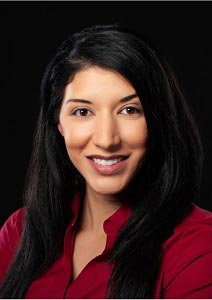
Monique Garcia works as a human factors engineer and systems administrator for The MITRE Corporation, tasked with developing a user interface for a telescope system that will be used in NASA’s Deep Space Network. She also assists with developing task automation systems on satellites for the U.S. Space Force.
Garcia has accumulated more than 12 years of military service with the Air National Guard. During her service, she primarily provided support to overseas operations using Remotely Piloted Aircraft, or RPA, as well as domestic RPA operation for wildfire support and disaster recovery.
Garcia earned her Master of Science in Kinesiology from California Baptist University, and is currently working toward a Master of Science in Human Factors Engineering from Embry-Riddle Aeronautical University. She maintains credentials as a certified personal trainer, with specializations in cognitive and behavioral techniques for health and performance. She aims to contribute and develop meaningful, long-duration human spaceflight research focused on human factors and behavioral performance for mission crews. She lives in Colorado with her husband, Trevor, their son, Jameson, and dog, Ted. In her free time, she enjoys reading, weightlifting and strength conditioning, spending time in nature, and meditating.
Christopher Roberts
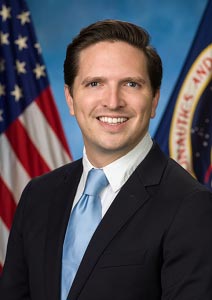
Chris Roberts is from Houston, Texas, and works as a project engineer with NASA’s Cold Stowage team in support of the International Space Station program. In this role, he is responsible for end-to-end integration and on-orbit operations for a fleet of hardware on both the space station and visiting vehicle missions.
Roberts and his team are 2021 recipients of NASA’s Spaceflight Awareness Award, an accolade given to employees for their dedication and contributions to flight safety and mission success. Previously, he was a cargo operations flight controller for the space shuttle and for assembly missions to the space station.
Born in Minnesota, Roberts attended Saint John’s University in Collegeville, where he earned a bachelor’s degree in physics. He then attended Embry-Riddle Aeronautical University, where he obtained a master’s degree in engineering physics and focused his research on laser-induced breakdown spectroscopy. In his free time, Roberts is an avid cyclist and enjoys hiking, camping, woodworking, and restoring vintage motorcycles.
Madelyne Willis
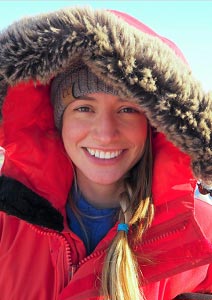
Madelyne Willis is a microbial ecologist from Atlanta, Georgia. She has extensive field experience, including multiple deployments to the Arctic and Antarctic.
Willis is working on her PhD in Ecology and Environmental Science at Montana State University in Bozeman, Montana. Her primary research is focused on polar ecology, understanding how microorganisms survive in frozen environments, and how microbial activity may alter the geochemistry of glacier ice.
Willis is also actively involved in projects to develop new spectroscopy instrumentation for Earth and planetary exploration.
Backup Crew
Justin Lawrence
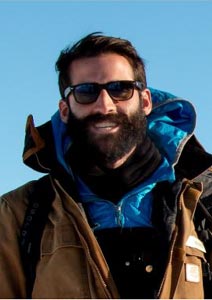
Justin Lawrence is a planetary science Ph.D. candidate, and a fellow with the Future Investigator in NASA Earth and Space Science and Technology program, also known as FINESST. He’s earning his doctorate at Georgia Tech’s Planetary Habitability and Technology Lab.
Lawrence’s research interests intersect at astrobiology, analog fieldwork, climate science, and robotics. Currently, he works primarily with the underwater vehicle Icefin, merging robotic exploration with microbiology to study habitability and ocean-ice interactions below Antarctic ice shelves. His work aims to help develop technologies that will aid future robotic exploration of other ocean worlds, like Jupiter’s moon Europa.
Since 2012, Lawrence has spent more than 1.5 years conducting research in Antarctica. He has also sailed 6,500 nautical miles across the globe, aboard research vessels with Sea Education Association. When not in the field, Lawrence enjoys cycling, sailing, photography, gardening, and scuba diving.
Pu Wang
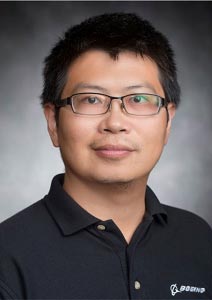
Dr. Pu Wang is an engineering team manager in The Boeing Company. At Boeing, he earned special accolades for leadership and knowledge depth, including being named a Boeing Associate Technical Fellow and a Designated Expert.
Wang has worked in the aviation and aerospace industry in more than 10 commercial and military programs. Wang specializes in multiple disciplines, such as structural analysis, fatigue and fracture mechanics, aircraft design, propulsion, plasma physics, and electromagnetic fields.
Before joining Boeing, Wang worked for General Electric and United Technologies to develop aircraft engines. His first venture into space programs involved research on 3D immersed finite element methods and particle-in-cell simulations of plasma-lunar surface interactions. Wang received a PhD in aerospace engineering from Virginia Tech. He also earned a master’s degree in solid mechanics and a bachelor’s degree in mechanical engineering from Tsinghua University in Beijing, China.
Never miss a breakthrough: Join the SciTechDaily newsletter.
Follow us on Google and Google News.