
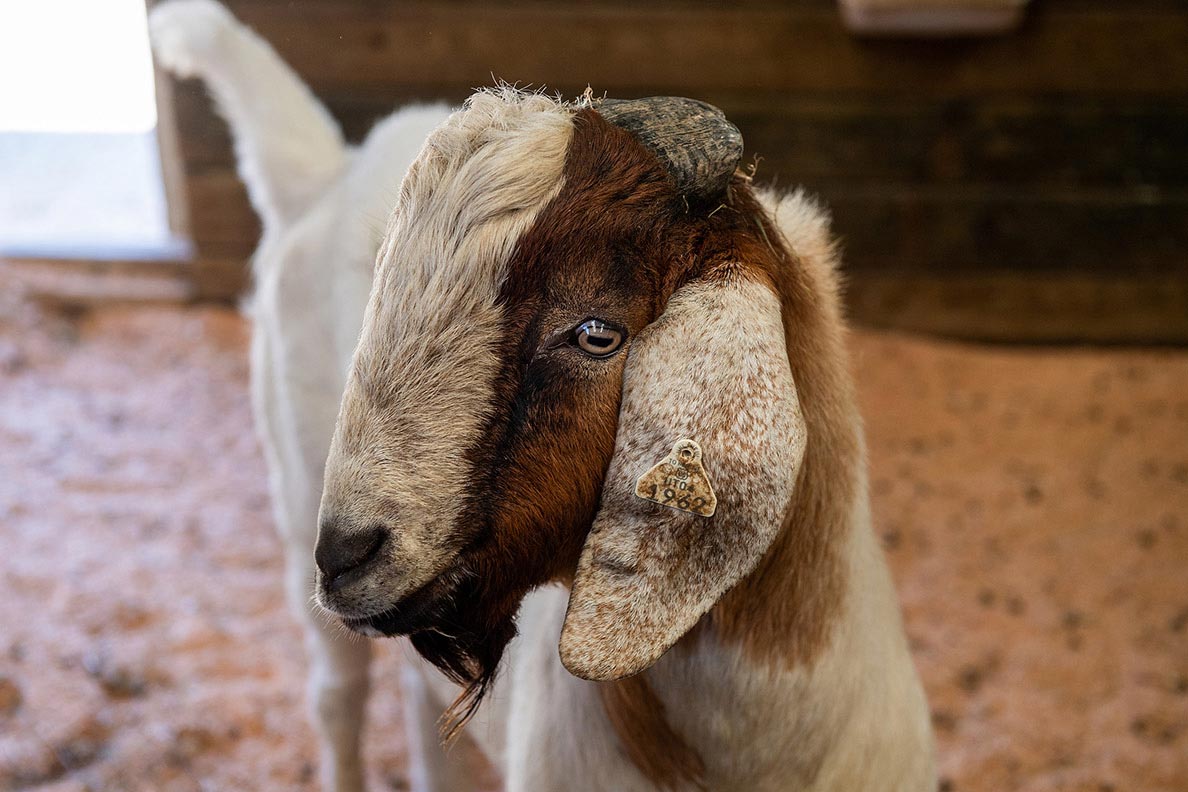
For the first time, scientists have created pigs, goats, and cattle that can serve as viable “surrogate sires,” male animals that produce sperm carrying only the genetic traits of donor animals.
The advance, published in the Proceedings of the National Academy of Sciences on September 14, 2020, could speed the spread of desirable characteristics in livestock and improve food production for a growing global population. It also would enable breeders in remote regions better access to the genetic material of elite animals from other parts of the world and allow more precision breeding in animals such as goats where using artificial insemination is difficult.
“With this technology, we can get better dissemination of desirable traits and improve the efficiency of food production. This can have a major impact on addressing food insecurity around the world,” said Jon Oatley, a reproductive biologist with WSU’s College of Veterinary Medicine. “If we can tackle this genetically, then that means less water, less feed, and fewer antibiotics we have to put into the animals.”
A research team led by Oatley used the gene-editing tool, CRISPR-Cas9, to knock out a gene specific to male fertility in the animal embryos that would be raised to become surrogate sires. The male animals were then born sterile but began producing sperm after researchers transplanted stem cells from donor animals into their testes. The sperm the surrogate sires produced held only the genetic material of the selected donor animals. The gene-editing process employed in this study seeks to bring about changes within an animal species that could occur naturally, such as infertility.
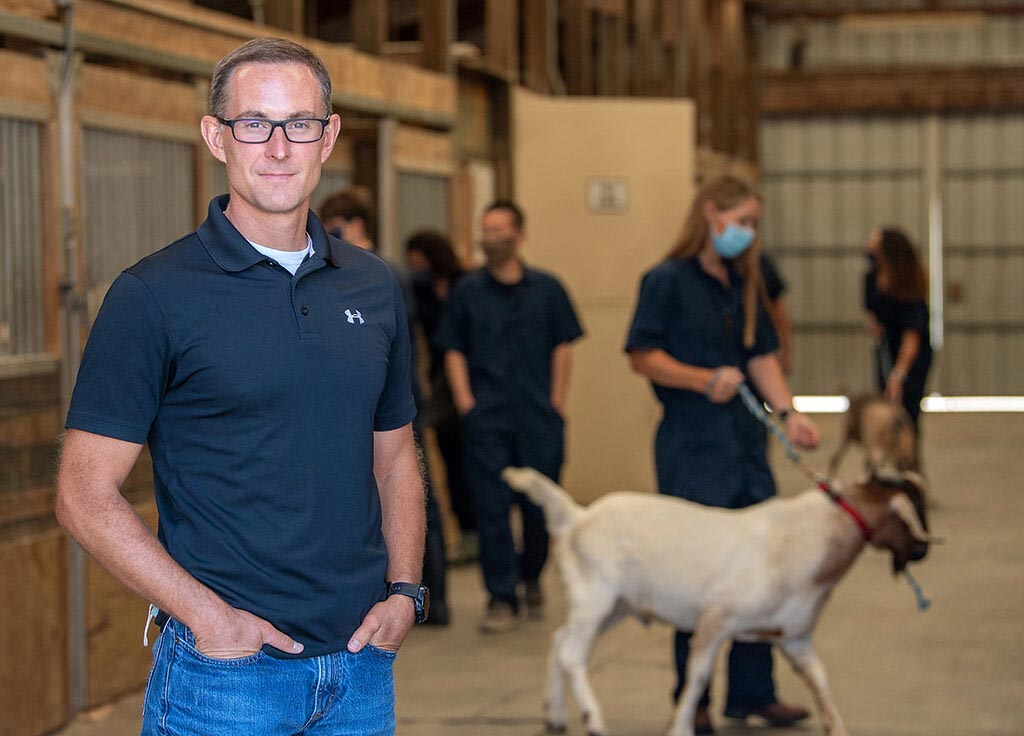
The study is the result of six years of collaborative work among researchers at WSU, Utah State University, University of Maryland, and the Roslin Institute at the University of Edinburgh in the U.K.
The researchers used CRISPR-Cas9 to produce mice, pigs, goats, and cattle that lacked a gene called NANOS2 which is specific to male fertility. The male animals grew up sterile but otherwise healthy, so when they received transplanted sperm-producing stem cells from other animals, they started producing sperm derived from the donor’s cells.
The surrogate sires were confirmed to have active donor sperm. The surrogate mice fathered healthy offspring who carried the genes of the donor mice. The larger animals have not been bred yet. Oatley’s lab is refining the stem cell transplantation process before taking that next step.
This study provides a powerful proof of concept, said Professor Bruce Whitelaw of the Roslin Institute.
“This shows the world that this technology is real. It can be used,” said Whitelaw. “We now have to go in and work out how best to use it productively to help feed our growing population.”
Latest step in animal husbandry
Scientists have been searching for a way to create surrogate sires for decades to overcome the limitations of selective breeding and artificial insemination, tools which require either animal proximity or strict control of their movement—and in many cases, both.
Artificial insemination is common in dairy cattle who are often confined so their reproductive behavior is relatively easy to control, but the procedure is rarely used with beef cattle who need to roam freely to feed. For pigs, the procedure still requires the animals be nearby as pig sperm does not survive freezing well. In goats, artificial insemination is quite challenging and could require a surgical procedure.
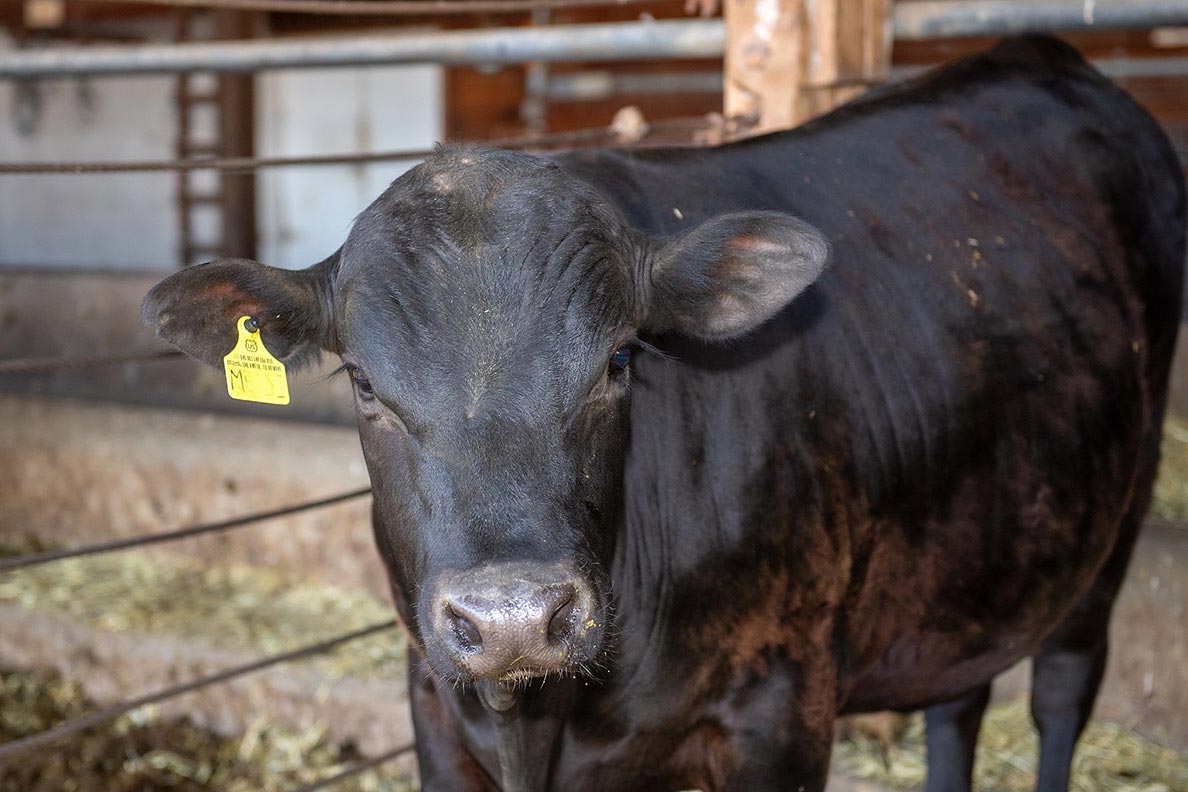
The surrogate sire technology could solve those problems since the surrogates deliver the donor genetic material the natural way—through normal reproduction. This enables ranchers and herders to let their animals interact normally on the range or field. Donors and surrogates do not need to be near each other since either frozen donor sperm or the surrogate animal itself can be shipped to different places. In addition, female NANOS2 knockout animals remain fertile – since the gene only affects male fertility – and could be bred to efficiently generate sterile males to be used as surrogate sires.
This technology has great potential to help food supply in places in the developing world, where herders still have to rely on selective breeding to improve their stock, said Irina Polejaeva, a professor at Utah State University.
“Goats are the number one source of protein in a lot of developing countries,” Polejaeva said. “This technology could allow faster dissemination of specific traits in goats, whether it’s disease resistance, greater heat tolerance or better meat quality.”
The surrogate sires technology could also open up a new option for genetic conservation of endangered species, whose dwindling numbers leave animal communities isolated from each other, limiting their genetic diversity.
Perception and policy hurdles
None of the benefits of surrogate sires can be realized, however, without changes in the current landscape of government regulations and public perception.
Even when the technology is advanced enough for commercialization, gene-edited surrogate sires could not be used in the food chain anywhere in the world under current regulations, even though their offspring would not be gene-edited. This is due in part to the misperceptions that gene editing is the same as the controversial gene manipulation, Oatley said. Gene editing involves making changes within a species that could occur naturally. It does not combine DNA from different species.
Oatley realizes there is a lot of work to do outside of the lab and recently joined the National Task Force on Gene Editing in Livestock to bring together researchers, industry representatives, bioethicists, and policymakers to find a path forward for the technology.
“Even if all science is finished, the speed at which this can be put into action in livestock production anywhere in the world is going to be influenced by societal acceptance and federal policy,” said Oatley. “By working with policymakers and the public, we can help to provide information assuring the public that this science does not carry the risks that other methods do.”
Reference: “Donor-derived spermatogenesis following stem cell transplantation in sterile NANOS2 knockout males” by Michela Ciccarelli, Mariana I. Giassetti, Deqiang Miao, Melissa J. Oatley, Colton Robbins, Blanca Lopez-Biladeau, Muhammad Salman Waqas, Ahmed Tibary, Bruce Whitelaw, Simon Lillico, Chi-Hun Park, Ki-Eun Park, Bhanu Telugu, Zhiqiang Fan, Ying Liu, Misha Regouski, Irina A. Polejaeva and Jon M. Oatley, 14 September 2020, Proceedings of the National Academy of Sciences.
DOI: 10.1073/pnas2010102117
This study was supported by the USDA National Institute of Food and Agriculture, WSU’s Functional Genomics Initiative and Genus plc. The Roslin Institute receives strategic investment funding from the Biotechnology and Biological Sciences Research Council, as part of U.K. Research and Innovation, and it is part of the University of Edinburgh’s Royal (Dick) School of Veterinary Studies. At Utah State University, this study was supported by the Utah Agricultural Experiment Station.
Never miss a breakthrough: Join the SciTechDaily newsletter.
Follow us on Google and Google News.
1 Comment
About 20 years ago I predicted that embryos would be formed using the genetic material from two males, bypassing the female influence. Due to the larger number of offspring from the paternal side, giving more reliability to performance data, that would be the driving force behind that technique.