
Close Menu
    Facebook X (Twitter) Instagram
    SciTechDaily
    • Biology
    • Chemistry
    • Earth
    • Health
    • Physics
    • Science
    • Space
    • Technology
    Facebook X (Twitter) Pinterest YouTube RSS
    SciTechDaily
    Home»Space»NASA SLS Exploration Upper Stage Passes Critical Design Review
    Space

    NASA SLS Exploration Upper Stage Passes Critical Design Review

    By Tracy McMahan / Ray Osorio, NASADecember 24, 2020No Comments4 Mins Read
    Facebook Twitter Pinterest Telegram LinkedIn WhatsApp Email Reddit
    Share
    Facebook Twitter LinkedIn Pinterest Telegram Email Reddit
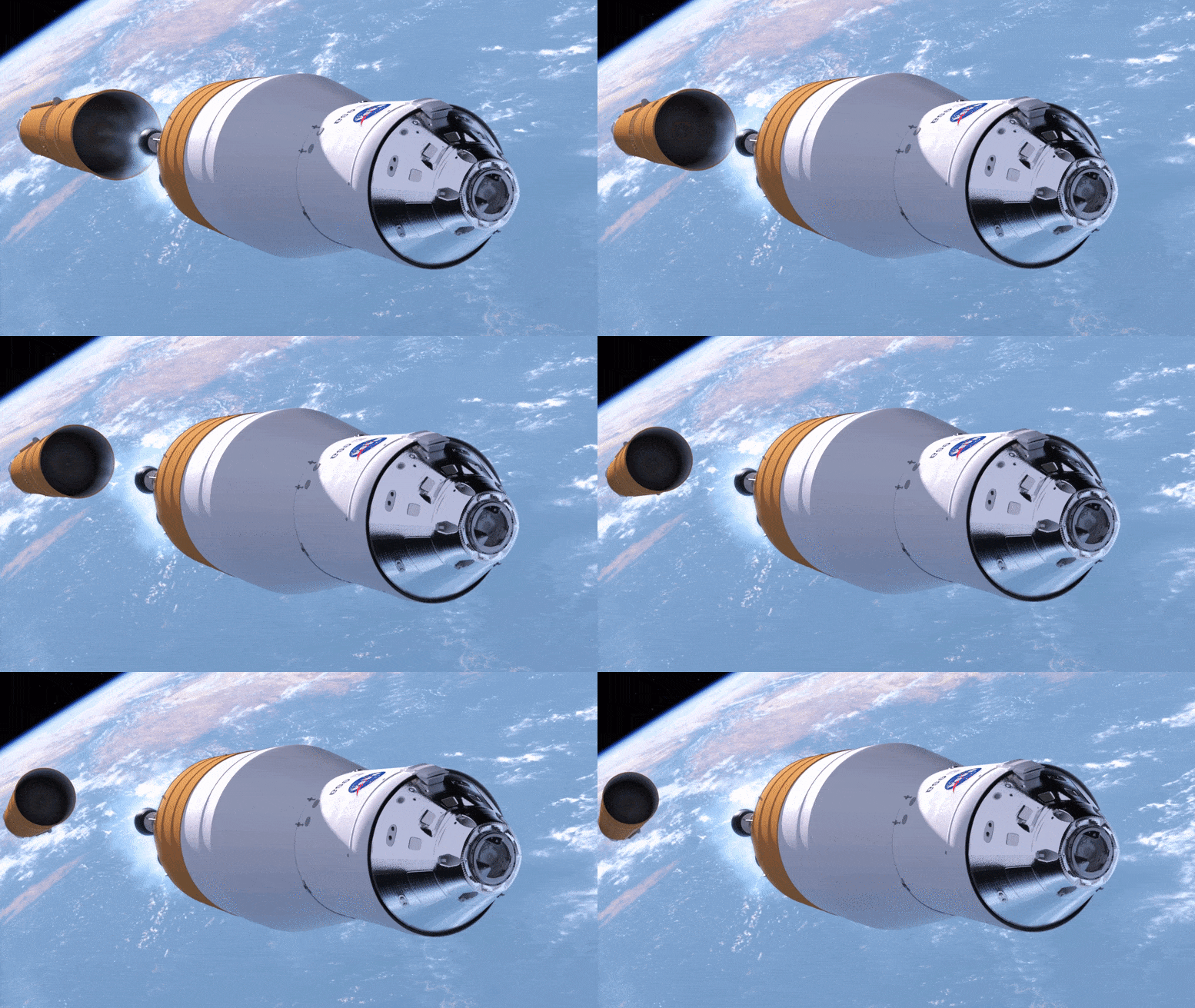
    SLS EUS
    Illustration of NASA’s Exploration Upper Stage (EUS) for upcoming missions of the Space Launch System (SLS) rocket.

    The Exploration Upper Stage (EUS) for future flights of NASA’s Space Launch System rocket has passed its Critical Design Review, or CDR.

    A panel of experts evaluated the EUS in the latest review to determine that the stage’s design meets the requirements for future missions. This most recent assessment certifies the EUS meets critical design requirements to withstand deep space environments and when completed will ensure astronaut safety. The review board also evaluated testing processes, the ability of the industrial base to supply parts and tooling, and production plans. Boeing, the prime contractor for the EUS as well as the core stage, will manufacture and assemble the upper stage at NASA’s Michoud Assembly Facility in New Orleans. 

    A structural test article of the stage will undergo testing at NASA’s Marshall Space Flight Center in Huntsville, Alabama, where the SLS Program is managed. The flight article will undergo Green Run testing at the agency’s Stennis Space Center near Bay St. Louis, Mississippi, before its first flight, similar to the SLS core stage Green Run testing currently in progress, including a hot firing of the engines.

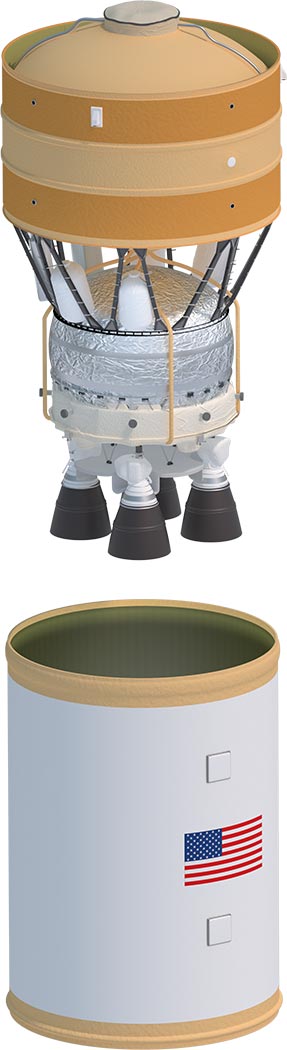
    SLS Exploration Upper Stage Infographic

    Exploration Upper Stage for SLS
    This illustration shows the Exploration Upper Stage (EUS) for the evolved configuration of NASA’s Space Launch System (SLS) rocket. NASA completed the Critical Design Review for the upper stage on Friday, December 18. This most recent assessment certifies the EUS meets critical design requirements to withstand deep space environments and when completed will ensure astronaut safety. Credit: NASA/Terry White

    NASA’s Space Launch System (SLS) rocket delivers propulsion in stages to send NASA’s Orion spacecraft and heavy cargo to the Moon for the Artemis lunar missions.

    At liftoff, the core stage and twin solid rocket boosters fire to propel the rocket off the launch pad send it into orbit. Once in orbit, the upper stage provides the in-space propulsion to set the spacecraft on a precise trajectory.

    While the rocket’s core stage design will remain the same for each of the Artemis missions, the rocket’s upper stage is selected to meet various mission requirements and goals.

    For the first three Artemis missions, including the mission that will land the first woman and the next man on the Moon by 2024, SLS will utilize an interim cryogenic propulsion stage with one RL10 engine to send Orion to the Moon. Later missions with the evolved SLS Block 1B rocket configuration will use an exploration upper stage with larger fuel tanks and four RL10 engines to send a crewed Orion and large cargos to the Moon.

    NASA’s Space Launch System will be the most powerful rocket they’ve ever built. When completed, SLS will enable astronauts to begin their journey to explore destinations far into the solar system.

    NASA’s Space Launch System, or SLS, is a super-heavy-lift launch vehicle that provides the foundation for human exploration beyond Earth’s orbit. With its unprecedented power and capabilities, SLS is the only rocket that can send Orion, astronauts, and cargo to the Moon on a single mission.

    Offering more payload mass, volume capability, and energy, SLS is designed to be flexible and evolvable and will open new possibilities for payloads, including robotic scientific missions to places like the Moon, Mars, Saturn, and Jupiter.

    The SLS team is producing NASA’s first deep space rocket built for human space travel since the Saturn V. Engineers are making progress toward delivering the first SLS rocket to NASA’s Kennedy Space Center in Florida for its first launch on the Artemis I lunar mission.

    NASA is working to land the first woman and the next man on the Moon by 2024. SLS and Orion, along with the human landing system and the Gateway in orbit around the Moon, are NASA’s backbone for deep space exploration.

    Never miss a breakthrough: Join the SciTechDaily newsletter.
    Follow us on Google and Google News.

    NASA NASA Marshall Space Flight Center Space Launch System
    Share. Facebook Twitter Pinterest LinkedIn Email Reddit

    Related Articles

    NASA Upgrades Powerful SLS Rocket Engines – Production Restarted for Next Era of Space Exploration

    Progress Underway on NASA Space Launch System (SLS) Moon Rockets for Artemis II, III, and IV

    NASA Prepares for Future Artemis Missions Using Data From the First SLS Flight

    NASA’s Artemis SLS Moon Rocket Showed Excellent Performance – World’s Most Powerful Rocket

    Fired Up: A Look at the 55 Engines and Motors That Power NASA’s Artemis Mission

    NASA Prepares Massive SLS Moon Rockets for First Crewed Artemis Missions

    SLS Solid Rocket Booster Fired Up To Test Improved Design for Future NASA Artemis Missions

    NASA Space Launch System Rocket Proceeding with Green Run Hot Fire Test

    First Massive SLS Rocket Core Stage for NASA’s Artemis Completed and Loaded for Transport

    Leave A Reply Cancel Reply

    • Facebook
    • Twitter
    • Pinterest
    • YouTube

    Don't Miss a Discovery

    Subscribe for the Latest in Science & Tech!

    Trending News

    One of the Universe’s Largest Stars May Be Getting Ready To Explode

    Scientists Discover Enzyme That Could Supercharge Ozempic-Like Weight Loss Drugs

    Popular Sweetener Linked to DNA Damage – “It’s Something You Should Not Be Eating”

    Ancient “Rock” Microbes May Reveal How Complex Life Began

    Researchers Capture Quantum Interference in One of Nature’s Rarest Atoms

    “A Plague Is Upon Us”: The Mass Death That Changed an Ancient City Forever

    Scientists Discover Game-Changing New Way To Treat High Cholesterol

    This Small Change to Your Exercise Routine Could Be the Secret to Living Longer

    Follow SciTechDaily
    • Facebook
    • Twitter
    • YouTube
    • Pinterest
    • Newsletter
    • RSS
    SciTech News
    • Biology News
    • Chemistry News
    • Earth News
    • Health News
    • Physics News
    • Science News
    • Space News
    • Technology News
    Recent Posts
    • Natural Compounds Boost Bone Implant Success While Killing Bacteria and Cancer Cells
    • After 60 Years, Scientists Uncover Unexpected Brain Effects of Popular Diabetes Drug Metformin
    • New Research Uncovers Hidden Side Effects of Popular Weight-Loss Drugs
    • Scientists Rethink Extreme Warming After Surprising Ocean Discovery
    • The Surprising Role of Asteroids in the Origin of Life
    Copyright © 1998 - 2026 SciTechDaily. All Rights Reserved.
    • Science News
    • About
    • Contact
    • Editorial Board
    • Privacy Policy
    • Terms of Use

    Type above and press Enter to search. Press Esc to cancel.