
Close Menu
    Facebook X (Twitter) Instagram
    SciTechDaily
    • Biology
    • Chemistry
    • Earth
    • Health
    • Physics
    • Science
    • Space
    • Technology
    Facebook X (Twitter) Pinterest YouTube RSS
    SciTechDaily
    Home»Space»NASA’s SPHEREx Mission Will Map the Entire Universe in Infrared Every 6 Months
    Space

    NASA’s SPHEREx Mission Will Map the Entire Universe in Infrared Every 6 Months

    By Brian Koberlein, Universe TodayApril 2, 2022No Comments3 Mins Read
    Facebook Twitter Pinterest Telegram LinkedIn WhatsApp Email Reddit
    Share
    Facebook Twitter LinkedIn Pinterest Telegram Email Reddit
    NASA SPHEREx Spacecraft
    It’s a long road from designing a spacecraft to launching and operating it. Major components of NASA’s SPHEREx spacecraft, which will seek to answer big questions about the universe, are shown in this illustration. Credit: NASA/JPL-Caltech

    The SPHEREx mission, launching in 2025, will complement James Webb Space Telescope (JWST) by mapping 99% of the infrared sky, helping to reveal new cosmic phenomena.

    The universe is cold and dark. And yet, within the dark, there is a faint glow of warmth. Across the sky, there are objects that emit infrared light, similar to the light that warms your hands near a campfire. By observing this light, astronomers can see the cosmos in a way that looks very different from that seen by our eyes.

    Both ground-based and space-based infrared telescopes have been around for quite some time, but with the launch of the James Webb Space Telescope (JWST), astronomers will be able to capture the infrared sky in unprecedented detail. It will allow us to see warm planets huddled near their star, and distant galaxies so ancient that their bright visible light has redshifted to faint infrared. It will change our understanding of the early universe and perhaps reveal evidence of alien life.
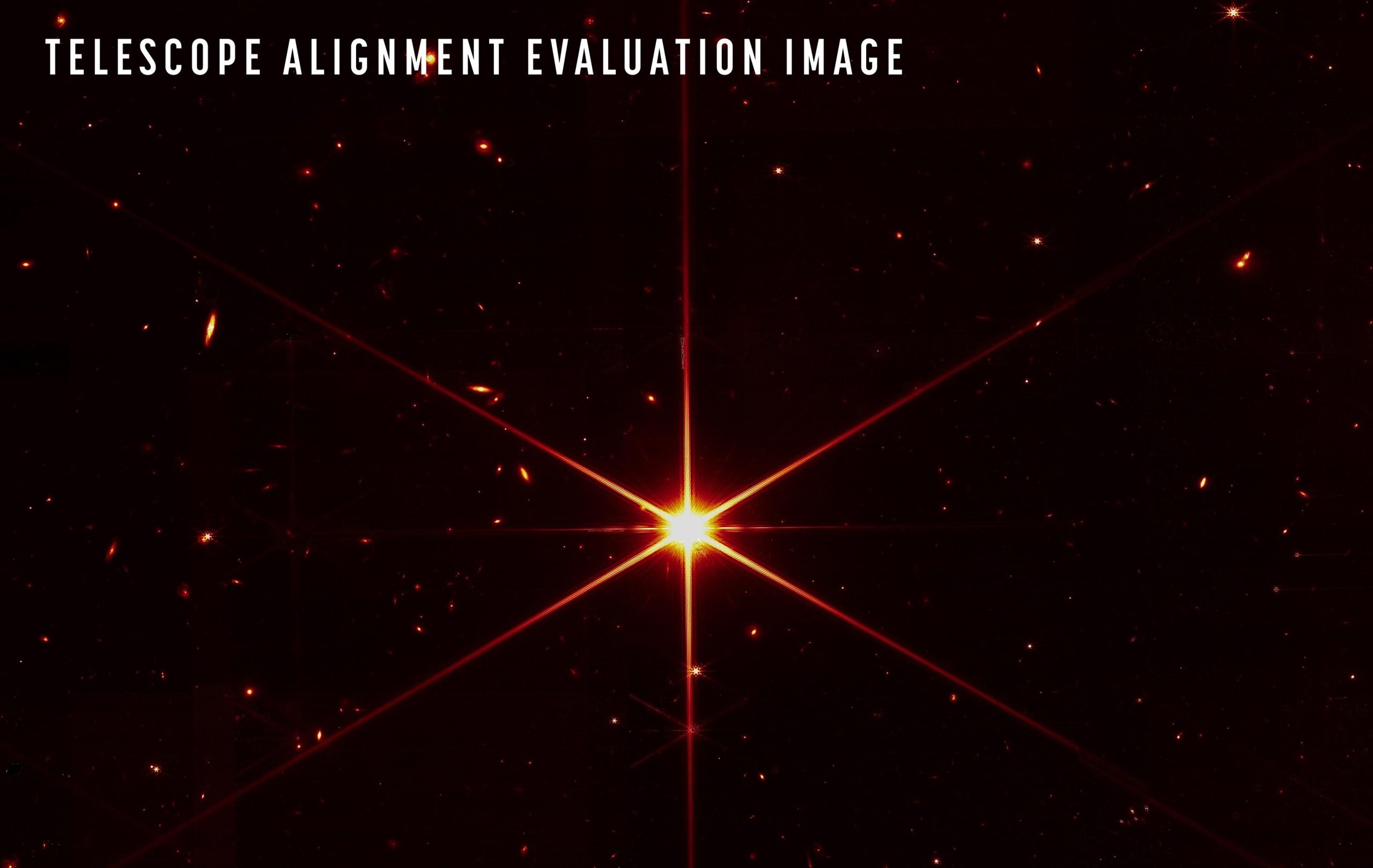
    Webb Telescope Alignment Evaluation Image
    A JWST engineering image of the star 2MASS J17554042+6551277, uses a red filter to optimize visual contrast. Credit: NASA/STScI

    But there is one aspect of the JWST that is very limiting. It is designed to capture high-resolution images of small areas of the sky. This is true for most telescopes since it is difficult to create an image with is both wide and detailed. Because of this, JWST will only be able to capture a fraction of the sky over time. For example, the Hubble Space Telescope has given us amazing views of the heavens, but in its 30-year mission, it has only captured about 0.1% of the visible sky.

    To counter this limitation we can create sky-survey telescopes. The Vera Rubin Observatory is being constructed specifically for this purpose. Its 8-meter mirror is designed to give a view of the sky several Moon-widths across. When completed, it will capture most of the southern sky every few days. It will not only allow astronomers to study a vast range of celestial objects, but it will also allow them to study how these objects change over time. It will be an amazing tool for visible light astronomy, but what about infrared?

    This is where the upcoming SPHEREx mission comes in. Scheduled to launch by April of 2025, SPHEREx will capture 99% of the sky every six months. This does come at a cost of resolution. The SPHEREx images will not be nearly as detailed as JWST. But since they will both observe infrared light they can work together to see more of our universe. SPHEREx will focus on the background heat of the deep universe, and look for water and complex organic molecules hidden within the gas and dust of stellar nurseries. And when SPHEREx finds something unusual, JWST can step in for a closer look.

    The James Webb Telescope will surely give us some amazing views over the next few years. With SPHEREx coming soon on its heels, the infrared revelations of JWST are surely just the beginning.

    Adapted from an article originally published on Universe Today.

    Never miss a breakthrough: Join the SciTechDaily newsletter.
    Follow us on Google and Google News.

    Astronomy Astrophysics NASA SPHEREx
    Share. Facebook Twitter Pinterest LinkedIn Email Reddit

    Related Articles

    NASA’s SPHEREx Is Mapping the Infrared Universe in 102 Colors – And It’s All Public

    NASA’s Newest Telescope Just Woke Up and It’s About to Change Astronomy

    Mapping the Cosmos: NASA’s Latest Space Telescope To Survey 450 Million Galaxies

    NASA SPHEREx Mission: Finalized Plans for a Cutting-Edge Cosmic Mapmaker

    Citizen Scientists Discover Dozens of Failed Stars Lurking in Our Cosmic Neighborhood

    NASA STEREO Spacecraft’s Lone View of Betelgeuse Reveals More Strange Behavior – Is Supernova Imminent?

    Here’s What Happens When a Supermassive Black Hole Fails to Do Its Job [Video]

    Irregular Outbursts From a Double Star System – Energy Equivalent to 10 Million Trillion Hydrogen Bombs

    “Deflated Croissant” – Uncovering the True Shape of Our Solar System

    Leave A Reply Cancel Reply

    • Facebook
    • Twitter
    • Pinterest
    • YouTube

    Don't Miss a Discovery

    Subscribe for the Latest in Science & Tech!

    Trending News

    The Universe Is Expanding Too Fast and Scientists Can’t Explain Why

    “Like Liquid Metal”: Scientists Create Strange Shape-Shifting Material

    Early Warning Signals of Esophageal Cancer May Be Hiding in Plain Sight

    Common Blood Pressure Drug Shows Surprising Power Against Deadly Antibiotic-Resistant Superbug

    Scientists Uncover Dangerous Connection Between Serotonin and Heart Valve Disease

    Scientists Discover a “Protector” Protein That Could Help Reverse Hair Loss

    Bone-Strengthening Discovery Could Reverse Osteoporosis

    Scientists Uncover Hidden Trigger Behind Stem Cell Aging

    Follow SciTechDaily
    • Facebook
    • Twitter
    • YouTube
    • Pinterest
    • Newsletter
    • RSS
    SciTech News
    • Biology News
    • Chemistry News
    • Earth News
    • Health News
    • Physics News
    • Science News
    • Space News
    • Technology News
    Recent Posts
    • 5 Common Myths About Learning a New Language, Debunked
    • The Neanderthal “Love Story” Isn’t What It Seems
    • Scientists Unlock Hidden Secrets of 2,300-Year-Old Mummies Using Cutting-Edge CT Scanner
    • Men vs. Women: Scientists Uncover Dramatic Differences in How the Immune System Ages
    • Eating Chili Peppers Linked to Longer Life
    Copyright © 1998 - 2026 SciTechDaily. All Rights Reserved.
    • Science News
    • About
    • Contact
    • Editorial Board
    • Privacy Policy
    • Terms of Use

    Type above and press Enter to search. Press Esc to cancel.