
Close Menu
    Facebook X (Twitter) Instagram
    SciTechDaily
    • Biology
    • Chemistry
    • Earth
    • Health
    • Physics
    • Science
    • Space
    • Technology
    Facebook X (Twitter) Pinterest YouTube RSS
    SciTechDaily
    Home»Space»NASA Tests Upgraded Artemis Moon Rocket Engines at 113% Power Level
    Space

    NASA Tests Upgraded Artemis Moon Rocket Engines at 113% Power Level

    By C. Lacy Thompson, NASA's Stennis Space CenterMarch 12, 2023No Comments4 Mins Read
    Facebook Twitter Pinterest Telegram LinkedIn WhatsApp Email Reddit
    Share
    Facebook Twitter LinkedIn Pinterest Telegram Email Reddit
    NASA Stennis RS-25 Hot Fire Test March 2023
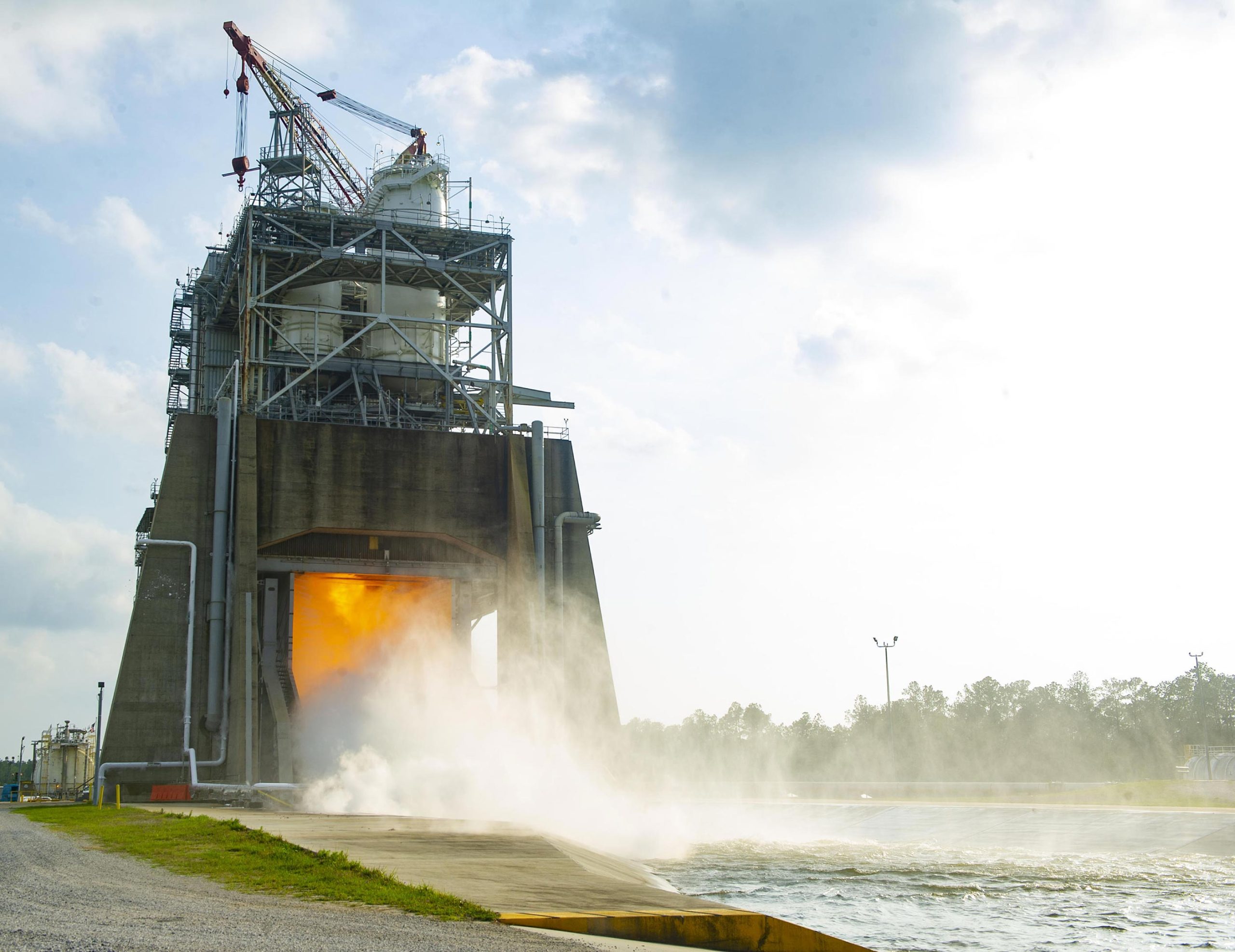
    NASA conducts an RS-25 hot fire test on the Fred Haise Test Stand at NASA’s Stennis Space Center in south Mississippi on March 8, 2023. Credit: NASA/Danny Nowlin

    NASA’s testing for redesigned RS-25 engines to be used on future Space Launch System (SLS) missions continued with a March 8 full-duration hot fire at NASA’s Stennis Space Center, near Bay St. Louis, Mississippi.

    The test, conducted on the Fred Haise Test Stand at NASA’s Stennis Space Center, was the third of the year and part of an ongoing certification hot fire series. It also was the third test since an upgraded nozzle was installed on the RS-25 engine just prior to a February 8 hot fire. The redesigned engines provided by lead SLS engines contractor Aerojet Rocketdyne will be used on future Artemis flights to the Moon, beginning with Artemis V, as NASA continues its mission to explore the secrets of the universe for the benefit of all.
    NASA Conducts RS-25 Hot Fire Test March 2023
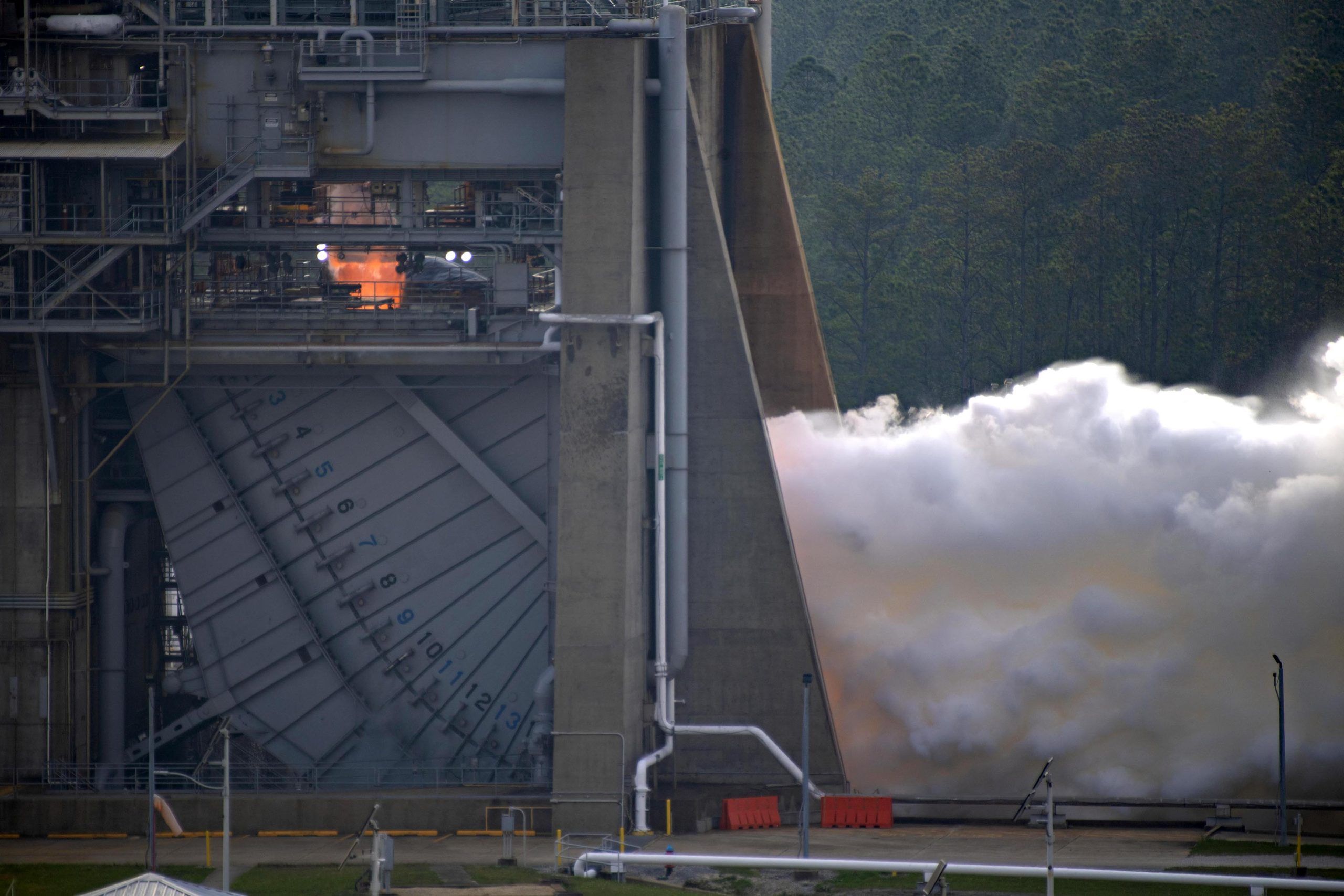
    A mounted field camera offers a close-up views as NASA conducts an RS-25 hot fire test on the Fred Haise Test Stand at NASA’s Stennis Space Center in south Mississippi on March 8, 2023. Credit: NASA/Stennis

    “Early indications are that the nozzle is working well,” said Mike Lauer, deputy program manager of RS-25 engines at Aerojet Rocketdyne. “Even though we changed manufacturing methods, we did not want to radically change the performance of the nozzle. We are very pleased that the nozzle appears to be performing very much in line with our previous history.”

    Operators fired the RS-25 engine during the test for a scheduled 520 seconds and up to 113% power level. During missions to the Moon, engines fire for about 500 seconds and up to the 111% power level to help SLS lift the Orion spacecraft and other payloads to orbit. With added seconds and the increased power level during ground tests, engineers can learn more about engine performance and provide a margin of operational safety.
    NASA Fred Haise Test Stand RS-25 Hot Fire Test March 2023
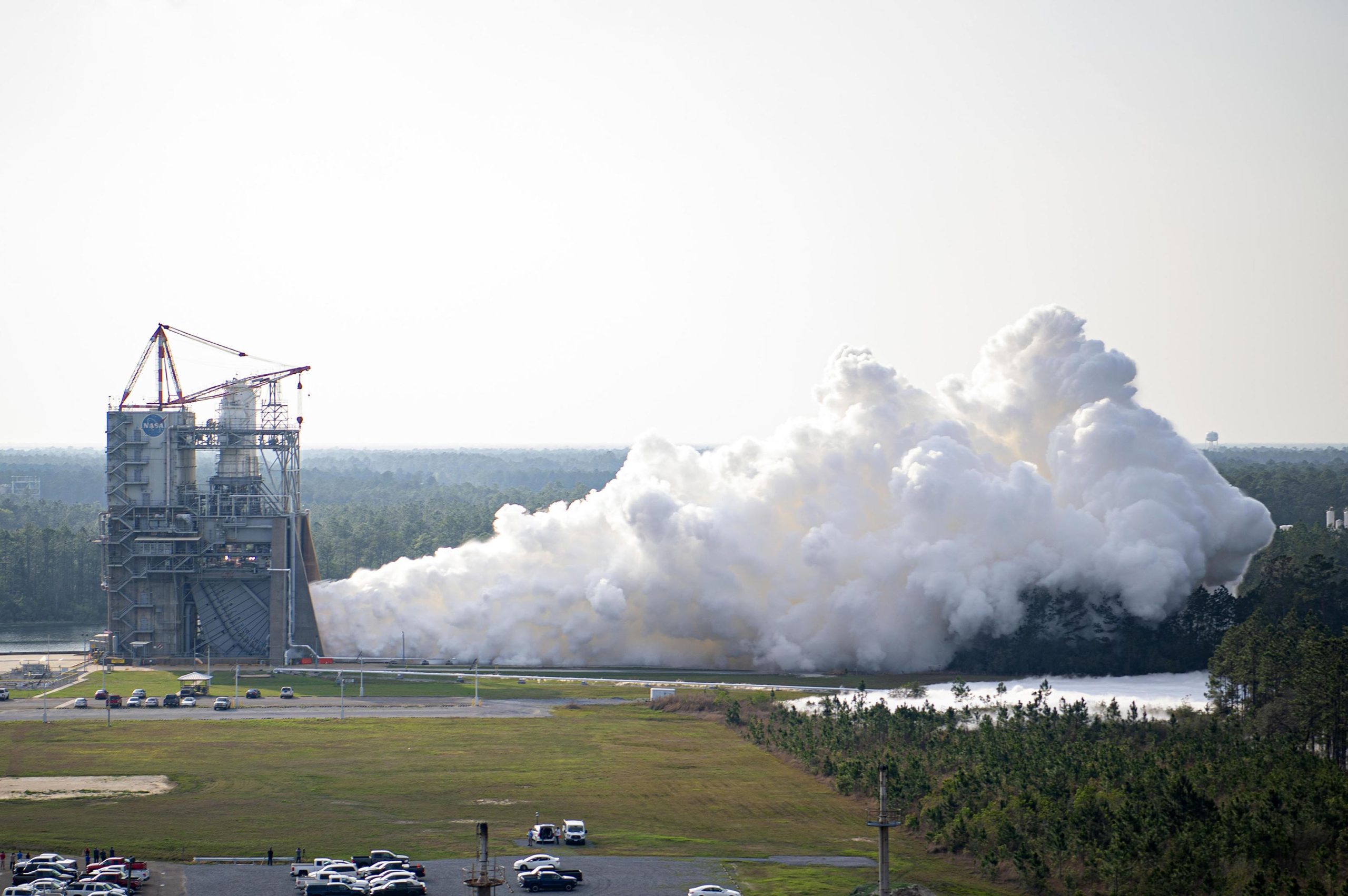
    NASA conducts an RS-25 hot fire test on the Fred Haise Test Stand at NASA’s Stennis Space Center in south Mississippi on March 8, 2023. Credit: NASA/Danny Nowlin

    The nozzle, or bell-shaped part at the bottom of the RS-25 engine, helps generate thrust by ejecting the engine’s exhaust at maximum speed to propel SLS to space. It is one of multiple upgraded components on the redesigned engine and also critical in ensuring efficiency by using a minimum amount of propellants, or fuel, to generate thrust and help propel the rocket to space. The nozzle is one reason the RS-25 is one of the most fuel-efficient rocket engines in the world.

    Over the course of the storied history of the RS-25 engine, many components have gone through changes or upgrades. One component that mostly went unchanged was the nozzle.
    NASA Stennis Space Center RS-25 Hot Fire Test March 2023
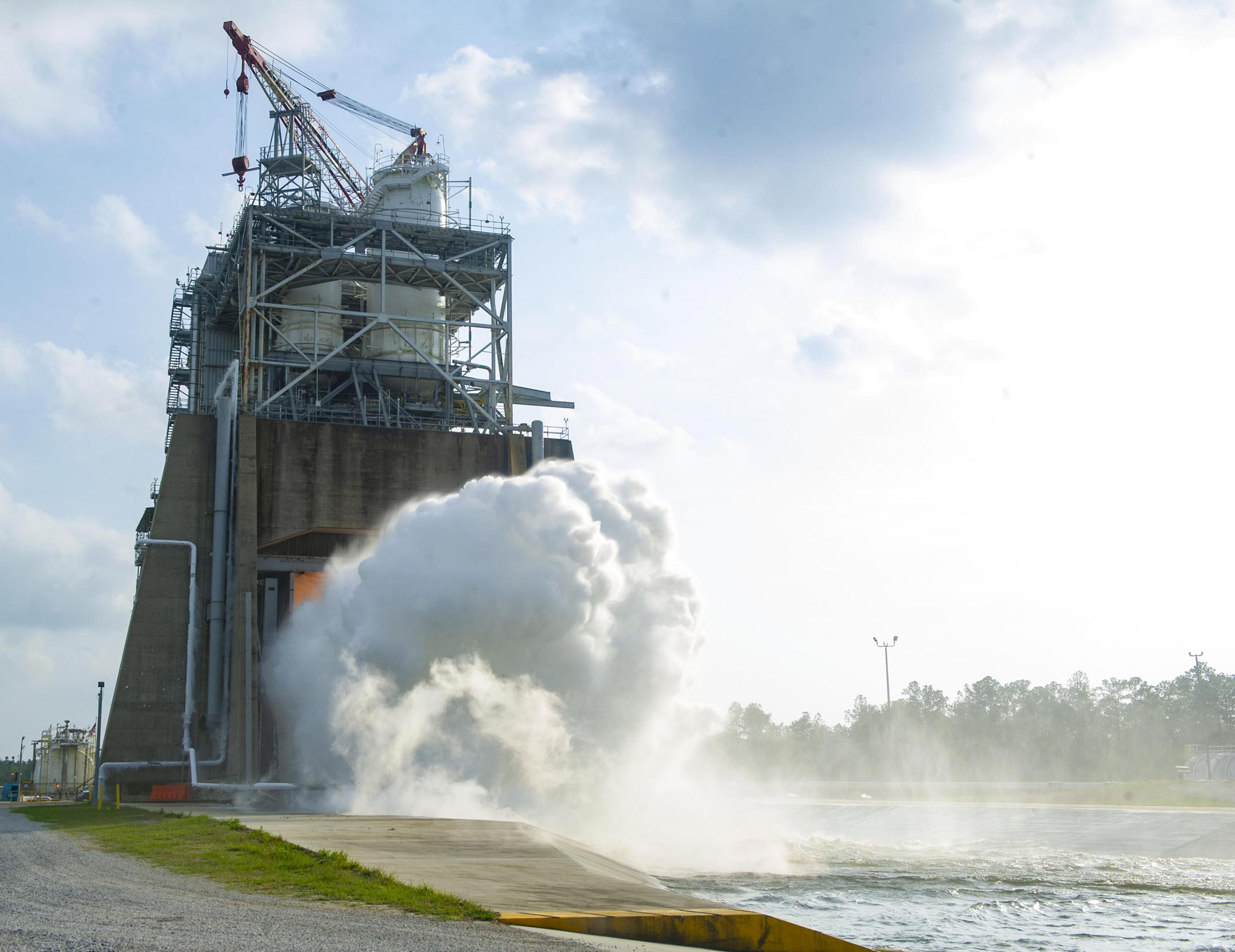
    NASA conducts an RS-25 hot fire test on the Fred Haise Test Stand at NASA’s Stennis Space Center in south Mississippi on March 8, 2023. Credit: NASA/Danny Nowlin

    For redesigned RS-25 engines, however, a team focused on re-engineering every part of the nozzle. This included using precision machining to improve production of the more than 1,000 tubes that comprise the nozzle wall. These tubes are critical in flowing super-cold liquid hydrogen to keep the nozzle cool. The team also is using 3D printing to manufacture selected nozzle parts.

    Upgrades to the nozzle include a new type and amount of insulation, which is a critical consideration since the RS-25 engines are exposed to more heat during SLS launches than previous space shuttle missions. SLS features four RS-25 engines instead of the three main engines used for the space shuttle and the proximity of the RS-25 nozzle to the SLS solid rocket boosters is closer than on the space shuttle.
    NASA Stennis Fred Haise Test Stand RS-25 Hot Fire Test March 2023
    A mounted field camera offers a close-up view as NASA conducts an RS-25 hot fire test on the Fred Haise Test Stand at NASA’s Stennis Space Center in south Mississippi on March 8, 2023. Credit: NASA/Stennis

    The goal of the upgrades is to streamline the nozzle production process, while making it more cost-efficient and still achieving the same performance level as with previous RS-25 engines. While new manufacturing methods have been incorporated into the production of the nozzle, the shape, length, and diameter remain the same.

    Sixteen main engines remained from the shuttle program. All were modified and tested at NASA Stennis for use on the first four Artemis missions.

    Never miss a breakthrough: Join the SciTechDaily newsletter.
    Follow us on Google and Google News.

    ARTEMIS Mission NASA NASA's Stennis Space Center Popular Rocket Space Launch System
    Share. Facebook Twitter Pinterest LinkedIn Email Reddit

    Related Articles

    NASA’s Engineering Marvel: Preparing the Gateway to the Moon

    To the Moon and Beyond: NASA’s Artemis Engine Roars in Latest Test

    Moonbound Majesty: Astronauts’ Inside Look at SLS, the Engine of Artemis Dreams

    Blasting Beyond: NASA Ignites New RS-25 Engine Test for Moon Missions

    NASA Upgrades Powerful SLS Rocket Engines – Production Restarted for Next Era of Space Exploration

    NASA Conducts Long Duration Hot Fire Test of Redesigned RS-25 Moon Rocket Engine

    NASA’s Artemis I Moon Rocket Ready To Launch – How To Watch Live

    NASA Completes Artemis I Moon Rocket Test, Moves Forward Toward Launch

    NASA Artemis I Moon Rocket Test: SLS Fully Fueled for First Time Despite Leak

    Leave A Reply Cancel Reply

    • Facebook
    • Twitter
    • Pinterest
    • YouTube

    Don't Miss a Discovery

    Subscribe for the Latest in Science & Tech!

    Trending News

    Mezcal “Worm” in a Bottle Mystery: DNA Testing Reveals a Surprise

    New Research Reveals That Your Morning Coffee Activates an Ancient Longevity Switch

    This Is What Makes You Irresistible to Mosquitoes

    Shockingly Powerful Giant Octopuses Ruled the Seas 100 Million Years Ago

    Scientists Stunned by New Organic Molecules Found on Mars

    Rewriting Dinosaur Evolution: Scientists Unearth Remarkable 150-Million-Year-Old Stegosaur Skull

    Omega-3 Supplements Linked to Cognitive Decline in Surprising New Study

    First-of-Its-Kind Discovery: Homer’s Iliad Found Embedded in a 1,600-Year-Old Egyptian Mummy

    Follow SciTechDaily
    • Facebook
    • Twitter
    • YouTube
    • Pinterest
    • Newsletter
    • RSS
    SciTech News
    • Biology News
    • Chemistry News
    • Earth News
    • Health News
    • Physics News
    • Science News
    • Space News
    • Technology News
    Recent Posts
    • Scientists Just Discovered the Hidden Trick That Keeps Your Cells Alive
    • This Simple Movement Could Be Secretly Cleaning Your Brain
    • Male Birth Control Breakthrough: Scientists Find Way To Turn Sperm Production Off and Back On
    • A Common Vitamin Could Hold the Key to Treating Fatty Liver Disease
    • New Research Shows Vitamin B12 May Hold the Key to Healthy Aging
    Copyright © 1998 - 2026 SciTechDaily. All Rights Reserved.
    • Science News
    • About
    • Contact
    • Editorial Board
    • Privacy Policy
    • Terms of Use

    Type above and press Enter to search. Press Esc to cancel.