

NASA’s Antarctic Long Duration Balloon Campaign includes the GUSTO mission to map the Milky Way and other missions for cosmic ray measurement and technology testing. The campaign takes advantage of Antarctica’s summer conditions for extended near-space flights.
NASA kicks off its annual Antarctic Long Duration Balloon Campaign around Dec. 1, which includes three scientific balloon flights planned for launch from the long-duration balloon (LDB) Camp near McMurdo Station, Antarctica. NASA’s stadium-sized, zero-pressure balloons will support a total of five missions on the long-duration flights with one mission vying to break NASA’s heavy-lift, long-duration balloon flight record, which stands at 55 days, 1 hour, and 34 minutes.
“The annual Antarctic long-duration balloon campaign is the program’s flagship event for long-duration missions,” said Andrew Hamilton, acting chief of NASA’s Balloon Program Office (BPO). “The environment and stratospheric wind conditions provide a unique and valuable opportunity to fly missions in a near-space environment for days or weeks at a time. The BPO team is excited to provide support to all our missions this year.”
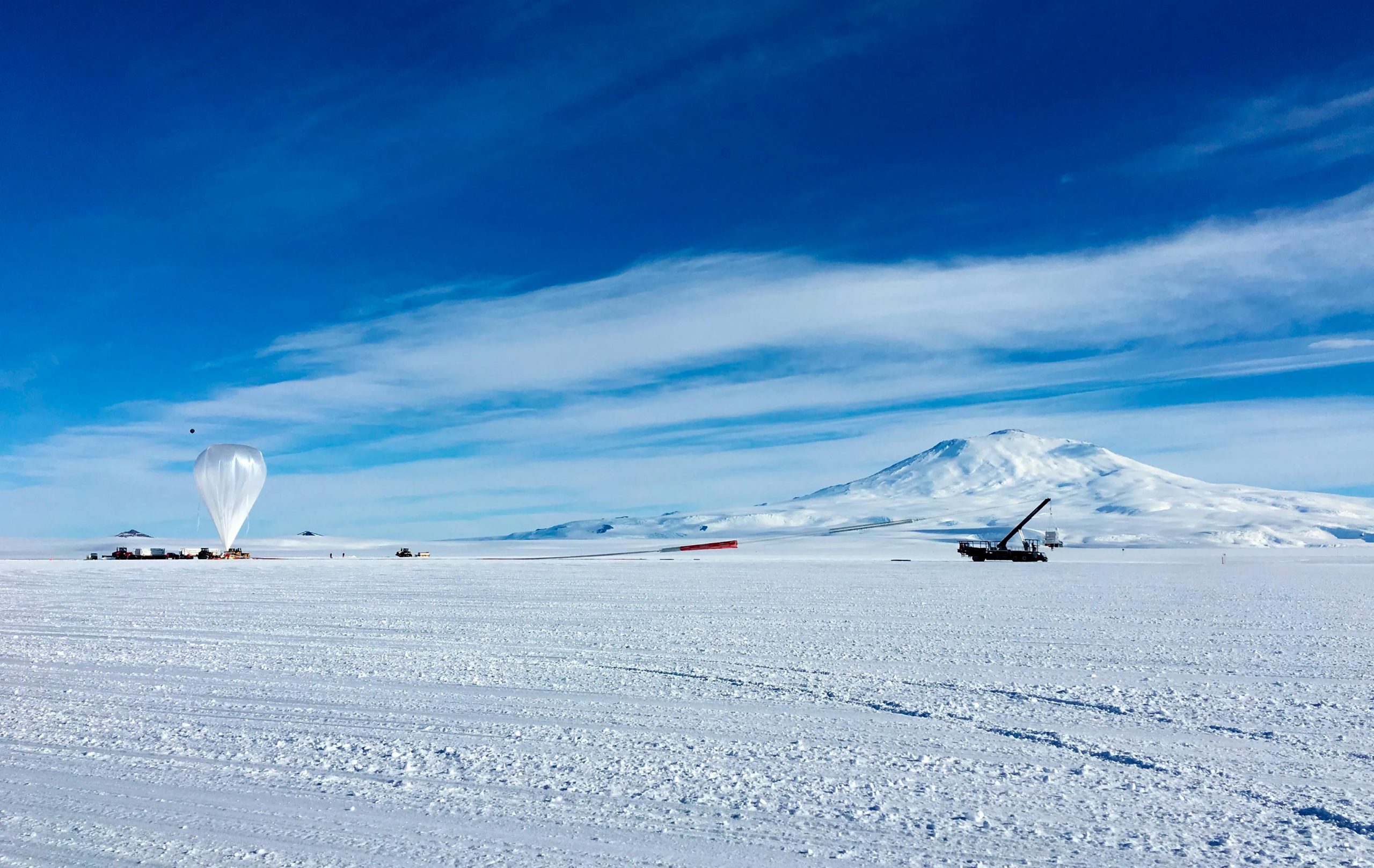
GUSTO: The Campaign’s Highlight
Headlining this year’s campaign is the Galactic/Extragalactic ULDB Spectroscopic Terahertz Observatory (GUSTO) mission. This Astrophysics mission is managed by NASA’s Explorers Program Office at Goddard Space Flight Center. The mission is led by principal investigator Christopher Walker from the University of Arizona with support from the Johns Hopkins University Applied Physics Laboratory.
GUSTO will aim for 55-plus days in flight above the southernmost hemisphere’s skies to map a large part of the Milky Way galaxy, including the galactic center, and the nearby Large Magellanic Cloud. The GUSTO telescope is equipped with very sensitive detectors for carbon, oxygen, and nitrogen emission lines. Measuring these emission lines will give the GUSTO team deep insight into the full lifecycle of the interstellar medium, the cosmic material found between stars.
GUSTO’s science observations will be performed from Antarctica to allow for enough observation time aloft, access to astronomical objects, and solar power provided by the austral summer in the polar region.
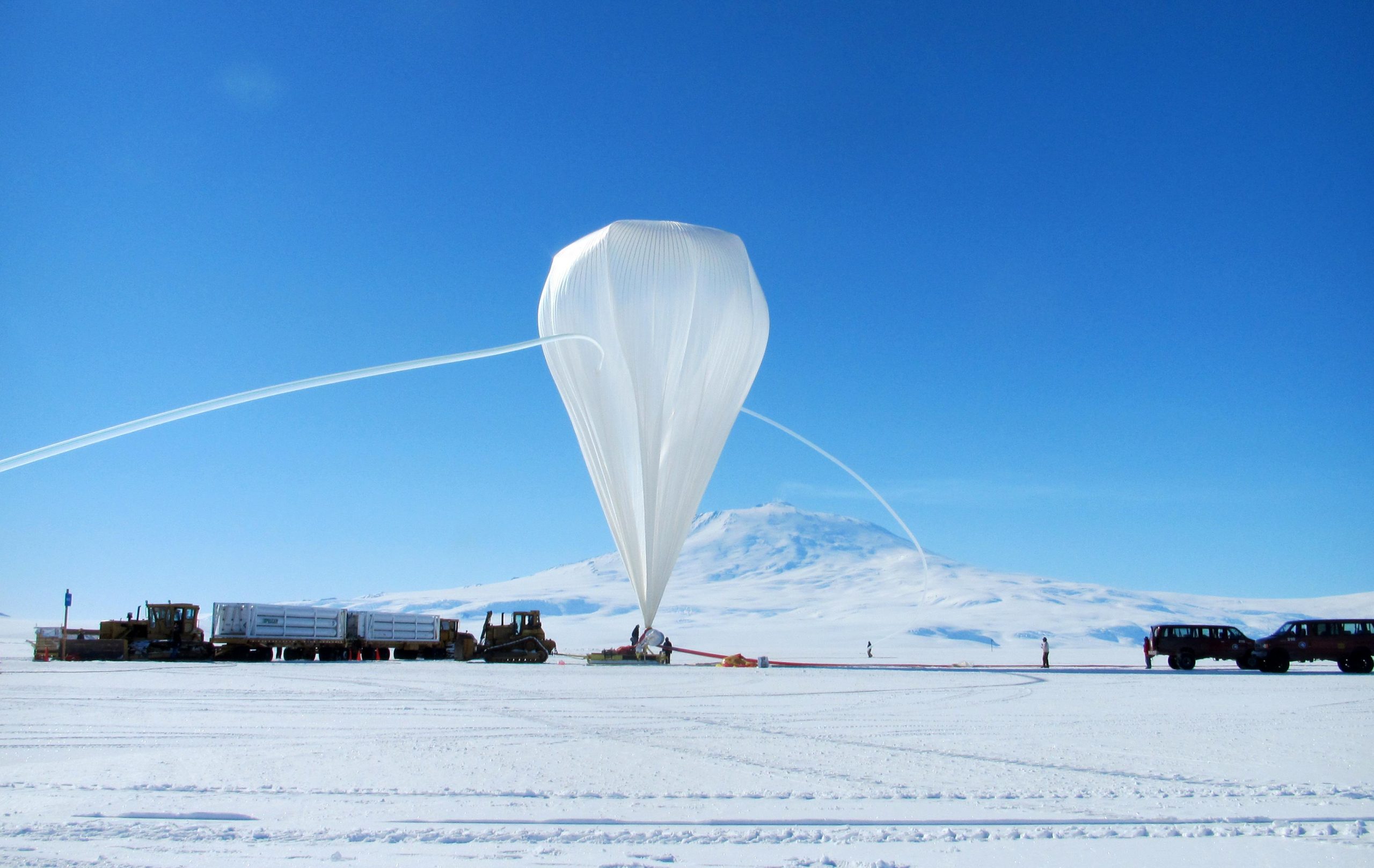
Additional missions set to fly during the Antarctic LDB campaign include:
- Anti-Electron Sub-Orbital Payload (AESOP-Lite): The mission, led by a team from the University of Delaware and University of California Santa Cruz, will measure cosmic-ray electrons and positrons. These electron measurements will be compared to Voyager I and II, which reached interstellar space and have been measuring cosmic ray electrons since 2012 and 2018, respectively. AESOP-Lite will fly on a 60 million cubic feet balloon, a test flight set to qualify the balloon for reaching altitudes greater than 150,000 feet, which is higher than NASA’s current stratospheric inventory.
- Long durAtion evalUation solaR hand LAunch (LAURA): This engineering test flight, led by NASA’s Columbia Scientific Balloon Facility, will utilize solar panels to extend the science capability of the hand launch platform from a few days in flight to long-duration flights. Hand-launched balloons are about 40 times smaller in volume than the heavy-lift balloons and have limited time aloft due to the amount and weight of batteries used for powering the science and balloon instruments.
- Anihala (Antarctic Infrasound Hand Launch): This piggyback payload on the AESOP-Lite launch, a cooperative mission between the Swedish Institute of Space Physics and Sandia National Lab, aims to measure natural background sound in the stratosphere over a continent where human-generated sound is largely absent.
Zero-pressure balloons feature open ducts that allow gas to escape and prevent an increase in pressure from inside the balloon. Gas expansion occurs as it heats during the balloon’s rise above the Earth’s surface or by temperature increases from a rising Sun. These balloons, which typically have a shorter flight duration due to the loss of gas from the cycle of day to night, can only fly long-duration missions during the constant daylight of summer in polar regions, where the balloon stays in constant sunlight.
NASA’s Wallops Flight Facility in Virginia manages the agency’s scientific balloon flight program with 10 to 15 flights each year from launch sites worldwide. Peraton, which operates NASA’s Columbia Scientific Balloon Facility (CSBF) in Texas, provides mission planning, engineering services, and field operations for NASA’s scientific balloon program. The CSBF team has launched more than 1,700 scientific balloons over some 40 years of operations. NASA’s balloons are fabricated by Aerostar. The NASA Scientific Balloon Program is funded by the NASA Headquarters Science Mission Directorate Astrophysics Division.
Never miss a breakthrough: Join the SciTechDaily newsletter.
Follow us on Google and Google News.