
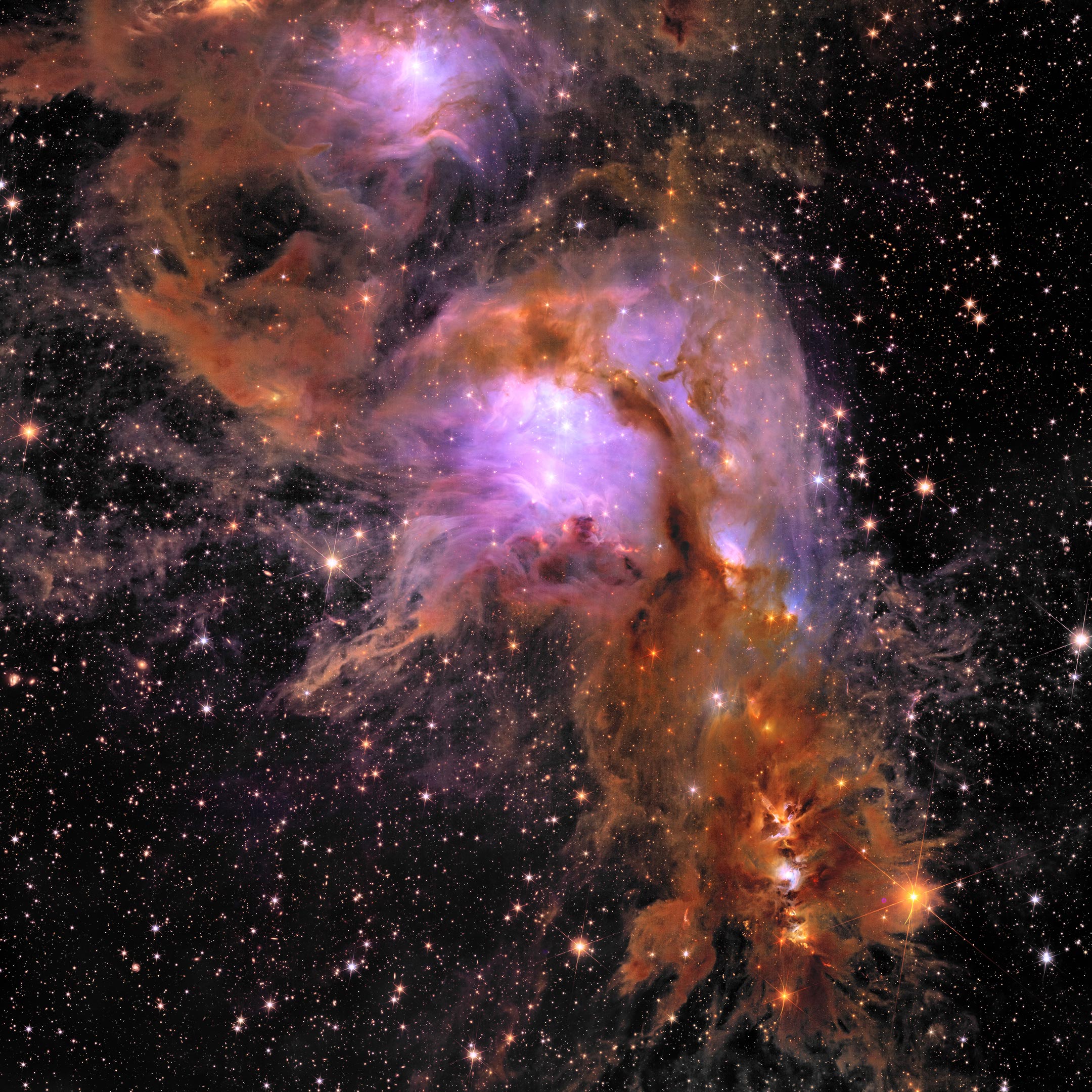
Euclid, an ESA mission with NASA’s support, aims to map the sky and study dark matter and dark energy. Its new images and data reveal significant scientific findings, including free-floating planets and brown dwarfs, enhancing our understanding of the universe.
The Euclid mission has released five new images that showcase the space telescope’s ability to explore two large-scale cosmic mysteries: dark matter and dark energy. Dark matter is an invisible substance five times more common in the universe than “regular” matter but with an unknown composition. “Dark energy” is the name given to the unknown source causing the universe to expand faster and faster. The Euclid mission is led by ESA (the European Space Agency) with contributions from NASA,
Cosmic Mapping and Precision
By 2030, Euclid will create a cosmic map that covers almost a third of the sky, using a field of view that is far wider than NASA’s Hubble and James Webb space telescopes, which are designed to study smaller areas in finer detail. Scientists will then chart the presence of dark matter with higher precision than ever before. They can also use this map to study how dark energy’s strength has changed over time.
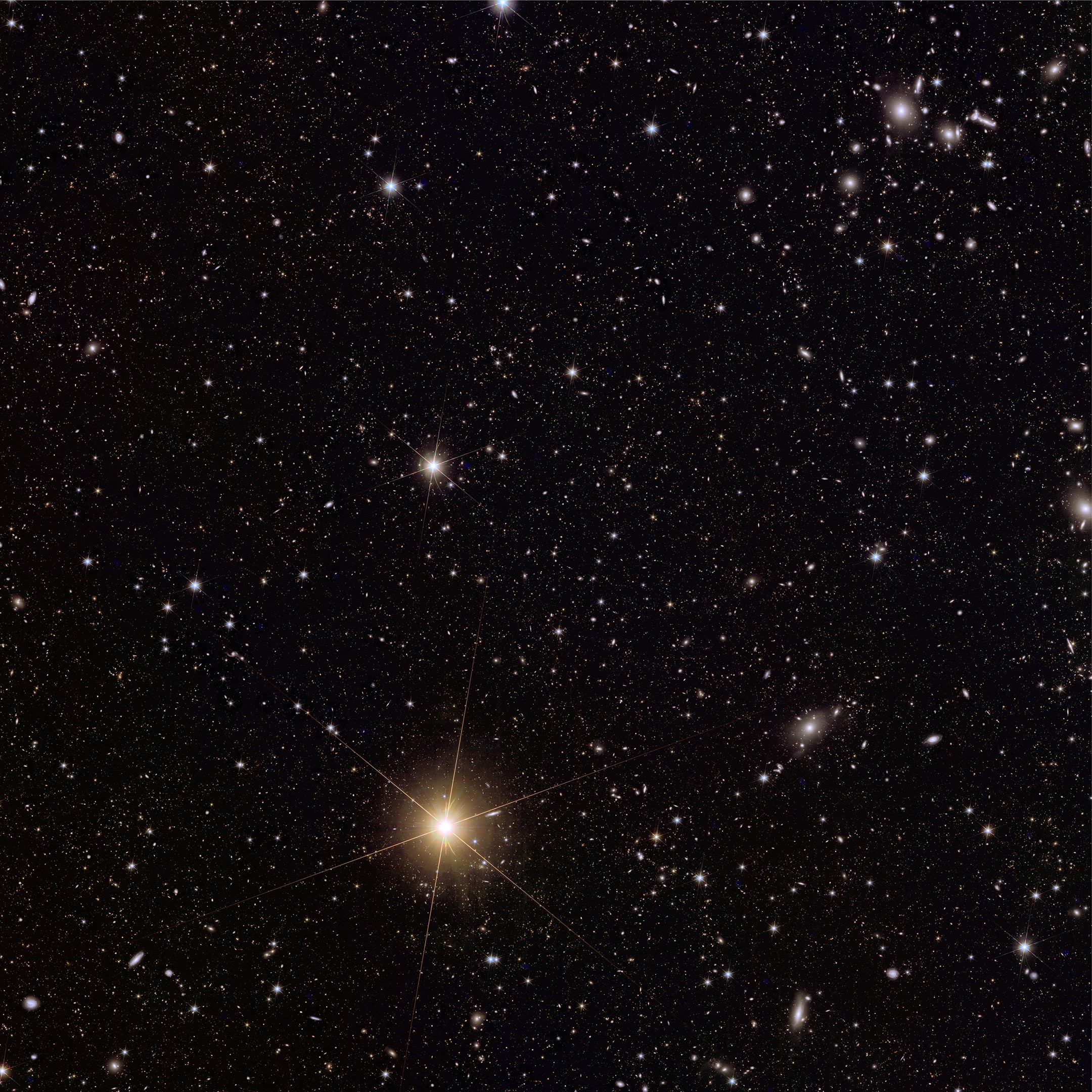
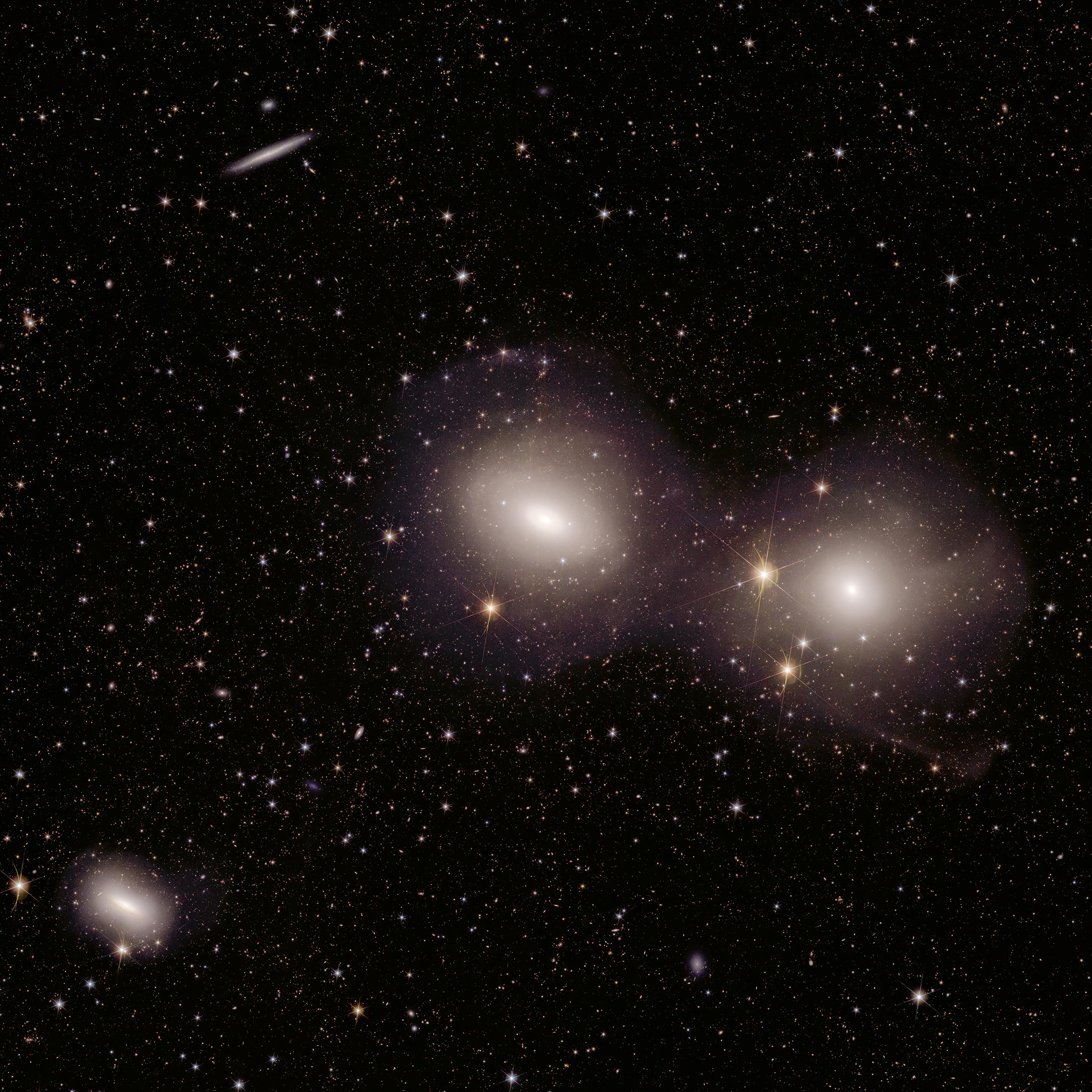
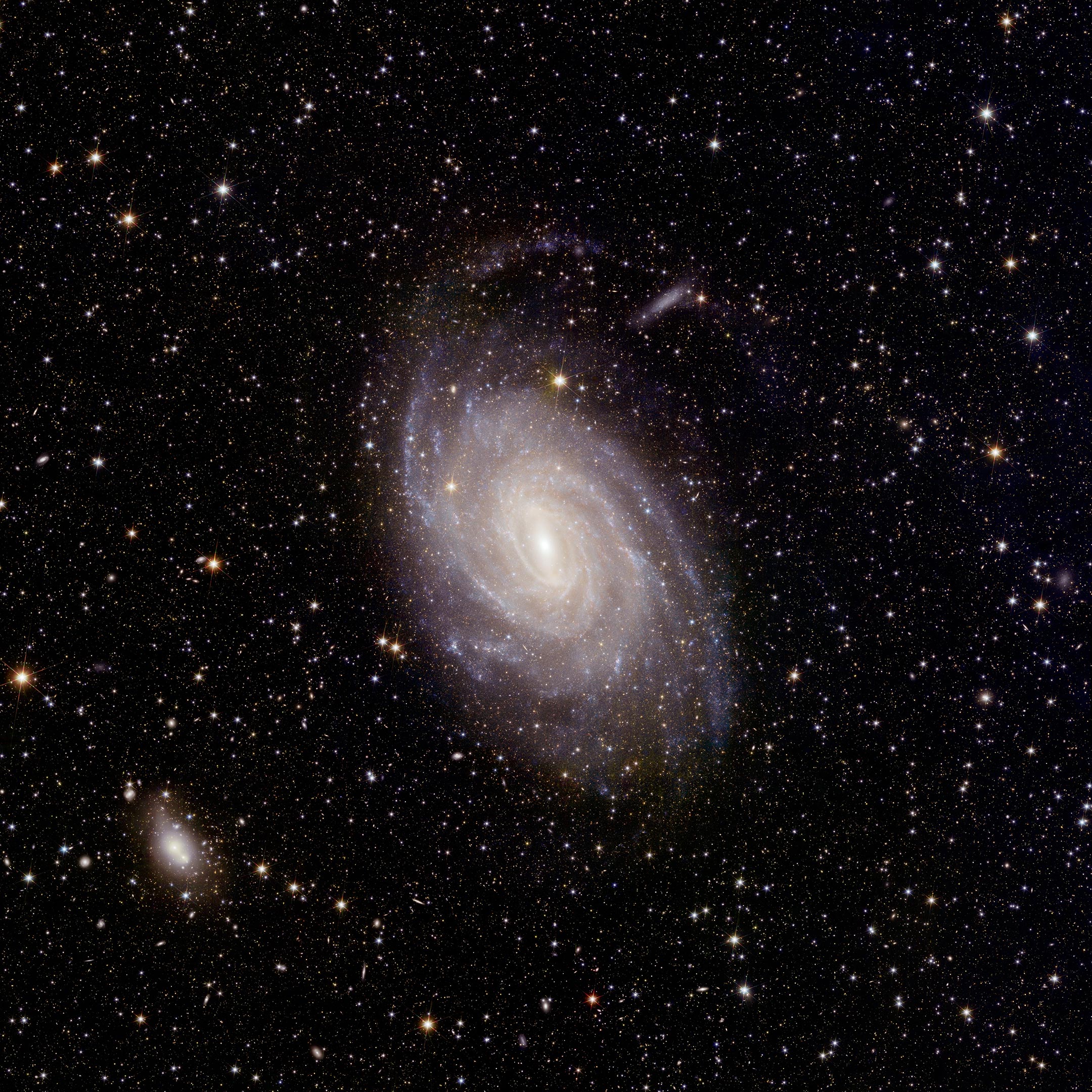
The five new images feature views of varying sizes — from a star-forming region in the Milky Way galaxy to clusters of hundreds of galaxies — and were taken shortly after Euclid’s launch in July 2023 as part of its early release observations program. The mission released five images from that program last year as a preview of what Euclid would offer, before scientists had analyzed the data.
New Images and Research Availability
The new images, related science papers, and data are available on the Euclid website. A pre-recorded program by ESA about these findings is available on ESA TV and YouTube.
Mission planners with NASA’s forthcoming Nancy Grace Roman Space Telescope will use Euclid’s findings to inform Roman’s complementary dark energy work. Scientists will use Roman, with its better sensitivity and sharpness, to extend the kind of science Euclid enables by studying fainter and more distant galaxies.
Curved Space and Gravitational Lensing
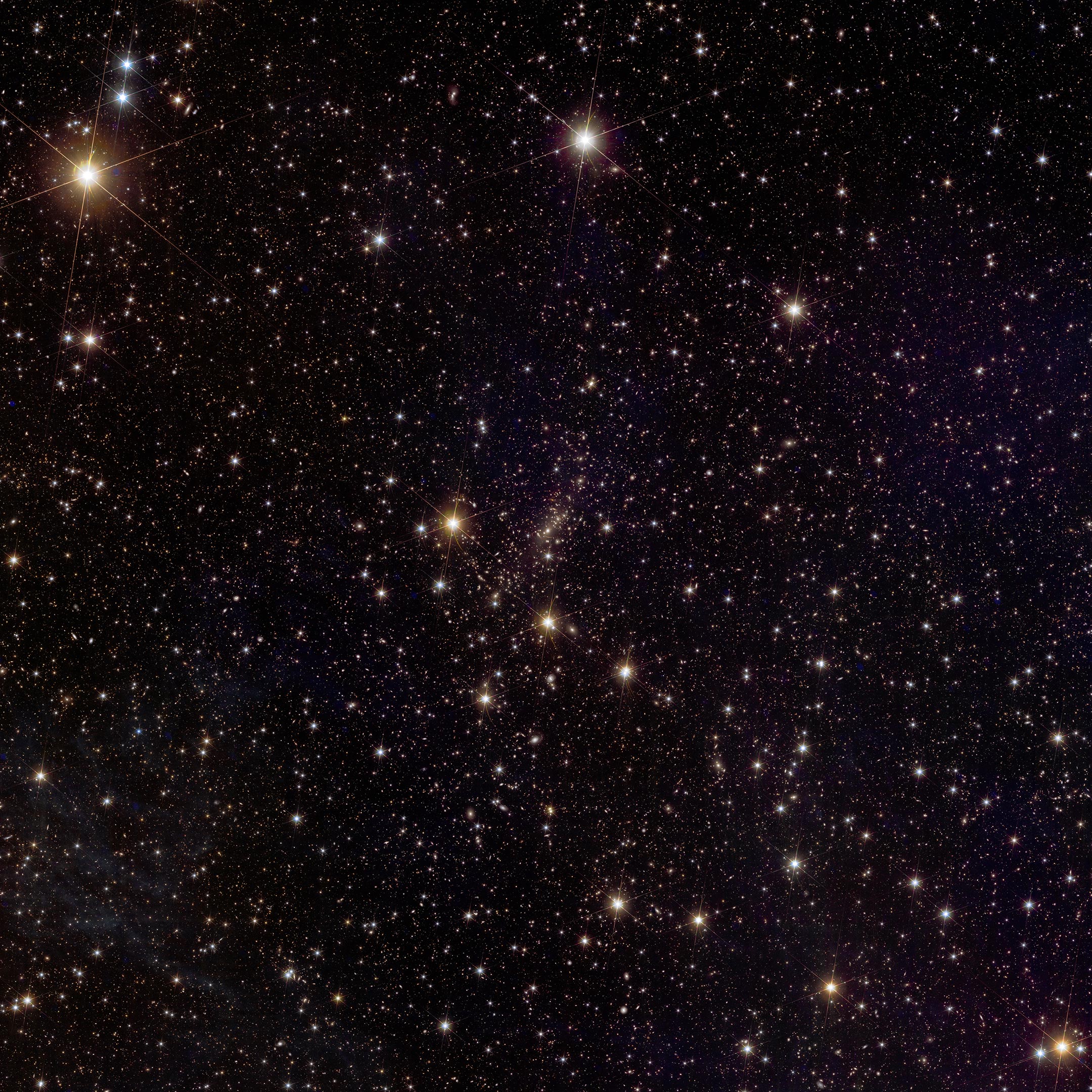
One way Euclid will help scientists study dark matter is by observing how this mysterious phenomenon warps the light from distant galaxies, as seen in one of the new images featuring a cluster of galaxies called Abell 2390. The mass of the galaxy cluster, which includes dark matter, creates curves in space. Light from more distant galaxies traveling over those curves appears to bend or arc, similar to how light looks when passing through the warped glass of an old window. Sometimes the warping is so powerful it can create rings, pronounced arcs, or multiple images of the same galaxy — a phenomenon called strong gravitational lensing.
Scientists interested in exploring the effects of dark energy will primarily look for a subtler effect, called weak gravitational lensing, which requires detailed computer analysis to detect and reveals the presence of even smaller clumps of dark matter. By mapping that dark matter and tracing how these clumps evolve over time, scientists will investigate how the outward acceleration of dark energy has changed dark matter’s distribution.
Instruments and Observational Capabilities
“Because dark energy is a relatively weak effect, we need larger surveys to give us more data and better statistical precision,” said Mike Seiffert, the NASA project scientist for Euclid at the agency’s Jet Propulsion Laboratory in Southern California. “It’s not something where we can zoom in on one galaxy and study it in detail. We need to look at a much bigger area but still be able to detect these subtle effects. To make that happen, we needed a specialized space telescope like Euclid.”
The telescope uses two instruments that detect different wavelengths of light: the visible-light imager (VIS) and the near-infrared spectrometer and photometer (NISP). Foreground galaxies emit more light in visible wavelengths (those the human eye can perceive), while background galaxies are typically brighter in infrared wavelengths.
“Observing a galaxy cluster with both instruments allows us to see galaxies at a wider range of distances than what we could get using either visible or infrared alone,” said JPL’s Jason Rhodes, principal investigator for NASA’s Euclid dark energy science team. “And Euclid can make these types of deep, wide, high-resolution images hundreds of times faster than other telescopes.”
Discoveries Beyond Dark Energy
While dark matter and dark energy are central to the Euclid. The mission has a variety of other astronomical applications. Euclid’s large-area sky map can, for instance, be used to discover faint objects and observe changes in cosmic objects, like a star changing in brightness. Euclid’s new science results include the detection of free-floating planets (planets that don’t orbit stars), which are difficult to find because of their faintness. In addition, the data reveals newly discovered brown dwarfs. Thought to form like stars but not quite large enough to begin fusion in their cores, these objects highlight the differences between stars and planets.
“The data, images, and scientific papers coming out now mark the very beginning of Euclid’s scientific results, and they show a startlingly wide variety of science beyond the primary objective of the mission,” said Seiffert. “What we’re already seeing from Euclid’s wide view has produced results that study individual planets, features in our home Milky Way galaxy, and the structure of the universe at large scales. It’s both thrilling and a little overwhelming to keep up with all the developments.”
Euclid Contributions and Support
Three NASA-supported science teams contribute to the Euclid mission. In addition to designing and fabricating the sensor-chip electronics for Euclid’s Near Infrared Spectrometer and Photometer (NISP) instrument, JPL led the procurement and delivery of the NISP detectors as well. Those detectors, along with the sensor chip electronics, were tested at NASA’s Detector Characterization Lab at Goddard Space Flight Center in Greenbelt, Maryland. The Euclid NASA Science Center at IPAC (ENSCI), at Caltech in Pasadena, California, will archive the science data and support U.S.-based science investigations. JPL (Jet Propulsion Laboratory) is a division of Caltech.
Never miss a breakthrough: Join the SciTechDaily newsletter.
Follow us on Google and Google News.
1 Comment
The universe does not do algebra, formulas, or fractions. The universe is the superposition, deflection, and twisting of geometric shapes, with its core being the spin and synchronization effects of topological vortex gravitational fields.