
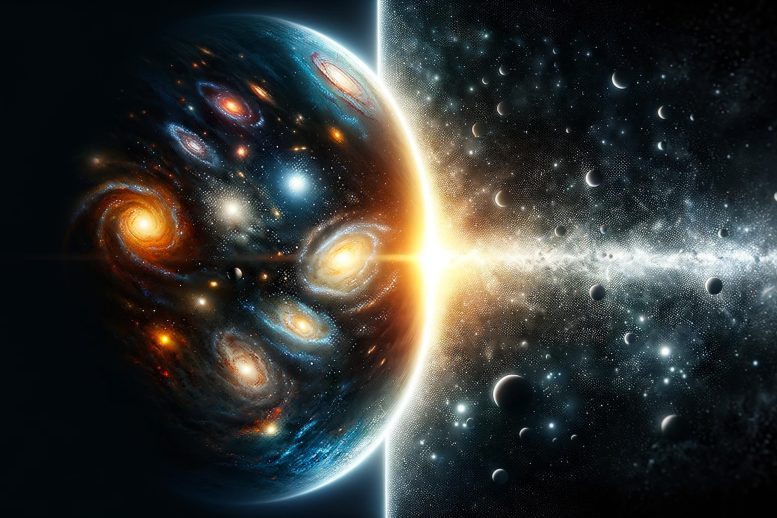
Today, ESA’s Euclid space mission reveals its first full-color images of the cosmos. Never before has a telescope been able to create such razor-sharp astronomical images across such a large patch of the sky, and looking so far into the distant Universe. These five images illustrate Euclid’s full potential; they show that the telescope is ready to create the most extensive 3D map of the Universe yet, to uncover some of its hidden secrets.
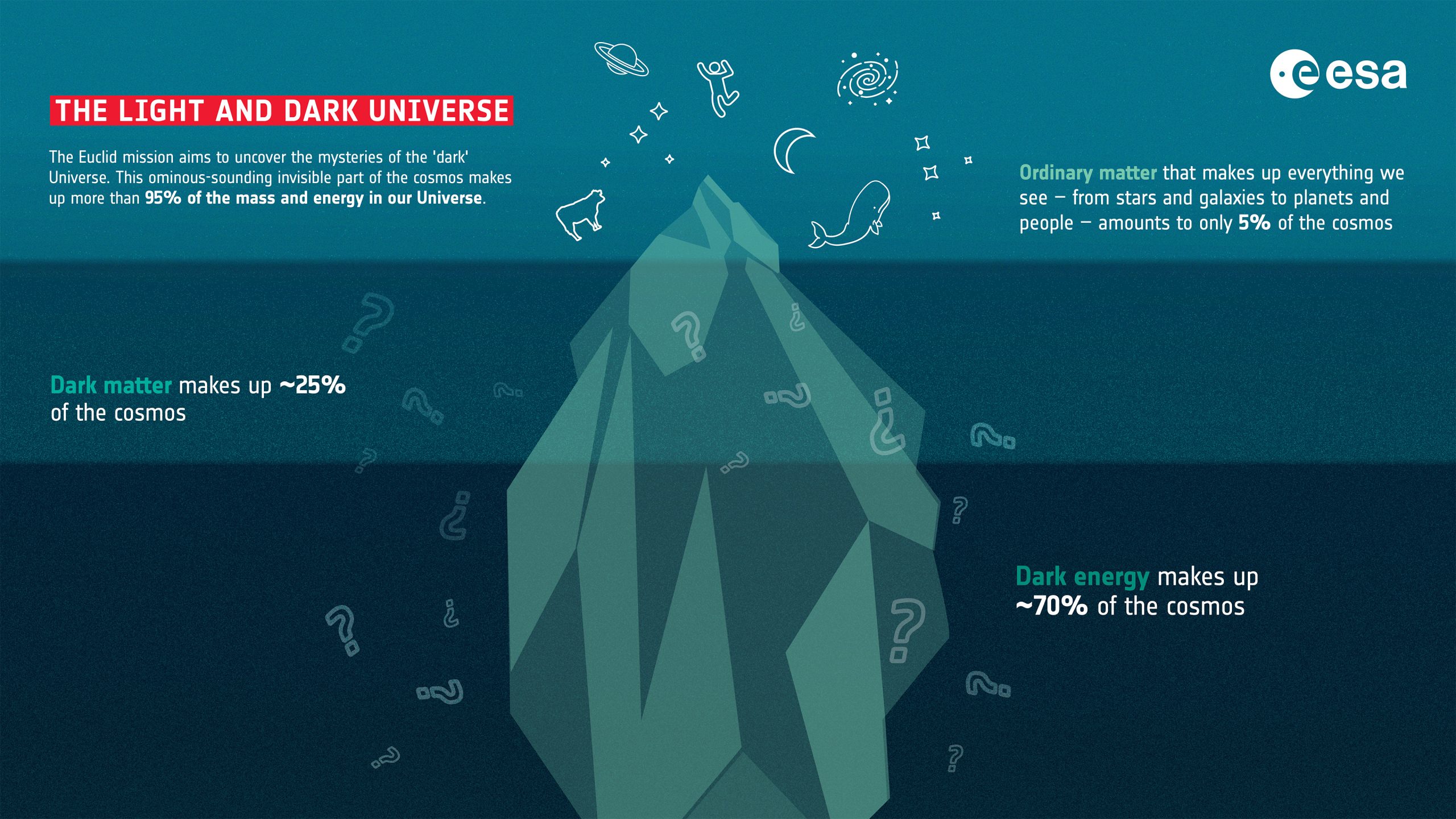
Euclid, our dark Universe detective, has a difficult task: to investigate how dark matter and dark energy have made our Universe look like it does today. 95% of our cosmos appears to be made of these mysterious ‘dark’ entities. But we don’t understand what they are because their presence causes only very subtle changes in the appearance and motions of the things we can see.
For centuries, astronomers have aimed to learn more about the luminous sources of the cosmos: planets, stars, galaxies, and gas, for example. But these objects make up only a small fraction of what the Universe contains.
95% of the Universe appears to be made up of unknown ‘dark’ matter and energy. Scientists estimate that dark matter makes up about 25% of the Universe and dark energy 70%. Dark matter and energy affect the motion and distribution of visible sources, but do not emit, absorb, or reflect any light, and scientists do not know yet what these entities actually are. Understanding their nature is therefore one of the most compelling challenges of cosmology and fundamental physics today. Credit: ESA
Exploring the Dark Universe
To reveal the ‘dark’ influence on the visible Universe, over the next six years, Euclid will observe the shapes, distances, and motions of billions of galaxies out to 10 billion light-years. By doing this, it will create the largest cosmic 3D map ever made.
What makes Euclid’s view of the cosmos special is its ability to create a remarkably sharp visible and infrared image across a huge part of the sky in just one sitting.
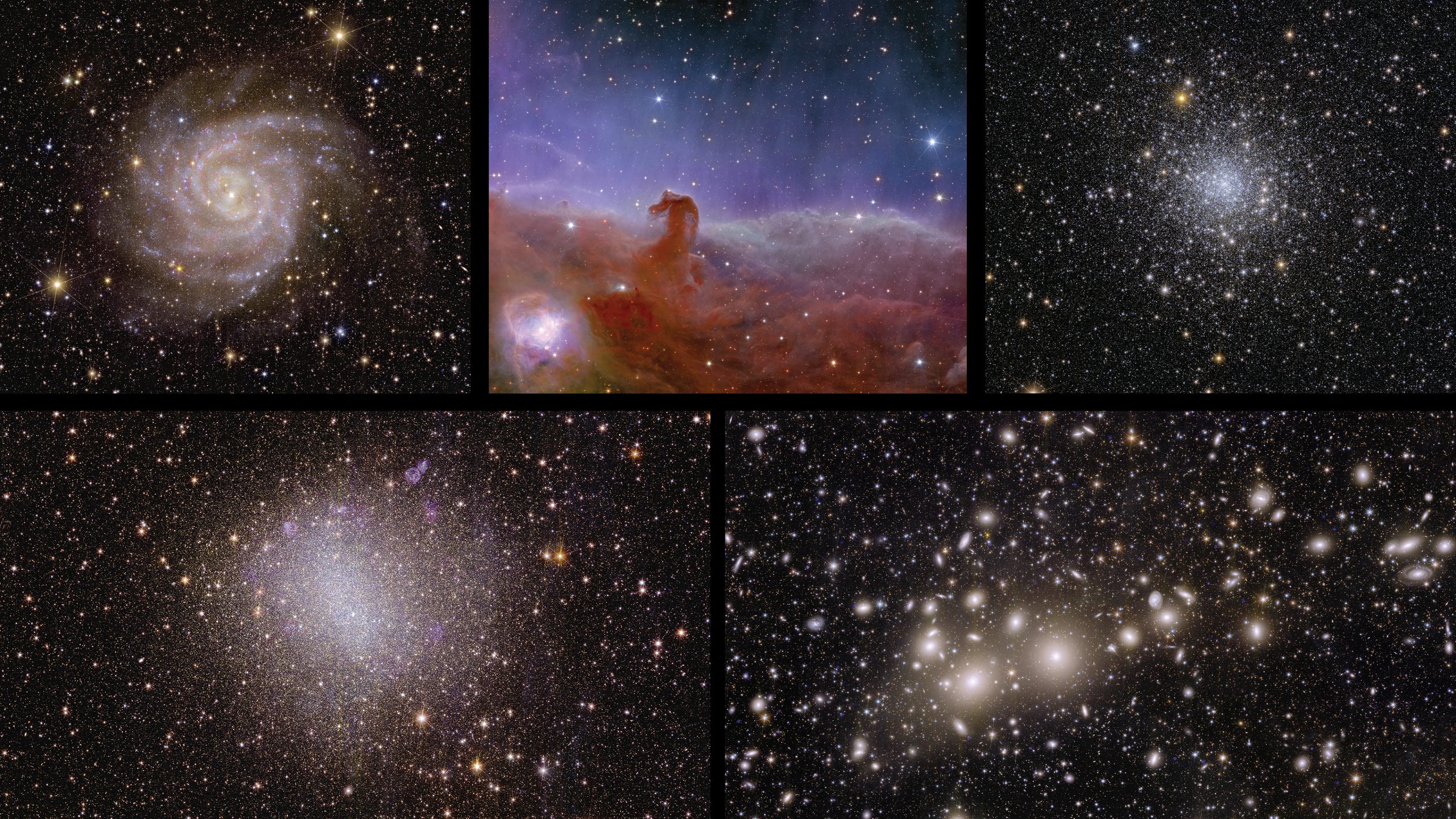
The images released today showcase this special capacity: from bright stars to faint galaxies, the observations show the entirety of these celestial objects, while remaining extremely sharp, even when zooming in on distant galaxies.
“Dark matter pulls galaxies together and causes them to spin more rapidly than visible matter alone can account for; dark energy is driving the accelerated expansion of the Universe. Euclid will for the first-time allow cosmologists to study these competing dark mysteries together,” explains ESA Director of Science, Professor Carole Mundell. “Euclid will make a leap in our understanding of the cosmos as a whole, and these exquisite Euclid images show that the mission is ready to help answer one of the greatest mysteries of modern physics.”
Capturing the Universe in Unprecedented Detail
“We have never seen astronomical images like this before, containing so much detail. They are even more beautiful and sharp than we could have hoped for, showing us many previously unseen features in well-known areas of the nearby Universe. Now we are ready to observe billions of galaxies, and study their evolution over cosmic time,” says René Laureijs, ESA’s Euclid Project Scientist.
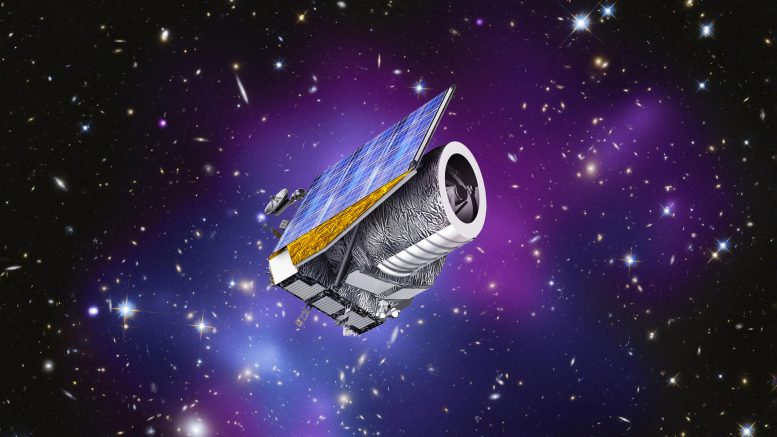
“Our high standards for this telescope paid off: that there is so much detail in these images, is all thanks to a special optical design, perfect manufacturing and assembly of telescope and instruments, and extremely accurate pointing and temperature control,” adds Giuseppe Racca, ESA’s Euclid Project Manager.
“I wish to congratulate and thank everyone involved with making this ambitious mission a reality, which is a reflection of European excellence and international collaboration. The first images captured by Euclid are awe-inspiring and remind us of why it is essential that we go to space to learn more about the mysteries of the Universe,” says ESA Director General Josef Aschbacher.
Zoom Into the Universe Through Euclid’s eyes
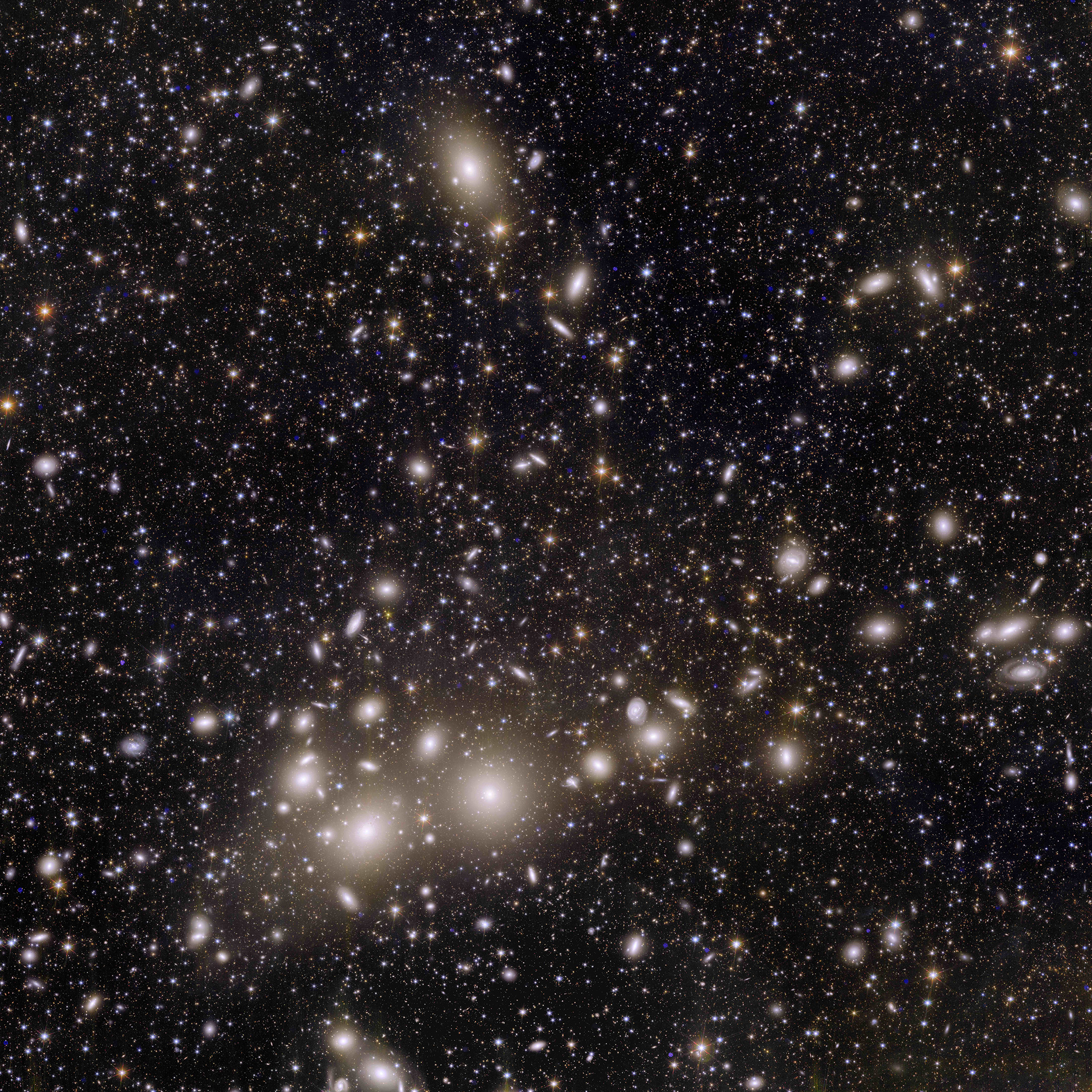
The Perseus Cluster of Galaxies
This incredible snapshot from Euclid is a revolution for astronomy. The image shows 1000 galaxies belonging to the Perseus Cluster, and more than 100,000 additional galaxies farther away in the background.
Many of these faint galaxies were previously unseen. Some of them are so distant that their light has taken 10 billion years to reach us. By mapping the distribution and shapes of these galaxies, cosmologists will be able to find out more about how dark matter shaped the Universe that we see today.
This is the first time that such a large image has allowed us to capture so many Perseus galaxies in such a high level of detail. Perseus is one of the most massive structures known in the Universe, located ‘just’ 240 million light-years away from Earth.
Astronomers demonstrated that galaxy clusters like Perseus can only have formed if dark matter is present in the Universe. Euclid will observe numerous galaxy clusters like Perseus across cosmic time, revealing the ‘dark’ element that holds them together.
Read the full story about this image.
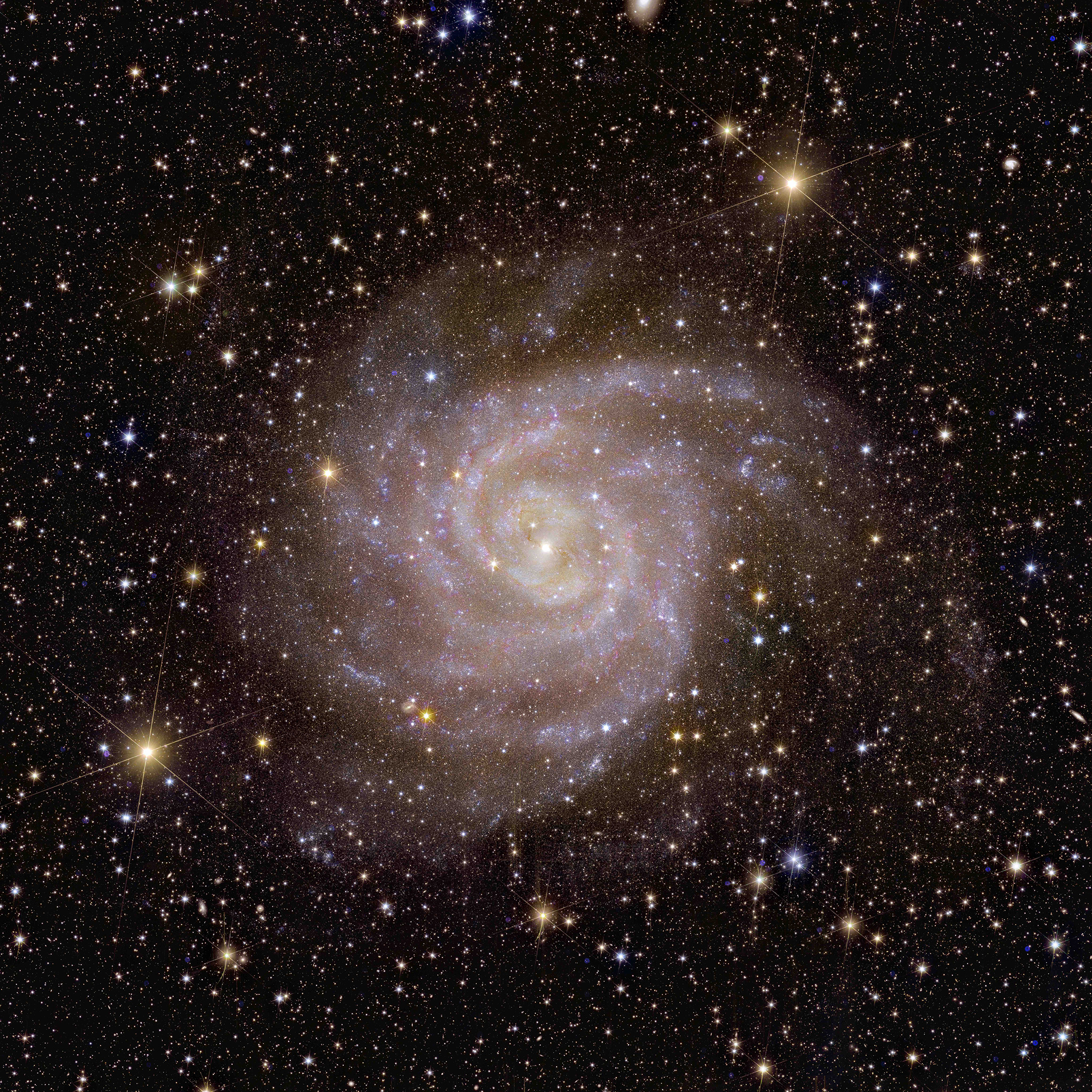
Spiral Galaxy IC 342
Over its lifetime, our dark Universe detective will image billions of galaxies, revealing the unseen influence that dark matter and dark energy have on them. That’s why it’s fitting that one of the first galaxies that Euclid observed is nicknamed the ‘Hidden Galaxy’, also known as IC 342 or Caldwell 5. Thanks to its infrared view, Euclid has already uncovered crucial information about the stars in this galaxy, which is a look-alike of our Milky Way.
Read the full story about this image.
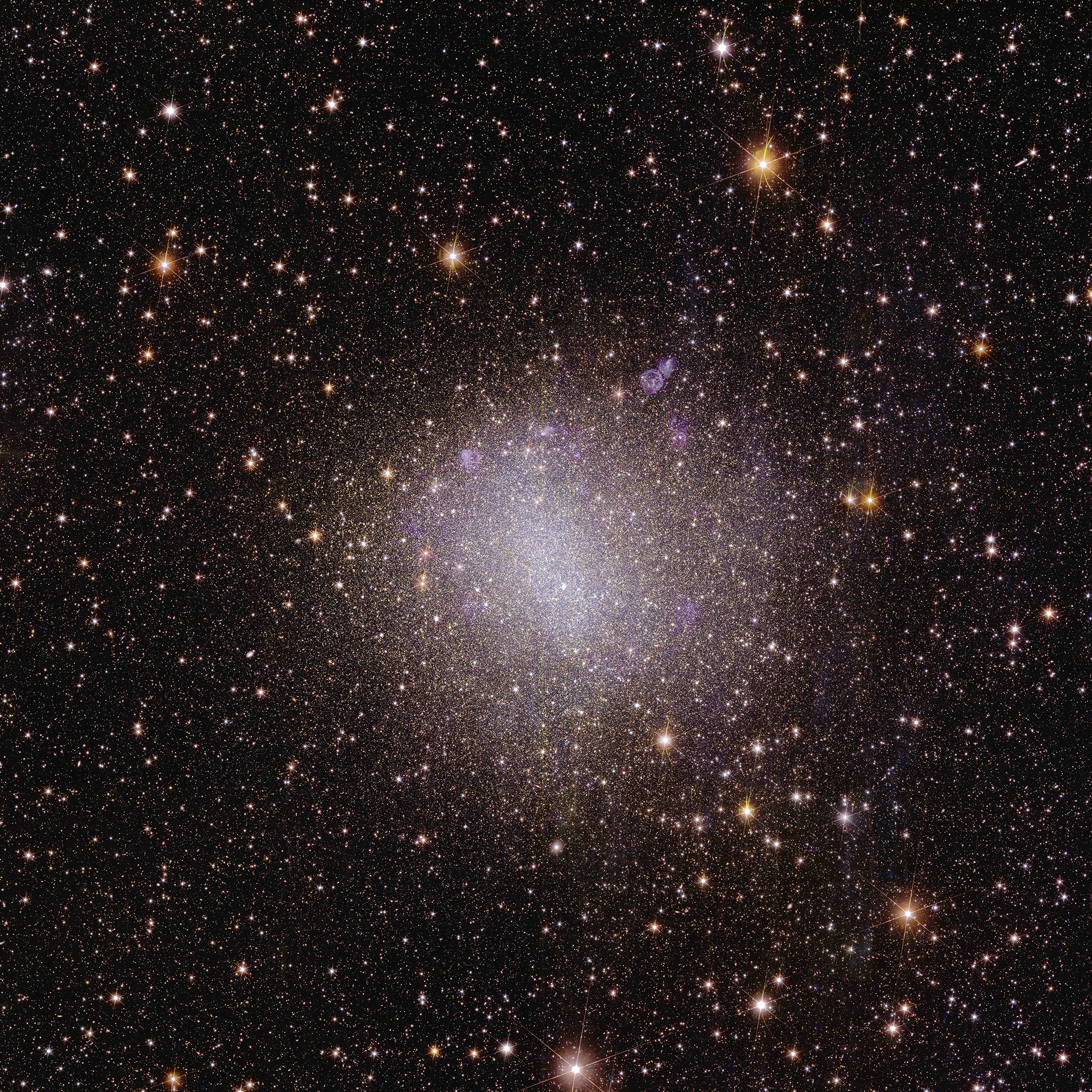
Irregular Galaxy NGC 6822
To create a 3D map of the Universe, Euclid will observe the light from galaxies out to 10 billion light-years. Most galaxies in the early Universe don’t look like the quintessential neat spiral, but are irregular and small. They are the building blocks for bigger galaxies like our own, and we can still find some of these galaxies relatively close to us. This first irregular dwarf galaxy that Euclid observed is called NGC 6822 and is located close by, just 1.6 million light-years from Earth.
Read the full story about this image.
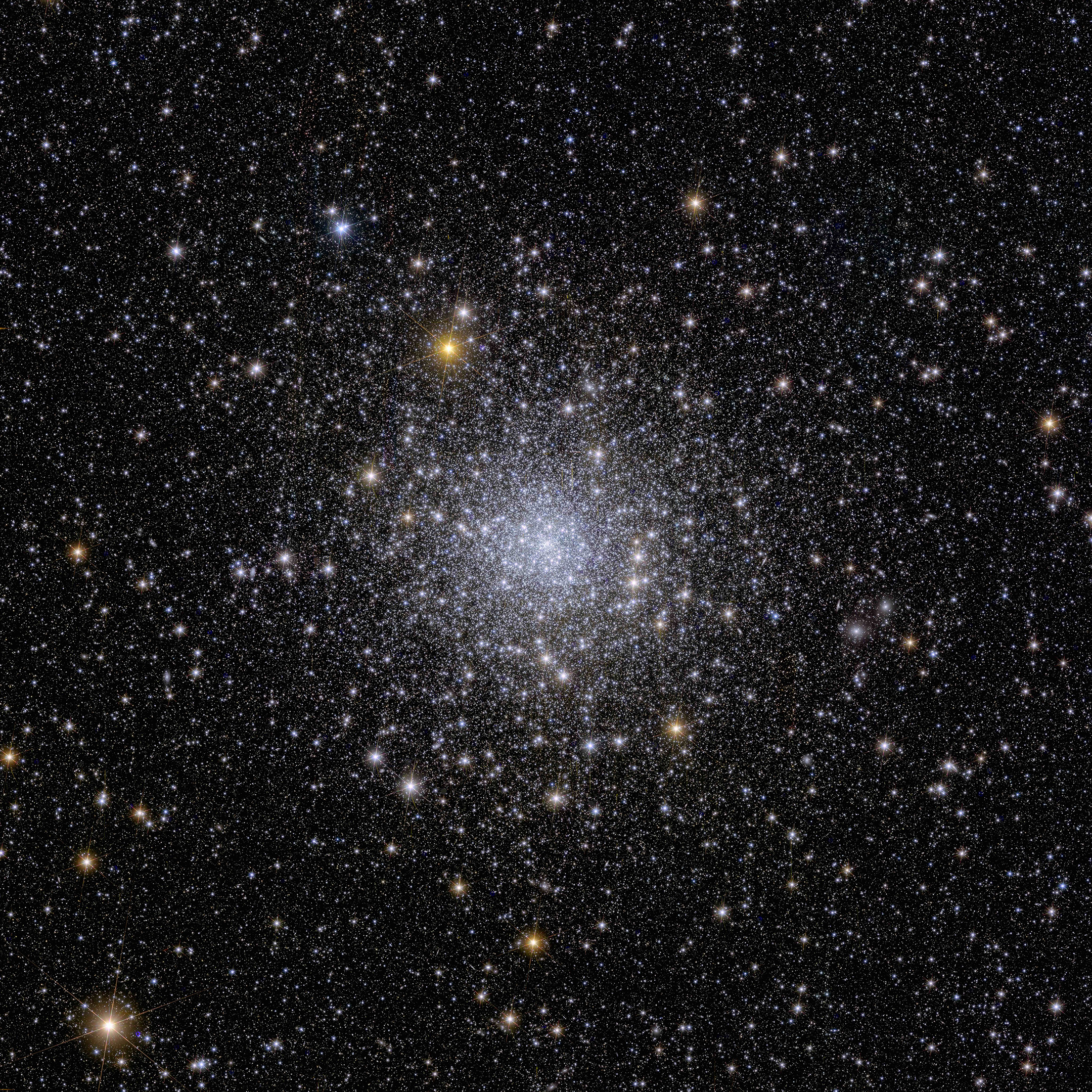
Globular Cluster NGC 6397
This sparkly image shows Euclid’s view on a globular cluster called NGC 6397. This is the second-closest globular cluster to Earth, located about 7800 light-years away. Globular clusters are collections of hundreds of thousands of stars held together by gravity. Currently, no other telescope than Euclid can observe an entire globular cluster in one single observation, and at the same time distinguish so many stars in the cluster. These faint stars tell us about the history of the Milky Way and where dark matter is located.
Read the full story about this image.
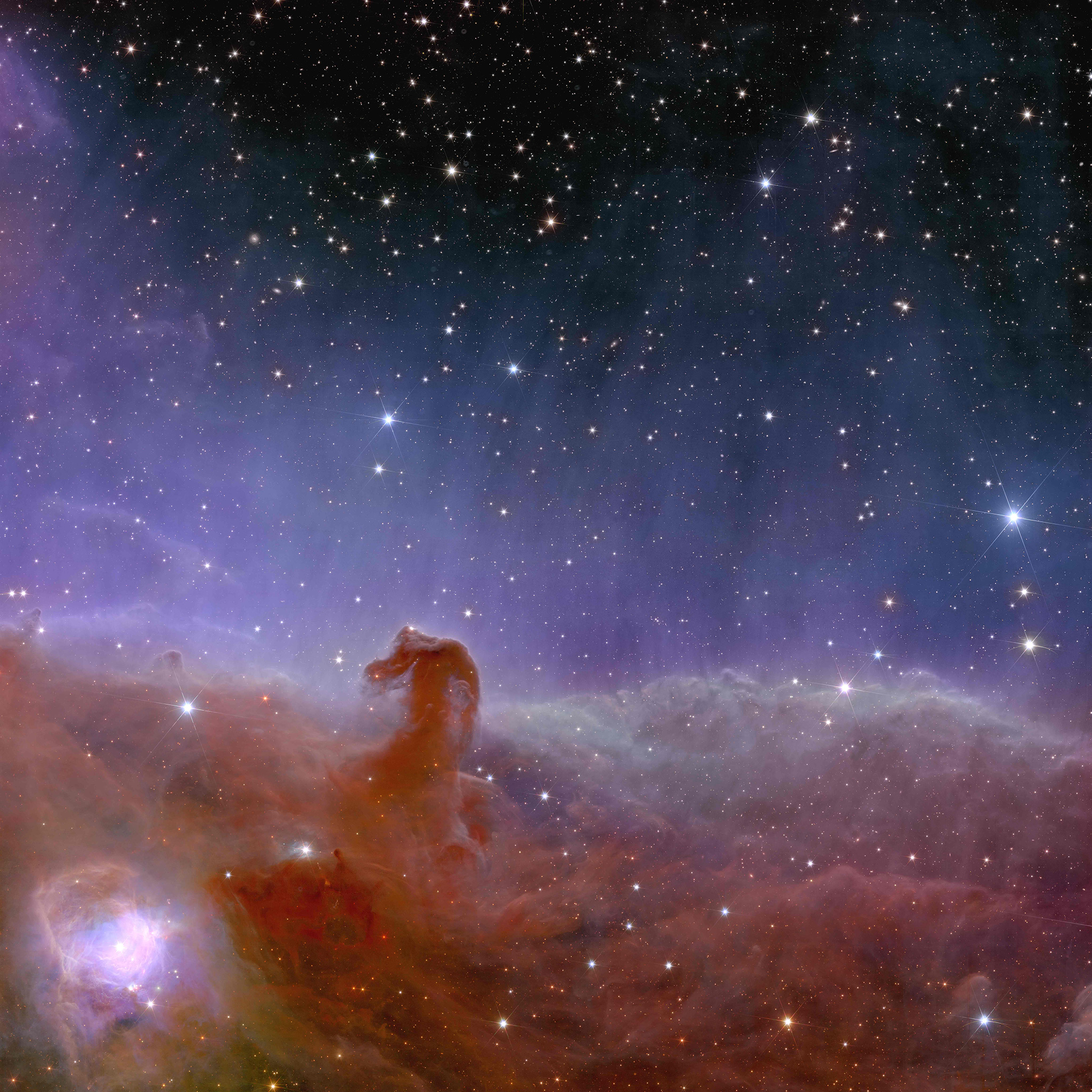
The Horsehead Nebula
Euclid shows us a spectacularly panoramic and detailed view of the Horsehead Nebula, also known as Barnard 33 and part of the constellation Orion. In Euclid’s new observation of this stellar nursery, scientists hope to find many dim and previously unseen Jupiter-mass planets in their celestial infancy, as well as young brown dwarfs and baby stars.
Read the full story about this image.
New Discoveries, Soon
Euclid’s first view of the cosmos is not only beautiful, but also immensely valuable for the scientific community.
Firstly, it showcases that Euclid’s telescope and instruments are performing extremely well and that astronomers can use Euclid to study the distribution of matter in the Universe and its evolution at the largest scales. Combining many observations of this quality covering large areas of the sky will show us the dark and hidden parts of the cosmos.
Secondly, each image individually contains a wealth of new information about the nearby Universe (click on the individual images to learn more about this). “In the coming months, scientists in the Euclid Consortium will analyze these images and publish a series of scientific papers in the journal Astronomy & Astrophysics, together with papers about the scientific objectives of the Euclid mission and the instrument performance,” adds Yannick Mellier, Euclid Consortium lead.
And finally, these images take us beyond the realm of dark matter and dark energy, also showing how Euclid will create a treasure trove of information about the physics of individual stars and galaxies.
Getting Ready for Routine Observations
Euclid launched to the Sun-Earth Lagrange point 2 on a SpaceX Falcon 9 rocket from Cape Canaveral Space Force Station in Florida, USA, at 17:12 CEST on 1 July 2023. In the months after launch, scientists and engineers have been engaged in an intense phase of testing and calibrating Euclid’s scientific instruments. The team is doing the last fine-tuning of the spacecraft before routine science observations begin in early 2024.
Over six years, Euclid will survey one-third of the sky with unprecedented accuracy and sensitivity. As the mission progresses, Euclid’s bank of data will be released once per year, and will be available to the global scientific community via the Astronomy Science Archives hosted at ESA’s European Space Astronomy Centre in Spain.
About Euclid
Euclid is a European mission, built and operated by ESA, with contributions from NASA. The Euclid Consortium – consisting of more than 2000 scientists from 300 institutes in 13 European countries, the US, Canada, and Japan – is responsible for providing the scientific instruments and scientific data analysis. ESA selected Thales Alenia Space as prime contractor for the construction of the satellite and its service module, with Airbus Defence and Space chosen to develop the payload module, including the telescope. NASA provided the detectors of the Near-Infrared Spectrometer and Photometer, NISP. Euclid is a medium-class mission in ESA’s Cosmic Vision Programme.
Never miss a breakthrough: Join the SciTechDaily newsletter.
Follow us on Google and Google News.
3 Comments
Electric Mysteries* there fixed it for you. Dark Matter doesn’t exist. Stop believing in faery tales and grow up.
Don’t put to much into the words dark matter a phrase used to simplify the large blobs in between areas of matter clouds, unexplained why they collies and have no energy detected, could be correct in the analisis that it simply are areas devoid of any material but we will probably not be determined until space travel is possible to very distant areas.
Awesome pictures, amazing technology. Well done people