
Close Menu
    Facebook X (Twitter) Instagram
    SciTechDaily
    • Biology
    • Chemistry
    • Earth
    • Health
    • Physics
    • Science
    • Space
    • Technology
    Facebook X (Twitter) Pinterest YouTube RSS
    SciTechDaily
    Home»Space»NASA’s Artemis I Moon Rocket Departs Launch Pad Ahead of Hurricane Ian
    Space

    NASA’s Artemis I Moon Rocket Departs Launch Pad Ahead of Hurricane Ian

    By NASASeptember 27, 2022No Comments2 Mins Read
    Facebook Twitter Pinterest Telegram LinkedIn WhatsApp Email Reddit
    Share
    Facebook Twitter LinkedIn Pinterest Telegram Email Reddit
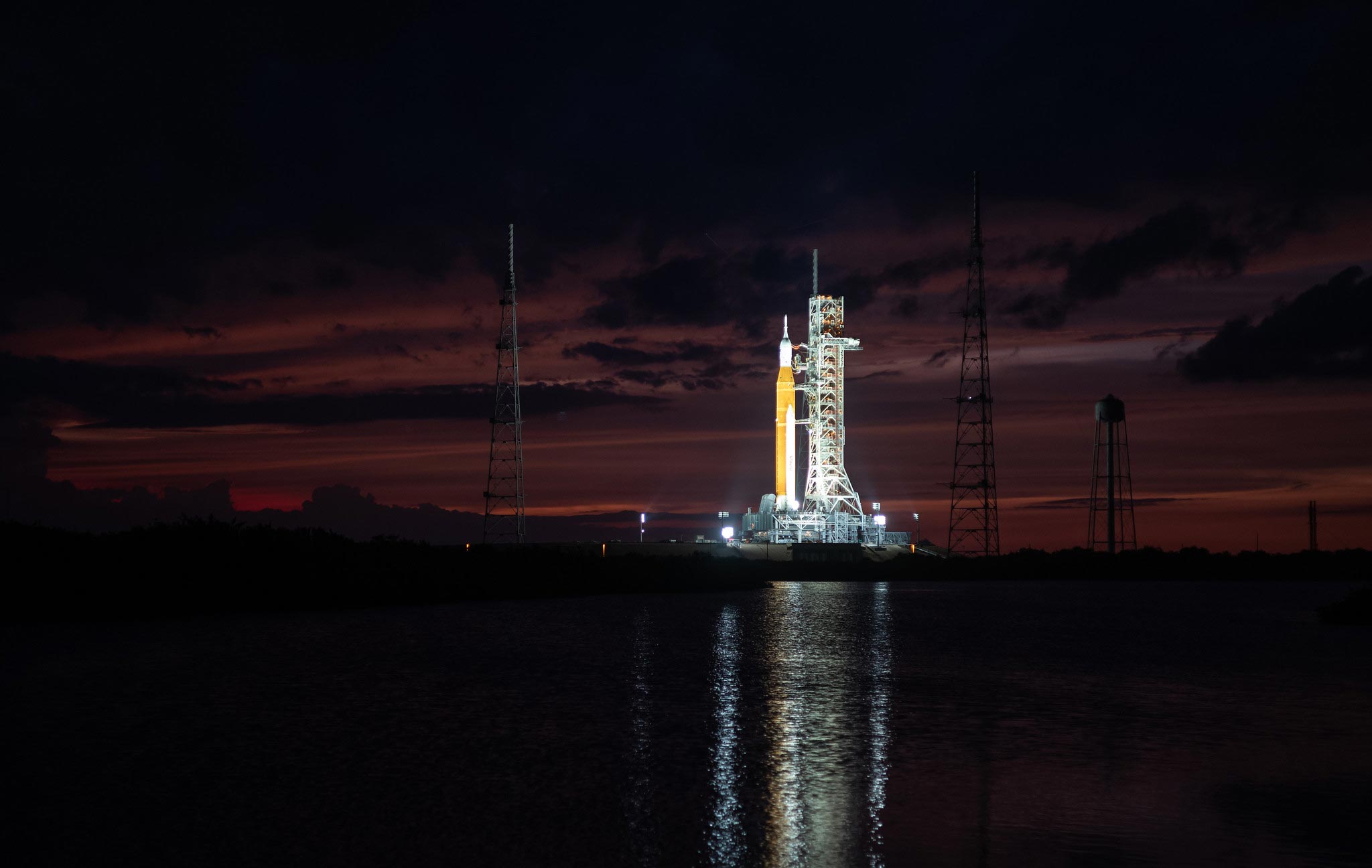
    NASA Artemis I Moon Rocket Departs Launch Pad Ahead of Hurricane Ian
    NASA’s Space Launch System (SLS) rocket with the Orion spacecraft aboard is seen atop the mobile launcher at Launch Pad 39B as teams configure systems for rolling back to the Vehicle Assembly Building, Monday, September 26, 2022, at NASA’s Kennedy Space Center in Florida. NASA made the decision to rollback based on the latest weather predictions associated with Hurricane Ian. NASA’s Artemis I flight test is the first integrated test of the agency’s deep space exploration systems: the Orion spacecraft, SLS rocket, and supporting ground systems. Credit: NASA/Joel Kowsky

    Managers decided to roll back based on the latest weather predictions associated with Hurricane Ian not showing improving expected conditions for the Kennedy area.

    At 11:21 p.m. EDT on Monday, September 26, NASA’s Artemis I Moon rocket left launch pad 39B atop the crawler-transporter and began its 4-mile trek to the Vehicle Assembly Building (VAB) at NASA’s Kennedy Space Center in Florida.

    Managers had met Monday morning and made the decision based on the latest weather predictions associated with Hurricane Ian, after additional data gathered overnight failed to show improving expected conditions for the Kennedy Space Center area. The decision allows time for employees to address the needs of their families as well as protect the integrated rocket and spacecraft system. The time of first motion, which was targeted for 11 p.m. EDT, was based on the best-predicted conditions for rollback to meet weather criteria for the move.

    For its weather-related decisions, NASA has continued to rely on the most up-to-date information from the National Oceanic and Atmospheric Administration (NOAA), U.S. Space Force, and the National Hurricane Center throughout its evaluations and continues to closely monitor conditions for the Kennedy area.

    NASA continues to provide a live stream of the rocket and spacecraft on the launch pad.

    Never miss a breakthrough: Join the SciTechDaily newsletter.
    Follow us on Google and Google News.

    ARTEMIS Mission Hurricane NASA Rocket Space Launch System
    Share. Facebook Twitter Pinterest LinkedIn Email Reddit

    Related Articles

    NASA’s Artemis II Is on the Launch Pad and the Moon Is Next

    NASA Fires Up RS-25 at 111% Power for Artemis Moon Launches

    212 Feet of Power: NASA’s Artemis II Rocket Fully Stacked for Moon Mission

    NASA Awards Artemis Contract for Future SLS Mega Moon Rocket Boosters

    NASA to Roll Out Artemis Mega Moon Rocket for First Time

    NASA’s Powerful SLS Rocket Fully Stacked for Artemis I Moon Mission – Liftoff for Deep Space in February 2022

    One Step Closer: Orion Spacecraft Stacked on Top SLS Rocket for NASA’s Artemis I Mission

    Final Piece of Rocket Hardware Added to Artemis I Stack

    NASA Readies for Future Artemis Moon Missions With SLS Rocket Engine Test Series

    Leave A Reply Cancel Reply

    • Facebook
    • Twitter
    • Pinterest
    • YouTube

    Don't Miss a Discovery

    Subscribe for the Latest in Science & Tech!

    Trending News

    Textbooks May Need Rewriting After Researchers Debunk a Core Chemistry Concept

    Alzheimer’s May Start With a Surprising Symptom – Not Memory Loss

    The “Hobbits” Mysteriously Disappeared 50,000 Years Ago – Scientists Have Revealed What Happened to Their Home

    One Sugar Tells Your Brain You’re Full. Another Barely Does

    One of Arizona’s Largest Reservoirs Is Less Than 1% Full After Snowpack Collapse

    This 400-Year-Old Shark May Hold the Secret to Preserving Human Vision

    Your Daily Orange Juice Could Have an Unexpected Health Benefit

    Black Hole Shredded a Massive Star in the Most Powerful Stellar Explosion Ever Seen

    Follow SciTechDaily
    • Facebook
    • Twitter
    • YouTube
    • Pinterest
    • Newsletter
    • RSS
    SciTech News
    • Biology News
    • Chemistry News
    • Earth News
    • Health News
    • Physics News
    • Science News
    • Space News
    • Technology News
    Recent Posts
    • Scientists Discover a 5-Million-Year-Old Whale Graveyard Deep Beneath the Indian Ocean
    • Ancient DNA Reveals the Hidden Origins of China’s Mysterious Shimao Civilization
    • Scientists Finally Solve a 50-Year Mystery Hidden in Solid Nitrogen
    • Saturn’s Largest Moon May Hold the Resources for a Space Colony
    • New Wearable Patch Boosts REM Sleep Without Drugs or Surgery
    Copyright © 1998 - 2026 SciTechDaily. All Rights Reserved.
    • Science News
    • About
    • Contact
    • Editorial Board
    • Privacy Policy
    • Terms of Use

    Type above and press Enter to search. Press Esc to cancel.