
Close Menu
    Facebook X (Twitter) Instagram
    SciTechDaily
    • Biology
    • Chemistry
    • Earth
    • Health
    • Physics
    • Science
    • Space
    • Technology
    Facebook X (Twitter) Pinterest YouTube RSS
    SciTechDaily
    Home»Space»NASA’s Curiosity Rover Sends a Beautiful Picture Postcard From Mars
    Space

    NASA’s Curiosity Rover Sends a Beautiful Picture Postcard From Mars

    By Jet Propulsion LaboratoryNovember 24, 2021No Comments3 Mins Read
    Facebook Twitter Pinterest Telegram LinkedIn WhatsApp Email Reddit
    Share
    Facebook Twitter LinkedIn Pinterest Telegram Email Reddit
    NASA’s Curiosity Rover Picture Postcard From Mars
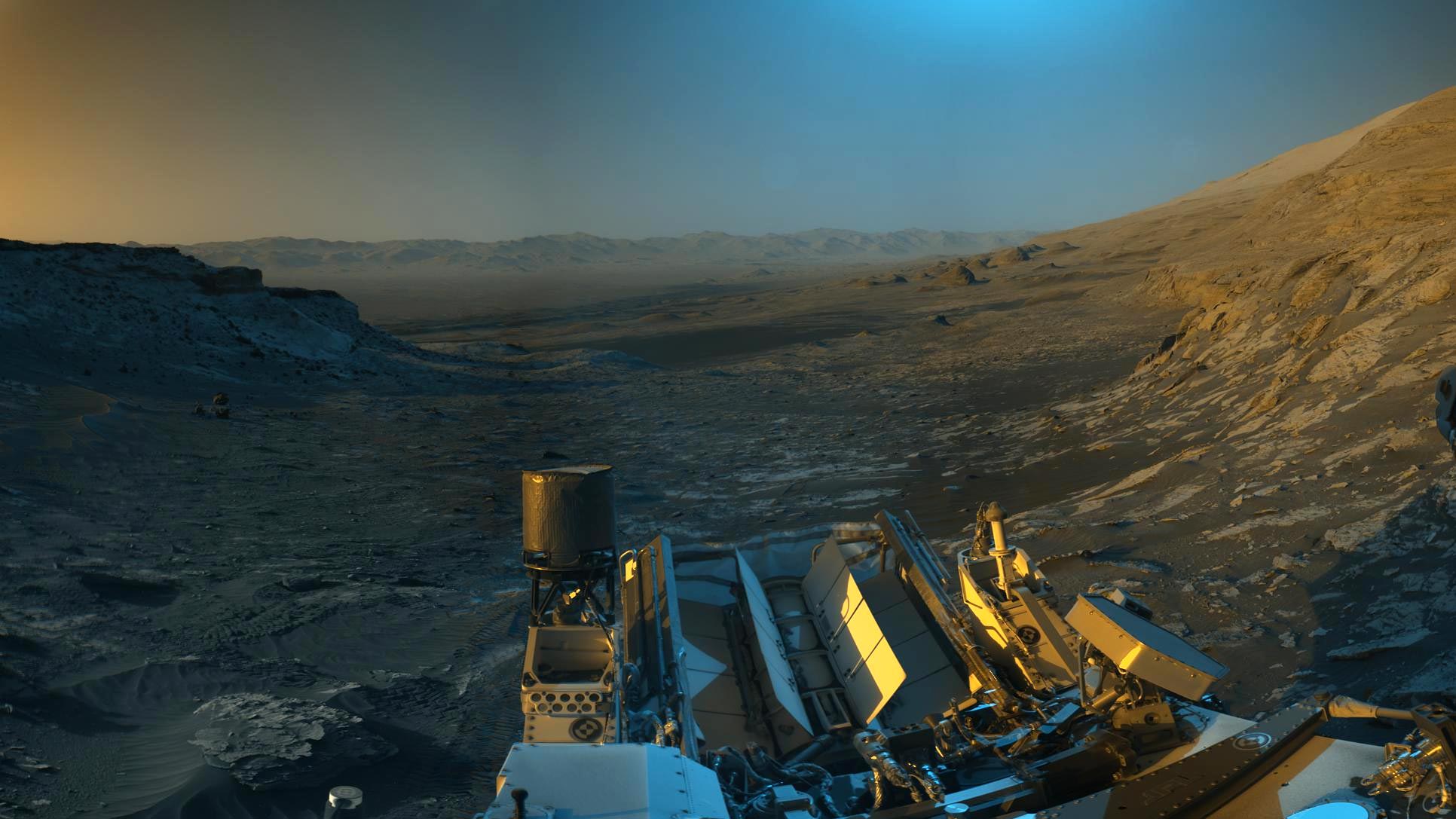
    NASA’s Curiosity Mars rover used its navigation cameras to capture panoramas of this scene. Blue, orange, and green color was added to a combination of the panoramas for an artistic interpretation of the scene. Credit: NASA/JPL-Caltech

    An artistic interpretation of Curiosity’s view high up on a Martian mountain was created by mission team members who were stunned by the sweeping landscape.

    NASA’s Curiosity rover captured a remarkable image from its most recent perch on the side of Mars’ Mount Sharp. The mission team was so inspired by the beauty of the landscape, they combined two versions of the black-and-white images from different times of the day and added colors to create a rare postcard from the Red Planet.

    Curiosity captures a 360-degree view of its surroundings with its black-and-white navigation cameras each time it completes a drive. To make the resulting panorama easier to send to Earth, the rover keeps it in a compressed, low-quality format. But when the rover team saw the view from Curiosity’s most recent stopping point, the scene was just too pretty not to capture it in the highest quality that the navigation cameras are capable of.
    NASA’s Curiosity Rover Black and White Navigation Camera Afternoon
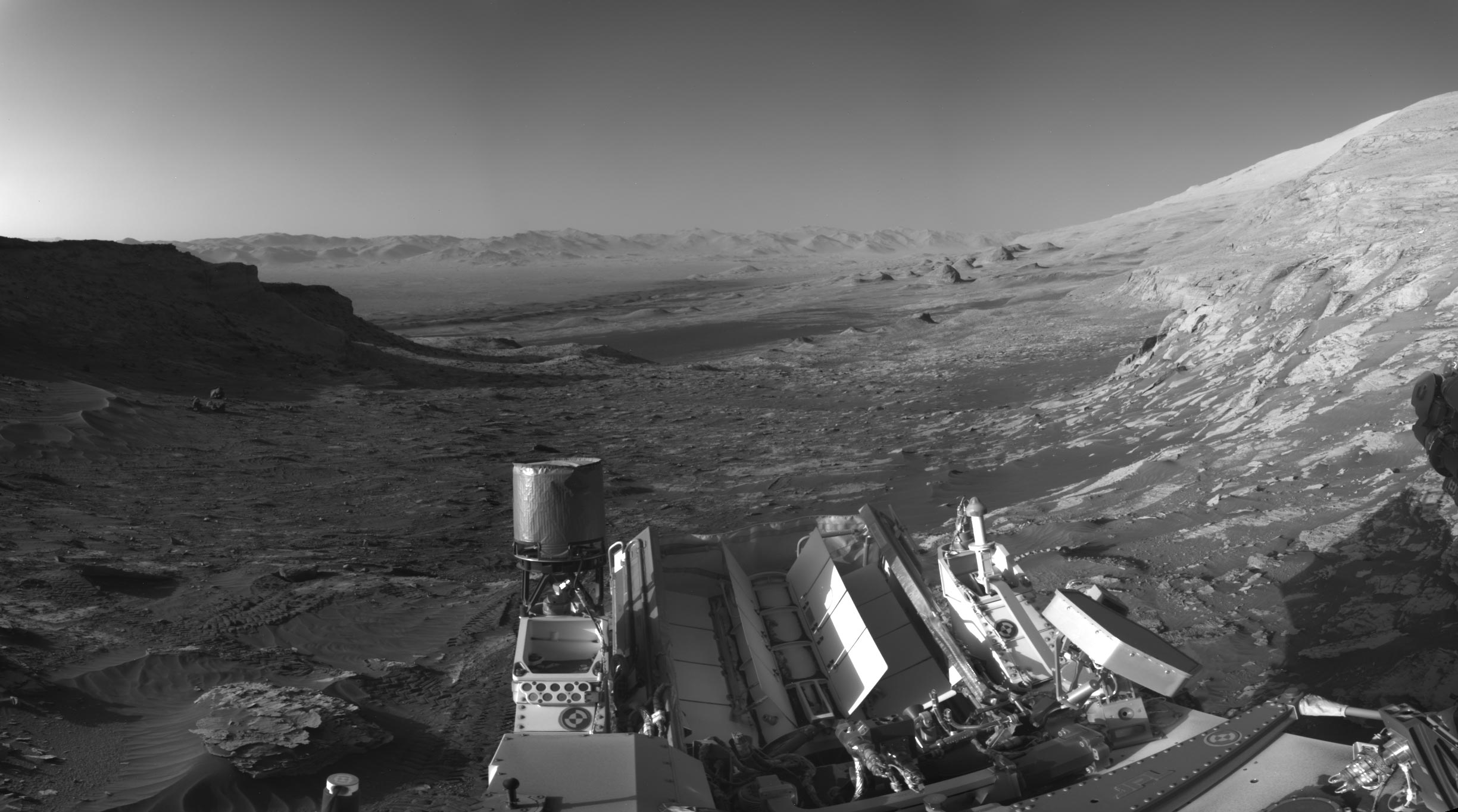
    NASA’s Curiosity Mars rover used its black-and-white navigation cameras to capture panoramas of this scene at two times of day. This was the view at 4:10 p.m. local Mars time. Credit: NASA/JPL-Caltech

    Many of the rover’s most stunning panoramas are from the color Mastcam instrument, which has far higher resolution than the navigation cameras. That’s why the team added colors of their own to this latest image. The blue, orange, and green tints are not what the human eye would see; instead, they represent the scene as viewed at different times of day.

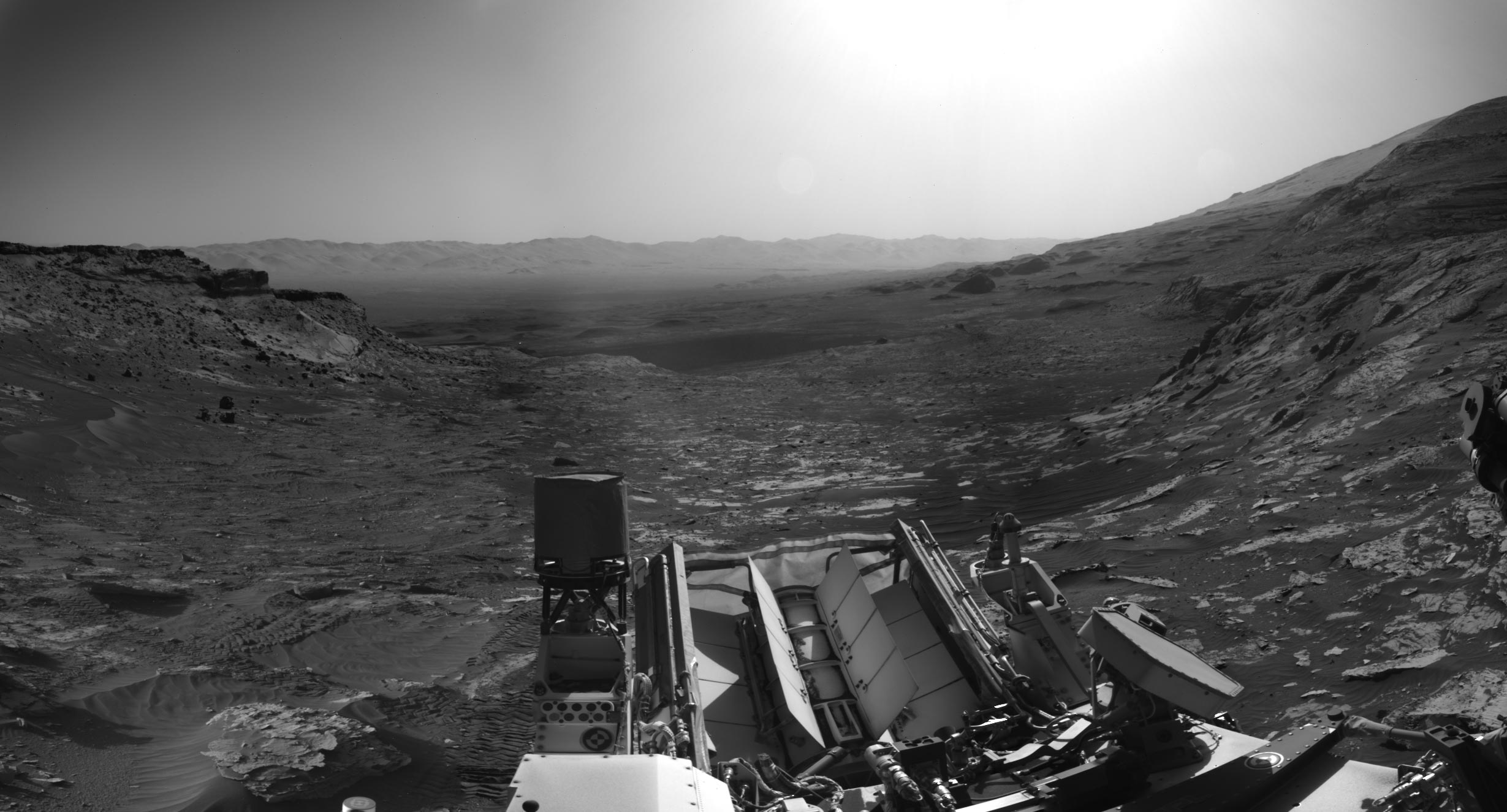
    On November 16, 2021 (the 3,299th Martian day, or sol, of the mission), engineers commanded Curiosity to take two sets of mosaics, or composite images, capturing the scene at 8:30 a.m. and again at 4:10 p.m. local Mars time. The two times of day provided contrasting lighting conditions that brought out a variety of landscape details. The team then combined the two scenes in an artistic re-creation that includes elements from the morning scene in blue, the afternoon scene in orange, and a combination of both in green.
    NASA’s Curiosity Rover Black and White Navigation Camera Morning
    NASA’s Curiosity Mars rover used its black-and-white navigation cameras to capture panoramas of this scene at two times of day. This was the view at 8:30 a.m. local Mars time. Credit: NASA/JPL-Caltech

    At the center of the image is the view back down Mount Sharp, the 3-mile-tall (5-kilometer-tall) mountain that Curiosity has been driving up since 2014. Rounded hills can be seen in the distance at center-right; Curiosity got a closer view of these back in July, when the rover started to see intriguing changes in the landscape. A field of sand ripples known as the “Sands of Forvie” stretches a quarter- to a half-mile (400 to 800 meters) away.

    At the far right of the panorama is the craggy “Rafael Navarro Mountain,” named after a Curiosity team scientist who passed away earlier this year. Poking up behind it is the upper part of Mount Sharp, far above the area Curiosity is exploring. Mount Sharp lies inside Gale Crater, a 96-mile-wide (154-kilometer-wide) basin formed by an ancient impact; Gale Crater’s distant rim stands 7,500 feet tall (2.3 kilometers), and is visible on the horizon about 18 to 25 miles away (30 to 40 kilometers).

    The Curiosity mission is led by NASA’s Jet Propulsion Laboratory, which is managed by Caltech in Pasadena, California.

    Never miss a breakthrough: Join the SciTechDaily newsletter.
    Follow us on Google and Google News.

    Curiosity Rover JPL Mars NASA Popular
    Share. Facebook Twitter Pinterest LinkedIn Email Reddit

    Related Articles

    Curiosity 2.0: NASA’s Mars Rover Software Upgrade Revs Up Performance

    NASA’s Curiosity Rover Views First Dazzling “Sun Rays” on Mars

    NASA’s Curiosity Rover Discovers Surprise Clues to Ancient Water on Mars

    Tantalizing Science and Dangerous Hazards: NASA’s Curiosity Mars Rover Reaches Long-Awaited Salty Region

    NASA’s Curiosity Mars Rover Still Going 10 Years After Landing – What It’s Learned

    NASA’s Curiosity Rover Measures Key Life Ingredient on Mars for First Time

    NASA’s Curiosity Rover Captures Stunning Mars Views – Unlocking Mysteries of Ancient Past

    NASA’s Curiosity Rover Spots a “Doorway” on Mars

    NASA’s Curiosity Mars Rover Reroutes Away From Knife-Edged “Gator-Back” Rocks

    Leave A Reply Cancel Reply

    • Facebook
    • Twitter
    • Pinterest
    • YouTube

    Don't Miss a Discovery

    Subscribe for the Latest in Science & Tech!

    Trending News

    What if Time Isn’t Fundamental? Physicists Just Tested the Idea in the Lab

    Scientists Say We’ve Been Wrong About the Aging Brain

    68 Quadrillion Miles: Scientists Map Earth’s Vast Hidden Fungal Network for the First Time

    Hidden Damage From Youth May Explode Into Disease Later in Life

    Climate Models May Be Wrong About How Trees Store Carbon

    Scientists Discover Brain-Protecting Peptide That Could Change Parkinson’s Treatment

    This Copper Drug Clears Alzheimer’s Brain Toxins and Boosts Memory

    Adults Over 65 Lost Massive Amounts of Weight With Ozempic

    Follow SciTechDaily
    • Facebook
    • Twitter
    • YouTube
    • Pinterest
    • Newsletter
    • RSS
    SciTech News
    • Biology News
    • Chemistry News
    • Earth News
    • Health News
    • Physics News
    • Science News
    • Space News
    • Technology News
    Recent Posts
    • Koalas Nearly Vanished 100,000 Years Ago – Long Before Humans Arrived
    • Ancient Ice Man Still Hosts Mysterious Cold-Loving Organisms, Study Finds
    • Scientists Discover a Gene That Boosts Youth – but It Comes With a Cost
    • A Decade-Long Physics Mystery May Finally Be Solved
    • AI Cracks the Secrets of How the Universe’s Heaviest Elements Are Forged
    Copyright © 1998 - 2026 SciTechDaily. All Rights Reserved.
    • Science News
    • About
    • Contact
    • Editorial Board
    • Privacy Policy
    • Terms of Use

    Type above and press Enter to search. Press Esc to cancel.