
Close Menu
    Facebook X (Twitter) Instagram
    SciTechDaily
    • Biology
    • Chemistry
    • Earth
    • Health
    • Physics
    • Science
    • Space
    • Technology
    Facebook X (Twitter) Pinterest YouTube RSS
    SciTechDaily
    Home»Space»NASA’s DART Mission To Redirect an Asteroid Launched – Spacecraft Traveling on Its Own
    Space

    NASA’s DART Mission To Redirect an Asteroid Launched – Spacecraft Traveling on Its Own

    By NASANovember 24, 2021No Comments2 Mins Read
    Facebook Twitter Pinterest Telegram LinkedIn WhatsApp Email Reddit
    Share
    Facebook Twitter LinkedIn Pinterest Telegram Email Reddit
    NASA’s DART Mission Launches
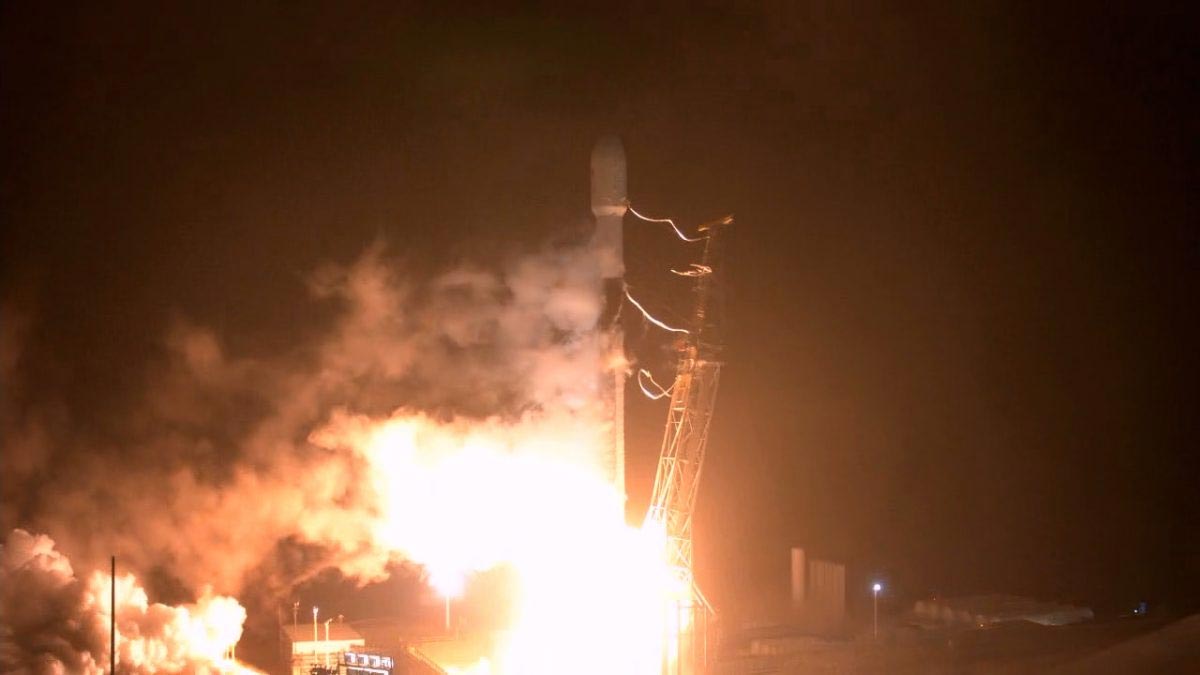
    A SpaceX Falcon 9 rocket lifts off from Space Launch Complex 4 at Vandenberg Space Force Base in California on November 23, 2021, carrying NASA’s Double Asteroid Redirection Mission spacecraft. Liftoff was at 10:21 p.m. PST. Credit: NASA

    NASA’s DART Mission Launches!

    A SpaceX Falcon 9 rocket carrying NASA’s Double Asteroid Redirection Test (DART) spacecraft has launched from Space Launch Complex 4 at Vandenberg Space Force Base in California. Launch time was 10:21 p.m. PST on November 23 (1:21 a.m. November 24). DART will soon be on its voyage to rendezvous with an asteroid.

    DART Launch and Separation Events

    A series of events occur after launch. The SpaceX Falcon 9 rocket’s first stage main engine will cut off, followed by separation from the second stage. The second stage will ignite, followed by payload fairing jettison from the DART spacecraft about three minutes after liftoff. The second stage will cut off and then restart a few minutes later to put the satellite in the proper trajectory. About a minute later, the second stage will cutoff and DART will separate from the second stage.
    NASA’s DART Spacecraft Traveling on its Own
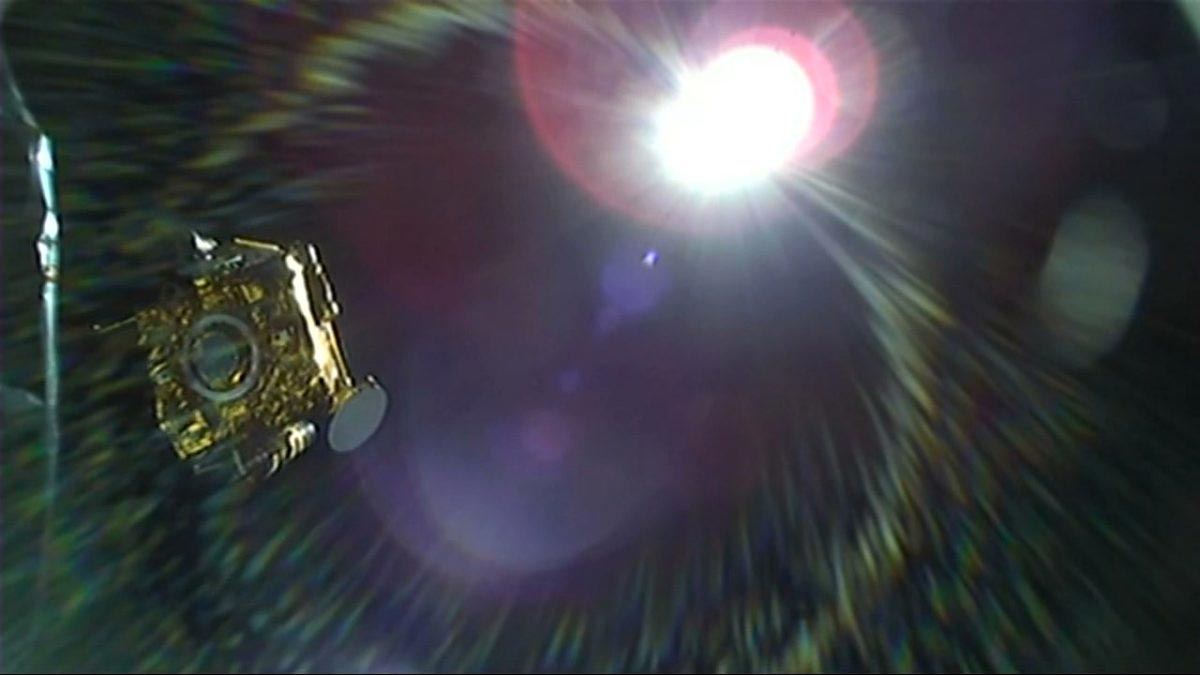
    NASA’s Double Asteroid Redirection Test spacecraft has separated from the Falcon 9 second stage and is flying on its own. Credit: NASA

    NASA’s DART Spacecraft Traveling on its Own

    NASA’s Double Asteroid Redirection Test (DART) spacecraft has separated from the Falcon 9 second stage and is flying on its own.

    NASA’s first flight mission for planetary defense, the Double Asteroid Redirection Test (DART) seeks to test and validate a method to protect Earth in case of an asteroid impact threat. The DART mission aims to shift an asteroid’s orbit through kinetic impact – specifically, by smashing a spacecraft into the smaller member of the binary asteroid system Didymos.

    The Didymos asteroid system is comprised of Didymos and its small, orbiting moonlet, Dimorphos. In 2022, DART will pummel into the latter, a boulder about 160 meters (525 feet) in diameter, and change its orbital period around Didymos by about 10 minutes.

    Using ground-based telescope observations prior to and after impact, scientists will be able to compare Dimorphos’ path around Didymos to determine how much the orbit has changed.

    Never miss a breakthrough: Join the SciTechDaily newsletter.
    Follow us on Google and Google News.

    Asteroid NASA NASA DART
    Share. Facebook Twitter Pinterest LinkedIn Email Reddit

    Related Articles

    NASA’s DART Impact Actually Changed an Asteroid System’s Orbit Around the Sun

    “At First, We Thought Something Was Wrong” – NASA DART Mission Reveals a Cosmic Snowball Fight

    NASA’s DART Spacecraft Secured in SpaceX Payload Fairing – Ready for Launch

    NASA’s Double Asteroid Redirection Test (DART): Hitting an Asteroid Head On

    NASA’s DART Mission To Crash a Spacecraft Into an Asteroid Is Set To Launch – Watch It Live

    We Asked a NASA Scientist: What if an Asteroid Was Going To Hit Earth? [Video]

    Planetary Defense: NASA Prepares To Launch DART To Deflect Asteroid With Kinetic Impact

    NASA To Launch Double Asteroid Redirection Test Mission – Preventing a Hazardous Asteroid From Striking Earth

    NASA’s Big Plans to Explore Small Bodies: DART, Lucy, and Psyche Missions

    Leave A Reply Cancel Reply

    • Facebook
    • Twitter
    • Pinterest
    • YouTube

    Don't Miss a Discovery

    Subscribe for the Latest in Science & Tech!

    Trending News

    Mezcal “Worm” in a Bottle Mystery: DNA Testing Reveals a Surprise

    New Research Reveals That Your Morning Coffee Activates an Ancient Longevity Switch

    This Is What Makes You Irresistible to Mosquitoes

    Shockingly Powerful Giant Octopuses Ruled the Seas 100 Million Years Ago

    Scientists Stunned by New Organic Molecules Found on Mars

    Rewriting Dinosaur Evolution: Scientists Unearth Remarkable 150-Million-Year-Old Stegosaur Skull

    Omega-3 Supplements Linked to Cognitive Decline in Surprising New Study

    First-of-Its-Kind Discovery: Homer’s Iliad Found Embedded in a 1,600-Year-Old Egyptian Mummy

    Follow SciTechDaily
    • Facebook
    • Twitter
    • YouTube
    • Pinterest
    • Newsletter
    • RSS
    SciTech News
    • Biology News
    • Chemistry News
    • Earth News
    • Health News
    • Physics News
    • Science News
    • Space News
    • Technology News
    Recent Posts
    • This Tiny World in the Outer Solar System Should Be Airless, but It Has an Atmosphere
    • NASA’s Webb Space Telescope Reveals a Dark Airless Super-Earth That Looks Like Mercury
    • These Simple Daily Habits Can Quickly Improve Blood Pressure and Heart Risk Factors
    • A Common Nutrient May Play a Surprising Role in Anxiety
    • Doing This After 9 p.m. Could Double Your Risk of Gut Issues
    Copyright © 1998 - 2026 SciTechDaily. All Rights Reserved.
    • Science News
    • About
    • Contact
    • Editorial Board
    • Privacy Policy
    • Terms of Use

    Type above and press Enter to search. Press Esc to cancel.