Close Menu
    Facebook X (Twitter) Instagram
    SciTechDaily
    • Biology
    • Chemistry
    • Earth
    • Health
    • Physics
    • Science
    • Space
    • Technology
    Facebook X (Twitter) Pinterest YouTube RSS
    SciTechDaily
    Home»Space»NASA’s Dawn Spacecraft Celebrates 10 Years in Space
    Space

    NASA’s Dawn Spacecraft Celebrates 10 Years in Space

    By Elizabeth Landau, Jet Propulsion LaboratorySeptember 28, 2017No Comments5 Mins Read
    Facebook Twitter Pinterest Telegram LinkedIn WhatsApp Email Reddit
    Share
    Facebook Twitter LinkedIn Pinterest Telegram Email Reddit
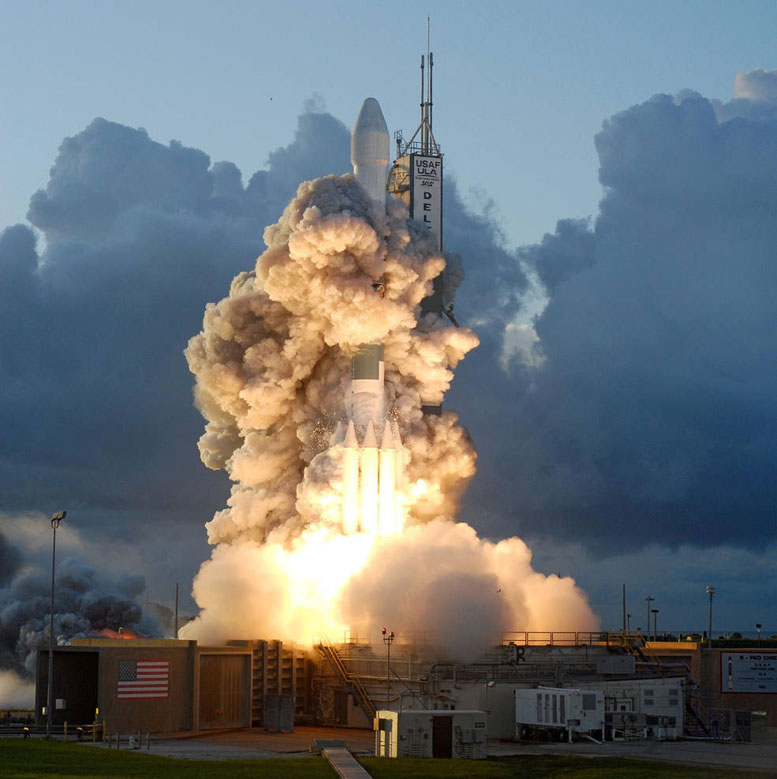
    Dawn Spacecraft Celebrates 10 Years in Space
    Dawn launched 10 years ago on September 27, 2007. Credit: NASA/Sandra Joseph and Rafael Hernandez

    Ten years ago, NASA’s Dawn Spacecraft set sail for the two most massive bodies in the asteroid belt between Mars and Jupiter: giant asteroid Vesta and dwarf planet Ceres. The mission was designed to deliver new knowledge about these small but intricate worlds, which hold clues to the formation of planets in our solar system.

    “Our interplanetary spaceship has exceeded all expectations in the last decade, delivering amazing insights about these two fascinating bodies,” said Chris Russell, principal investigator of the Dawn mission, based at the University of California, Los Angeles.

    Since its launch on September 27, 2007, Dawn has achieved numerous technical and scientific feats while traveling 4 billion miles (6 billion kilometers). It is the only spacecraft to orbit two extraterrestrial solar system targets. It is also the only spacecraft to orbit a dwarf planet, a milestone it achieved when in entered orbit around Ceres on March 6, 2015. The spacecraft’s ion propulsion system enabled Dawn to study each of these worlds from a variety of vantage points and altitudes, creating an impressive scrapbook of 88,000 photos. Additionally, Dawn’s suite of instruments enabled it to take a variety of other measurements of Vesta and Ceres, revealing the contrasting compositions and internal structures of these two bodies.

    Vesta Highlights

    Scientists learned a great deal about Vesta’s geological features and composition during Dawn’s 14 months of exploration there. A notable discovery was that Rheasilvia, a giant basin in Vesta’s southern hemisphere, was even deeper and wider than scientists expected based on telescopic observations from Earth. It spans more than 310 miles (500 kilometers) and pierces about 12 miles (19 kilometers) into Vesta. The center of the crater also hosts a mountain twice the height of Mt. Everest — the tallest feature seen in Dawn’s 1,298 orbits of Vesta.
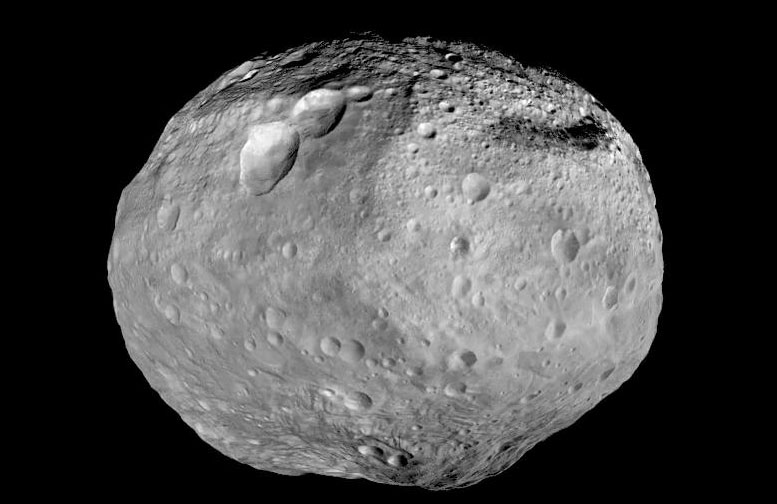
    NASA’s Dawn Spacecraft View of Giant Asteroid Vesta

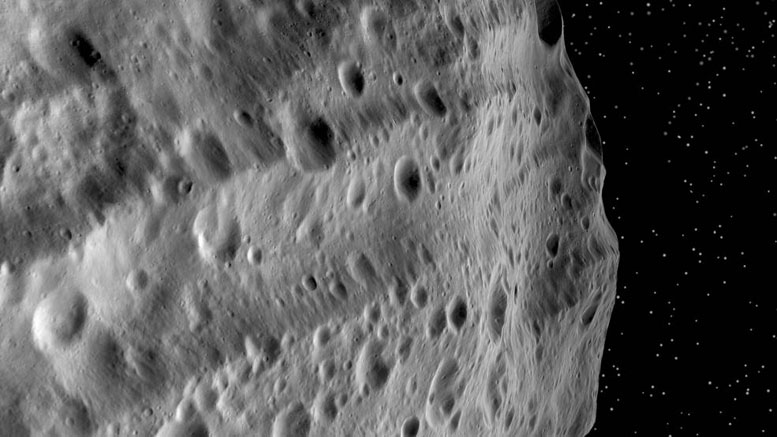
    The massive punch into Vesta that carved out this crater happened about 1 billion years ago and caused huge amounts of material to rain down on the surface. The net result is that the surface of the southern hemisphere of Vesta is younger than the northern hemisphere, which retains a hefty record of craters. The Rheasilvia impact also created dozens of gorges circling Vesta’s equator. Canyons there, some of which formed from an earlier impact, measure up to 290 miles (465 kilometers) in length.
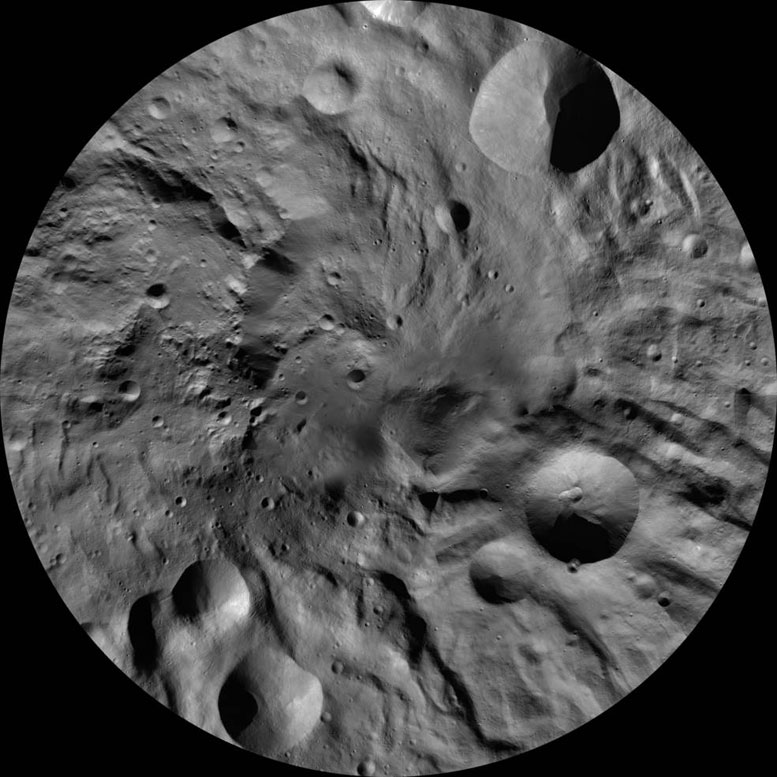
    Giant Asteroid Vesta
    This image from the atlas of the giant asteroid Vesta was created from images taken as NASA’s Dawn spacecraft flew around the protoplanet. The set of maps was created from mosaics of 10,000 images from Dawn’s framing camera instrument, taken at a low altitude of about 130 miles (210 kilometers). Credit: NASA/JPL-Caltech/UCLA/MPS/DLR/IDA
    Asteroid Vesta
    This image from NASA’s Dawn mission shows huge grooves on Vesta that were the result of large impacts. The image was rendered from a global mosaic of Vesta processed from thousands of individual images obtained by the framing camera between January and April 2012. Credit: NASA/JPL-Caltech/UCLA/MPS/DLR/IDA

    Ceres Highlights

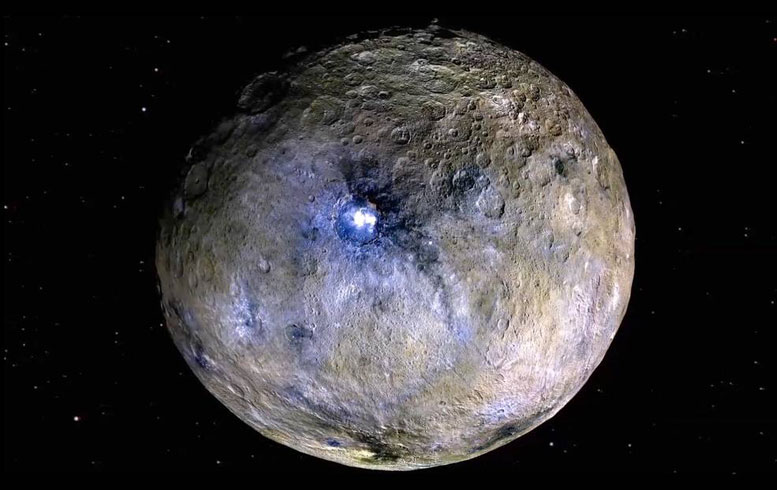
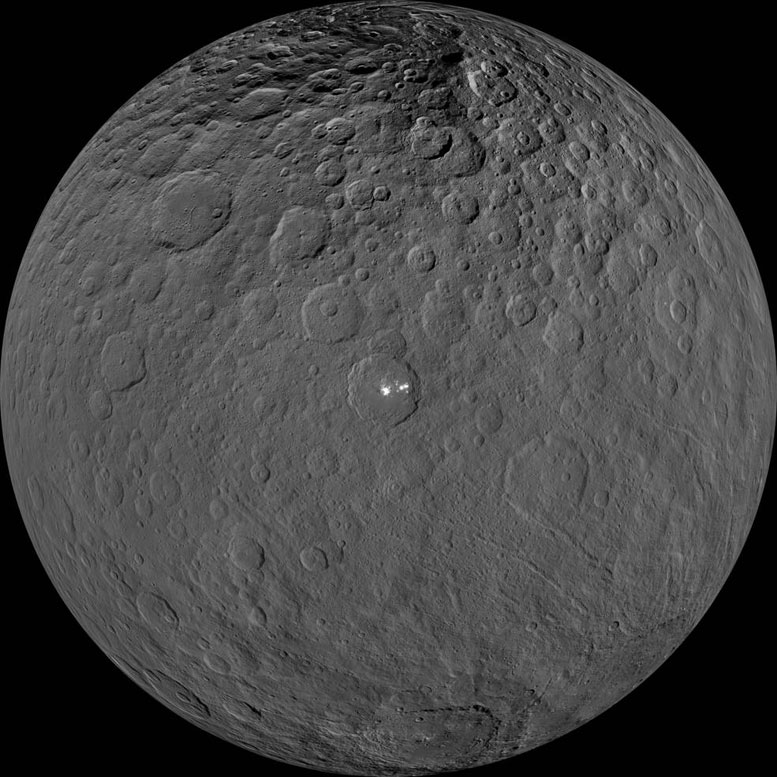
    One of Dawn’s biggest revelations at Ceres is the extremely bright, salty material in Occator Crater that gleams amid an otherwise dark area. What appeared to be a single white blob at a distance turned out to be a smattering of many bright areas called faculae. The central bright area, Cerealia Facula, has a dome at its center with radial fractures across it that appears reddish in enhanced color images. This “bright spot” suggests Ceres was geologically active in the very recent past, when briny water rose to the surface and deposited salts. Just to the east are the Vinalia Faculae, a constellation of less-bright spots distributed along fractures that also intrigue scientists. Ceres hosts more than 300 small bright areas, with some thought to host ice at northern latitudes.

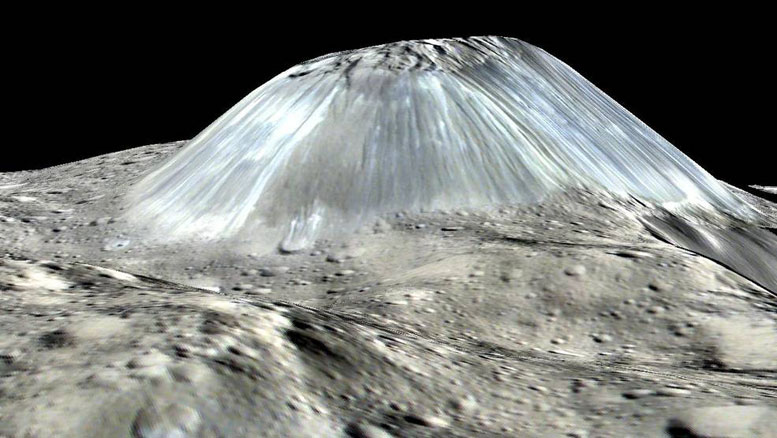
    Another huge surprise at Ceres was Ahuna Mons, which scientists believe formed as a cryovolcano, a volcano that erupted with salty water in the past. This “lonely mountain,” 3 miles (5 kilometers) high on its steepest side, is unlike anything else on Ceres and remains a thriving research topic. Though both Ahuna Mons and Occator appear dormant, they suggest that liquid water flowed once beneath the surface of Ceres, and may even still be there today, if it is enriched in salts that would lower its freezing point.
    False-Color Image of Ceres
    This false-color image of Ceres highlights differences in surface materials. The color diversity of the material within Occator Crater (center) and its ejecta reveals the elaborate composition of Ceres’ crust. Credit: NASA/JPL-Caltech/UCLA/MPS/DLR/IDA
    Occator Crater
    This orthographic projection, centered on Occator Crater, shows Ceres as seen by NASA’s Dawn spacecraft from its low-altitude mapping orbit. A high-resolution version is available. Credit: NASA/JPL-Caltech/UCLA/MPS/DLR/IDA
    Ahuna Mons
    Ceres’ lonely mountain, Ahuna Mons, is seen in this simulated perspective view. The elevation has been exaggerated by a factor of two. The view was made using enhanced-color images from NASA’s Dawn spacecraft. Credit: NASA/JPL-Caltech/UCLA/MPS/DLR/IDA

    Dawn Science Continues

    “The science team is still actively exploring the troves of data that Dawn has delivered so far, comparing these two fossils of the early solar system,” said Carol Raymond, Dawn deputy principal investigator, based at NASA’s Jet Propulsion Laboratory, Pasadena, California.

    Since March 2015, Dawn has orbited Ceres 1,595 times. It remains healthy, currently in a 30-day elliptical orbit collecting data on cosmic rays in the vicinity of Ceres.

    “This continues to be a mission for everyone who yearns for new knowledge, everyone who is curious about the cosmos, and everyone who is exhilarated by bold adventures into the unknown,” said Marc Rayman, mission director and chief engineer, based at JPL.

    For more information about the Dawn mission, visit: https://dawn.jpl.nasa.gov

    Never miss a breakthrough: Join the SciTechDaily newsletter.
    Follow us on Google and Google News.

    Astronomy Ceres Dawn Spacecraft Planetary Science
    Share. Facebook Twitter Pinterest LinkedIn Email Reddit

    Related Articles

    A New View of Ceres, Dawn Shows Finer Detail

    Dawn Captures New Images of Ceres Bright Spots

    New Images by NASA’s Dawn Spacecraft Show Mysterious Bright Spots on Ceres

    New Color Map of Ceres Reveals Surface Diversity

    NASA’s Dawn Spacecraft Achieves Orbit Around Ceres

    Dawn Spacecraft Shows Crater Shapes on Ceres’ Surface

    NASA’s Dawn Captures Sharper Images of Ceres

    Dawn Spacecraft Captures Best-Ever View of Ceres

    NASA’s Dawn Spacecraft Closes in on Ceres, Delivers New Images

    Leave A Reply Cancel Reply

    • Facebook
    • Twitter
    • Pinterest
    • YouTube

    Don't Miss a Discovery

    Subscribe for the Latest in Science & Tech!

    Trending News

    Breakthrough Parkinson’s Drug Targets Disease at Its Genetic Roots

    Just 4 Weeks of Simple Diet Changes Reversed Signs of Aging in Older Adults

    Scientists May Have Finally Solved Why Humans Are Right-Handed

    NASA’s Hubble Accidentally Witnesses a Comet Shattering in Space

    Researchers Discover the Body’s Hidden “Off Switch” for Inflammation

    Scientists Discover Metformin Doesn’t Work the Way We Thought

    Tea or Coffee? Your Daily Choice Could Affect Osteoporosis Risk

    Vitamin C May Fight Cancer in a Surprising Way

    Follow SciTechDaily
    • Facebook
    • Twitter
    • YouTube
    • Pinterest
    • Newsletter
    • RSS
    SciTech News
    • Biology News
    • Chemistry News
    • Earth News
    • Health News
    • Physics News
    • Science News
    • Space News
    • Technology News
    Recent Posts
    • Banned Antibiotic Discovered in Fish Raises Food Safety Concerns
    • Common Asthma Drug May Reverse Dangerous Fatty Liver Disease
    • Scientists Develop Experimental Eye Drop That Could Transform Dry Eye Treatment
    • Extra Weight Could Age Your Brain Faster, Study Warns
    • Scientists Warn: America’s Most Popular Cooking Oil May Be Harming Your Intestines
    Copyright © 1998 - 2026 SciTechDaily. All Rights Reserved.
    • Science News
    • About
    • Contact
    • Editorial Board
    • Privacy Policy
    • Terms of Use

    Type above and press Enter to search. Press Esc to cancel.