
Close Menu
    Facebook X (Twitter) Instagram
    SciTechDaily
    • Biology
    • Chemistry
    • Earth
    • Health
    • Physics
    • Science
    • Space
    • Technology
    Facebook X (Twitter) Pinterest YouTube RSS
    SciTechDaily
    Home»Space»NASA’s Epic Experiment: Solar Sail System Readies Sail Deployment
    Space

    NASA’s Epic Experiment: Solar Sail System Readies Sail Deployment

    By NASA Ames Research CenterJuly 29, 2024No Comments3 Mins Read
    Facebook Twitter Pinterest Telegram LinkedIn WhatsApp Email Reddit
    Share
    Facebook Twitter LinkedIn Pinterest Telegram Email Reddit
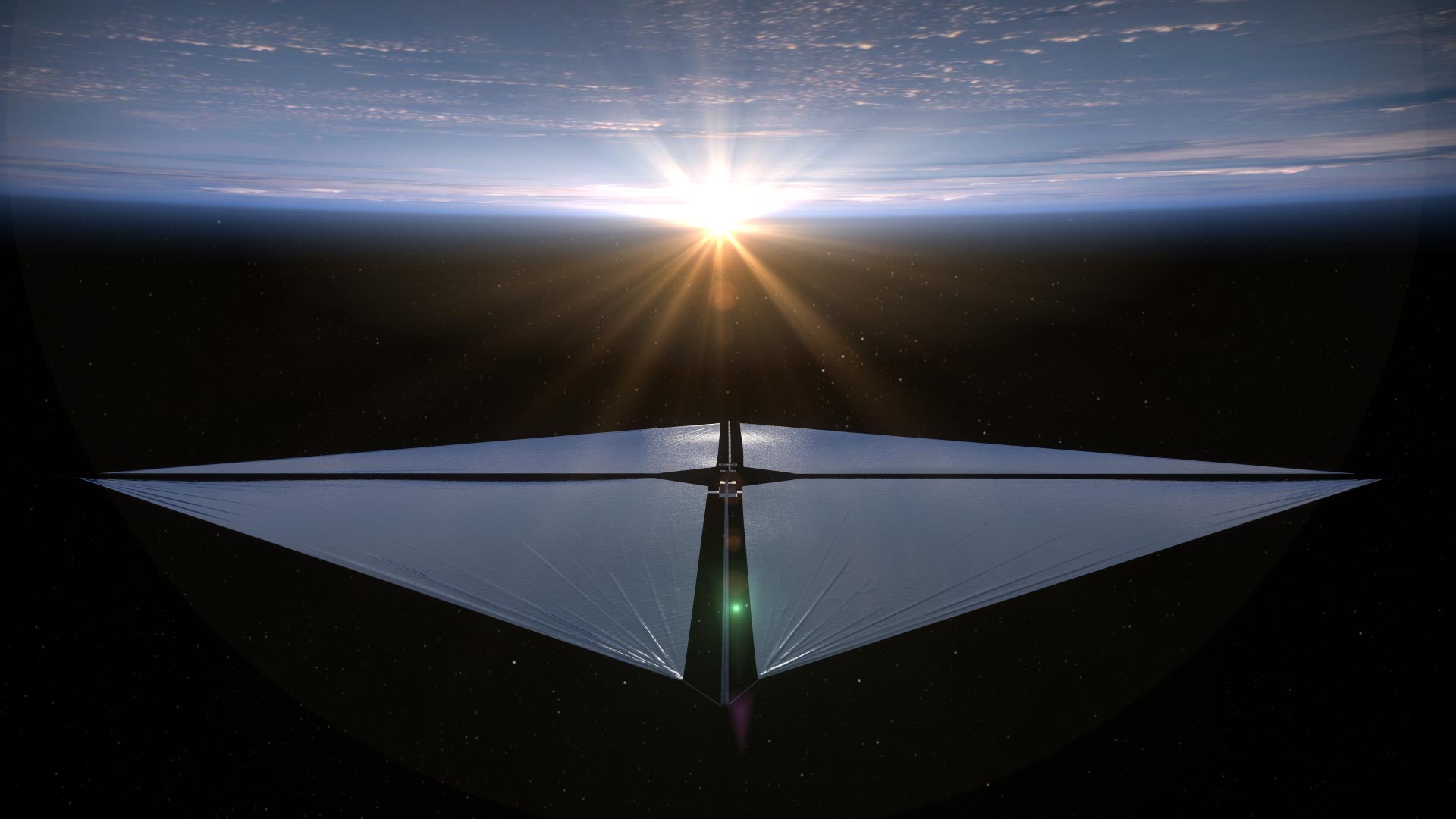
    Advanced Composite Solar Sail System Spacecraft
    An artist’s concept of NASA’s Advanced Composite Solar Sail System spacecraft in orbit as the Sun crests Earth’s horizon. Credit: NASA/Aero Animation/Ben Schweighart

    NASA is readying to deploy a solar sail on its CubeSat, which will test using sunlight for propulsion.

    The mission, launched from New Zealand, involves new materials for better efficiency.

    NASA’s Advanced Composite Solar Sail System

    Commissioning is nearly complete for NASA’s Advanced Composite Solar Sail System, and mission operators are charting a course for their next milestone – hoisting the sails using new composite booms.

    The sail will unfurl from the spacecraft’s 12-unit (12U) CubeSat body using composite booms made from new materials that are stiffer and lighter than previous designs. Once successful boom and sail deployment are achieved, the team hopes to prove the sail’s propulsion capabilities and maneuverability by raising and lowering the satellite’s orbit. Solar sails use the pressure of sunlight for propulsion, as photons bouncing off a reflective sail push a spacecraft. Like a sailboat turning to capture the wind, the spacecraft can adjust its orbit by angling the sail.
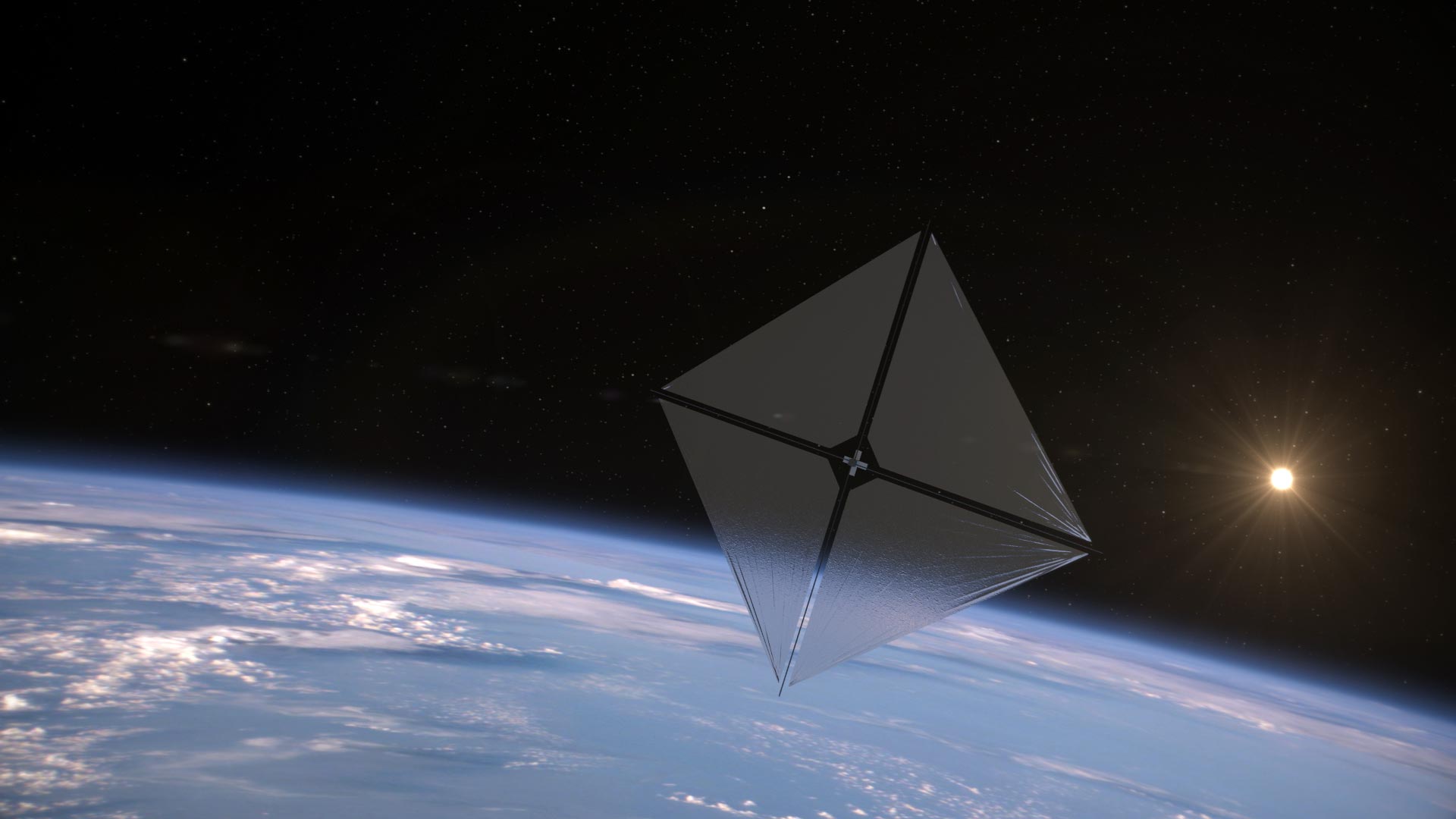
    NASA Advanced Composite Solar Sail System Spacecraft
    This artist’s concept shows the Advanced Composite Solar Sail System spacecraft sailing in space using the energy of the Sun. Credit: NASA/Aero Animation/Ben Schweighart

    Launch and Initial Tests

    After launching in April aboard Rocket Lab’s Electron rocket from New Zealand, the mission completed a series of tests and preparations, including testing two-way communications and deploying solar panels – a battery-charging mechanism, not to be confused with the not-yet deployed solar sail.

    The project team expects to deploy the sail in the next few weeks. Given its position in orbit, about 600 miles (1,000 kilometers) above Earth, and the reflectivity of the large sail, about 860 square feet (80 square meters), mission managers say the Solar Sail System should be easily visible at times in the night sky once the sail is fully deployed.

    Collaborative Efforts in Spacecraft Development

    NASA Ames manages the Advanced Composite Solar Sail System project and designed and built the onboard camera diagnostic system. NASA Langley designed and built the deployable composite booms and solar sail system. NASA’s Small Spacecraft Technology program office based at NASA Ames and led by the agency’s Space Technology Mission Directorate (STMD), funds and manages the mission. NASA STMD’s Game Changing Development program developed the deployable composite boom technology. Rocket Lab USA, Inc. of Long Beach, California provided launch services. AST&Defense LLC of College Park, Maryland, designed and built the spacecraft bus.

    Never miss a breakthrough: Join the SciTechDaily newsletter.
    Follow us on Google and Google News.

    Ames Research Center NASA Solar Sail
    Share. Facebook Twitter Pinterest LinkedIn Email Reddit

    Related Articles

    Tumbling in Orbit: NASA’s Test of Advanced Solar Sail Technology Encounters Early Challenges

    Look Up! Catch a Glimpse of NASA’s Giant Solar Sail Gliding Above

    Trouble Above Earth: NASA’s Advanced Composite Solar Sail Grapples With Deployment Snag

    New Research Shows Giant Tsunamis Once Battered the Coastlines of Mars

    Kepler Discovers a Planetary Object Being Vaporized by a White Dwarf

    Microgravity Mimics Aging in Immune Cells

    Online Database Tracks Organic Nano-Particles Across the Universe

    Researchers Simulate the Formation of Massive Stars from Turbulent Molecular Clouds

    New Astronomical Tool Traces the Evolution of Cosmic Carbon

    Leave A Reply Cancel Reply

    • Facebook
    • Twitter
    • Pinterest
    • YouTube

    Don't Miss a Discovery

    Subscribe for the Latest in Science & Tech!

    Trending News

    Millions Take These IBS Drugs, But a New Study Finds Serious Risks

    Scientists Unlock Hidden Secrets of 2,300-Year-Old Mummies Using Cutting-Edge CT Scanner

    Bread Might Be Making You Gain Weight Even Without Eating More Calories

    Scientists Discover Massive Magma Reservoir Beneath Tuscany

    Europe’s Most Active Volcano Just Got Stranger – Here’s Why Scientists Are Rethinking It

    Alzheimer’s Symptoms May Start Outside the Brain, Study Finds

    Millions Take This Popular Supplement – Scientists Discover a Concerning Link to Heart Failure

    The Universe Is Expanding Too Fast and Scientists Can’t Explain Why

    Follow SciTechDaily
    • Facebook
    • Twitter
    • YouTube
    • Pinterest
    • Newsletter
    • RSS
    SciTech News
    • Biology News
    • Chemistry News
    • Earth News
    • Health News
    • Physics News
    • Science News
    • Space News
    • Technology News
    Recent Posts
    • Simple Blood Test May Predict Alzheimer’s Years Before Brain Scans Show Signs
    • Scientists Say Adding This Unusual Seafood to Your Diet Could Reverse Signs of Aging
    • U.S. Waste Holds $5.7 Billion Worth of Crop Nutrients
    • Scientists Say a Hidden Structure May Exist Inside Earth’s Core
    • Doctors Surprised by the Power of a Simple Drug Against Colon Cancer
    Copyright © 1998 - 2026 SciTechDaily. All Rights Reserved.
    • Science News
    • About
    • Contact
    • Editorial Board
    • Privacy Policy
    • Terms of Use

    Type above and press Enter to search. Press Esc to cancel.