
Close Menu
    Facebook X (Twitter) Instagram
    SciTechDaily
    • Biology
    • Chemistry
    • Earth
    • Health
    • Physics
    • Science
    • Space
    • Technology
    Facebook X (Twitter) Pinterest YouTube RSS
    SciTechDaily
    Home»Space»Look Up! Catch a Glimpse of NASA’s Giant Solar Sail Gliding Above
    Space

    Look Up! Catch a Glimpse of NASA’s Giant Solar Sail Gliding Above

    By NASA Ames Research CenterAugust 31, 20242 Comments2 Mins Read
    Facebook Twitter Pinterest Telegram LinkedIn WhatsApp Email Reddit
    Share
    Facebook Twitter LinkedIn Pinterest Telegram Email Reddit
    Advanced Composite Solar Sail System Spacecraft
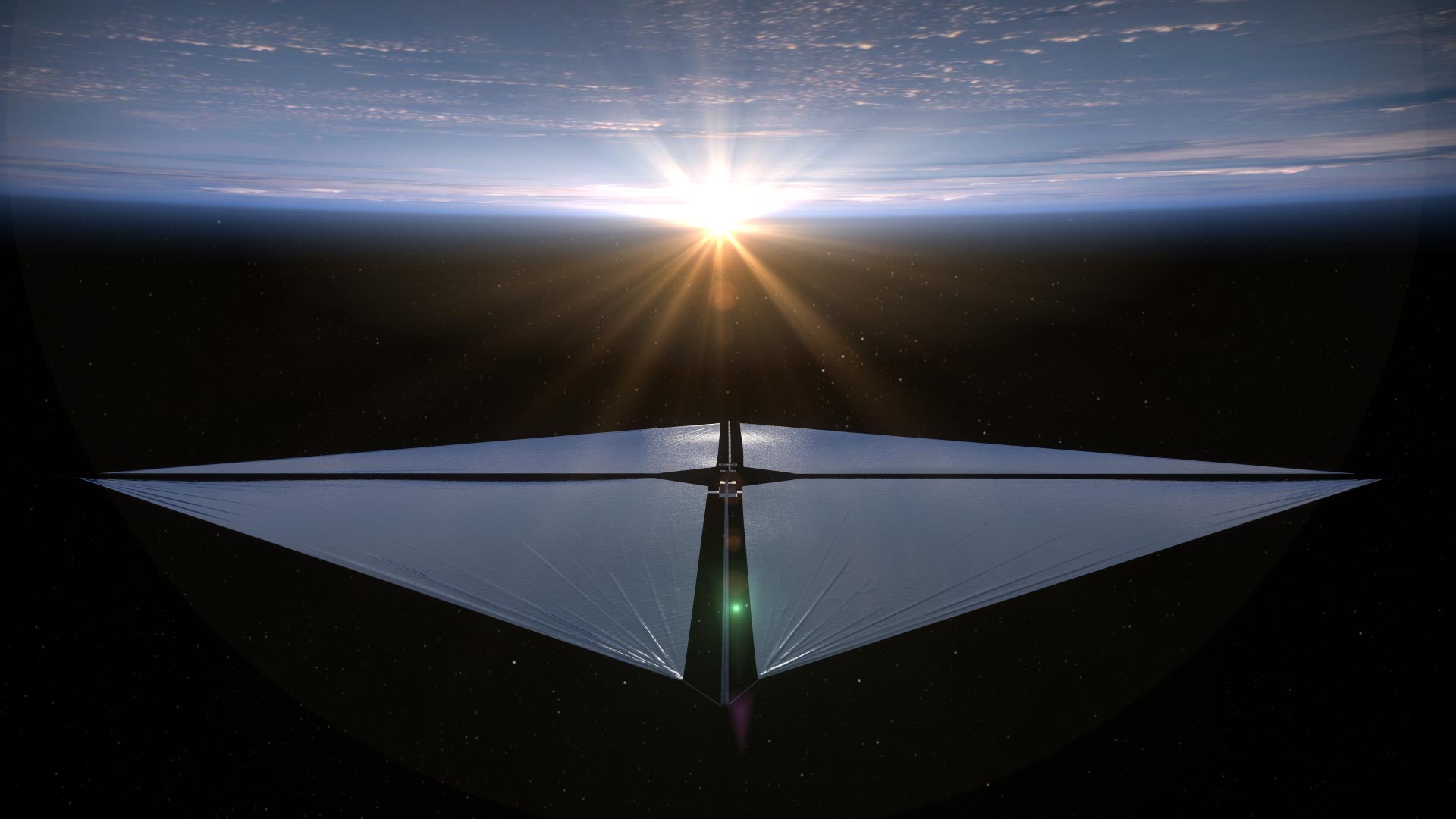
    An artist’s concept of NASA’s Advanced Composite Solar Sail System spacecraft in orbit as the Sun crests Earth’s horizon. Credit: NASA/Aero Animation/Ben Schweighart

    NASA’s Advanced Composite Solar Sail System has achieved full deployment in space, marking a significant milestone with its sail-hoisting boom system now operational.

    High-resolution images of the reflective sail and supporting composite booms, captured by onboard cameras, will soon be released, enhancing our understanding of solar sail mechanics. In the coming weeks, NASA will explore the sail’s maneuverability, potentially revolutionizing solar sail-equipped missions for science and exploration by adjusting the spacecraft’s orbit.

    Successful Deployment of NASA’s Solar Sail

    NASA’s Advanced Composite Solar Sail System is now fully deployed in space after a successful test of its sail-hoisting boom system. Mission operators confirmed success at 1:33 p.m. EDT (10:33 a.m. PDT) on Thursday, August 29, after receiving data from the spacecraft. Centrally located aboard the spacecraft are four cameras that captured a panoramic view of the reflective sail and supporting composite booms. High-resolution imagery from these cameras will be available on Wednesday, September 4.

    Testing and Future Applications

    During the next few weeks, the team will test the maneuvering capabilities of the sail in space. Raising and lowering the orbit of the Advanced Composite Solar Sail System spacecraft will provide valuable information that may help guide future concepts of operations and designs for solar sail-equipped science and exploration missions.

    Observational Opportunities

    The Advanced Composite Solar Sail System spacecraft orbits Earth at approximately twice the altitude of the International Space Station. From above, the sail will appear as a square, with an area of approximately 860 square feet (80 square meters) – about half the size of a tennis court. Now, with the sail fully extended, the Solar Sail System may be visible to some keen skywatchers on Earth who look up at the right time.

    Never miss a breakthrough: Join the SciTechDaily newsletter.
    Follow us on Google and Google News.

    Ames Research Center NASA Popular Solar Sail
    Share. Facebook Twitter Pinterest LinkedIn Email Reddit

    Related Articles

    Tumbling in Orbit: NASA’s Test of Advanced Solar Sail Technology Encounters Early Challenges

    Liftoff! NASA’s Next-Generation Solar Sail Boom Technology Launched

    Origin of Saturn’s Rings: Massive Collision Between Icy Moons During the Time of the Dinosaurs?

    Autonomous Invasion: NASA’s Starling Mission Sending Swarm of Satellites Into Orbit

    Swarm Intelligence in Space: NASA’s Starling CubeSats Ready To Test Critical Technology

    Moon’s Hidden Treasure: Lunar Water Map Unveiled by Pioneering Study

    Moon Mountain Named in Honor of NASA Mathematician and Computer Programmer

    After 15 Years and 1,000 Tests – Is Orion’s Heat Shield Ready To Take the Heat?

    Innovative Diffractive Solar Sail Funded by NASA Could Take Science to Exciting New Destinations

    2 Comments

    1. Priscilla Wood on August 31, 2024 12:43 pm

      Great photos. I’ve enjoyed learning about outer space since my childhood–80 years ago. We’ve come a long way.

      Reply
      • Darren on September 2, 2024 8:23 pm

        agreed, the advancement of space technology has kept me wanting to know more…🫂

        Reply
    Leave A Reply Cancel Reply

    • Facebook
    • Twitter
    • Pinterest
    • YouTube

    Don't Miss a Discovery

    Subscribe for the Latest in Science & Tech!

    Trending News

    Could Low Vitamin D Be Making Your Pain Worse?

    Scientists Discover Once-Weekly Workout That Melts Belly Fat Surprisingly Effectively

    Scientists Just Tested a Thruster Powerful Enough for Human Missions to Mars

    Doctors Say Your Ice Pack Might Be Making Injuries Worse

    Scientists Discover 43-Foot Sea Reptile Twice the Size of a Great White Shark

    Bees and Birds Are Drinking Alcohol From Flowers

    Scientists Discover How Obesity May Trigger Alzheimer’s Disease

    Scientists Confirm Alcohol Causes Widespread Health Damage

    Follow SciTechDaily
    • Facebook
    • Twitter
    • YouTube
    • Pinterest
    • Newsletter
    • RSS
    SciTech News
    • Biology News
    • Chemistry News
    • Earth News
    • Health News
    • Physics News
    • Science News
    • Space News
    • Technology News
    Recent Posts
    • Just Minutes of Intense Exercise Could Slash Disease Risk by 50%
    • People Who Stop Ozempic Often Don’t Gain the Weight Back
    • Why More People in Their 30s Are Suddenly Getting Colon Cancer
    • Scientists Discover Sperm Seem To Bypass a Fundamental Law of Physics
    • The Secret Behind Indigenous Andeans’ “Digestive Superpower” May Be Potatoes
    Copyright © 1998 - 2026 SciTechDaily. All Rights Reserved.
    • Science News
    • About
    • Contact
    • Editorial Board
    • Privacy Policy
    • Terms of Use

    Type above and press Enter to search. Press Esc to cancel.