
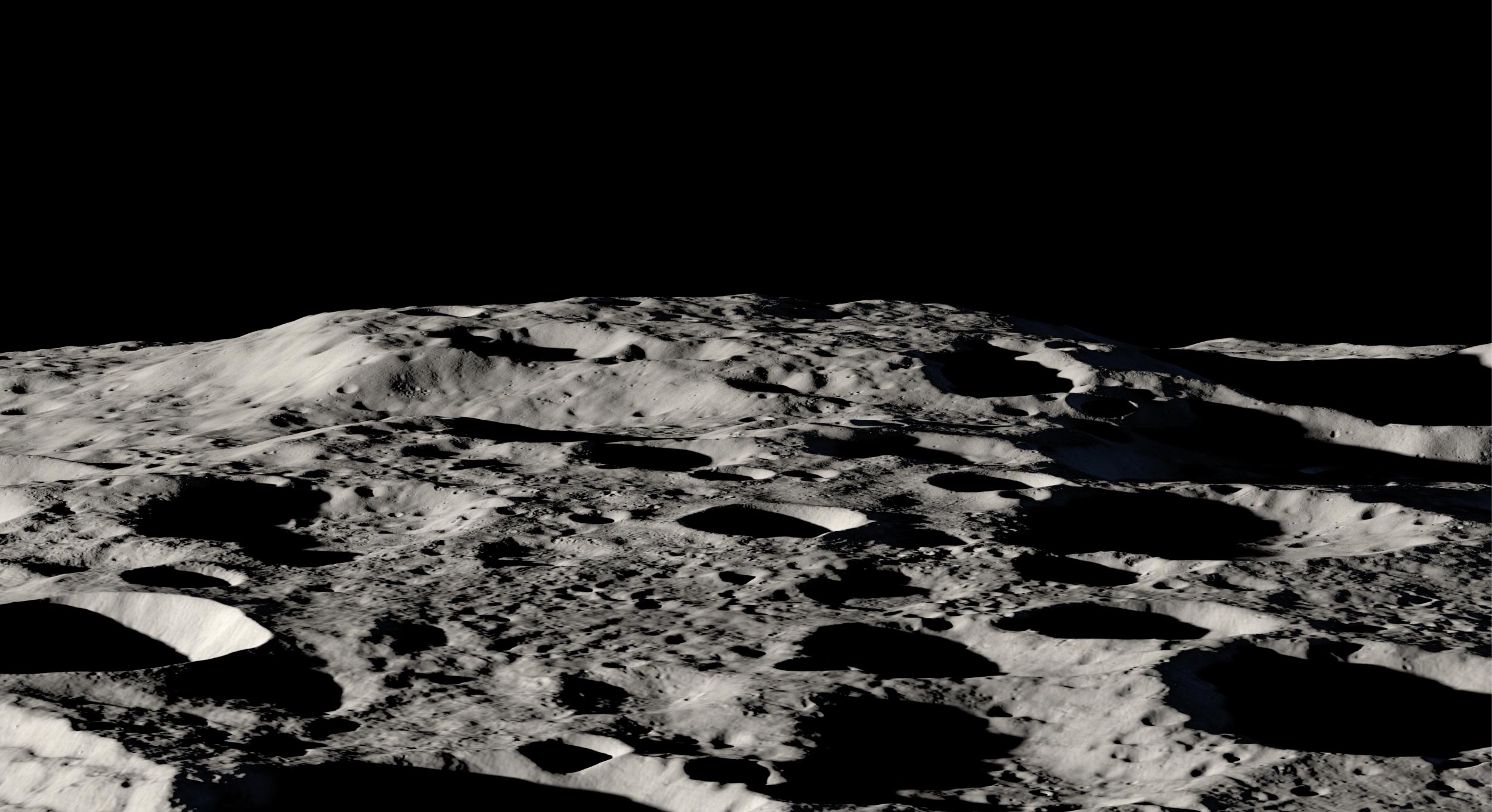
NASA has named a lunar mountain “Mons Mouton” after Melba Roy Mouton, an influential mathematician and computer programmer at NASA. The naming comes as part of the Volatiles Investigating Polar Exploration Rover (VIPER) mission, which will explore this mountain as part of the Artemis program. Mons Mouton is expected to provide crucial insights for VIPER’s mission to map lunar resources, potentially supporting future human exploration.
Scientists recently named a mesa-like lunar mountain that towers above the landscape carved by craters near the Moon’s South Pole. This unique feature will now be referred to as “Mons Mouton,” after NASA mathematician and computer programmer Melba Roy Mouton (MOO-tawn).
Members of NASA’s Volatiles Investigating Polar Exploration Rover (VIPER) mission proposed the name to the International Astronomical Union (IAU). The flat-topped mountain is adjacent to the western rim of the Nobile Crater, on which VIPER will land and explore during its approximately 100-day mission as part of NASA’s Artemis program.
The IAU theme for naming mountains (mons) on the Moon focuses on “scientists who have made outstanding or fundamental contributions to their fields.” The lunar landmark naming honors and recognizes Mouton’s life, her accomplishments as a computer scientist, and her contributions to NASA’s missions.
“Melba Mouton was one of our pioneering leaders at NASA,” said Sandra Connelly, the acting associate administrator for science at NASA Headquarters in Washington. “She not only helped NASA take the lead in exploring the unknown in air and space, but she also charted a path for other women and people of color to pursue careers and lead cutting-edge science at NASA.”
Mouton was first employed at NASA’s Goddard Space Flight Center in Greenbelt, Maryland, in 1959, just a year after the space agency was established. She became the head mathematician who led a group of “human computers,” who tracked the Echo 1 and 2 satellites, launched into Earth’s orbit in 1960 and 1964, respectively.

A few years later, in 1961, Mouton was the head programmer responsible for the Mission and Trajectory Analysis Division’s Program Systems Branch – the team who coded computer programs used to calculate spacecraft locations and trajectories, giving NASA the ability to track spacecraft while in orbit.
Before retiring in 1973, after a career at NASA that spanned 14 years, Mouton had become the assistant chief of research programs for the Trajectory and Geodynamics Division at Goddard. In appreciation of her dedicated service and outstanding accomplishments, which culminated in the successful Apollo 11 Moon landing on July 20, 1969, she was recognized with an Apollo Achievement Award.
As NASA prepares to send astronauts to the lunar surface, including the first woman to set foot on the Moon, Mons Mouton is among one of the 13 candidate landing regions for Artemis III.
The wide, relatively flat-topped mountain, about the size of the state of Delaware, was created over billions of years by lunar impacts, which sculpted it out of its surroundings. As a result, Mons Mouton stands as tall as Denali – the tallest mountain in North America – approximately 20,000 feet higher than its neighboring features on the Moon’s South Pole. Because it is relatively untouched by bombardments, scientists believe Mons Mouton is much more ancient – possibly billions of years older than its surroundings. A ring of huge craters – evidence of its pulverizing past – lie around its base; some with cliff-like edges, descending into areas of permanent darkness. Its rolling hilltop is peppered with smaller rocks and pebbles as well as lots of enticing craters that are frequently blanketed in freezing, shifting shadows.
“Mons Mouton represents a great spot for VIPER – our solar-powered Moon rover that we’ll drive and conduct science in near real-time,” said Dr. Sarah Noble, VIPER program scientist at NASA Headquarters in Washington. “It features high sunny spots, it’s relatively flat, satellite data shows signs of water ice, and it allows long stretches of direct communications with our ground station on Earth.”
VIPER will be the first resource mapping mission beyond Earth. It will search at and below the lunar surface to determine the location and concentration of any ice could eventually be harvested to sustain human exploration on the Moon, Mars, and beyond and will help advance scientific exploration of the Moon by helping to understand how water is created and deposited throughout the solar system. VIPER is planned for delivery to the Moon in late 2024 under NASA’s Commercial Lunar Payload Services (CLPS) initiative.
Never miss a breakthrough: Join the SciTechDaily newsletter.
Follow us on Google and Google News.