
Close Menu
    Facebook X (Twitter) Instagram
    SciTechDaily
    • Biology
    • Chemistry
    • Earth
    • Health
    • Physics
    • Science
    • Space
    • Technology
    Facebook X (Twitter) Pinterest YouTube RSS
    SciTechDaily
    Home»Space»NASA’s Interstellar Boundary Explorer Spacecraft Restored After “Firecode Reset”
    Space

    NASA’s Interstellar Boundary Explorer Spacecraft Restored After “Firecode Reset”

    By Denise Hill, NASAMarch 7, 2023No Comments2 Mins Read
    Facebook Twitter Pinterest Telegram LinkedIn WhatsApp Email Reddit
    Share
    Facebook Twitter LinkedIn Pinterest Telegram Email Reddit
    IBEX Interstellar Boundary
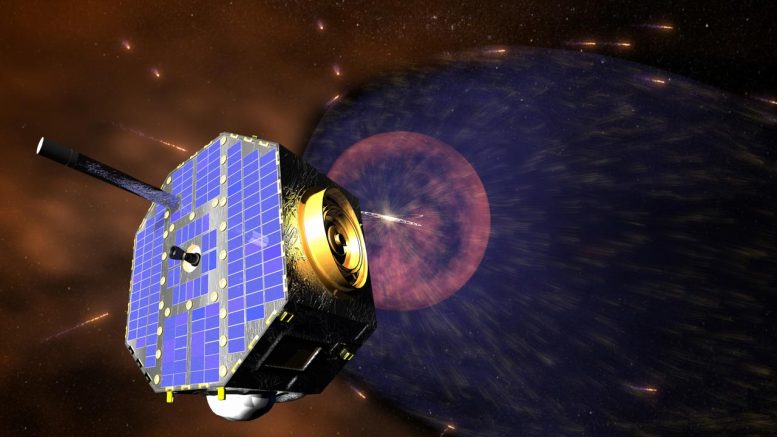
    This artist’s concept shows the IBEX spacecraft. Credit: NASA

    NASA’s Interstellar Boundary Explorer (IBEX) is fully operational after the mission team successfully reset the spacecraft on March 2.

    Back on February 18, IBEX experienced a flight computer reset during a planned contact and the spacecraft went into contingency mode. While fight computer resets have happened before, this time the team lost the ability to command the spacecraft during the subsequent reset recovery. The team also was unsuccessful in regaining command capability by resetting ground systems hardware and software.

    Flight software still was running, and the spacecraft systems appeared to be functional. However, while uplink signals are reaching the spacecraft, commands were not processing.
    IBEX Spacecraft Illustration
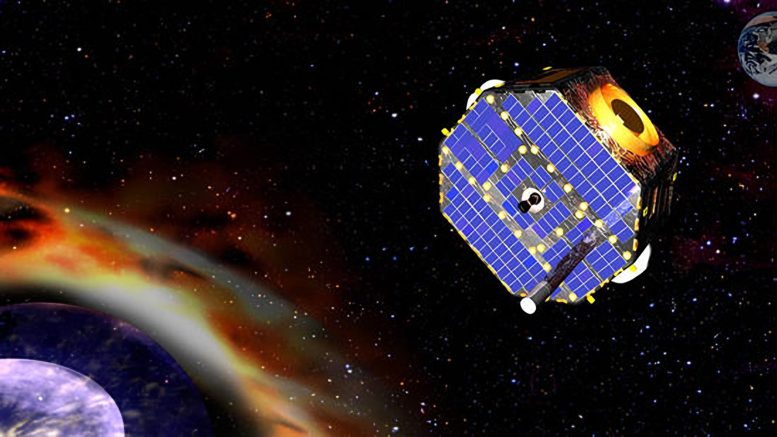
    This artist’s concept shows the IBEX spacecraft between Earth and the heliosphere. Credit: NASA

    To take the spacecraft out of contingency mode, the mission team performed a firecode reset (which is an external reset of the spacecraft) instead of waiting for the spacecraft to perform an autonomous reset and power cycle on March 4. The decision took advantage of a favorable communications environment around IBEX’s perigee – the point in the spacecraft’s orbit where it is closest to Earth.

    After the firecode reset, command capability was restored. IBEX telemetry shows that the spacecraft is fully operational and functioning normally.

    Launched on October 19, 2008, IBEX is a space mission designed to study the interaction between the solar wind and the interstellar medium, which is the gas, dust, and cosmic rays that exist in the space between stars. IBEX, a spacecraft about the size of a bus tire, uses a suite of instruments to measure energetic neutral atoms that are created at the boundary between the solar wind and the interstellar medium. These measurements help scientists better understand the structure and dynamics of the heliosphere, which is the region of space that is influenced by the solar wind. IBEX has made important discoveries about the nature of the interstellar medium and the heliosphere.

    Never miss a breakthrough: Join the SciTechDaily newsletter.
    Follow us on Google and Google News.

    IBEX NASA
    Share. Facebook Twitter Pinterest LinkedIn Email Reddit

    Related Articles

    NASA’s Interstellar Boundary Explorer Reveals: The Heliosphere Has Ripples!

    NASA’s Interstellar Boundary Explorer Charts 11 Years of Change to Heliosphere

    NASA’s Voyager 1 Continues to Help Solve the Interstellar Medium Mystery

    NASA’s Interstellar Boundary Explorer Provides New Details on Solar System Boundary

    IBEX Explores the Magnetic System Beyond the Solar Wind

    IBEX Reveals First View of the Solar System’s Tail, The Heliotail

    IBEX Measures Particles Outside Our Solar System

    The Mars Rover Curiosity Planetary Protection Snafu

    NASA Curiosity Heads to Mars

    Leave A Reply Cancel Reply

    • Facebook
    • Twitter
    • Pinterest
    • YouTube

    Don't Miss a Discovery

    Subscribe for the Latest in Science & Tech!

    Trending News

    A SpaceX Falcon 9 Rocket Hit the Moon and Blasted Open a 60-Foot Crater

    Study Reveals Your Organs May Be Aging at Very Different Speeds

    Scientists Finally Solve a 20-Year Mystery About Diamond Melting

    Ultra-Processed Foods Linked to 30% Higher Prostate Cancer Risk

    More Screen Time, Better Thinking? An 8-Year Study Finds a Surprising Link

    Cleaner Cars May Be Hiding a New Pollution Problem

    Common Plant Chemical Linked to Widespread Organ Damage in Aquatic Animals

    Dogs and Humans May Share a Surprising Biological Secret to Longevity

    Follow SciTechDaily
    • Facebook
    • Twitter
    • YouTube
    • Pinterest
    • Newsletter
    • RSS
    SciTech News
    • Biology News
    • Chemistry News
    • Earth News
    • Health News
    • Physics News
    • Science News
    • Space News
    • Technology News
    Recent Posts
    • NASA’s Powerful New Roman Space Telescope Is Cleared for Launch
    • Scientists Reveal How Cells Tame One of Biology’s Most Dangerous Metals
    • Hurricane Forecast Maps Are Getting Better – but One Big Problem Remains
    • Blackbirds Somehow Know When a Snake Is Too Dangerous To Attack
    • Scientists Find a Clue to Making Brain Stimulation More Reliable
    Copyright © 1998 - 2026 SciTechDaily. All Rights Reserved.
    • Science News
    • About
    • Contact
    • Editorial Board
    • Privacy Policy
    • Terms of Use

    Type above and press Enter to search. Press Esc to cancel.