

Close Menu
    Facebook X (Twitter) Instagram
    SciTechDaily
    • Biology
    • Chemistry
    • Earth
    • Health
    • Physics
    • Science
    • Space
    • Technology
    Facebook X (Twitter) Pinterest YouTube RSS
    SciTechDaily
    Home»Space»NASA’s Lunar Reconnaissance Orbiter Images Saturn From 56 Miles Above the Moon
    Space

    NASA’s Lunar Reconnaissance Orbiter Images Saturn From 56 Miles Above the Moon

    By NASA’s Goddard Space Flight CenterNovember 24, 2021No Comments3 Mins Read
    Facebook Twitter Pinterest Telegram LinkedIn WhatsApp Email Reddit
    Share
    Facebook Twitter LinkedIn Pinterest Telegram Email Reddit
    Lunar Reconnaissance Orbiter Saturn
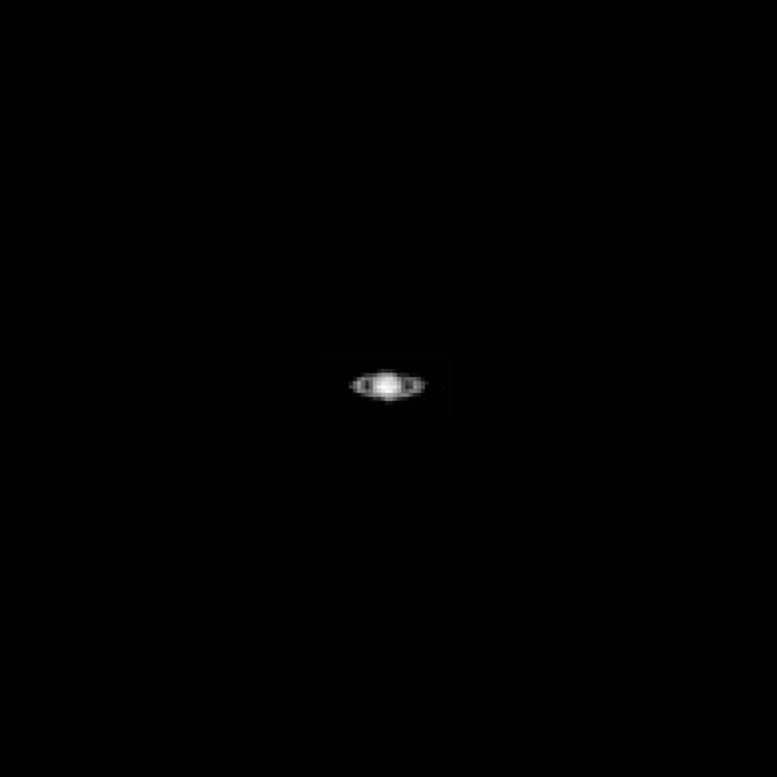
    On October 13, 2021, NASA’s Lunar Reconnaissance Orbiter slewed to allow LRO Camera (LROC) to acquire this magnificent view revealing Saturn and its rings. Credit: NASA/GSFC/Arizona State University

    NASA’s Lunar Reconnaissance Orbiter captured a striking image of Saturn and its rings from 90 kilometers above the Moon’s surface.

    From a viewpoint about 90 kilometers (56 miles) above Lacus Veris, “Lake of Spring,” the camera aboard NASA’s Lunar Reconnaissance Orbiter (LRO) spacecraft imaged Saturn on October 13, 2021. In this view, the Lunar Reconnaissance Orbiter Camera (LROC) was looking down at the north face of the rings, and from this perspective, the rings in front of Saturn appear below its equator.
    Lunar Reconnaissance Orbiter Saturn Zoom
    Saturn (enlarged 4x) seen from the Moon. Maneuvers such as this require intense planning from the LRO mission operations team at NASA’s Goddard Space Flight Center in Greenbelt, Maryland. Credit: NASA/GSFC/Arizona State University

    The LROC Narrow Angle Cameras (NAC) are line scan cameras, which presents a challenge for imaging anything besides the Moon. This is because they were designed to acquire images by taking advantage of the motion of the spacecraft above the surface (LRO travels over 1,600 meters per second (1 mile per second) above the Moon), to build up an image one line at a time, with very short exposure times. To image Saturn, the spacecraft slews the NAC across Saturn, building up the image by mimicking our orbital ground motion. The slew across Saturn was achieved by pointing the NACs on one side of Saturn and then targeting the other side. LRO responded to the updated target by slewing to it at a specific rate across the planet. This rate is programmed to optimize LRO stability and speed and resulted in a NAC exposure time of 3.82 milliseconds. Since Saturn is much dimmer than the Moon (and Jupiter) and the exposure time is in effect set by the slew speed, we cannot detect the Saturnian moons as we did with the Galilean moons, they are just too dim.

    Fortunately, the NACs can image the amazing rings of Saturn, which are likely only 10 to 100 million years old, 10 meters thick, and are comprised almost entirely of water ice. The major rings visible here have a diameter of 270,000 km (168,000 miles), about 70% of the average distance between the Earth and the Moon.

    Hubble Saturn 2021
    Hubble’s 2021 look at Saturn shows rapid and extreme color changes in the bands of the planet’s northern hemisphere. Credit: NASA, ESA, A. Simon (NASA-GSFC), and M. H. Wong (UC Berkeley); Image Processing: A. Pagan (STScI)

    For comparison, the image above was captured by the Hubble Space Telescope during its grand tour of the outer solar system.

    LRO is managed by NASA’s Goddard Space Flight Center in Greenbelt, Maryland, for the Science Mission Directorate at NASA Headquarters in Washington. Launched on June 18, 2009, LRO has collected a treasure trove of data with its seven powerful instruments, making an invaluable contribution to our knowledge about the Moon. NASA is returning to the Moon with commercial and international partners to expand human presence in space and bring back new knowledge and opportunities.

    Never miss a breakthrough: Join the SciTechDaily newsletter.
    Follow us on Google and Google News.

    Astronomy NASA NASA Goddard Space Flight Center NASA's Lunar Reconnaissance Orbiter Saturn
    Share. Facebook Twitter Pinterest LinkedIn Email Reddit

    Related Articles

    Saturn’s Rings Are Acting Strange – Hubble Captures Mysterious “Spokes”

    Stunning Hubble Images Capture Changing Seasons in Saturn’s Vast and Turbulent Atmosphere

    NASA Discovers “Very Weird” Molecule in Titan’s Atmosphere

    Cassini Data Reveals Likely Subsurface Ocean on Titan

    Heat from Within the Planet Powers Saturn’s Jet Streams

    X-Ray Echoes Demonstrate the Reality of Relativistic Reverberation

    A Closer Look at Titan’s Chemical Production

    Ultra-Fast Outflows are Common Features of Black-Hole-Powered Galaxies

    NASA LRO Spacecraft Reveals Geological Activity on the Moon’s Surface

    Leave A Reply Cancel Reply

    • Facebook
    • Twitter
    • Pinterest
    • YouTube

    Don't Miss a Discovery

    Subscribe for the Latest in Science & Tech!

    Trending News

    Why Popular Diabetes Drugs Like Ozempic Don’t Work for Everyone: The “Genetic Glitch”

    Scientists Stunned After Finding Plant Thought Extinct for 60 Years

    Scientists Discover Tiny New Spider That Hunts Prey 6x Its Size

    Natural Component From Licorice Shows Promise for Treating Inflammatory Bowel Disease

    Scientists Warn: Popular Sweetener Linked to Dangerous Metabolic Effects

    Monster Storms on Jupiter Unleash Lightning Beyond Anything on Earth

    Scientists Create “Liquid Gears” That Spin Without Touching

    The Simple Habit That Could Help Prevent Cancer

    Follow SciTechDaily
    • Facebook
    • Twitter
    • YouTube
    • Pinterest
    • Newsletter
    • RSS
    SciTech News
    • Biology News
    • Chemistry News
    • Earth News
    • Health News
    • Physics News
    • Science News
    • Space News
    • Technology News
    Recent Posts
    • Seeing the Invisible: Scientists Develop New Way To Track Particles in 3D
    • The Atomic Gap That Could Cost the Semiconductor Industry Billions
    • Earth’s Secret Advantage: Why Most Alien Worlds May Be Too Dry for Life
    • Ancient Bacteria Turned a DNA System Into a Cell Skeleton
    • Researchers Finally Solve 50-Year-Old Blood Group Mystery
    Copyright © 1998 - 2026 SciTechDaily. All Rights Reserved.
    • Science News
    • About
    • Contact
    • Editorial Board
    • Privacy Policy
    • Terms of Use

    Type above and press Enter to search. Press Esc to cancel.