
Close Menu
    Facebook X (Twitter) Instagram
    SciTechDaily
    • Biology
    • Chemistry
    • Earth
    • Health
    • Physics
    • Science
    • Space
    • Technology
    Facebook X (Twitter) Pinterest YouTube RSS
    SciTechDaily
    Home»Space»NASA’s OSIRIS-REx Will Deliver 4.5 Billion-Year-Old Asteroid Samples to Specially Designed Facility
    Space

    NASA’s OSIRIS-REx Will Deliver 4.5 Billion-Year-Old Asteroid Samples to Specially Designed Facility

    By NASAJune 25, 20231 Comment7 Mins Read
    Facebook Twitter Pinterest Telegram LinkedIn WhatsApp Email Reddit
    Share
    Facebook Twitter LinkedIn Pinterest Telegram Email Reddit
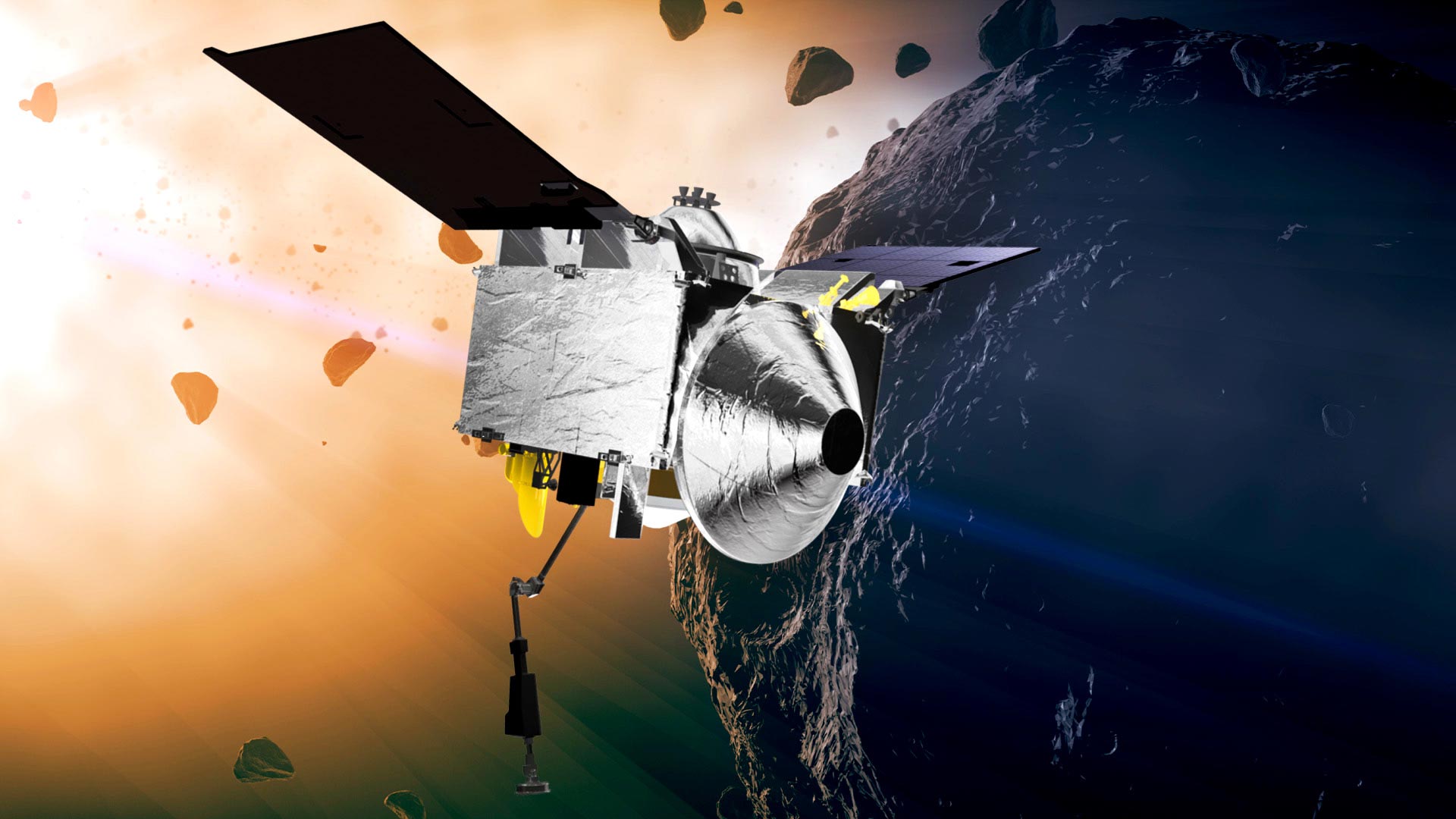
    NASA's OSIRIS-REx Asteroid Sample Return Mission
    NASA’s OSIRIS-REx mission is on the verge of returning samples of rocks and dust from asteroid Bennu, a 4.5 billion-year-old remnant of the early solar system, which will help to understand the role of similar asteroids in the formation of planets and life on Earth. The samples, collected in 2020, are expected to provide insights into the potential impact of asteroids on Earth and aid in future asteroid deflection strategies. These will be examined and stored at NASA’s Astromaterials Research and Exploration Science (ARES) division at Johnson, the largest repository of extraterrestrial materials globally. Credit: NASA’s Goddard Space Flight Center

    NASA’s OSIRIS-REx is set to return samples from asteroid Bennu to Earth. These 4.5 billion-year-old samples will help scientists understand planet formation and life’s genesis, aid in asteroid impact prevention, and be preserved for future research. Over 200 scientists worldwide will analyze these samples in a specially designed facility at NASA’s Johnson Space Center.

    If everything goes according to plan, in September 2023, OSIRIS-REx’s sample return capsule will separate from the spacecraft, enter the Earth’s atmosphere, and parachute safely to Earth for recovery at the Department of Defense’s Utah Test and Training Range, located about 70 miles west of Salt Lake City.

    “The OSIRIS-REx curation team is excitedly preparing for the Bennu samples,” said Nicole Lunning, OSIRIS-REx lead sample curator at NASA’s Johnson Space Center.
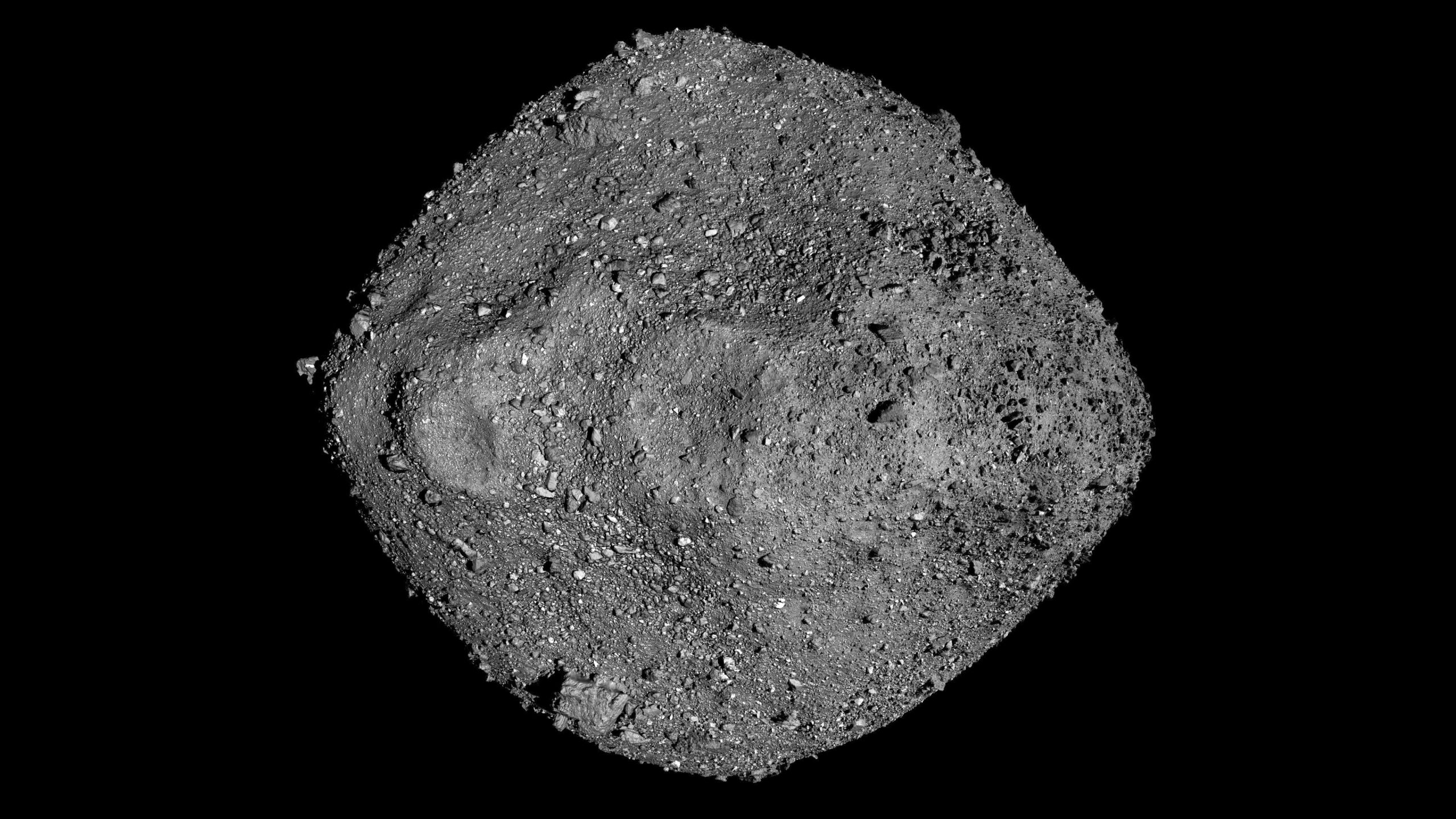
    Asteroid Bennu Mosaic OSIRIS-REx
    This mosaic of Bennu was created using observations made by NASA’s OSIRIS-REx spacecraft that was in close proximity to the asteroid for over two years. Credit: NASA/Goddard/University of Arizona

    The rocks and dust, called regolith, were collected from Bennu’s surface in 2020. Bennu is likely to be a well-preserved, 4.5 billion-year-old remanent of the early solar system, so the samples should provide insight into the role that similar asteroids played in the formation of planets and the delivery of organic material and water to Earth that may have ultimately led to life. Data collected from the OSIRIS-REx mission will also help scientists better understand asteroids that could impact Earth and inform future asteroid deflection efforts.
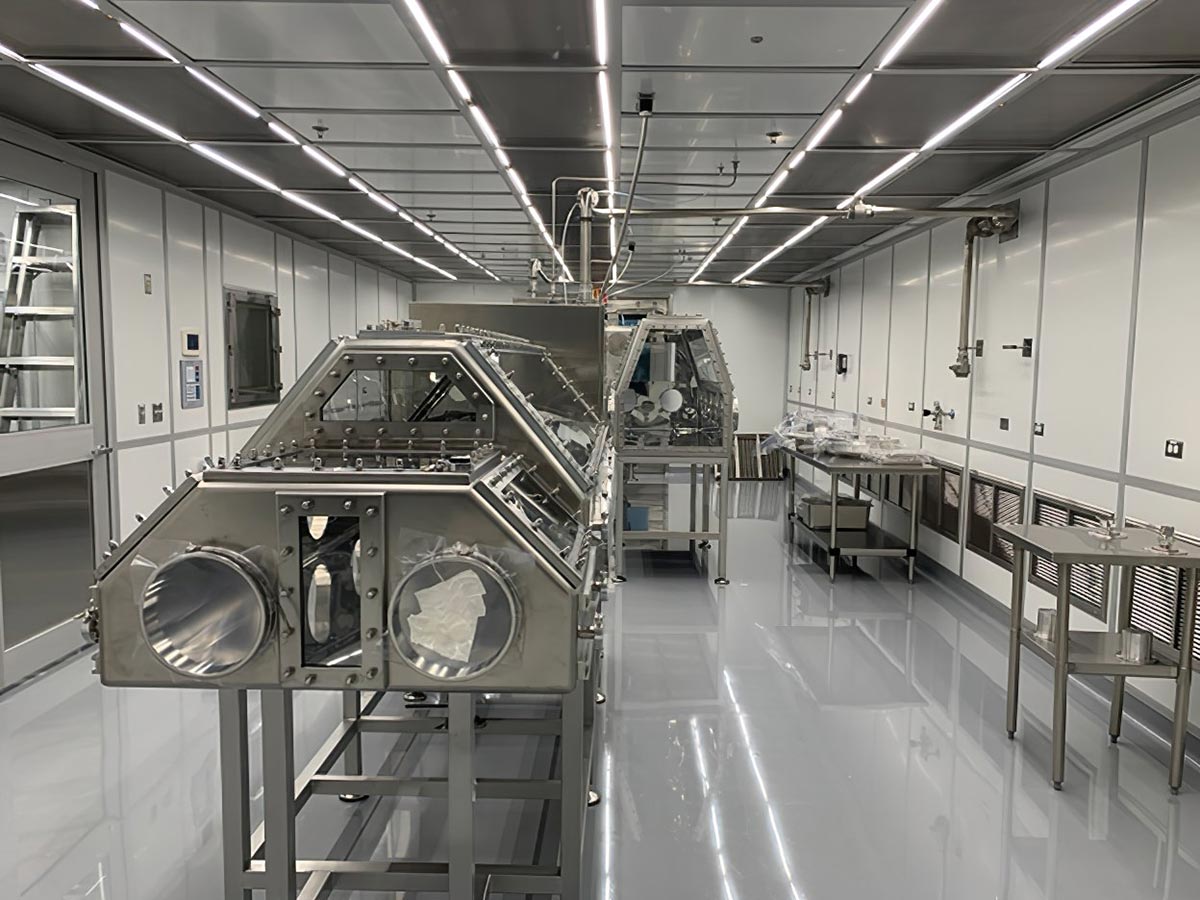
    OSIRIS-REx Curation Laboratory
    The new OSIRIS-REx curation laboratory at NASA’s Johnson Space Center undergoing preparations for completion of the glovebox nitrogen plumbing. Credit: NASA/Nicole Lunning

    To investigate these questions, scientists must carefully preserve, protect, and handle the asteroid samples, which will be examined and stored in a new curation facility managed by NASA’s Astromaterials Research and Exploration Science division, or ARES, at Johnson. The division is home to the world’s most extensive collection of extraterrestrial materials — including lunar rocks, solar wind particles, meteorites, and comet samples.
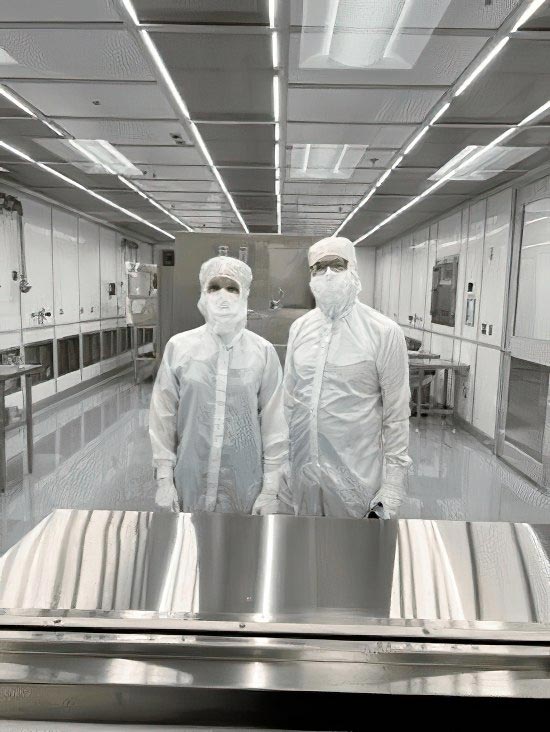
    Nicole Lunning and Dante Lauretta
    Nicole Lunning, Deputy OSIRIS-REx curator within the Astromaterials Research and Exploration Science (ARES) division at NASA’s Johnson Space Center (left) with Dante Lauretta, OSIRIS-REx principal investigator and professor of planetary science from the University of Arizona in Tucson, dressed in clean room gowns in the new curation laboratory at Johnson. Credit: Rowan University/Harold Connolly

    For two years, from late 2023 to late 2025, the science team will characterize the samples and conduct the analysis needed to meet the mission’s science goals. NASA will preserve at least 70 percent of the sample at Johnson for further research by scientists worldwide, including future generations of scientists. A cohort of more than 200 scientists around the world will explore the regolith’s properties, including researchers from many US institutions, NASA partners JAXA (Japan Aerospace Exploration Agency), CSA (Canadian Space Agency), and other scientists from around the world.
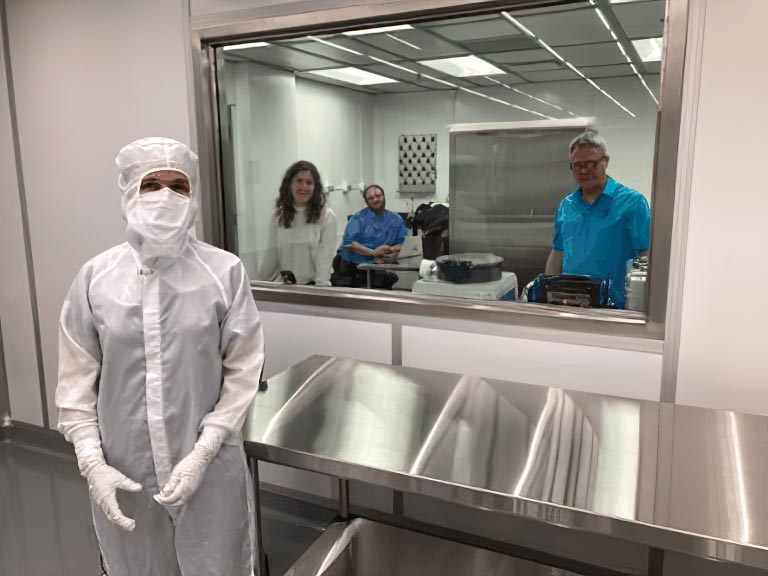
    Nicole Lunning Cleanroom
    From left to right are Nicole Lunning, dressed in a cleanroom gown; Anjani Polit, mission implementation systems engineer from the University of Arizona; Jason Dworkin, OSIRIS-REx contamination control officer project scientist from NASA’s Goddard Space Flight Center in Greenbelt, Maryland; and Harold Connolly, mission sample scientist from Rowan University in Glassboro, New Jersey. Credit: University of Arizona/Dante Lauretta

    The new curation laboratory has specialized gloveboxes for handling both the OSIRIS-REx sample and the hardware used to grab the material from the asteroid’s surface and deliver it to Earth.

    “Our team is engaged in a whirlwind of activity as we get ready for the sample,” Lunning said. “A variety of specialists are coming together to develop custom tools, many of which have been fabricated onsite by Johnson’s Manufacturing group and in the Innovation Design Center. We are carefully outfitting the curation lab to protect the sample from potential contaminants as we rehearse complex procedures for flight hardware disassembly in gloveboxes.”
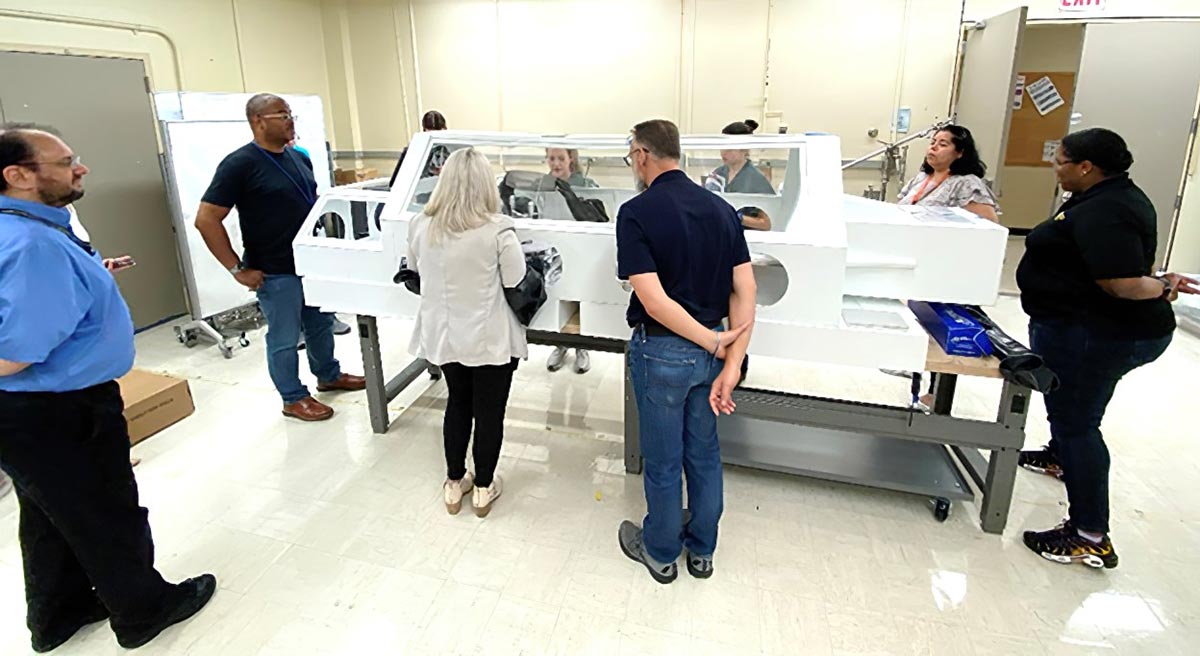
    NASA OSIRIS-REx Curation Team
    NASA’s OSIRIS-REx curation team from Johnson’s ARES division and visiting mission team members practice the sample pour in a mock-up glovebox in Building 36 at Johnson in May 2023. From left to right are Jason Dworkin OSIRIS-REx project scientist from Goddard; Christopher Snead, OSIRIS-REx deputy sample curator; Curtis Calva, astromaterials processor; Rachel Funk, OSIRIS-REx lab lead processor; Julia Plummer, astromaterials processor; Dante Lauretta, OSIRIS-REx principal investigator and professor of planetary science from the University of Arizona in Tucson; Nicole Lunning, OSIRIS-REx lead sample curator; Melissa Rodriguez, contractor lead for astromaterials-current collections; and Kimberly Allums, contract project manager and contract section manager for curation. Credit: NASA

    Some of the material collected from Bennu’s surface will be smaller than a grain of sand. “We have been developing custom tools to carefully handle these precious particles within our new gloveboxes,” said Christopher Snead, small-particle handling lead and OSIRIS-REx deputy curator at Johnson.
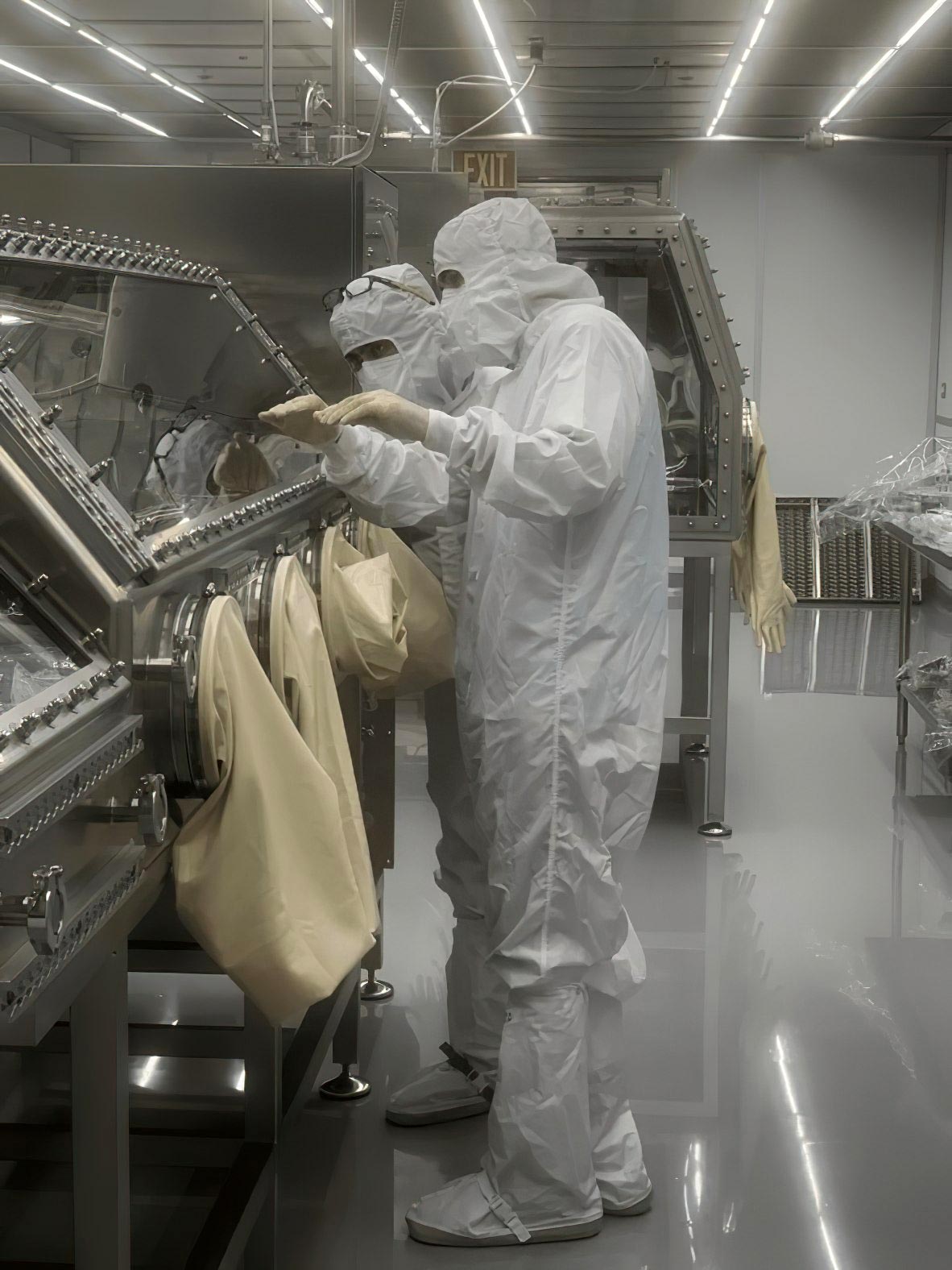
    NASA Johnson ARES Curation Engineers
    Curation engineers from Johnson’s ARES division finalizing installation of the x-y-rotation stage in the Touch-and-Go Sample Acquisition Mechanism glovebox in June 2023. From left to right are Neftali Hernandez Gomez and Salvador Martinez. Credit: NASA

    With help from the ARES curation laboratories, scientists around the globe are still analyzing new caches of Moon rocks preserved since the Apollo missions in the Apollo Next Generation Sample Analysis initiative. Lessons learned from Apollo and other missions have advanced the science behind sample protection, contingency planning, and contamination control. This legacy will continue with the Bennu samples, which will be preserved for study by scientists not yet born, using technologies not yet invented, to answer fundamental questions about the solar system.
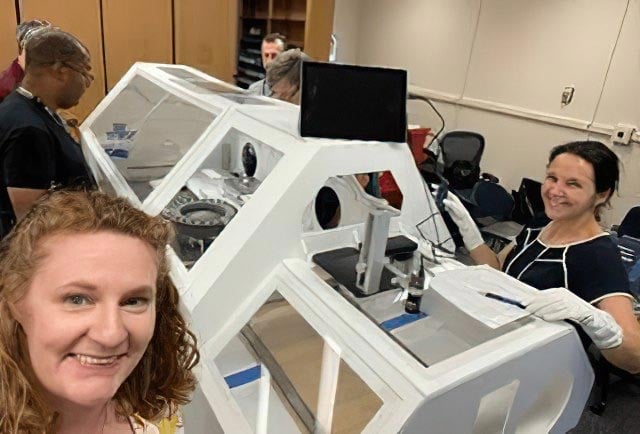
    OSIRIS-REx Team Practices for Sample Return
    The OSIRIS-REx team practices for sample return at Johnson with a mock-up glovebox in October 2022. From front left going clockwise are Michelle Thompson, OSIRIS-REx contact pad analysis deputy lead and professor of planetary sciences at Purdue University, West Lafayette, Indiana and Johnson team members from the ARES division Christopher Snead and Kevin Righter, OSIRIS-REx deputy sample curators; Wayland Connelly, astromaterials curation engineer; Lindsay Keller OSIRIS-REx contact pad analysis lead, and Nicole Lunning, OSIRIS-REx sample curator. Credit: Purdue University/Michelle Thompson

    Scientists of this generation will determine the properties of Bennu’s precursor chemical compounds to map out if — and how — these chemicals could have evolved into life. The mineral and chemical makeup of the samples will be analyzed to see if it compares with the interpretation of data collected at the asteroid, helping to improve future missions and the evaluation of telescopic and spacecraft data.
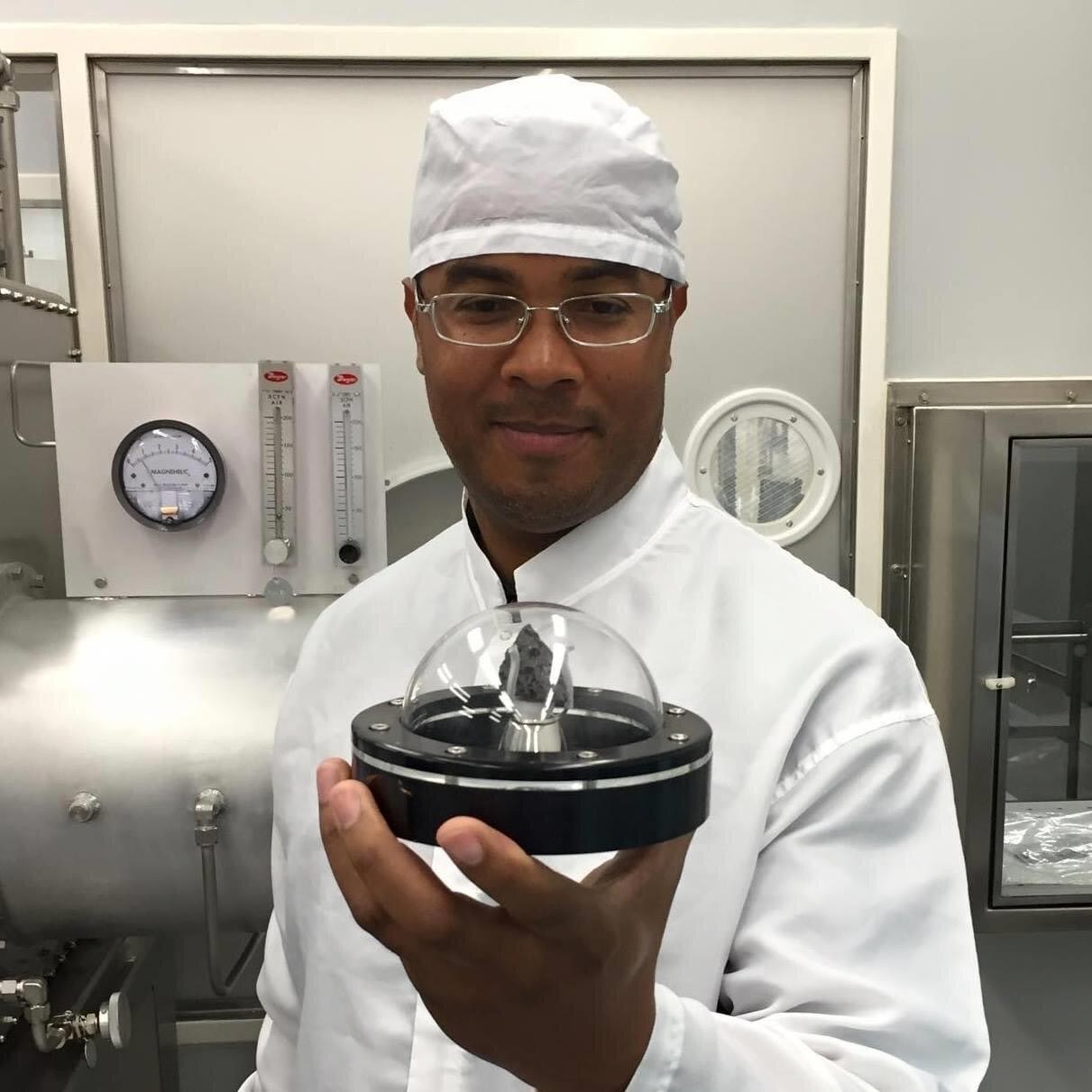
    Christopher Snead, OSIRIS-REx Deputy Sample Curator
    Christopher Snead, OSIRIS-REx deputy sample curator, the curation small particle handling lead and OSIRIS-REx deputy curator, holding a preserved Moon rock in Johnson’s curation laboratory. Credit: NASA

    NASA’s Goddard Space Flight Center provides overall mission management, systems engineering, and the safety and mission assurance for OSIRIS-REx. Dante Lauretta of the University of Arizona, Tucson, is the principal investigator. The university leads the science team and the mission’s science observation planning and data processing. Lockheed Martin Space in Littleton, Colorado, built the spacecraft and provides flight operations. Goddard and KinetX Aerospace are responsible for navigating the OSIRIS-REx spacecraft. Curation for OSIRIS-REx, including processing the sample when it arrives on Earth, will take place at NASA’s Johnson Space Center in Houston.

    International partnerships on this mission include CSA (contributed the OSIRIS-REx Laser Altimeter instrument) and JAXA (Hayabusa2 sample science collaboration). OSIRIS-REx is the third mission in NASA’s New Frontiers Program, managed by NASA’s Marshall Space Flight Center in Huntsville, Alabama, for the agency’s Science Mission Directorate in Washington, D.C.

    Never miss a breakthrough: Join the SciTechDaily newsletter.
    Follow us on Google and Google News.

    Asteroid Asteroid Bennu Johnson Space Center NASA OSIRIS-REx Popular
    Share. Facebook Twitter Pinterest LinkedIn Email Reddit

    Related Articles

    Beyond the Mission Goals: How NASA Surpassed Expectations With Asteroid Bennu

    NASA’s OSIRIS-REx Team Triumphs Over Fasteners – Gains Access to Remaining Asteroid Sample

    Building Blocks of Life? NASA Reveals 4.5-Billion-Year-Old Asteroid Bennu Sample

    Countdown to History: NASA’s OSIRIS-REx Preps for Epic Asteroid Delivery

    Preparing for Asteroid Bennu: NASA’s OSIRIS-REx Astromaterials Lab Opens Doors to Media

    A Race Against Time: NASA Readies for Historic Asteroid Sample Delivery

    NASA Finds Some Asteroids Aged Early by Sun – “We Were Surprised”

    Surprise – Again! NASA Spacecraft Reveals Asteroid Bennu Is Not What It Seemed

    NASA’s OSIRIS-REx Spacecraft Observes Asteroid Bennu’s Boulder “Body Armor”

    1 Comment

    1. Eric M. Jones on June 26, 2023 6:09 am

      Great. We’ve all seen this movie before. Tentacled alien creature invades Earth and is unstoppable. Staring Faith Domergue and Kenneth Tobey.

      Reply
    Leave A Reply Cancel Reply

    • Facebook
    • Twitter
    • Pinterest
    • YouTube

    Don't Miss a Discovery

    Subscribe for the Latest in Science & Tech!

    Trending News

    Why Popular Diabetes Drugs Like Ozempic Don’t Work for Everyone: The “Genetic Glitch”

    Scientists Stunned After Finding Plant Thought Extinct for 60 Years

    Scientists Discover Tiny New Spider That Hunts Prey 6x Its Size

    Natural Component From Licorice Shows Promise for Treating Inflammatory Bowel Disease

    Scientists Warn: Popular Sweetener Linked to Dangerous Metabolic Effects

    Monster Storms on Jupiter Unleash Lightning Beyond Anything on Earth

    Scientists Create “Liquid Gears” That Spin Without Touching

    The Simple Habit That Could Help Prevent Cancer

    Follow SciTechDaily
    • Facebook
    • Twitter
    • YouTube
    • Pinterest
    • Newsletter
    • RSS
    SciTech News
    • Biology News
    • Chemistry News
    • Earth News
    • Health News
    • Physics News
    • Science News
    • Space News
    • Technology News
    Recent Posts
    • Natural Compound Shows Powerful Potential Against Rheumatoid Arthritis
    • 100,000-Year-Old Neanderthal Fossils in Poland Reveal Unexpected Genetic Connections
    • Unexpected Hormone Discovery Could Change How We Treat Arthritis
    • Scientists Supercharge “Natural Killer” Cells To Break Through Cancer’s Defenses
    • Simple “Gut Reset” May Prevent Weight Gain After Ozempic or Wegovy
    Copyright © 1998 - 2026 SciTechDaily. All Rights Reserved.
    • Science News
    • About
    • Contact
    • Editorial Board
    • Privacy Policy
    • Terms of Use

    Type above and press Enter to search. Press Esc to cancel.