
Close Menu
    Facebook X (Twitter) Instagram
    SciTechDaily
    • Biology
    • Chemistry
    • Earth
    • Health
    • Physics
    • Science
    • Space
    • Technology
    Facebook X (Twitter) Pinterest YouTube RSS
    SciTechDaily
    Home»Space»NASA’s Perseverance Rover Scouts Mars Sample Return Campaign Landing Sites
    Space

    NASA’s Perseverance Rover Scouts Mars Sample Return Campaign Landing Sites

    By SciTechDailyJuly 12, 2022No Comments5 Mins Read
    Facebook Twitter Pinterest Telegram LinkedIn WhatsApp Email Reddit
    Share
    Facebook Twitter LinkedIn Pinterest Telegram Email Reddit
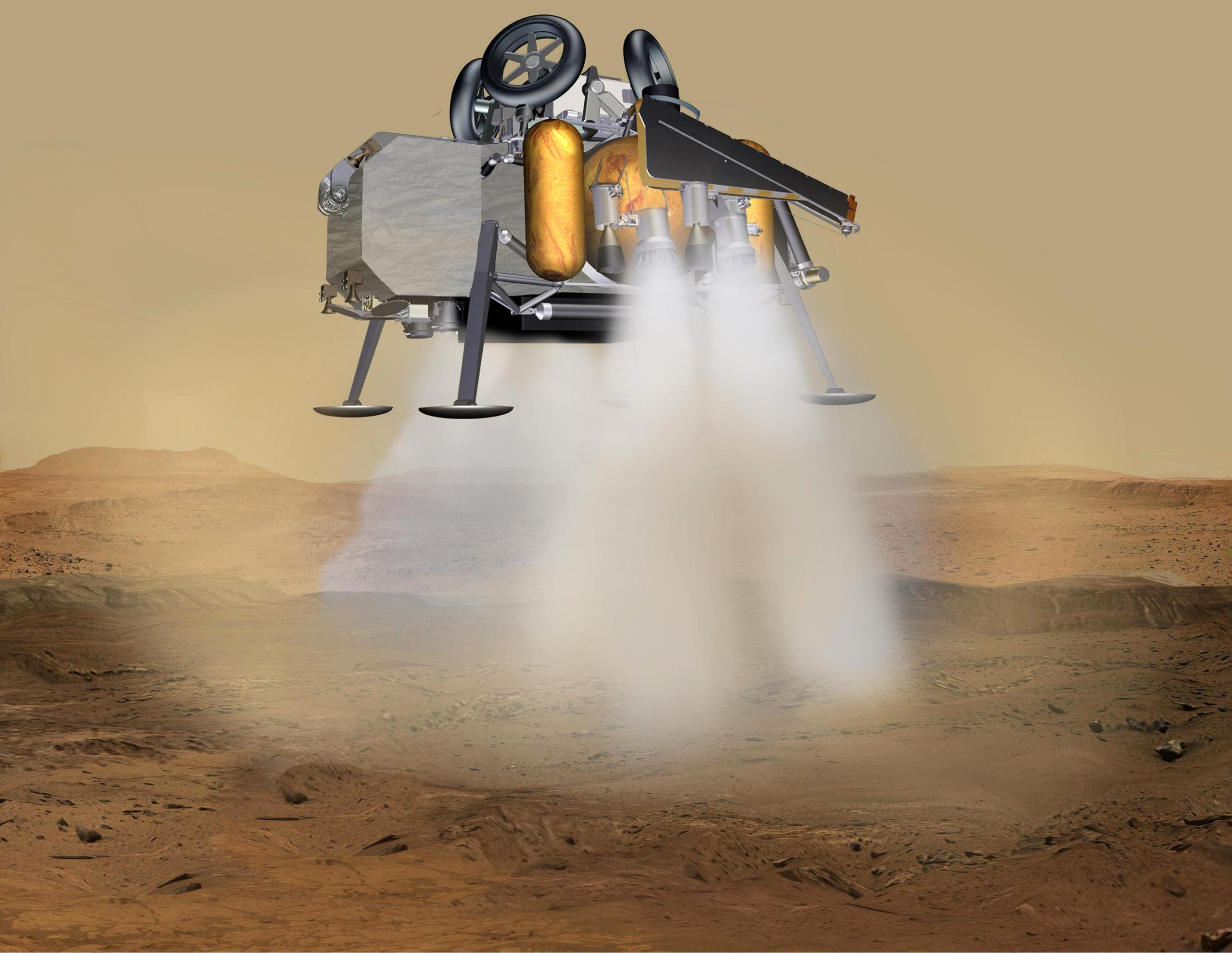
    Mars Sample Return Lander Touchdown
    In this illustration of a Mars sample return mission concept, a lander carrying a fetch rover touches down on the surface of Mars. Credit: NASA/JPL-Caltech

    The six-wheeled roving explorer has inspected a stretch of the Red Planet to see if it is flat enough for NASA’s next Mars lander.

    While NASA’s Perseverance Mars rover is conducting its science campaign, taking samples at Jezero Crater’s ancient river delta, it’s also been busy scouting. The rover is searching for locations where the planned Mars Sample Return (MSR) Campaign can land spacecraft and collect sample tubes Perseverance has filled with rock and sediment. The sites being surveyed are under consideration because of their proximity to the delta and to one another, as well as for their reasonably flat, lander-friendly topography.

    Mars Sample Return is a historic endeavor that would retrieve samples of that faraway terrain and deliver them to Earth for intensive analysis in laboratories to look for signs of past microscopic life on the Red Planet. To make this happen a strategic partnership between NASA and ESA (European Space Agency) would involve multiple spacecraft, including a rocket that would launch from the surface of Mars.
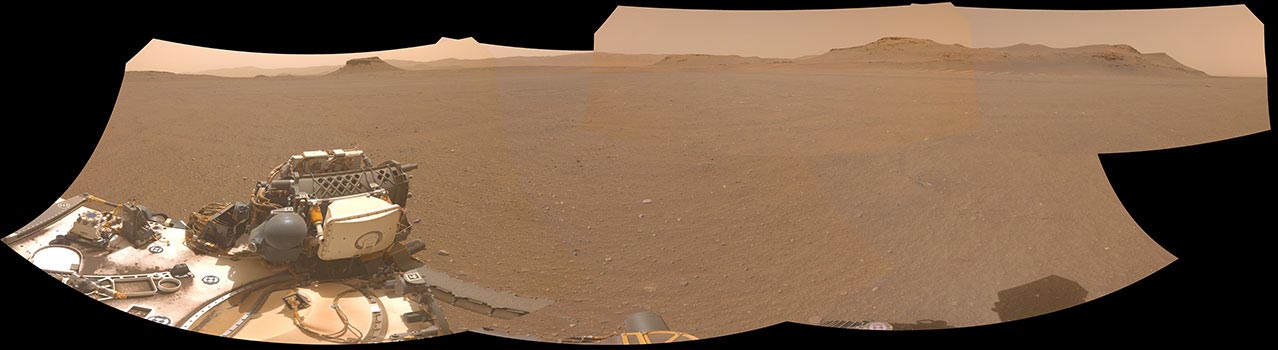
    Perseverance’s Panorama of Potential Mars Sample Return Landing Site
    NASA’s Perseverance Mars rover used one of its navigation cameras to take this panorama of a proposed landing site for the Mars Sample Return lander that would serve as part of the campaign to bring samples of Mars rock and sediment to Earth for intensive study. Credit: NASA/JPL-Caltech

    Because rocks and an undulating surface are harder to land on, engineers planning a Mars landing prefer to work with flatter ground. With that in mind, the MSR Entry, Descent, and Landing team is looking for a pancake-flat landing zone with a 200-foot (60-meter) radius.

    “The Perseverance team pulled out all the stops for us, because Mars Sample Return has unique needs when it comes to where we operate,” said MSR Program Manager Richard Cook of NASA’s Jet Propulsion Laboratory in Southern California. “Essentially, a dull landing place is good. The flatter and more uninspiring the vista, the better we like it, because while there are a lot of things that need to be done when we arrive to pick up the samples, sightseeing is not one of them.”
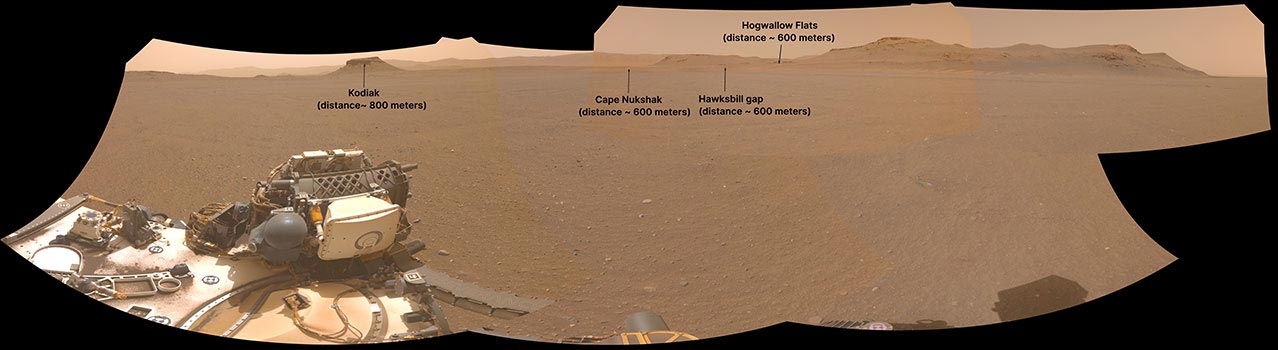
    Perseverance’s Panorama of Potential Mars Sample Return Landing Site Annotated
    Same image as above, but with annotations. Credit: NASA/JPL-Caltech

    Flat-Out Inspirational

    The first stage of MSR is already in progress: Perseverance has cored, collected, and sealed nine samples of Mars rock to date. The ninth, collected on July 6, is the first from Jezero Crater’s ancient river delta. The plan is for Perseverance to drop, or cache, sample tubes on the surface to await later retrieval during MSR surface operations.
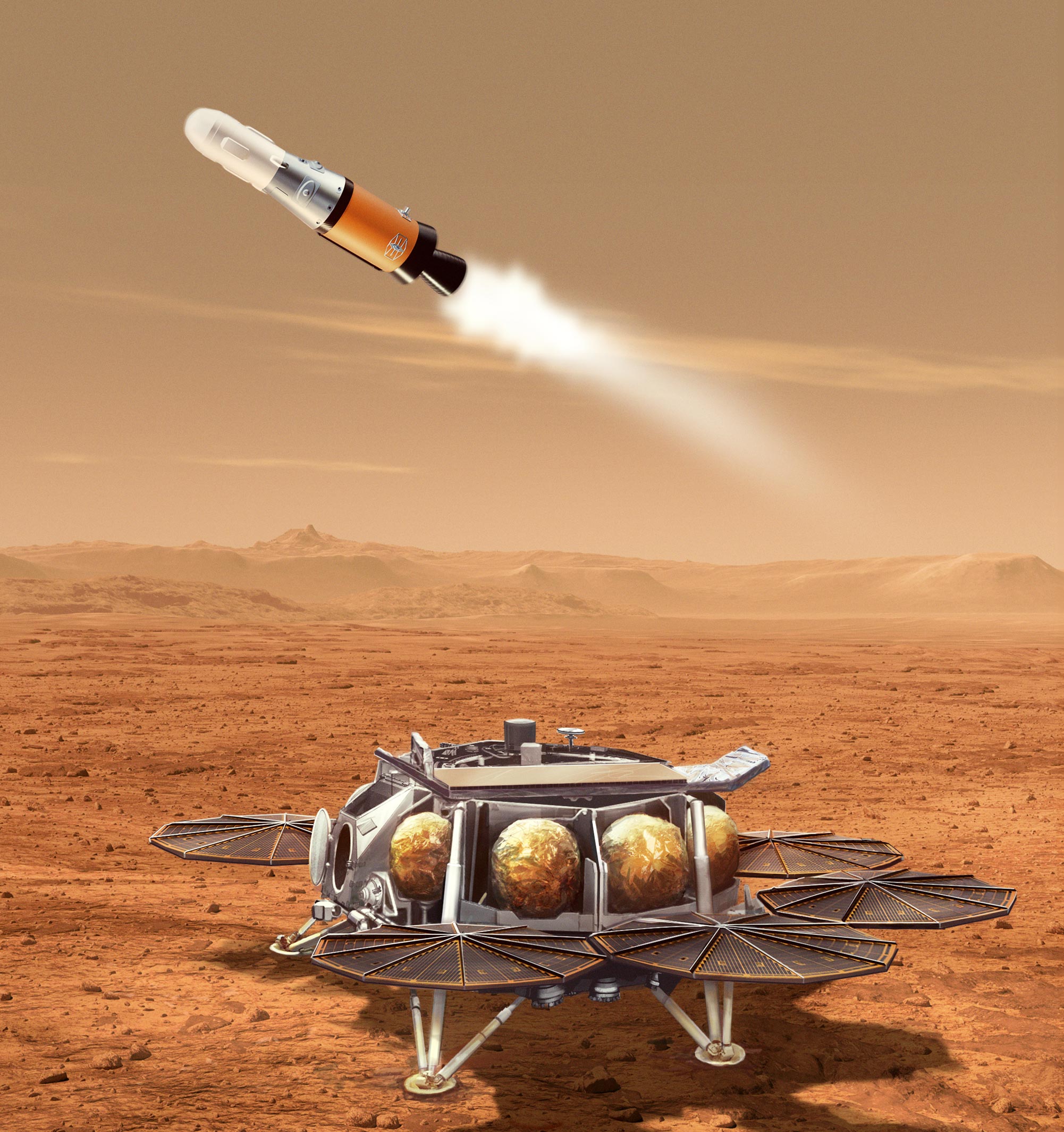
     Mars Sample Retrieval Lander-Mars Ascent Vehicle Launch Illustration
    This illustration shows a concept for a proposed NASA Mars lander-and-rocket combination that would play a key role in returning to Earth samples of Mars material collected by the Perseverance rover. This Sample Retrieval Lander would carry a small rocket (about 10 feet, or 3 meters, tall) called the Mars Ascent Vehicle to the Martian surface. After using a robotic arm to load the rover’s sealed sample tubes into a container in the nose cone of the rocket, the lander would launch the Mars Ascent Vehicle into orbit around the Red Planet. Credit: NASA/JPL-Caltech

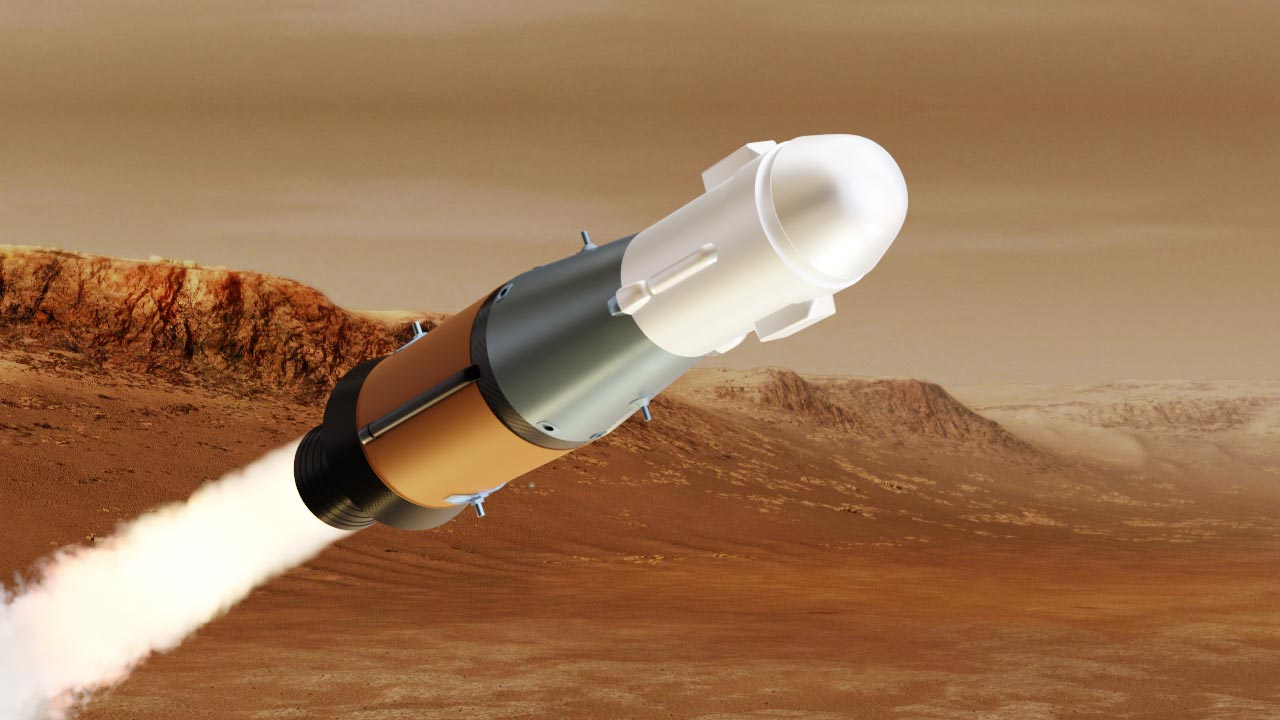
    Choosing an area that lacks large rocks (especially those over 7 1/2 inches, or 19 centimeters, in diameter), sand dunes, and steeply angled terrain would go a long way toward easing the path for an MSR recovery vehicle to efficiently grab tubes before heading to the MSR Sample Retrieval Lander (see image above) and its Mars Ascent Vehicle (see image below).
    Mars Ascent Vehicle (Illustration)
    This illustration shows NASA’s Mars Ascent Vehicle (MAV) in powered flight. The MAV will carry tubes containing Martian rock and soil samples into orbit around Mars, where ESA’s Earth Return Orbiter spacecraft will enclose them in a highly secure containment capsule and deliver them to Earth. Credit: NASA

    Landing Strip

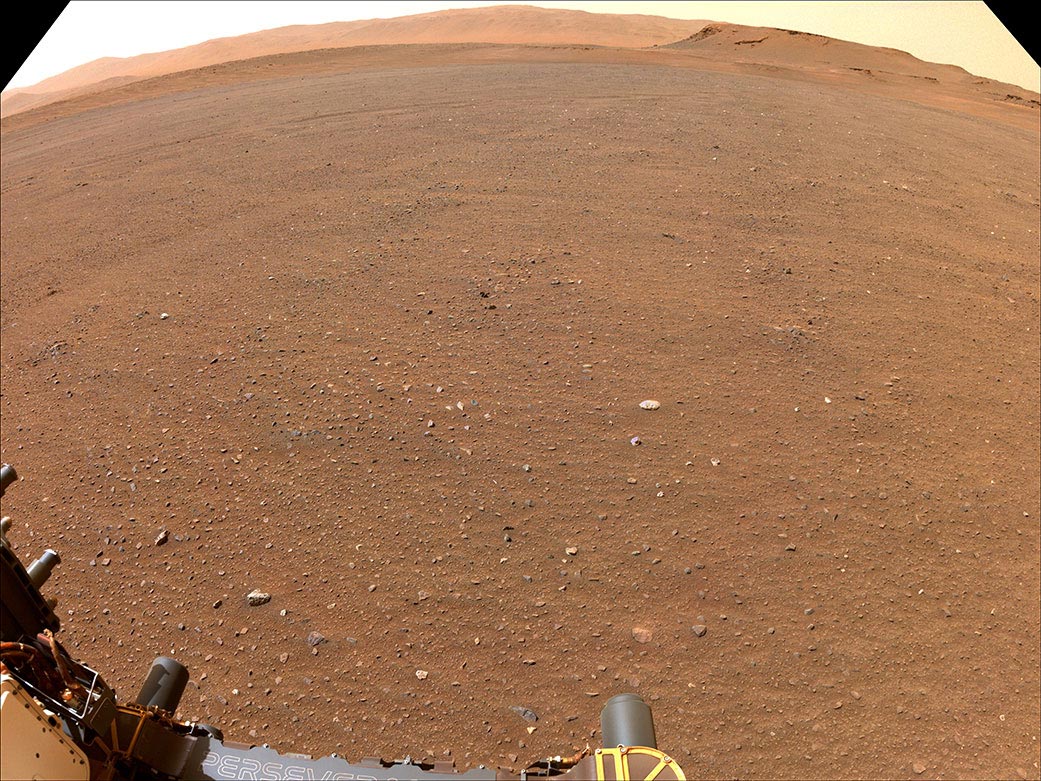
    The MSR team calls the area they’ve been looking at the “landing strip” because – at least from images taken from spacecraft in orbit – it appears to be as flat and long as a runway. But they needed a rover’s-eye-view for a closer look.

    “We had been eyeing these locations since before Perseverance’s landing, but imagery from orbit can only tell you so much,” said Al Chen, Mars Sample Return Systems Engineering & Integration manager at JPL. “Now we have some up-close-and-personal shots of the landing strip that indicate we were right on the money. The landing strip will more than likely make our shortlist of potential landing and caching sites for MSR.”
    Mars Sample Return Lander Terrain
    NASA’s Perseverance Mars rover used one of its navigation cameras to take this image of flat terrain to be considered for a Mars Sample Return lander that would serve as part of the campaign to bring samples of Mars rock and sediment to Earth for intensive study. Credit: NASA/JPL-Caltech

    More About the Campaign

    NASA’s Mars Sample Return Campaign promises to revolutionize humanity’s understanding of Mars by bringing scientifically selected samples to Earth for study using the most sophisticated instruments around the world. The campaign would fulfill a solar system exploration goal, a high priority since the 1970s and in the last three National Academy of Sciences Planetary Decadal Surveys.

    This strategic NASA and ESA partnership would be the first mission to return samples from another planet and the first launch from the surface of another planet. The samples collected by NASA’s Perseverance Mars rover during its exploration of an ancient lakebed are thought to present the best opportunity to reveal clues about the early evolution of Mars, including the potential for past life. By better understanding the history of Mars, we would improve our understanding of all rocky planets in the solar system, including Earth.

    Never miss a breakthrough: Join the SciTechDaily newsletter.
    Follow us on Google and Google News.

    Mars Mars 2020 Perseverance Rover Mars Sample Return NASA Popular
    Share. Facebook Twitter Pinterest LinkedIn Email Reddit

    Related Articles

    Evidence of Life on Mars? NASA’s Bold Strategy to Recover the Proof

    Atmospheric Time Capsules: Why Scientists Are Intrigued by Air in NASA’s Mars Sample Tubes

    NASA’s Perseverance Mars Rover Shows Off Collection of Martian Samples in Stunning Panorama

    NASA’s Ingenuity Mars Helicopter Scouts Ridgeline for Perseverance Science Team

    NASA Ingenuity Helicopter Spots Spacecraft Wreckage on Mars – Perseverance’s Cone-Shaped Backshell

    We’ve Arrived! NASA’s Mars Perseverance Rover Starts the Delta Front Campaign

    Incredible Video of Solar Eclipse on Mars – Captured by NASA’s Perseverance Rover

    NASA’s Mars Perseverance Rover Arrives at Ancient Delta for New Science Campaign

    NASA Perseverance Rover’s Self-Driving Capabilities Put to the Test in Rush to Martian Delta

    Leave A Reply Cancel Reply

    • Facebook
    • Twitter
    • Pinterest
    • YouTube

    Don't Miss a Discovery

    Subscribe for the Latest in Science & Tech!

    Trending News

    One of the Universe’s Largest Stars May Be Getting Ready To Explode

    Scientists Discover Enzyme That Could Supercharge Ozempic-Like Weight Loss Drugs

    Popular Sweetener Linked to DNA Damage – “It’s Something You Should Not Be Eating”

    Ancient “Rock” Microbes May Reveal How Complex Life Began

    Researchers Capture Quantum Interference in One of Nature’s Rarest Atoms

    “A Plague Is Upon Us”: The Mass Death That Changed an Ancient City Forever

    Scientists Discover Game-Changing New Way To Treat High Cholesterol

    This Small Change to Your Exercise Routine Could Be the Secret to Living Longer

    Follow SciTechDaily
    • Facebook
    • Twitter
    • YouTube
    • Pinterest
    • Newsletter
    • RSS
    SciTech News
    • Biology News
    • Chemistry News
    • Earth News
    • Health News
    • Physics News
    • Science News
    • Space News
    • Technology News
    Recent Posts
    • Scientists Prove There Are Just Six Degrees of Separation in a Social Network
    • Bee Bacteria Could Fix a Major Flaw in Plant-Based Milk
    • Scientists Discover a Surprising Way To Make Bread Healthier and More Nutritious
    • Natural Compounds Boost Bone Implant Success While Killing Bacteria and Cancer Cells
    • After 60 Years, Scientists Uncover Unexpected Brain Effects of Popular Diabetes Drug Metformin
    Copyright © 1998 - 2026 SciTechDaily. All Rights Reserved.
    • Science News
    • About
    • Contact
    • Editorial Board
    • Privacy Policy
    • Terms of Use

    Type above and press Enter to search. Press Esc to cancel.