
Close Menu
    Facebook X (Twitter) Instagram
    SciTechDaily
    • Biology
    • Chemistry
    • Earth
    • Health
    • Physics
    • Science
    • Space
    • Technology
    Facebook X (Twitter) Pinterest YouTube RSS
    SciTechDaily
    Home»Technology»NASA’s Space Launch System Passes Review, Moving to Preliminary Design Phase
    Technology

    NASA’s Space Launch System Passes Review, Moving to Preliminary Design Phase

    By Kim Henry, Marshall Space Flight CenterJuly 26, 2012No Comments4 Mins Read
    Facebook Twitter Pinterest Telegram LinkedIn WhatsApp Email Reddit
    Share
    Facebook Twitter LinkedIn Pinterest Telegram Email Reddit
    NASA's Space Launch System
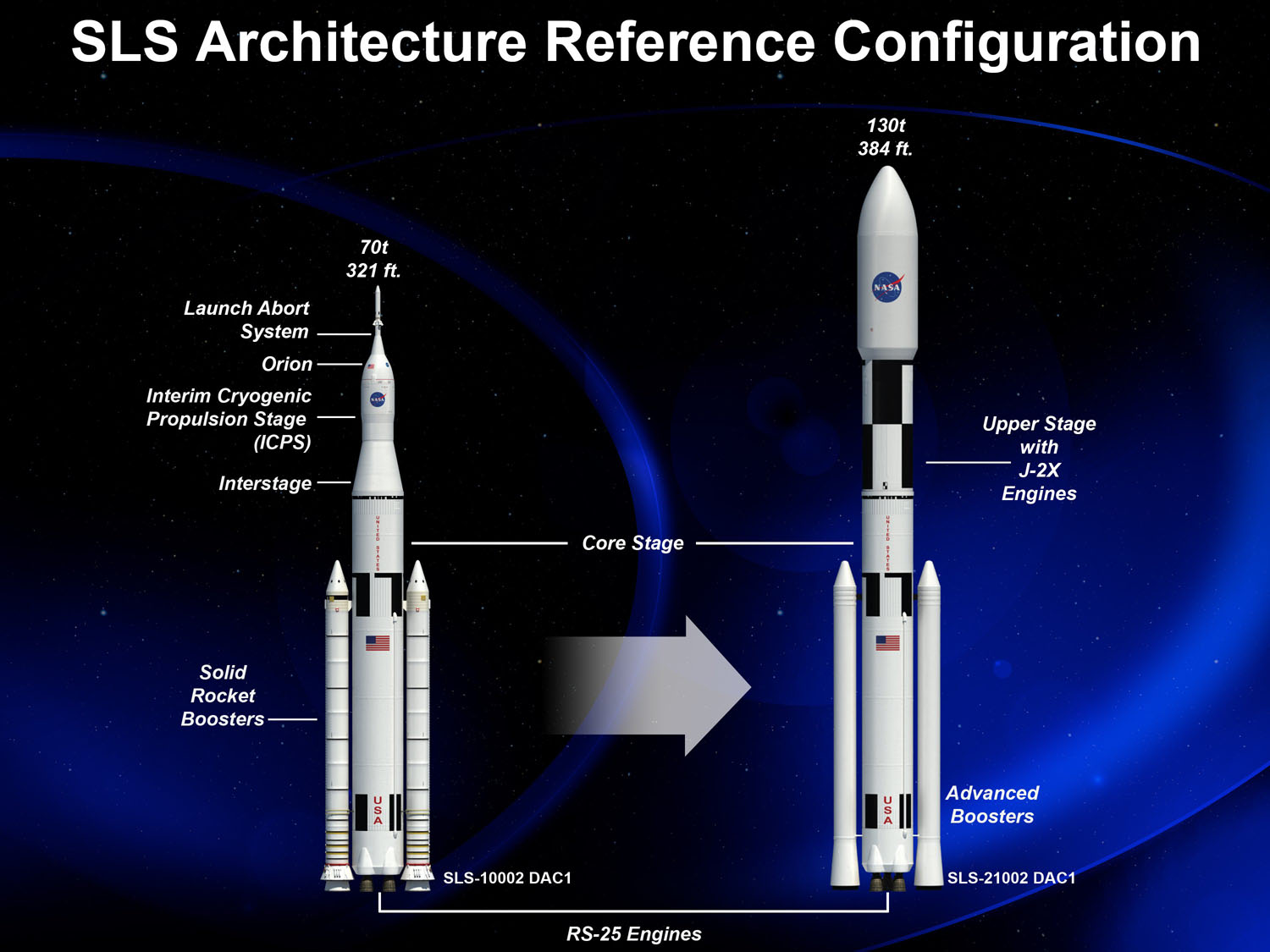
    SLS Architecture Reference Configuration. An artist rendering of the various configurations of NASA’s Space Launch System (SLS), managed by the Marshall Space Flight Center in Huntsville, Alabama. The flexible configuration, sharing the same basic core-stage, allows for different crew and cargo flights as needed, promoting efficiency, time, and cost savings. The SLS enables exploration missions beyond low-Earth orbit and support travel to asteroids, Mars, and other destinations within our solar system. Credit: NASA

    With the hope of bringing explorers to nearby asteroids, Mars, and its moons, and to destinations even farther across our solar system, NASA’s Space Launch System passed several major agency reviews and is now moving to its preliminary design phase.

    The rocket that will launch humans farther into space than ever before passed a major NASA review Wednesday. The Space Launch System (SLS) Program completed a combined System Requirements Review and System Definition Review, which set requirements of the overall launch vehicle system. SLS now moves ahead to its preliminary design phase.

    The SLS will launch NASA’s Orion spacecraft and other payloads, and provide an entirely new capability for human exploration beyond low Earth orbit.

    These NASA reviews set technical, performance, cost, and schedule requirements to provide on-time development of the heavy-lift rocket. As part of the process, an independent review board comprised of technical experts from across NASA evaluated SLS Program documents describing vehicle specifications, budget and schedule. The board confirmed SLS is ready to move from concept development to preliminary design.
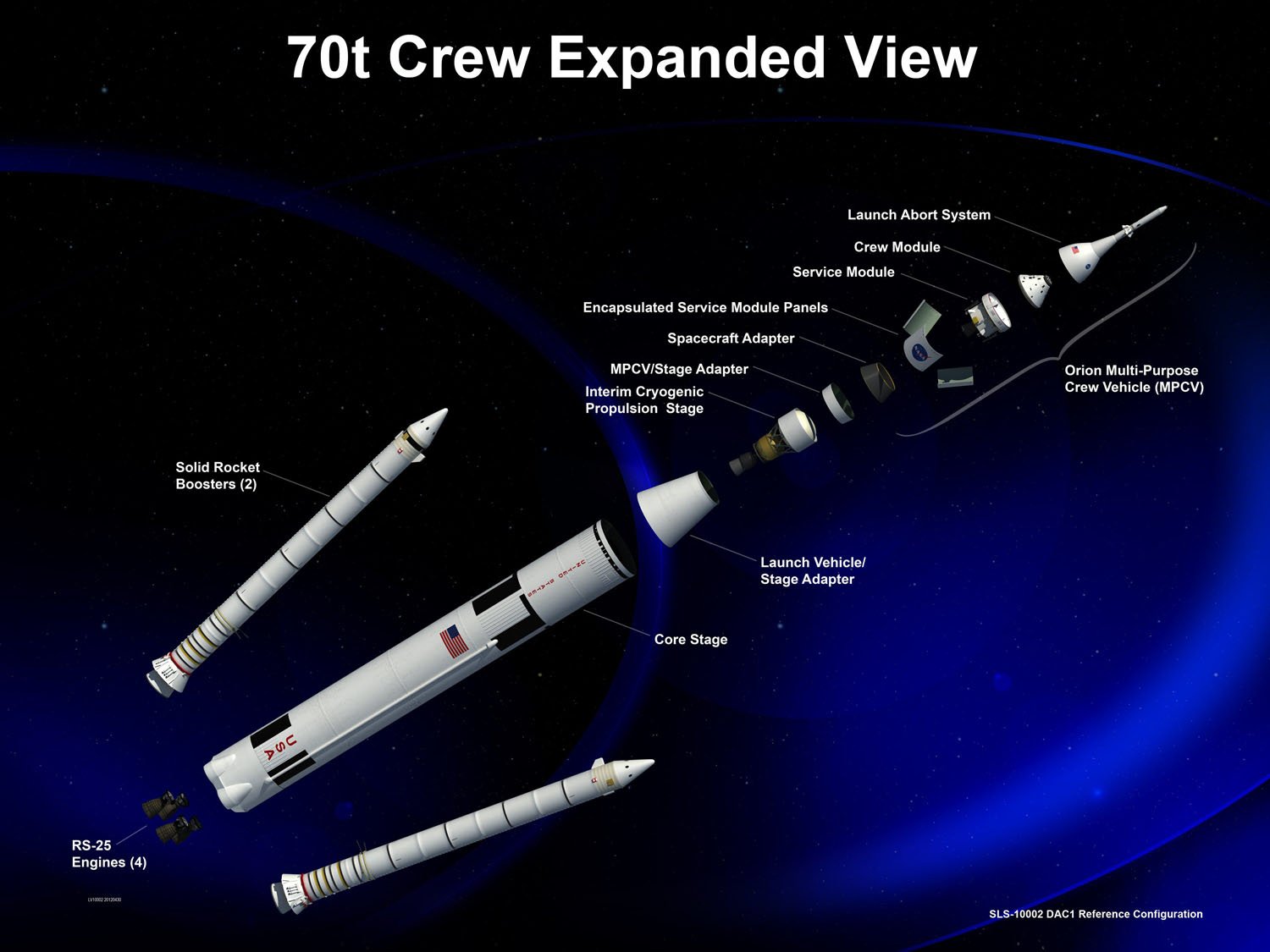
    expanded view of an artist rendering of the 70-metric-ton configuration of NASA's Space Launch System
    An expanded view of an artist rendering of the 70-metric-ton configuration of NASA’s Space Launch System. Credit: NASA

    “This new heavy-lift launch vehicle will make it possible for explorers to reach beyond our current limits, to nearby asteroids, Mars and its moons, and to destinations even farther across our solar system,” said William Gerstenmaier, associate administrator for the Human Exploration and Operations Mission Directorate at NASA Headquarters in Washington. “The in-depth assessment confirmed the basic vehicle concepts of the SLS, allowing the team to move forward and start more detailed engineering design.”

    The reviews also confirmed the SLS system architecture and integration with the Orion spacecraft, managed by NASA’s Johnson Space Center in Houston, and the Ground Systems Development and Operations Program, which manage the operations and launch facilities at NASA’s Kennedy Space Center in Florida.

    “This is a pivotal moment for this program and for NASA,” said SLS Program Manager Todd May. “This has been a whirlwind experience from a design standpoint. Reaching this key development point in such a short period of time, while following the strict protocol and design standards set by NASA for human spaceflight is a testament to the team’s commitment to delivering the nation’s next heavy-lift launch vehicle.”
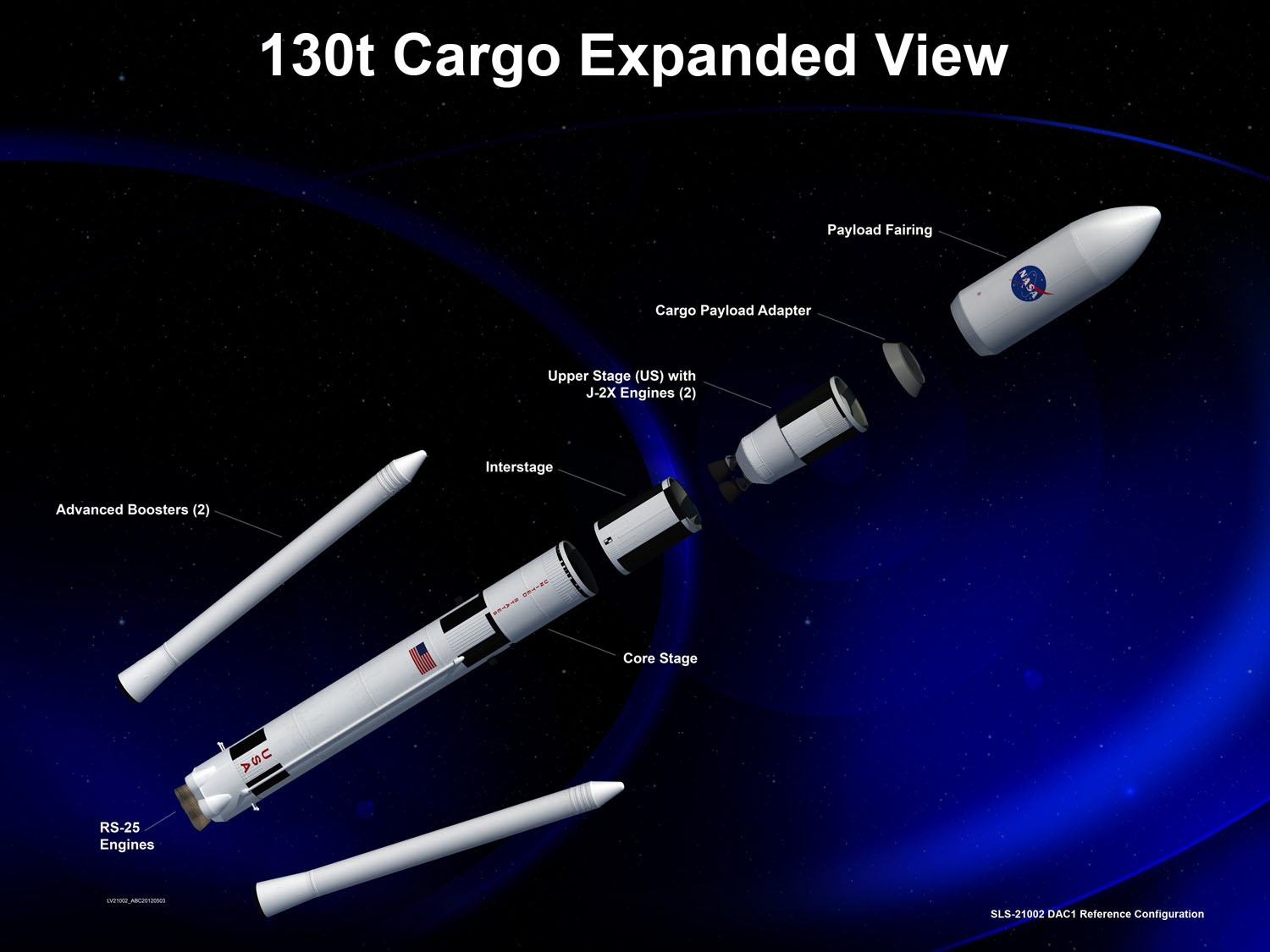
    expanded view of an artist rendering of the 130 metric ton configuration of NASA's Space Launch System
    An expanded view of an artist rendering of the 130 metric ton configuration of NASA’s Space Launch System. Credit: NASA

    SLS reached this major milestone less than 10 months after the program’s inception. The combination of the two assessments represents a fundamentally different way of conducting NASA program reviews. The SLS team is streamlining processes to provide the nation with a safe, affordable, and sustainable heavy-lift launch vehicle capability. The next major program milestone is preliminary design review, targeted for late next year.

    The first test flight of NASA’s Space Launch System, which will feature a configuration for a 70-metric-ton (77-ton) lift capacity, is scheduled for 2017. As SLS evolves, a three-stage launch vehicle configuration will provide a lift capability of 130 metric tons (143 tons) to enable missions beyond low Earth orbit and support deep space exploration.

    NASA’s Marshall Space Flight Center in Huntsville, Alabama, manages the SLS program. Across the country NASA and its industry partners continue to make progress on SLS hardware that will be integrated into the final design. The RS-25 core stage and J-2X upper-stage rocket engine in development by Pratt & Whitney Rocketdyne of Canoga Park, California, for the future two-stage SLS, will be tested at NASA’s Stennis Space Center in Mississippi. The prime contractor for the five-segment solid rocket boosters, ATK of Brigham City, Utah, has begun processing its first SLS boosters in preparation for an initial qualification test next year, ahead of their use for the first two exploration missions. The Boeing Co. in Huntsville is designing the SLS core stage, to be built at NASA’s Michoud Assembly Facility in New Orleans and tested at Stennis before being shipped to Kennedy.

    Never miss a breakthrough: Join the SciTechDaily newsletter.
    Follow us on Google and Google News.

    Astronomy Exploration Mars NASA Rocket Space Launch System
    Share. Facebook Twitter Pinterest LinkedIn Email Reddit

    Related Articles

    A Peek Inside the Fuel Tank For World’s Largest Rocket

    NASA Space Launch System Completes Design Review, Ready to Meet the Challenges of the Journey to Mars

    NASA SLS Program ‘Right on Track’ for Journey to Mars

    NASA’s Curiosity Readies for First Drive on Mars

    New NASA InSight Mission Set to Explore the Depths of Mars

    Superconducting Amplifier Designed to Study the Universe

    NASA’s NuSTAR is One Step Closer to Launching

    NASA’s Opportunity Rover Continues Research at Greeley Haven

    NASA Curiosity Heads to Mars

    Leave A Reply Cancel Reply

    • Facebook
    • Twitter
    • Pinterest
    • YouTube

    Don't Miss a Discovery

    Subscribe for the Latest in Science & Tech!

    Trending News

    Mezcal “Worm” in a Bottle Mystery: DNA Testing Reveals a Surprise

    New Research Reveals That Your Morning Coffee Activates an Ancient Longevity Switch

    This Is What Makes You Irresistible to Mosquitoes

    Shockingly Powerful Giant Octopuses Ruled the Seas 100 Million Years Ago

    Scientists Stunned by New Organic Molecules Found on Mars

    Rewriting Dinosaur Evolution: Scientists Unearth Remarkable 150-Million-Year-Old Stegosaur Skull

    Omega-3 Supplements Linked to Cognitive Decline in Surprising New Study

    First-of-Its-Kind Discovery: Homer’s Iliad Found Embedded in a 1,600-Year-Old Egyptian Mummy

    Follow SciTechDaily
    • Facebook
    • Twitter
    • YouTube
    • Pinterest
    • Newsletter
    • RSS
    SciTech News
    • Biology News
    • Chemistry News
    • Earth News
    • Health News
    • Physics News
    • Science News
    • Space News
    • Technology News
    Recent Posts
    • Scientists Map Thousands of Brain Connections With RNA Barcodes
    • This Gene Tweak Turns Strawberries Into Healthier, Tastier Superfruit
    • This New Chip Could Make GPUs Far More Efficient
    • This Tiny World in the Outer Solar System Should Be Airless, but It Has an Atmosphere
    • NASA’s Webb Space Telescope Reveals a Dark Airless Super-Earth That Looks Like Mercury
    Copyright © 1998 - 2026 SciTechDaily. All Rights Reserved.
    • Science News
    • About
    • Contact
    • Editorial Board
    • Privacy Policy
    • Terms of Use

    Type above and press Enter to search. Press Esc to cancel.