
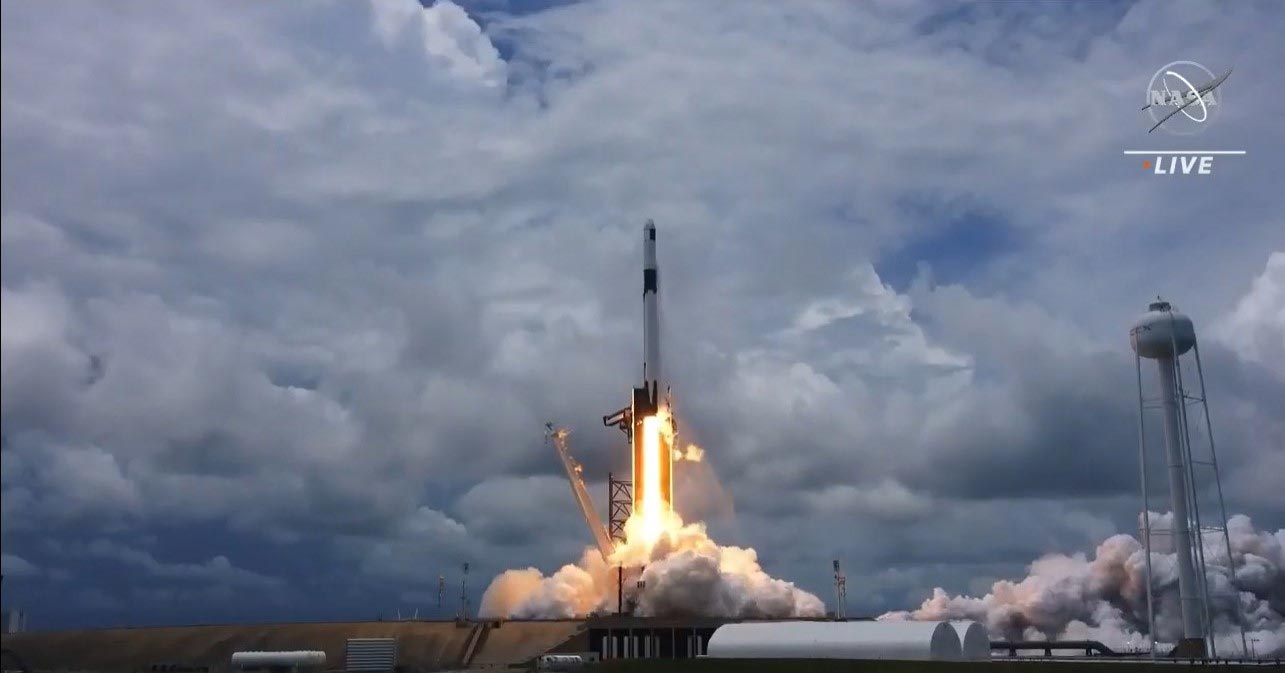
SpaceX Dragon Launches with 7,300 Pounds of Science and Supplies
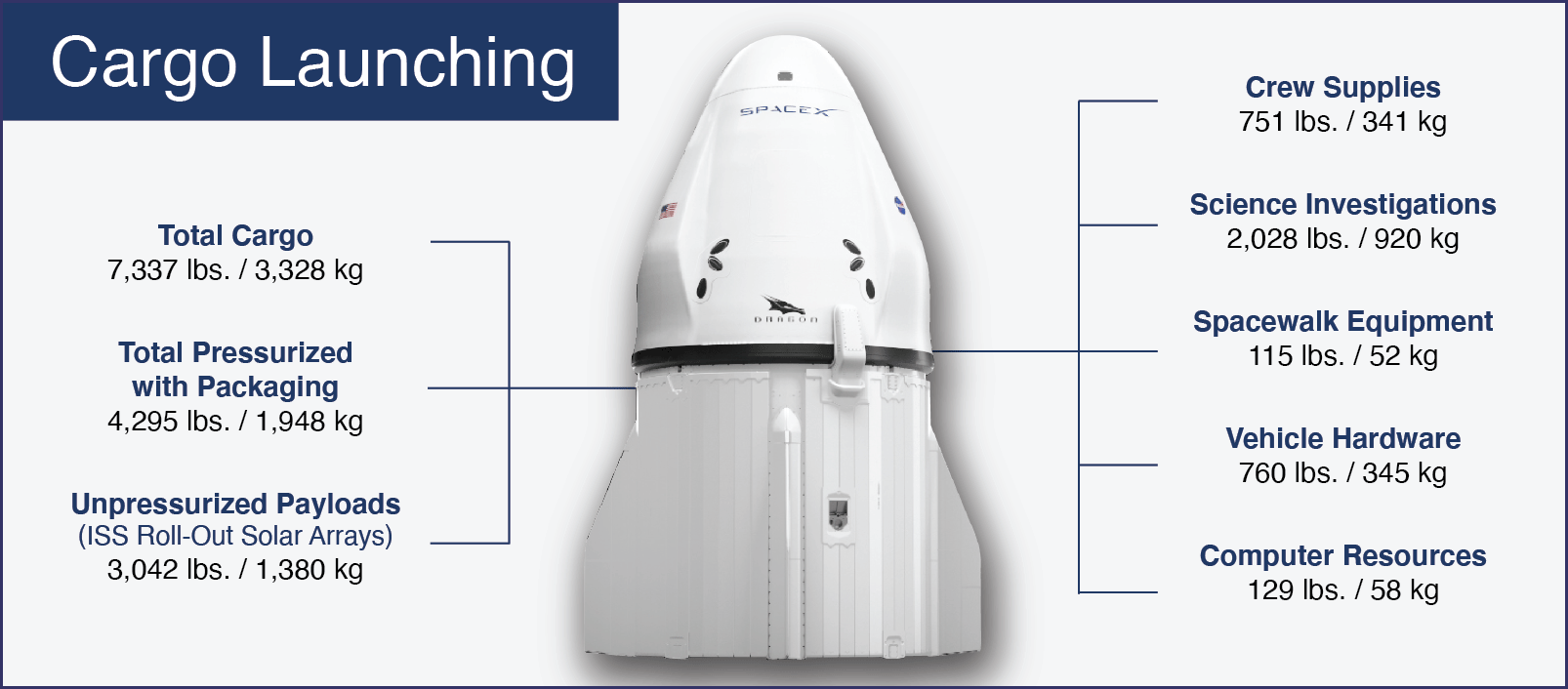
The latest SpaceX Dragon resupply spacecraft is on its way to the International Space Station after launching at 1:29 p.m. EDT Thursday from NASA’s Kennedy Space Center in Florida, bearing more than 7,300 pounds (3,300 kilograms) of science experiments, new solar arrays, and other cargo.
The spacecraft launched on a Falcon 9 rocket from Launch Pad 39A at Kennedy. It is scheduled to autonomously dock at the space station around 5 a.m. Saturday, June 5, and remain at the station for about a month. Coverage of arrival will begin at 3:30 a.m. on NASA Television, the agency’s website, and the NASA app.
This 22nd contracted resupply mission for SpaceX will deliver the new ISS Roll-out Solar Arrays (iROSA) to the space station in the trunk of the Dragon spacecraft. After the Dragon docks to the space station’s Harmony module, the robotic Canadarm2 will extract the arrays and astronauts will install them during spacewalks planned for June 16 and 20.
Among the science experiments Dragon is delivering to the space station are:
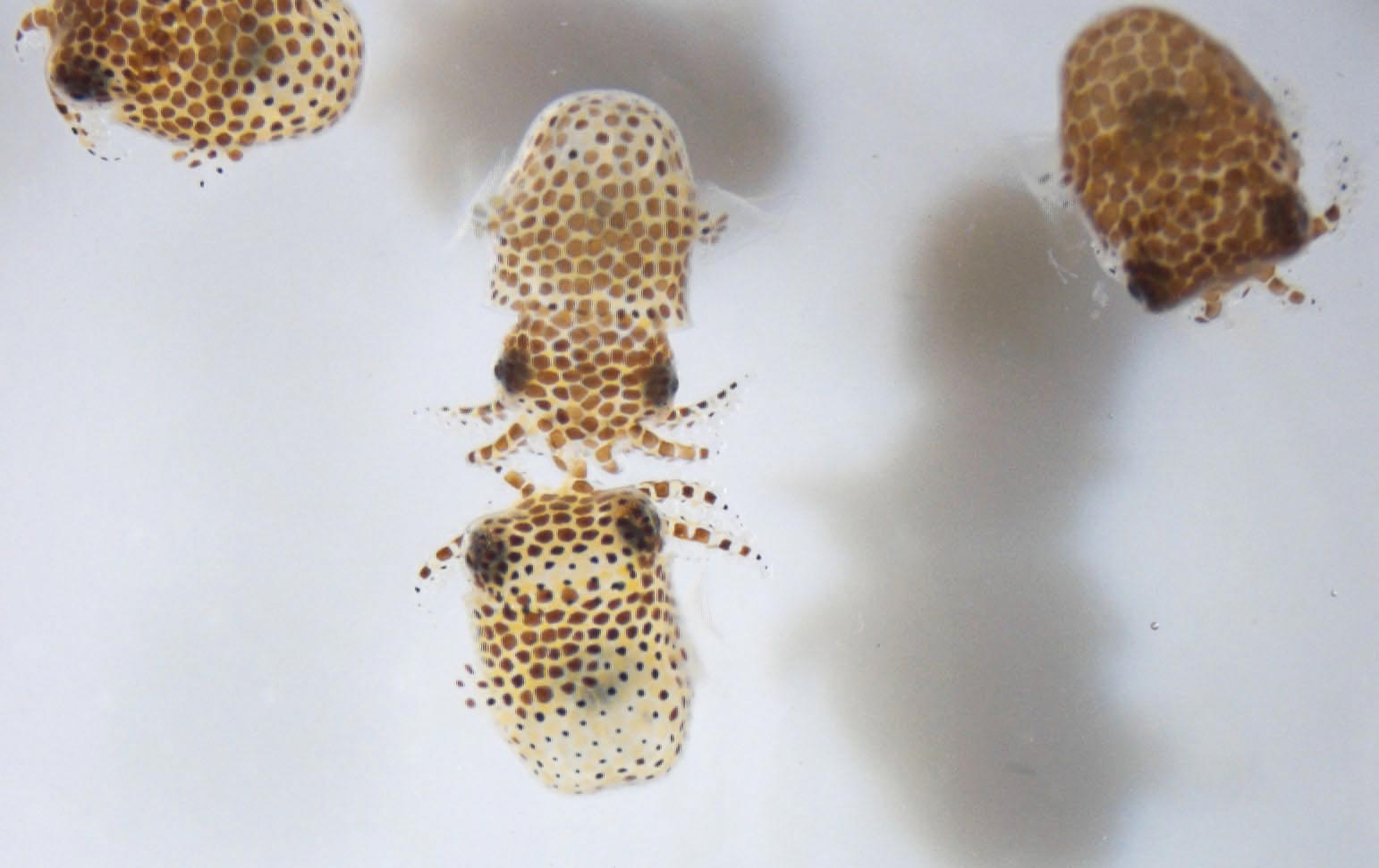
Symbiotic Squid and Microbes in Microgravity
The Understanding of Microgravity on Animal-Microbe Interactions (UMAMI) study examines the effects of spaceflight on the molecular and chemical interactions between beneficial microbes and their animal hosts. Microbes play a significant role in the normal development of animal tissues and in maintaining human health. “Animals, including humans, rely on our microbes to maintain a healthy digestive and immune system,” says UMAMI principal investigator Jamie Foster. “We do not fully understand how spaceflight alters these beneficial interactions. The UMAMI experiment uses a glow-in-the-dark bobtail squid to address these important issues in animal health.”
The bobtail squid, Euprymna scolopes, is an animal model that is used to study symbiotic relationships between two species. This investigation helps determine whether spaceflight alters the mutually beneficial relationship, which could support the development of protective measures and mitigation to preserve astronaut health on long-duration space missions. The work also could lead to a better understanding of the complex interactions between animals and beneficial microbes, including new and novel pathways that microbes use to communicate with animal tissues. Such knowledge could help identify ways to protect and enhance these relationships for better human health and well-being on Earth as well.
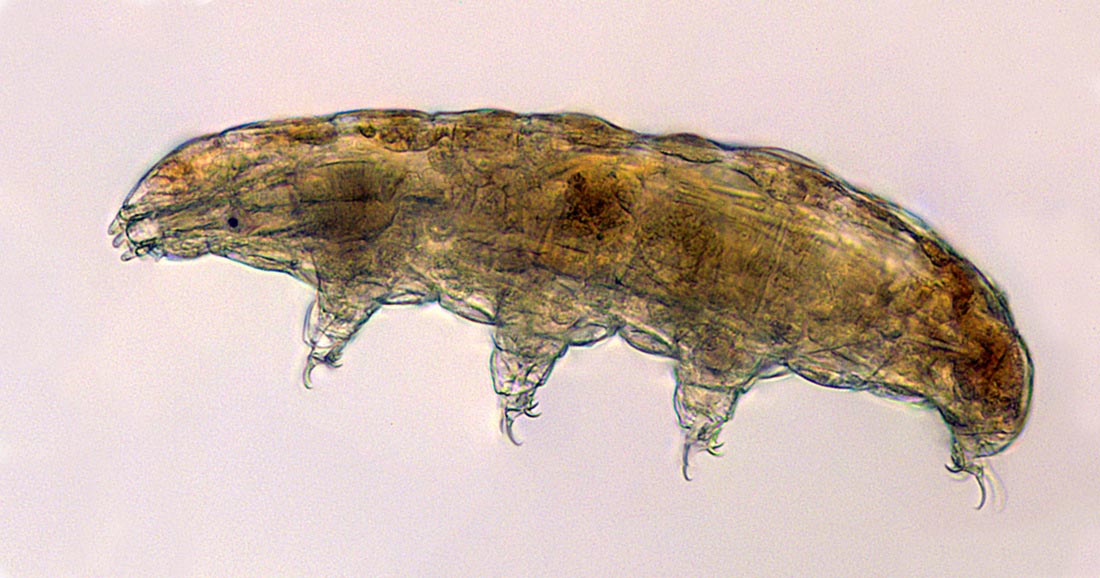
Water Bears Take on Space
Tardigrades, known as water bears due to their appearance under a microscope and common habitat in water, are tiny creatures that tolerate environments more extreme than most life forms can. That makes them a model organism for studying biological survival under extreme conditions on Earth and in space. In addition, researchers have sequenced the genome of the tardigrade Hypsibius exemplaris and developed methods for measuring how different environmental conditions affect tardigrade gene expression. Cell Science-04 characterizes the molecular biology of short-term and multigenerational survival of water bears, identifying the genes involved in adaptation and survival in high-stress environments.
The results could advance understanding of the stress factors affecting humans in space and support the development of countermeasures. “Spaceflight can be a really challenging environment for organisms, including humans, who have evolved to the conditions on Earth,” says principal investigator Thomas Boothby. “One of the things we are really keen to do is understand how tardigrades are surviving and reproducing in these environments and whether we can learn anything about the tricks that they are using and adapt them to safeguard astronauts.”
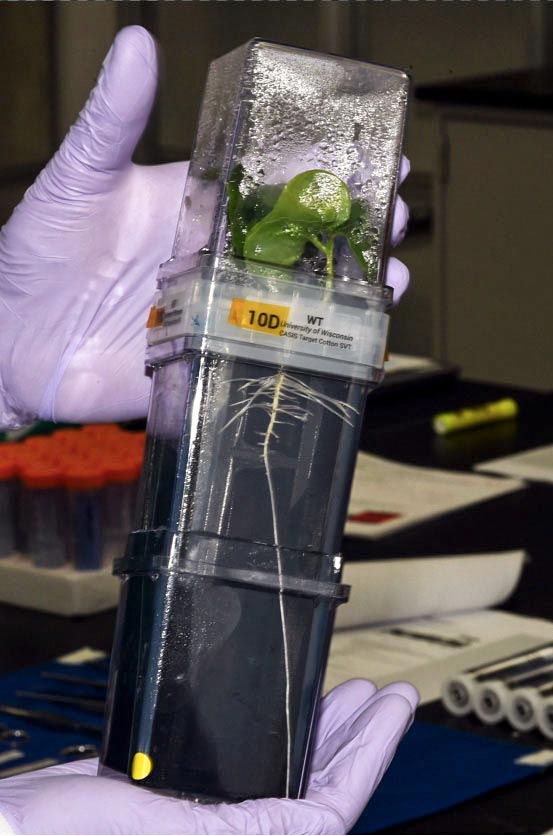
Producing Tougher Cotton
Cotton plants that overexpress a certain gene show increased resistance to stressors, such as drought, and yield 20% more cotton fiber than plants without that characteristic under certain stress conditions. This stress resistance has been tentatively linked to having an enhanced root system that can tap into a larger volume of soil for water and nutrients. Targeting Improved Cotton Through On-orbit Cultivation (TICTOC) studies how root system structure affects plant resilience, water-use efficiency, and carbon sequestration during the critical phase of seedling establishment. Root growth patterns depend upon gravity, and TICTOC could help define which environmental factors and genes control root development in the absence of gravity.
Cotton is used in a variety of consumer products from clothing to bed sheets and coffee filters, but the effects of its production include significant water use and intensive use of agricultural chemicals. “We are hoping to reveal features of root system formation that can be targeted by breeders and scientists to improve characteristics such as drought resistance or nutrient uptake, both key factors in the environmental impacts of modern agriculture,” says principal investigator Simon Gilroy. Improved understanding of cotton root systems and associated gene expression could enable the development of more robust cotton plants and reduce water and pesticide use.
On-the-Spot Ultrasound
Butterfly IQ Ultrasound demonstrates use of a portable ultrasound in conjunction with a mobile computing device in microgravity. The investigation collects crew feedback on ease of handling and quality of the ultrasound images, including image acquisition, display, and storage.
“This type of commercial off-the-shelf technology could provide important medical capabilities for future exploration missions beyond low-Earth orbit, where immediate ground support is not available,” says Kadambari Suri, integration manager for the Butterfly iQ Technology Demonstration “The investigation also examines how effective just-in-time instructions are for autonomous use of the device by the crew.” The technology also has potential applications for medical care in remote and isolated settings on Earth.
Developing Better Robot Drivers
Pilote, an investigation from the ESA (European Space Agency) and the Centre National d’Etudes Spatiales (CNES), tests the effectiveness of remote operation of robotic arms and space vehicles using virtual reality and interfaces based on haptics, or simulated touch and motion. Testing of the ergonomics for controlling robotic arms and spacecraft must be performed in microgravity, because designs from Earth-based testing would use ergonomic principles that do not fit conditions experienced on a spacecraft in orbit. Pilote compares existing and new technologies, including those recently developed for teleoperation and others used to pilot the Canadarm2 and Soyuz spacecraft. The investigation also compares astronaut performance on the ground and during long-duration space missions. Results could help optimize the ergonomics of workstations on the space station and future space vehicles for missions to the Moon and Mars.
Protecting Kidneys in Space and on Earth
Some crew members exhibit an increased susceptibility to kidney stones during flight, which could affect their health and the success of the mission. The Kidney Cells-02 investigation uses a 3D kidney cell model (or tissue chip) to study the effects of microgravity on the formation of microcrystals that can lead to kidney stones. It is part of the Tissue Chips in Space initiative, a partnership between the ISS U.S. National Laboratory and the National Institutes of Health’s National Center for Advancing Translational Sciences (NCATS) to analyze the effects of microgravity on human health and translate that to improvements on Earth. This investigation could reveal critical pathways of kidney disease development and progression, potentially leading to therapies to treat and prevent kidney stones for astronauts and for the 1 in 10 people on Earth who develop them.
“With this study, we hope to identify biomarkers or ‘signatures’ of cellular changes that occur during the formation of kidney stones,” says principal investigator Ed Kelly. “This may lead to novel therapeutic interventions. The rationale for conducting this study on the space station is that the microcrystals behave in a manner like what happens in our own kidneys, meaning they stay suspended in the kidney chip tubes and do not sink to the bottom, like they do in labs on Earth.”
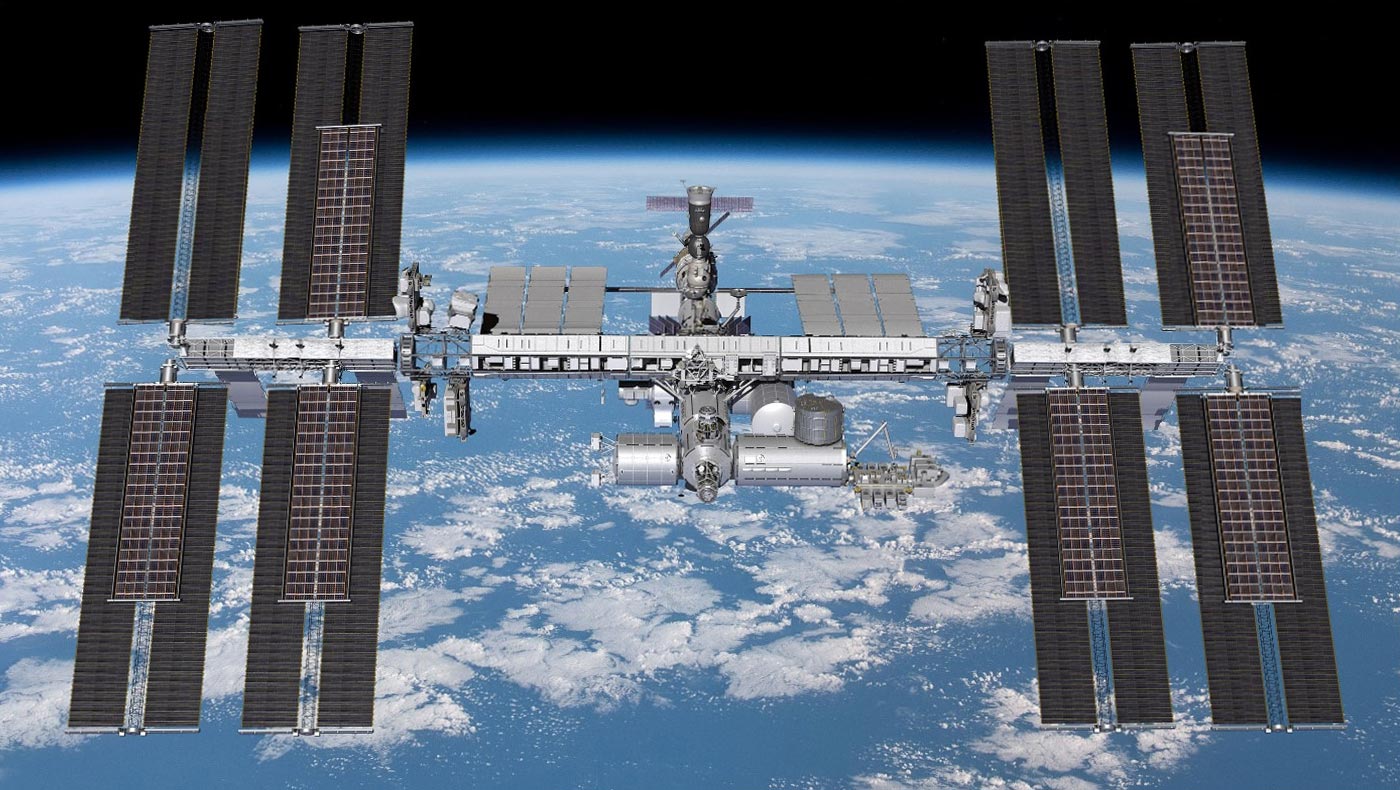
Bonus Power
New solar panels headed to station are made up of compact sections that roll open like a long rug. The ISS Roll-out Solar Arrays (iROSA) are based on a previous demonstration of roll-out panels performed on station. They are expected to provide an increase in energy available for research and station activities. NASA plans a total of six new arrays to augment the station’s power supply with the first pair launching on this flight. The Expedition 65 crew is scheduled to begin preparations for spacewalks to supplement the station’s existing rigid panels this summer. The same solar array technology is planned to power NASA’s Gateway, part of the Artemis program.
These are just a few of the hundreds of investigations currently being conducted aboard the orbiting laboratory in the areas of biology and biotechnology, physical sciences, and Earth and space science. Advances in these areas will help keep astronauts healthy during long-duration space travel and demonstrate technologies for future human and robotic exploration beyond low-Earth orbit to the Moon and Mars through NASA’s Artemis program.
Never miss a breakthrough: Join the SciTechDaily newsletter.
Follow us on Google and Google News.
2 Comments
Best off luck
Are we sending any plush toys up there