

Close Menu
    Facebook X (Twitter) Instagram
    SciTechDaily
    • Biology
    • Chemistry
    • Earth
    • Health
    • Physics
    • Science
    • Space
    • Technology
    Facebook X (Twitter) Pinterest YouTube RSS
    SciTechDaily
    Home»Space»NASA’s Toxic Test Chamber Allows Hellish Venus-Like Conditions on Earth
    Space

    NASA’s Toxic Test Chamber Allows Hellish Venus-Like Conditions on Earth

    By SciTechDailyJanuary 10, 2012No Comments2 Mins Read
    Facebook Twitter Pinterest Telegram LinkedIn WhatsApp Email Reddit
    Share
    Facebook Twitter LinkedIn Pinterest Telegram Email Reddit
    Venus-Surface-Conditions
    NASA engineers will create a 12-ton toxic oven at the NASA Glenn Research Center in Cleveland to test technology’s response to Venus’ harsh surface conditions.

    In an effort to learn how their technology will react to the hellish surface conditions on Venus, NASA engineers will put together a 12-ton toxic oven in Cleveland at the NASA Glenn Research Center. It will be operational in May 2012, and scorch anything that is put in it at 1,000 degrees Fahrenheit (538 degrees Celsius), as well as crush it at nearly 100 atmospheres, then choke it with carbon dioxide, sulfuric acid, and other noxious fumes.

    These conditions should emulate what the surface of Venus is actually like. The planet used to be like Earth, and it’s suffocated by greenhouse gases. Robert Dyson is the leader of the Extreme Environment Test Chamber and says that the problem with Venus-bound spacecraft is that they’ll melt inside an hour or two when they arrive. In order for the next generation of rovers to survive, they’ll need to be tested in a chamber large enough. Hence the reason for the chamber and it’s the first of its kind.
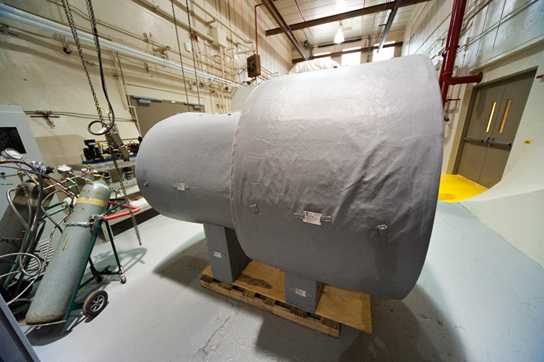
    Nasa-Heavy-Blanket-ChamberSince scientists have no idea how long materials will survive on the corrosive surface, the chamber will provide valuable data on what to use for the ships and robots. Only 10 spacecraft have reached Venus’ surface. Of those, 9 were Soviet landers. The only American mission was launched in 1978. Since the Soviet launched Venera 13 last responded in 1984, scientists have considered Venus too hostile for a $1 billion probe.

    However, if engineers can come up with better cooling and electricity-producing technology, Venus surface missions might be a go. The chamber has to be covered in a heavy blanket so that it doesn’t melt anything else around it. While the chamber was conceived to simulate the surface conditions of Venus, operators will be able to simulate other conditions, like Mars, Jupiter and its moons, Ganymede, Titan, and Europa.

    Never miss a breakthrough: Join the SciTechDaily newsletter.
    Follow us on Google and Google News.

    NASA Venus
    Share. Facebook Twitter Pinterest LinkedIn Email Reddit

    Related Articles

    What’s Really Happening on Venus? Scientists Reveal Surprising Patterns

    NASA Just Found New Signs of Life Inside Venus – Geologic Life, That Is

    NASA Finds Venus Has a Surprisingly Thin Crust – And Something Stranger

    NASA’s Return to Venus and What It Means for Earth [Video]

    Engineers Are Working on Automaton Rover for Extreme Environments (AREE)

    New Research From NASA Suggests Venus May Have Been Habitable

    Arc of Venus May Reveal Secrets About Earth’s Sister Planet

    Transit of Venus Starts on June 5, 2012

    Hubble to Test Technique of Using the Moon as a Mirror

    Leave A Reply Cancel Reply

    • Facebook
    • Twitter
    • Pinterest
    • YouTube

    Don't Miss a Discovery

    Subscribe for the Latest in Science & Tech!

    Trending News

    AI Could Detect Early Signs of Alzheimer’s in Under a Minute – Far Before Traditional Tests

    What if Dark Matter Has Two Forms? Bold New Hypothesis Could Explain a Cosmic Mystery

    This Metal Melts in Your Hand – and Scientists Just Discovered Something Strange

    Beef vs. Chicken: Surprising Results From New Prediabetes Study

    Alzheimer’s Breakthrough: Scientists Discover Key Protein May Prevent Toxic Protein Clumps in the Brain

    Quantum Reality Gets Stranger: Physicists Put a Lump of Metal in Two Places at Once

    Scientists May Have Found the Key to Jupiter and Saturn’s Moon Mystery

    Scientists Uncover Brain Changes That Link Pain to Depression

    Follow SciTechDaily
    • Facebook
    • Twitter
    • YouTube
    • Pinterest
    • Newsletter
    • RSS
    SciTech News
    • Biology News
    • Chemistry News
    • Earth News
    • Health News
    • Physics News
    • Science News
    • Space News
    • Technology News
    Recent Posts
    • Asthma and Depression Don’t Mix the Way Scientists Expected
    • Why Promising Cancer Drugs Failed: Scientists Uncover the Missing Piece
    • Popular Sweetener Linked to DNA Damage – “It’s Something You Should Not Be Eating”
    • Ancient “Rock” Microbes May Reveal How Complex Life Began
    • Hidden “Trade Winds” Inside Cells Could Explain Cancer Spread
    Copyright © 1998 - 2026 SciTechDaily. All Rights Reserved.
    • Science News
    • About
    • Contact
    • Editorial Board
    • Privacy Policy
    • Terms of Use

    Type above and press Enter to search. Press Esc to cancel.