
Close Menu
    Facebook X (Twitter) Instagram
    SciTechDaily
    • Biology
    • Chemistry
    • Earth
    • Health
    • Physics
    • Science
    • Space
    • Technology
    Facebook X (Twitter) Pinterest YouTube RSS
    SciTechDaily
    Home»Earth»National GHG 2010 Greenhouse Gas Emissions Data
    Earth

    National GHG 2010 Greenhouse Gas Emissions Data

    By EPAJanuary 11, 2012No Comments3 Mins Read
    Facebook Twitter Pinterest Telegram LinkedIn WhatsApp Email Reddit
    Share
    Facebook Twitter LinkedIn Pinterest Telegram Email Reddit
    National GHG 2010 Greenhouse Gas Emissions Data
    National GHG 2010 Greenhouse Gas Emissions Data Credit: EPA

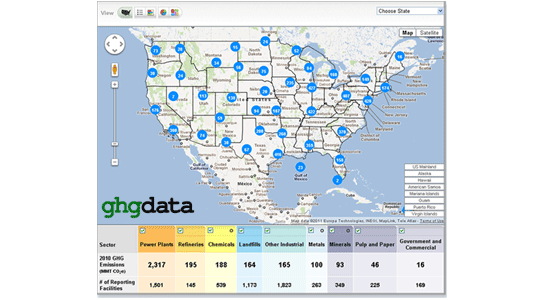
    The 2010 GHG data was released today and for the first time data from large facilities is easily accessible to the public. The GHG report has data on over 6,700 facilities that can be sorted and viewed by facility, location, industrial sector, and the type of GHG emitted when using the EPA’s online publication tool.

    For the first time, comprehensive greenhouse gas (GHG) data reported directly from large facilities and suppliers across the country are now easily accessible to the public through EPA’s GHG Reporting Program. The 2010 GHG data released today includes public information from facilities in nine industry groups that directly emit large quantities of GHGs, as well as suppliers of certain fossil fuels.

    “Thanks to strong collaboration and feedback from industry, states, and other organizations, today we have a transparent, powerful data resource available to the public,” said Gina McCarthy, assistant administrator for EPA’s Office of Air and Radiation. “The GHG Reporting Program data provides a critical tool for businesses and other innovators to find cost- and fuel-saving efficiencies that reduce greenhouse gas emissions, and foster technologies to protect public health and the environment.”

    EPA’s online data publication tool allows users to view and sort GHG data for calendar year 2010 from over 6,700 facilities in a variety of ways—including by facility, location, industrial sector, and the type of GHG emitted. This information can be used by communities to identify nearby sources of GHGs, help businesses compare and track emissions, and provide information to state and local governments.

    GHG data for direct emitters show that in 2010:

    •Power plants were the largest stationary sources of direct emissions with 2,324 million metric tons of carbon dioxide equivalent (mmtCO2e), followed by petroleum refineries with emissions of 183 mmtCO2e.

    •CO2 accounted for the largest share of direct GHG emissions with 95 percent, followed by methane with 4 percent, and nitrous oxide and fluorinated gases accounting for the remaining 1 percent.

    •100 facilities each reported emissions over 7 mmtCO2e, including 96 power plants, two iron and steel mills and two refineries.

    Mandated by the FY2008 Consolidated Appropriations Act, EPA launched the GHG Reporting Program in October 2009, requiring the reporting of GHG data from large emission sources across a range of industry sectors, as well as suppliers of products that would emit GHGs if released or combusted. Most reporting entities submitted data for calendar year 2010. However, an additional 12 source categories will begin reporting their 2011 GHG data this year.

    Never miss a breakthrough: Join the SciTechDaily newsletter.
    Follow us on Google and Google News.

    Carbon Emissions EPA Greenhouse Gas
    Share. Facebook Twitter Pinterest LinkedIn Email Reddit

    Related Articles

    Good News: Significant Reductions in Global Greenhouse Gas Emissions Still Possible

    Uncovering the Hidden Sources of City Methane Emissions: Researchers Reveal Unrecognized Contributors to Global Warming

    NASA Makes First-of-Its-Kind Detection of Reduced Human CO2 Emissions

    Free Green Electricity and Public Transport Could Substantially Reduce Emissions

    Three Ways To Reduce the Carbon Footprint of American Food

    UN: Long-Term Outlook Bleak for Building Sector CO2 Emissions Despite COVID Pandemic Dip

    It’s Not Just Smokestacks to Worry About: Mountain Streams Emit a Surprising Amount of CO2

    NASA Solves Puzzle Involving the Recent Rise in Atmospheric Methane

    Storing Carbon Emissions in Deep Saline Aquifers

    Leave A Reply Cancel Reply

    • Facebook
    • Twitter
    • Pinterest
    • YouTube

    Don't Miss a Discovery

    Subscribe for the Latest in Science & Tech!

    Trending News

    Scientists Discover How Coffee Impacts Memory, Mood, and Gut Health

    Why Did the Neanderthals Disappear? Scientists Reveal Humans Had a Hidden Advantage

    Physicists Propose Strange Experiment Where Time Goes Quantum

    Magnesium Magic: New Drug Melts Fat Even on a High-Fat, High-Sugar Diet

    Weight-Loss Drugs Like Ozempic May Come With an Unexpected Cost

    Mezcal “Worm” in a Bottle Mystery: DNA Testing Reveals a Surprise

    New Research Reveals That Your Morning Coffee Activates an Ancient Longevity Switch

    This Is What Makes You Irresistible to Mosquitoes

    Follow SciTechDaily
    • Facebook
    • Twitter
    • YouTube
    • Pinterest
    • Newsletter
    • RSS
    SciTech News
    • Biology News
    • Chemistry News
    • Earth News
    • Health News
    • Physics News
    • Science News
    • Space News
    • Technology News
    Recent Posts
    • Scientists Just Captured Killer T Cells in Action Inside Tumors
    • Alaska’s Sky Explodes With Swirling Clouds and a Hidden Polar Storm
    • Warming Oceans Could Trigger a Dangerous Methane Surge
    • Harvard Scientists Reveal Secret Structure Behind How You Smell
    • Scientists Just Discovered the Hidden Trick That Keeps Your Cells Alive
    Copyright © 1998 - 2026 SciTechDaily. All Rights Reserved.
    • Science News
    • About
    • Contact
    • Editorial Board
    • Privacy Policy
    • Terms of Use

    Type above and press Enter to search. Press Esc to cancel.