
Close Menu
    Facebook X (Twitter) Instagram
    SciTechDaily
    • Biology
    • Chemistry
    • Earth
    • Health
    • Physics
    • Science
    • Space
    • Technology
    Facebook X (Twitter) Pinterest YouTube RSS
    SciTechDaily
    Home»Biology»Neurons That Control Hunger Could Help Control Autoimmune Diseases
    Biology

    Neurons That Control Hunger Could Help Control Autoimmune Diseases

    By Karen N. Peart, Yale UniversityMarch 26, 2013No Comments3 Mins Read
    Facebook Twitter Pinterest Telegram LinkedIn WhatsApp Email Reddit
    Share
    Facebook Twitter LinkedIn Pinterest Telegram Email Reddit
    Neurons That Control Hunger Could Help Control Autoimmune Diseases
    A new study by researchers at the Yale School of Medicine has revealed that neurons responsible for hunger in the central nervous system also influence immune cell functions, linking eating behavior to defense against infections and the prevention of autoimmune diseases.

    Researchers at the Yale School of Medicine have discovered that hunger-spiking neurons could help control autoimmune diseases, unmasking a previously unsuspected role of hypothalamic feeding circuits in the regulation of adaptive immune response.

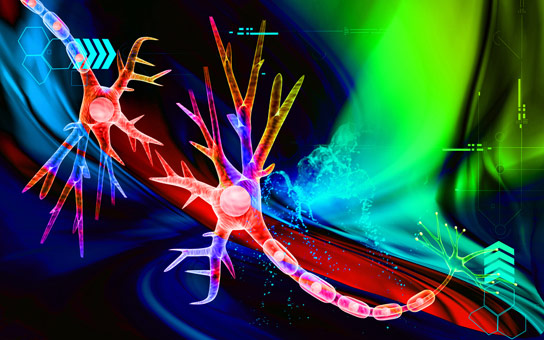
    Neurons that control hunger in the central nervous system also regulate immune cell functions, implicating eating behavior as a defense against infections and autoimmune disease development, Yale School of Medicine researchers have found in a new study published in the Proceedings of the National Academies of Sciences (PNAS).

    Autoimmune diseases have been on a steady rise in the United States. These illnesses develop when the body’s immune system turns on itself and begins attacking its own tissues. The interactions between different kinds of T cells are at the heart of fighting infections, but they have also been linked to autoimmune disorders.

    “We’ve found that if appetite-promoting AgRP neurons are chronically suppressed, leading to decreased appetite and a leaner body weight, T cells are more likely to promote inflammation-like processes enabling autoimmune responses that could lead to diseases like multiple sclerosis,” said lead author Tamas Horvath, the Jean and David W. Wallace Professor of Biomedical Research and chair of comparative medicine at Yale School of Medicine.

    “If we can control this mechanism by adjusting eating behavior and the kinds of food consumed, it could lead to new avenues for treating autoimmune diseases,” he added.

    Horvath and his research team conducted their study in two sets of transgenic mice. In one set, they knocked out Sirt1, a signaling molecule that controls the hunger-promoting neuron AgRP in the hypothalamus. These Sirt1-deficient mice had decreased regulatory T cell function and enhanced effector T cell activity, leading to their increased vulnerability in an animal model of multiple sclerosis.

    “This study highlights the important regulatory role of the neurons that control appetite in peripheral immune functions,” said Horvath. “AgRP neurons represent an important site of action for the body’s immune responses.”

    The team’s data support the idea that achieving weight loss through the use of drugs that promote a feeling of fullness “could have unwanted effects on the spread of autoimmune disorders,” he notes.

    Reference: “Hunger-promoting hypothalamic neurons modulate effector and regulatory T-cell responses” by Giuseppe Matarese, Claudio Procaccini, Ciro Menale, Jae Geun Kim, Jung Dae Kim, Sabrina Diano, Nadia Diano, Veronica De Rosa, Marcelo O. Dietrich and Tamas L. Horvath, 25 March 2013, Proceedings of the National Academies of Sciences.
    DOI: 10.1073/pnas.1210644110

    Other authors on the study include Giuseppe Matarese, Claudio Procaccini, Ciro Menale, Jae Geun Kim, Jung Dae Kim, Sabrina Diano, Nadia Diano, Veronica De Rosa, and Marcelo O. Dietrich.

    The study was funded by grants from the NIH Director’s Pioneer Award.

    Never miss a breakthrough: Join the SciTechDaily newsletter.
    Follow us on Google and Google News.

    Biomedicine Disease Immunology Yale University
    Share. Facebook Twitter Pinterest LinkedIn Email Reddit

    Related Articles

    Researchers Solve Biological Mystery about the Common Genesis of Many Serious Diseases

    Nanogels Provide a New Way to Attack Lupus

    Understanding the Internal Process That Makes Salmonella Dangerous

    Increasing Th17 Cells in the Gut May Improve the Control of HIV Growth

    A2A Adenosine Receptor May Be a Key to Multiple Sclerosis Treatment

    Nanoparticles Stop Lymphoma in Mice

    A Potential Therapeutic Target for Treating Pulmonary Fibrosis

    Yale Neurologists Discover the Source of Diabetic Neuropathy Pain

    Human Presence Increases Indoor Bacteria

    Leave A Reply Cancel Reply

    • Facebook
    • Twitter
    • Pinterest
    • YouTube

    Don't Miss a Discovery

    Subscribe for the Latest in Science & Tech!

    Trending News

    New “Nanozyme Hypothesis” Could Rewrite the Story of Life’s Origins

    Anatomy Isn’t Finished: The Human Body Still Holds Secrets

    “Pretty Close to Home”: The Hidden Earthquake Threat Beneath Seattle

    The Surprising Reason You Might Want To Sleep Without a Pillow

    Scientists Say This Natural Hormone Reverses Obesity by Targeting the Brain

    35-Million-Year-Old Mystery: Strange Arachnid Discovered Preserved in Amber

    Is AI Really Just a Tool? It Could Be Altering How You See Reality

    JWST Reveals a “Forbidden” Planet With a Baffling Composition

    Follow SciTechDaily
    • Facebook
    • Twitter
    • YouTube
    • Pinterest
    • Newsletter
    • RSS
    SciTech News
    • Biology News
    • Chemistry News
    • Earth News
    • Health News
    • Physics News
    • Science News
    • Space News
    • Technology News
    Recent Posts
    • Saturn’s Magnetic Shield Isn’t What Scientists Expected
    • Hidden Oceans of Magma Could Be Protecting Alien Life
    • After Decades of Searching, Astronomers Finally Track Down the Universe’s Missing Hydrogen
    • Scientists Capture Hidden Electron Patterns Inside Quantum Materials
    • New Study Challenges Alzheimer’s Theories: It’s Not Just About Plaques
    Copyright © 1998 - 2026 SciTechDaily. All Rights Reserved.
    • Science News
    • About
    • Contact
    • Editorial Board
    • Privacy Policy
    • Terms of Use

    Type above and press Enter to search. Press Esc to cancel.