
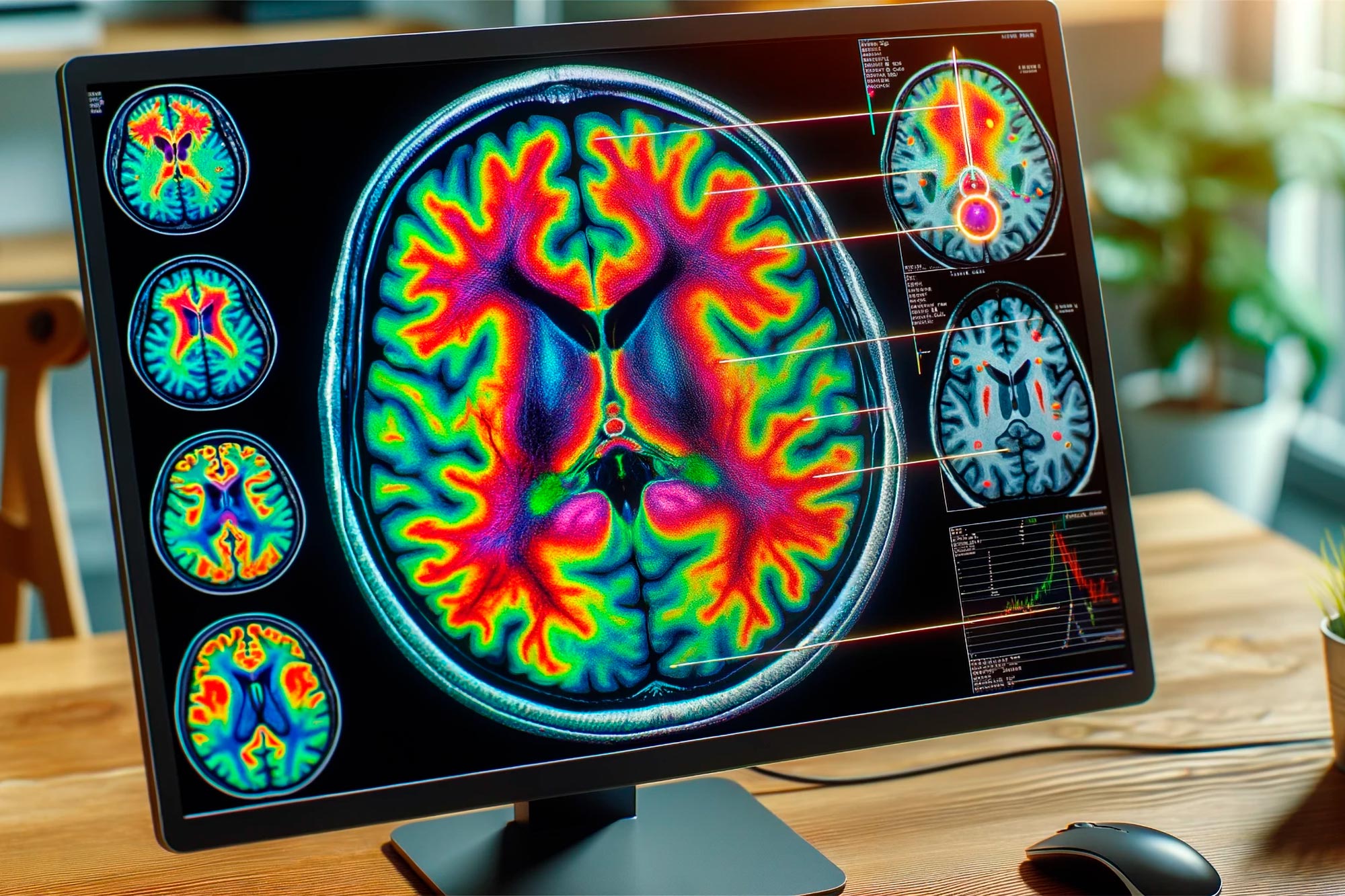
Research reveals brain abnormalities in children with developmental language impairments, suggesting potential new pathways for diagnosis and treatment based on movement-related brain functions.
A rigorous analysis of numerous studies concludes that a part of the brain traditionally associated with movement is abnormal in children with developmental language impairments, according to Georgetown University Medical Center neuroscientists. The discovery has the potential to improve both the diagnosis and treatment of the language difficulties.
Uncovering Brain Abnormalities in Language Disorders
The researchers investigated brain abnormalities in developmental language disorder. This condition, which impacts the development of various aspects of language, is about as common as attention-deficit/hyperactivity disorder (ADHD) and dyslexia, and more prevalent than autism. The scientists found that abnormalities occurred specifically in the anterior neostriatum within the basal ganglia, a structure found deep in the brain. They described their findings on March 15 in the journal Nature Human Behaviour.
To better understand why the language impairments occur, the researchers analyzed the results of 22 articles examining brain structures in people with the disorder, and then employed a new computational method to identify common patterns of abnormalities across the studies. They determined that the anterior neostriatum was abnormal in 100% of the studies that examined the structure, with fewer abnormalities in all other parts of the brain.
Potential Implications and Future Research
“We hope that by identifying the neural bases of developmental language difficulties we may help increase awareness of a major, but also rather unrecognized, disorder,” says the study’s lead author Michael T. Ullman, PhD, professor of neuroscience and director of the Brain and Language Laboratory at Georgetown University Medical Center. “We caution, however, that further research is necessary to understand exactly how the anterior neostriatum might lead to the language difficulties.”
Ullman says the findings underscore the potential utility of drugs that are known to improve movement impairments due to basal ganglia dysfunction, such as those that act on dopamine receptors. Interventions that encourage compensation by intact brain structures may also be useful. Additionally, basal ganglia abnormalities could potentially serve as early biomarkers of an increased likelihood of developmental language problems. Such early warning signs could trigger further diagnostic procedures, potentially leading to early therapy.
“Continuing research efforts to further understand the neurobiology of developmental language disorder, especially the role of the basal ganglia, could help the many children who are affected by these problems,” concludes Ullman.
Reference: “The neuroanatomy of developmental language disorder: a systematic review and meta-analysis” by Michael T. Ullman, Gillian M. Clark, Mariel Y. Pullman, Jarrett T. Lovelett, Elizabeth I. Pierpont, Xiong Jiang and Peter E. Turkeltaub, 15 March 2024, Nature Human Behaviour.
DOI: 10.1038/s41562-024-01843-6
In addition to Ullman, other authors at Georgetown include Mariel Pullman, Jarrett Lovelett, Xiong Jiang, and Peter Turkeltaub. Gillian Clark was at Deakin University, Melbourne, Australia. Elizabeth Pierpont is at the University of Minnesota Medical Center, Minneapolis.
This work was supported by NIH grants R01 HD049347 and R21 HD 087088; NSF grants BCS 1439290 and BCS 1940980; and funding from the Mabel H. Flory Trust.
Never miss a breakthrough: Join the SciTechDaily newsletter.
Follow us on Google and Google News.