

A study at UT Arlington sequencing the pest’s genome could help prevent outbreaks.
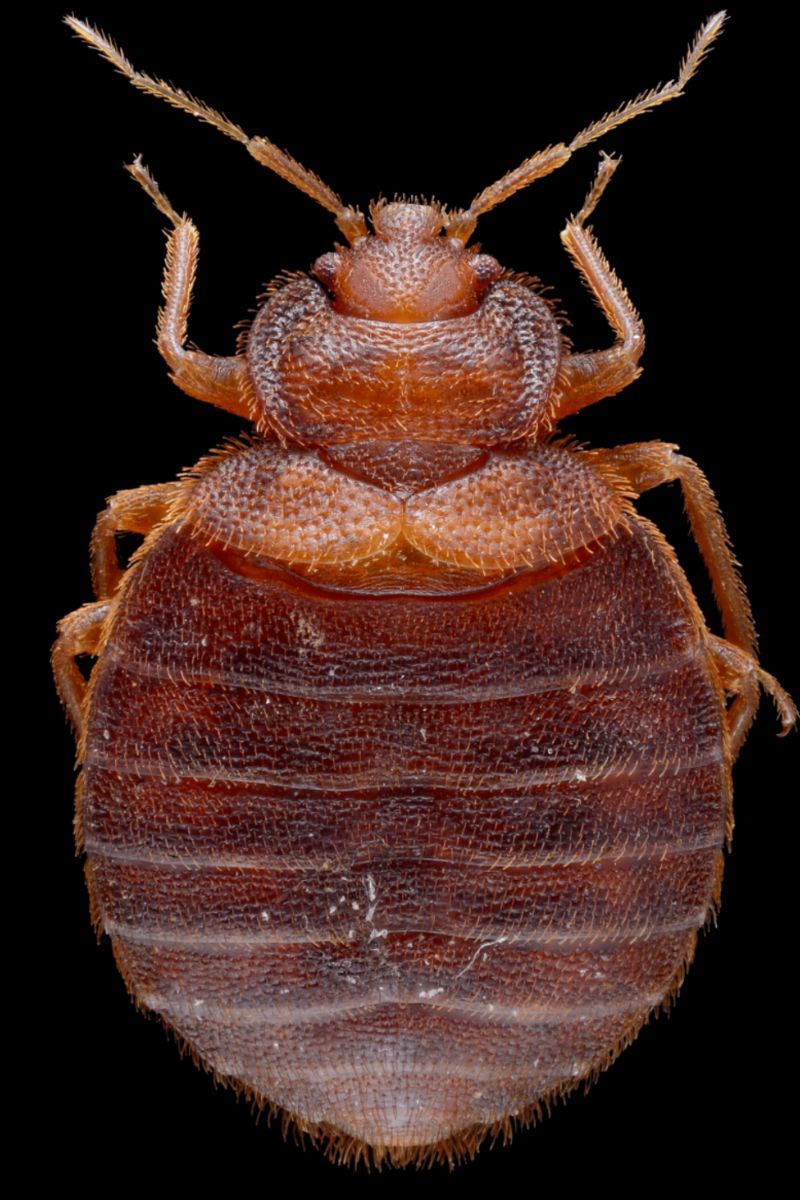
Bedbugs—the mere mention of these tiny, blood-feeding insects is enough to cause alarm. Known for infesting mattresses, couches, and bedding, bedbugs not only trigger anxiety, itching, and rashes but are also notoriously difficult to detect and costly to eliminate.
However, a recent study from the University of Texas at Arlington, published in the Journal of Heredity, sheds new light on these pests. Researchers have conducted an updated genetic analysis of the common bedbug, Cimex lectularius. This breakthrough provides valuable insights for improving prevention, developing effective treatment strategies, and monitoring pesticide resistance, offering hope for better management of infestations.
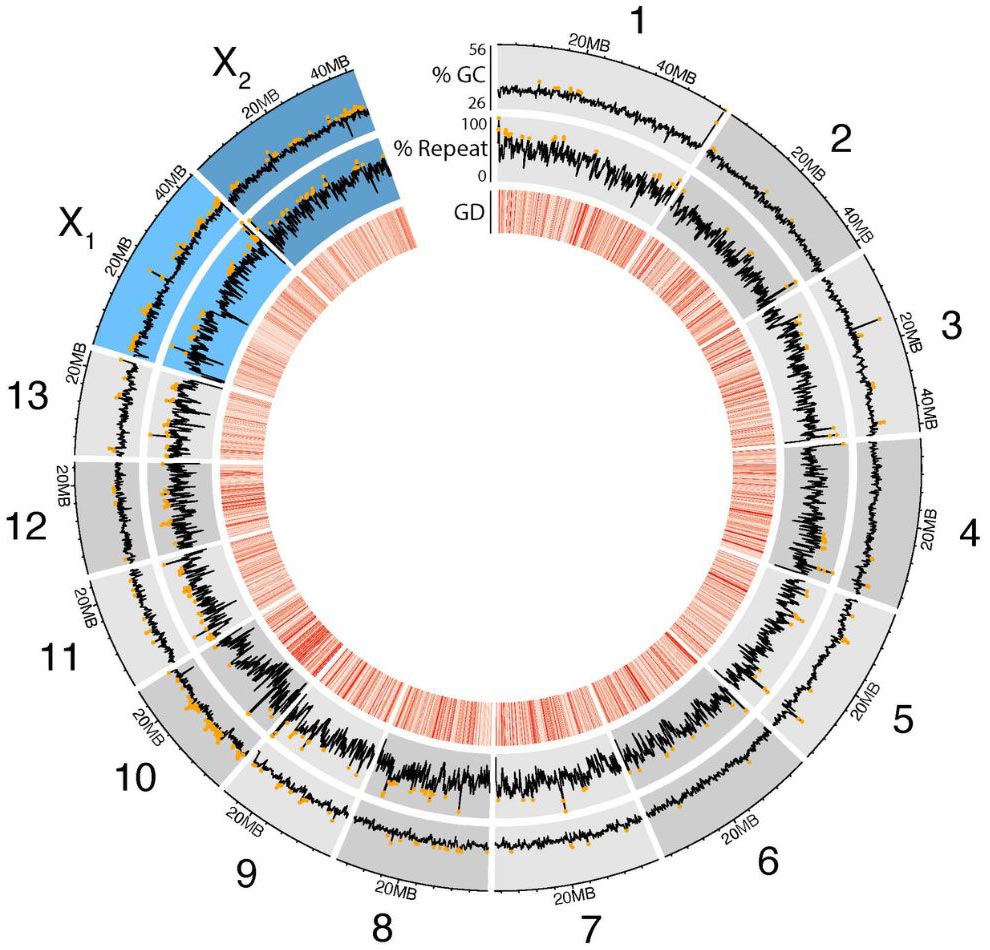
Updated bedbug genome. Credit: Courtesy UT Arlington
The Value of a High-Quality Genome Map
“This new high-quality reference genome provides a valuable resource for enhancing scientific investigations into this medically and economically resurging pest,” said author Todd Castoe, professor of biology at UTA.
“We now have an important additional tool for studying patterns of human-associated evolution and adaption for this insect that has wreaked havoc on human populations since the beginning of civilization,” added co-author Yannick Francioli, a Ph.D. student in Dr. Castoe’s lab.
Although bedbugs have been mentioned in the written record for more than 3,000 years, the pest rose to prominence 1940s, when infestations plagued military bases during World War II. With the introduction of the powerful pesticide DDT (dichlorodiphenyltrichloroethane), the insect was thought to be eradicated in many industrialized nations.

In the 1990s, a combination of the elimination of DDT use due to health concerns, increased pesticide resistance among insects, and increased international travel helped fuel a resurgence of bedbug infestations. Bedbug outbreaks around the world now routinely make news headlines, such as the infestation in Paris hotels before the summer 2024 Olympic Games.
Advancing Bedbug Genomics
To better understand the genetics of the bedbug, Castoe and Francioli, along with researchers from Virginia Polytechnic Institute and State University, the University of Arkansas, the Dana-Farber Cancer Center, Harvard Medical School, and the Broad Institute of Massachusetts Institute of Technology and Harvard University, obtained a sample specimen of the insect and flash froze it to allow its DNA to be extracted.
From that extraction, the team was able to create a chromosome-level reference genome for the insect using PacBio long-read and Omni-C proximity genetic sequencing tools. This approach, combined with sampling additional male and female individuals, allowed the team to map a contiguous bedbug genome with 15 chromosomes (13 autosomes and two sex chromosomes: X1 and X2), providing a comprehensive genetic map that enhances our understanding of the pest’s biology, evolution, and insecticide resistance.
Specifically, the identification of the sex chromosomes will help researchers understand the genetic basis of sex determination in bedbugs. This can be particularly useful for developing targeted pest control strategies that exploit sex-specific traits.
“The creation of a chromosome-level reference genome gives us a new and highly accurate contiguous map of the bedbug’s genetic material,” said Castoe. “This new foundational resource will allow researchers to further understand the genetic basis of traits for the insect that cause issues such as insecticide resistance, which is crucial for developing more effective pest control strategies.”
Reference: “A chromosome-level reference genome for the common bed bug, Cimex lectularius, with identification of sex chromosomes” by Lindsay S Miles, Richard Adams, Yannick Z Francioli, Daren C Card, Todd A Castoe and Warren Booth, 28 November 2024, Journal of Heredity.
DOI: 10.1093/jhered/esae071
This research was supported by the National Science Foundation Division of Environmental Biology (DEB-1754394), startup funds from the University of Tulsa and Virginia Polytechnic Institute and State University, and the Joseph R. and Mary W. Wilson Urban Entomology Endowment. Additional funding came from a National Science Foundation Doctoral Dissertation Improvement Grant (DEB-1401747).
Never miss a breakthrough: Join the SciTechDaily newsletter.
Follow us on Google and Google News.
4 Comments
We a locL power here in Nigeria that can wipe out Bed bugs in a day.
We have a locally made powder solution here in Nigeria that can wipe out Bedbugs in a day
What is the name of the powder?
Please, how can we get the powder and at how much? Am highly interested.