
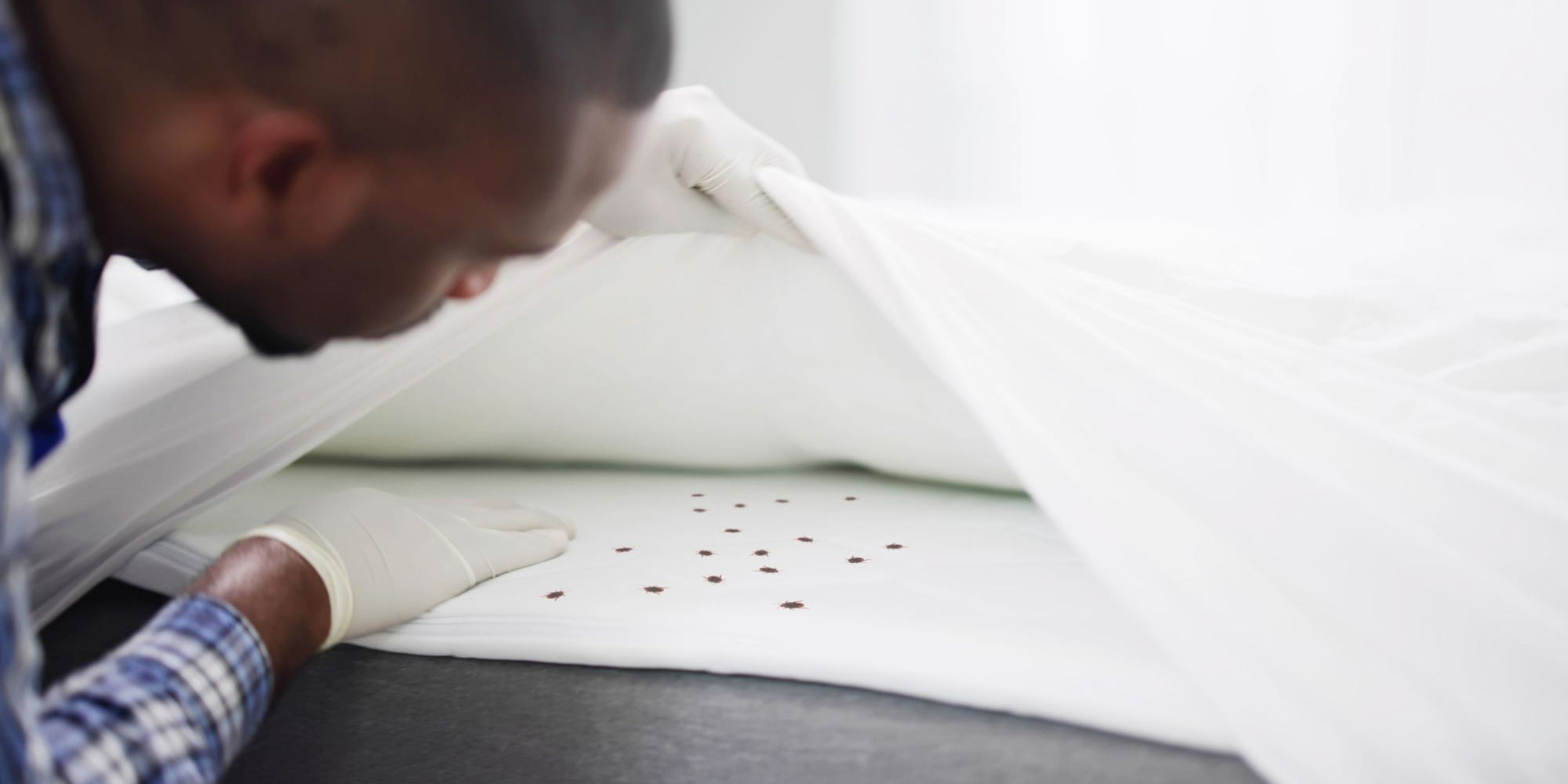
Scientists mapped genomes of bed bug strains, identifying 729 mutations linked to insecticide resistance, offering insights for improved pest control.
Scientists have successfully mapped near-complete and highly accurate genomes for two strains of bed bugs: one highly susceptible to insecticides and another “superstrain” that is roughly 20,000 times more resistant. This achievement provides the most comprehensive view yet of the genetic mutations behind insecticide resistance. The findings were published in the journal Insects.
While bed bugs are not known to transmit diseases to humans, their bites can cause itchy rashes and secondary infections. Insecticide use, including the now-banned DDT, nearly eradicated bed bug populations by the 1960s, making infestations a rarity. However, over the past two decades, bed bugs have made a global resurgence, largely due to genetic mutations that have rendered them resistant to modern insecticides.
Resistance can develop through various mechanisms, such as producing detoxifying enzymes (metabolic resistance) or evolving thicker protective outer layers that block chemicals (penetration resistance). Previous studies have identified some of the genes and mutations involved in resistance, but the complete genetic picture remained unclear because no prior research had sequenced the entire genomes of resistant strains. This new study fills critical gaps, shedding light on the full spectrum of mutations driving their resilience.

A research team led by Hidemasa Bono, professor at Hiroshima University’s (HU) Graduate School of Integrated Sciences for Life, mapped genomes of susceptible and resistant bed bug strains from Japan to address this gap. They obtained susceptible strains descended from wild bed bugs (Cimex lectularius) collected 68 years ago in fields at Isahaya City, Nagasaki. Meanwhile, the resistant strains were bred from specimens collected from a Hiroshima City hotel in 2010. Their tests revealed that the resistant samples had 19,859-fold stronger resistance to pyrethroids — the most commonly used insecticide for bed bug control — exceeding levels seen in many previously identified superstrains. All the specimens were provided by Fumakilla Limited, a Japan-based chemical manufacturing company.
Piecing together the genome puzzle
Sequencing a genome is like assembling a massive jigsaw puzzle, spanning anywhere from about 160,000 to 160 billion pieces. To map the most complete bed bug genomes to date, researchers used the breakthrough method of long-read sequencing, which captures longer stretches of DNA—akin to having entire sections of puzzle pieces put together. Traditional short-read sequencing, by contrast, only covers tiny snippets, often leading to frustrating gaps.
The researchers assembled a near-total picture of the two genomes with just about every piece precisely where it belonged, achieving 97.8% completeness and quality value (QV) of 57.0 for the susceptible strain and 94.9% completeness and QV of 56.9 for the resistant strain. A QV above 30 indicates high-quality sequences with less than 0.1% error rate. Both also surpassed the N50 value of the existing C. lectularius reference genome, Clec2.1, from a previous sequencing effort, meaning there were fewer gaps and more complete sections of the genome puzzle.
Known, new resistance mutations uncovered
After fully sequencing the genomes, the team identified protein-coding genes, determined their functions, and assessed if they were active through transcriptional analysis. They uncovered 3,938 transcripts with amino acid mismatches. Of these, 729 mutated transcripts were linked to insecticide resistance.
“We determined the genome sequence of insecticide-resistant bed bugs, which exhibited 20,000-fold greater resistance compared to susceptible bed bugs. By comparing the amino acid sequences between the susceptible and resistant bed bugs, we identified 729 transcripts with resistance-specific mutations,” said study first author Kouhei Toga, postdoctoral researcher at the Laboratory of Genome Informatics of HU’s Graduate School of Integrated Sciences for Life.
“These transcripts included genes related to DNA damage response, cell cycle regulation, insulin metabolism, and lysosome functions. This suggests that these molecular pathways may play a role in the development of pyrethroid resistance in bed bugs.”
By drawing on previous insect studies, the researchers confirmed known resistance mutations and discovered new ones that could inform more targeted and effective pest control strategies.
“We identified a large number of genes likely involved in insecticide resistance, many of which have not been previously reported as being associated with resistance in bedbugs. Genome editing of these genes could provide valuable insights into the evolution and mechanisms of insecticide resistance,” Toga said.
“Additionally, this study expands the pool of target genes for monitoring allele distribution and frequency changes, which could contribute significantly to assessing resistance levels in wild populations. This work highlights the potential of genome-wide approaches in understanding insecticide resistance in bed bugs.”
Reference: “Genome-Wide Search for Gene Mutations Likely Conferring Insecticide Resistance in the Common Bed Bug, Cimex lectularius” by Kouhei Toga, Fumiko Kimoto, Hiroki Fujii and Hidemasa Bono, 23 September 2024, Insects.
DOI: 10.3390/insects15100737
The study was funded by the Japan Science and Technology Agency and the Subsidy for Bioeconomy Industry Creation Support Project (Hiroshima Prefecture).
Other research team members include Fumiko Kimoto and Hiroki Fujii, who are employees of Fumakilla Limited.
Never miss a breakthrough: Join the SciTechDaily newsletter.
Follow us on Google and Google News.
2 Comments
I was in Connecticut recently, which has a big bedbug problem. It took 2 treatments, because the treatment doesn’t kill the eggs. So you have to kill the hatched ones, wait the appropriate time for the eggs to hatch, then do it again. Apparently, the longest gestation time for the eggs is less than the time for them to reach adulthood, so that works. But I also learned something else. Alcohol kills them when sprayed directly on them. So get a spray bottle, put 90% (or more if possible) rubbing alcohol in it, and just spray the hell out of your furniture, especially in seams. They die of alcohol poisoning, but the alcohol evaporates without leaving a stain on the cloth. Then vacuum up the bodies. Of course, as with all arthropods, kinetic energy works as well (squish).
Nolodge is the best way to get rid of bedbugs