
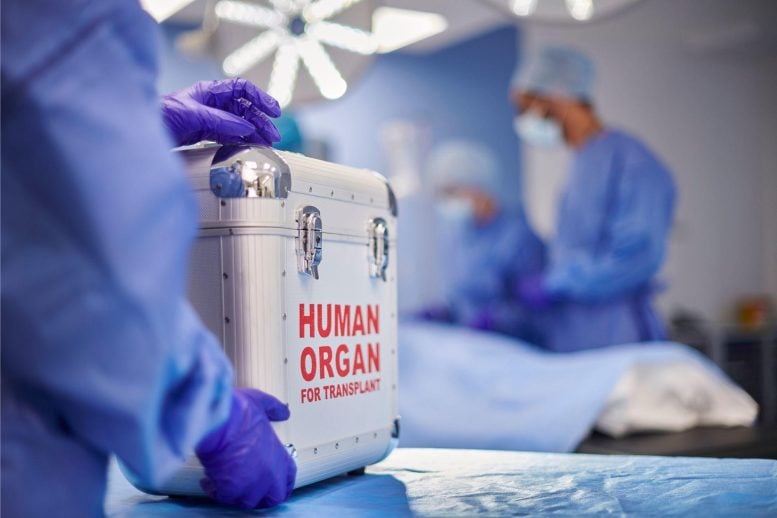
Recent research indicates that Senolytics, a new class of drugs, have the potential to prevent the transfer of senescence, a key mechanism of ageing, and the related physical and mental decline in individuals receiving organs from older donors.
The groundbreaking research, recently presented at the European Society for Organ Transplantation (ESOT) Congress 2023, heralds new opportunities for increasing the organ donor pool and improving patient outcomes.
Effects of Transplanting Older Organs
By transplanting older donor organs into younger recipients, researchers from Harvard Medical School and the Mayo Clinic investigated the role of transplantation in inducing senescence, a biological mechanism linked to aging and age-related diseases. The researchers conducted age-disparate heart transplants from both young (3 months) and old (18–21 months) mice into younger recipients.
Recipients that had received old hearts showed augmented frequencies of senescent cells in draining lymph nodes, livers, and muscles, in addition to augmented systemic mt-DNA levels, when compared to recipients that had received young grafts. Strikingly, transplanting old organs led not only to advanced physical but also cognitive impairments in recipient animals.
Potential Solutions and Commentary
The research also uncovered a potential solution to this process by utilizing Senolytics – a new class of drugs designed to specifically target and eliminate senescent cells. When old donors were treated with Senolytics (Dasatinib and Quercetin) prior to organ procurement, the transfer of senescence was significantly reduced through a diminished accumulation of senescent cells and mt-DNA. Recipients who received old organs treated with Senolytics showed improved physical fitness that was comparable to observations in recipients of young organs.
Maximillian J. Roesel, presenting the study as part of the group at Brigham and Women’s Hospital, Harvard Medical School, commented, “Donor age plays a crucial role in the success of transplantations, with recipients of older organs facing worse short- and long-term outcomes. Nevertheless, the use of older donor organs is essential to tackle the global organ shortage, and this research illuminates fundamental challenges and potential solutions for utilizing older organs.”
Addressing Organ Shortage and Future Research
Throughout Europe, the demand for organ transplantation is on the rise, driven by an increase in chronic diseases. Moreover, this growing need far surpasses the available supply of organs, with recent data demonstrating that across Europe an average of 21 people die each day waiting for a transplant.
“Moving forward, we will delve deeper into the mechanisms underpinning our current findings, with a particular focus on the potential role of Senolytics in preventing the transfer of senescence in humans. This research is extremely exciting and clinically so relevant as it may not only help us to improve outcomes but also make more organs available for transplantation,” concluded Stefan G. Tullius, the senior and lead author of the study.
Reference: “Spreading’ aging with the transplantation of old organs: An experimental reality” by Roesel M, et al, 18 September 2023, The European Society for Organ Transplantation Congress 2023 (ESOT Congress 2023).
Never miss a breakthrough: Join the SciTechDaily newsletter.
Follow us on Google and Google News.