
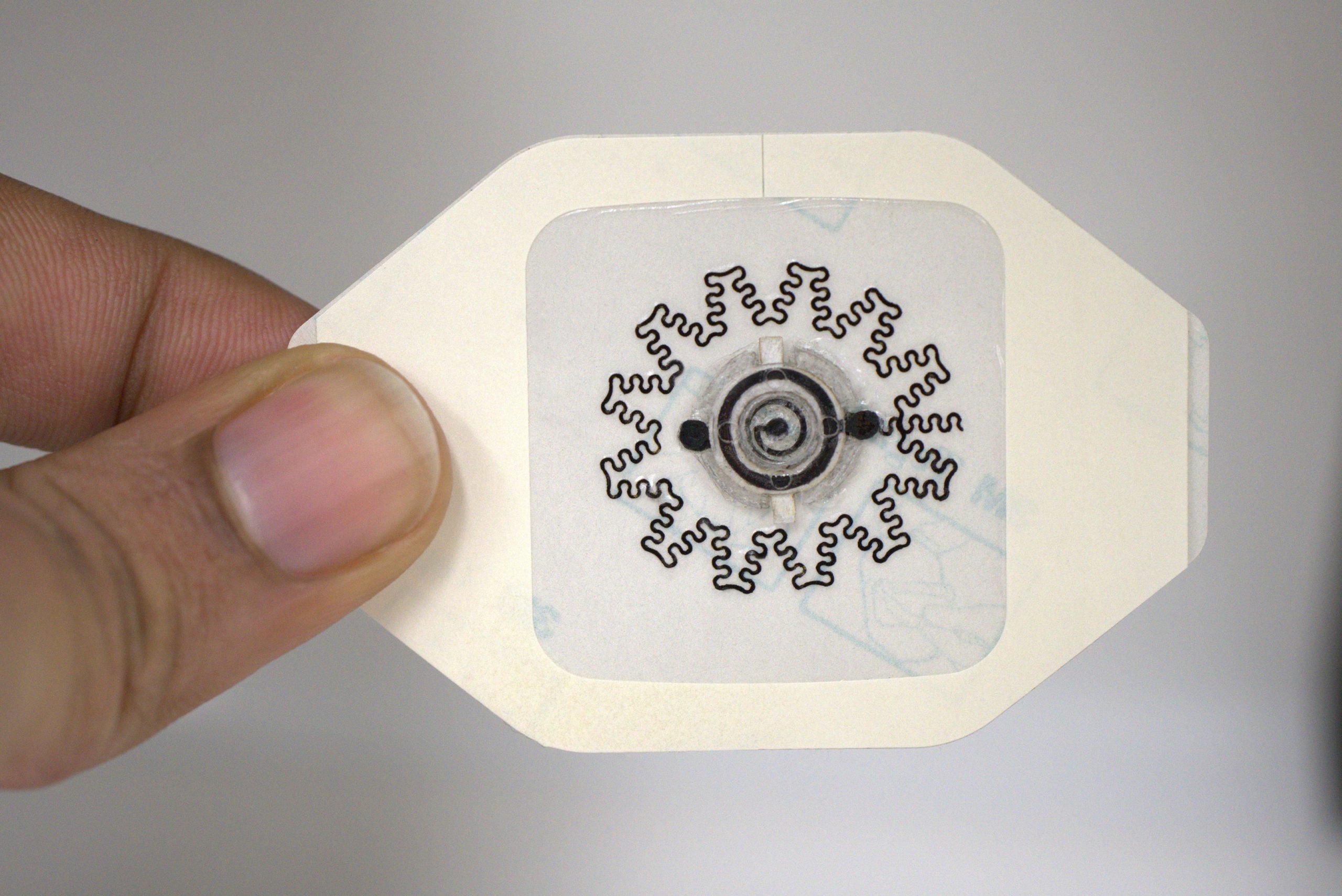
New water-activated electric bandages offer a fast, affordable solution for improving chronic wound healing at home.
Chronic wounds are open wounds that heal slowly, if they heal at all. For example, sores that occur in some patients with diabetes are chronic wounds. These wounds are particularly problematic because they often recur after treatment and significantly increase the risk of amputation and death. Unfortunately, the existing treatment options for chronic wounds are costly, creating additional problems for patients.
Now, researchers have developed an inexpensive bandage that uses an electric field to promote healing in chronic wounds. In animal testing, wounds that were treated with these electric bandages healed 30% faster than wounds treated with conventional bandages.
“Our goal here was to develop a far less expensive technology that accelerates healing in patients with chronic wounds,” says Amay Bandodkar, co-corresponding author of the work and an assistant professor of electrical and computer engineering at North Carolina State University. “We also wanted to make sure that the technology is easy enough for people to use at home, rather than something that patients can only receive in clinical settings.”
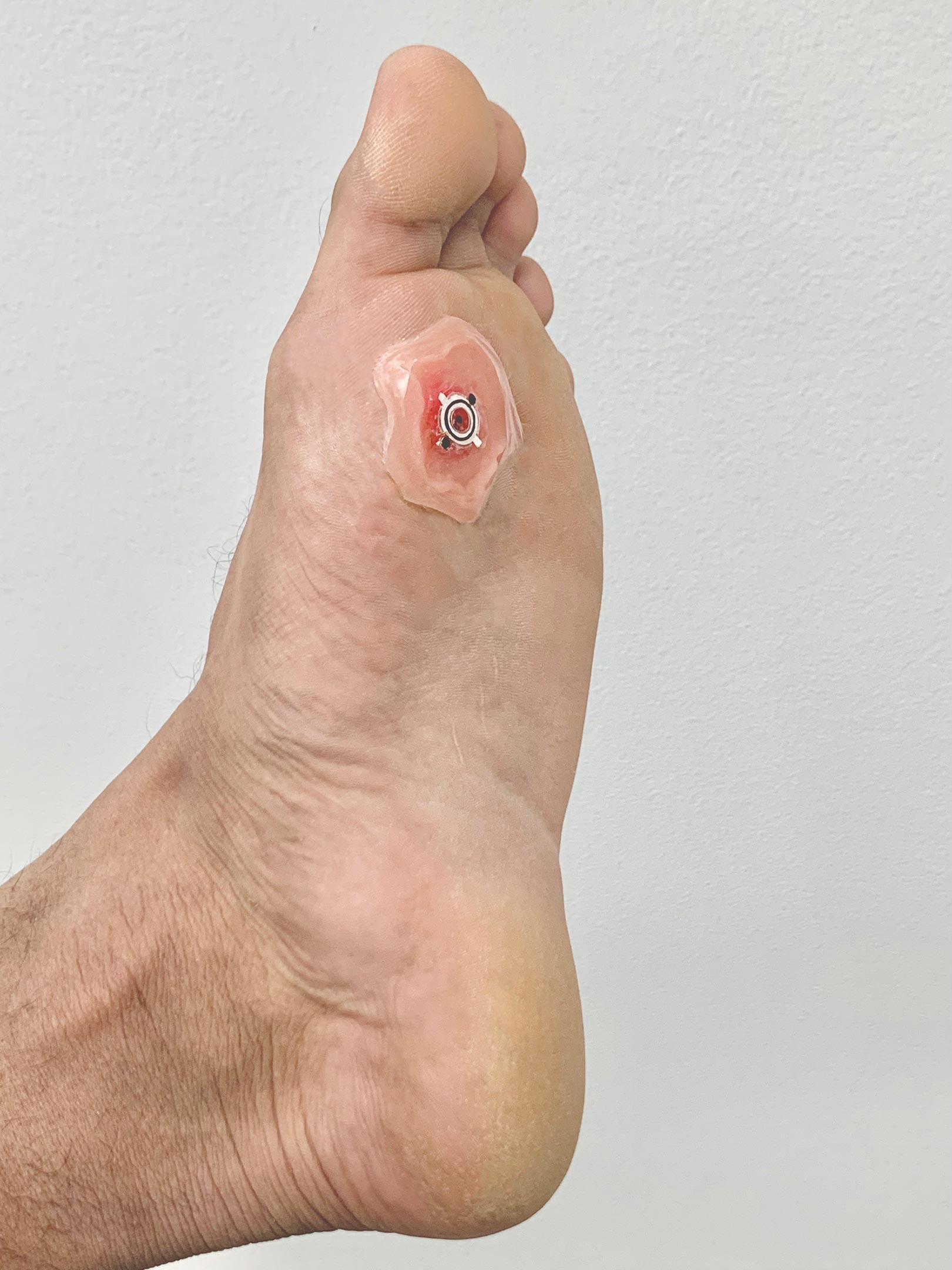
Revolutionary Water-Powered Dressings
“This project is part of a bigger DARPA project to accelerate wound healing with personalized wound dressings,” says Sam Sia, co-corresponding author of the work and professor of biomedical engineering at Columbia University. “This collaborative project shows that these lightweight bandages, which can provide electrical stimulation simply by adding water, healed wounds faster than the control, at a similar rate as bulkier and more expensive wound treatment.”
Specifically, the research team developed water-powered, electronics-free dressings (WPEDs), which are disposable wound dressings that have electrodes on one side and a small, biocompatible battery on the other. The dressing is applied to a patient so that the electrodes come into contact with the wound. A drop of water is then applied to the battery, activating it. Once activated, the bandage produces an electric field for several hours.
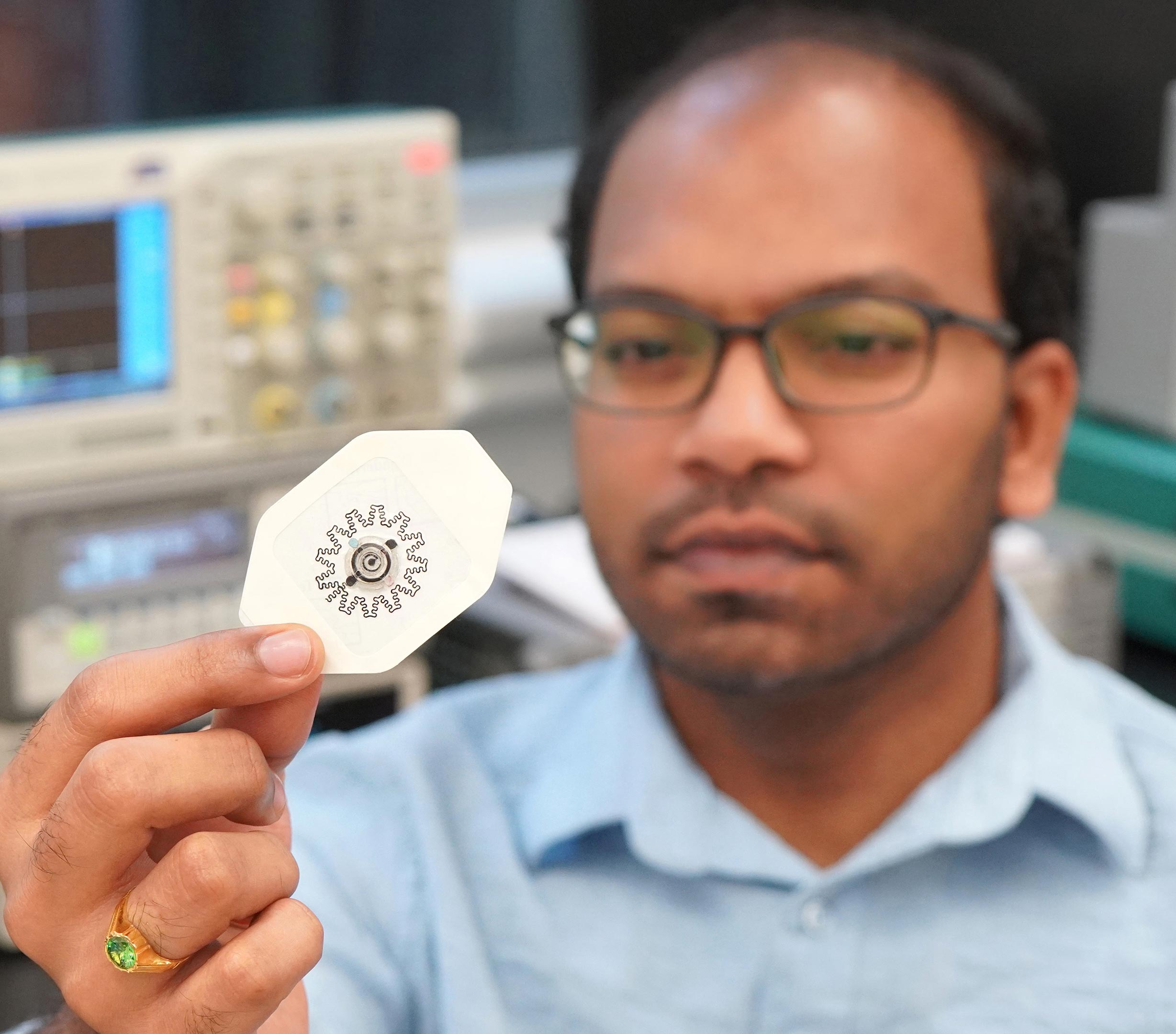
“That electric field is critical, because it’s well established that electric fields accelerate healing in chronic wounds,” says Rajaram Kaveti, co-first author of the study and a post-doctoral researcher at NC State.
The electrodes are designed in a way that allows them to bend with the bandage and conform to the surface of the chronic wounds, which are often deep and irregularly shaped.
“This ability to conform is critical, because we want the electric field to be directed from the periphery of the wound toward the wound’s center,” says Kaveti. “In order to focus the electric field effectively, you want electrodes to be in contact with the patient at both the periphery and center of the wound itself. And since these wounds can be asymmetrical and deep, you need to have electrodes that can conform to a wide variety of surface features.”
Promising Results in Animal Models
“We tested the wound dressings in diabetic mice, which are a commonly used model for human wound healing,” says Maggie Jakus, co-first author of the study and a graduate student at Columbia. “We found that the electrical stimulation from the device sped up the rate of wound closure, promoted new blood vessel formation, and reduced inflammation, all of which point to overall improved wound healing.”
Specifically, the researchers found that mice who received treatment with WPEDs healed about 30% faster than mice who received conventional bandages.
Economic and Practical Benefits
“But it is equally important that these bandages can be produced at relatively low cost – we’re talking about a couple of dollars per dressing in overhead costs,” Bandodkar explained.
“Diabetic foot ulceration is a serious problem that can lead to lower extremity amputations,” says Aristidis Veves, a co-author of the study and professor of surgery at Beth Israel Deaconess Center. “There is urgent need for new therapeutic approaches, as the last one that was approved by the Food and Drug Administration was developed more than 25 years ago. My team is very lucky to participate in this project that investigates innovative and efficient new techniques that have the potential to revolutionize the management of diabetic foot ulcers.”
Implications and Future Directions
In addition, the WPEDs can be applied quickly and easily. Once applied, patients can move around and take part in daily activities. This functionality means that patients can receive treatment at home and are more likely to comply with treatment. In other words, patients are less likely to skip treatment sessions or take shortcuts, since they aren’t required to come to a clinic or remain immobile for hours.
“Next steps for us include additional work to fine-tune our ability to reduce fluctuations in the electric field and extend the duration of the field. We are also moving forward with additional testing that will get us closer to clinical trials and – ultimately – practical use that can help people,” says Bandodkar.
The study was recently published in the journal Science Advances.
Reference: “Water-powered, electronics-free dressings that electrically stimulate wounds for rapid wound closure” by Rajaram Kaveti, Margaret A. Jakus, Henry Chen, Bhavya Jain, Darragh G. Kennedy, Elizabeth A. Caso, Navya Mishra, Nivesh Sharma, Baha Erim Uzunoğlu, Won Bae Han, Tae-Min Jang, Suk-Won Hwang, Georgios Theocharidis, Brandon J. Sumpio, Aristidis Veves, Samuel K. Sia and Amay J. Bandodkar, 7 August 2024, Science Advances.
DOI: 10.1126/sciadv.ado7538
This work was done with support from the Defense Advanced Research Projects Agency under grant D20AC00004 and from the Center for Advanced Self-Powered Systems of Integrated Sensors and Technologies at NC State, which is funded by National Science Foundation grant 1160483. Bandodkar and Kaveti are inventors on a patent application related to this work.
Never miss a breakthrough: Join the SciTechDaily newsletter.
Follow us on Google and Google News.
4 Comments
I would love to know more about this,I would even maybe do a trial, I’ve had my wound for 5 long years,, I’m so over it,
Powerheal
OTC
Amazon, Walgreens etc
I have had an open wound on my ankle for about 15 years due to cancer removal and radiation . This electrical dressing sounds like it would help a lot. Any chance of being able to participate in a trial?
Powerheal over the counter dressings are available from many vendors