
Close Menu
    Facebook X (Twitter) Instagram
    SciTechDaily
    • Biology
    • Chemistry
    • Earth
    • Health
    • Physics
    • Science
    • Space
    • Technology
    Facebook X (Twitter) Pinterest YouTube RSS
    SciTechDaily
    Home»Space»New Horizons Shows Pluto’s Haze Varies in Brightness
    Space

    New Horizons Shows Pluto’s Haze Varies in Brightness

    By NASAApril 18, 2016No Comments2 Mins Read
    Facebook Twitter Pinterest Telegram LinkedIn WhatsApp Email Reddit
    Share
    Facebook Twitter LinkedIn Pinterest Telegram Email Reddit
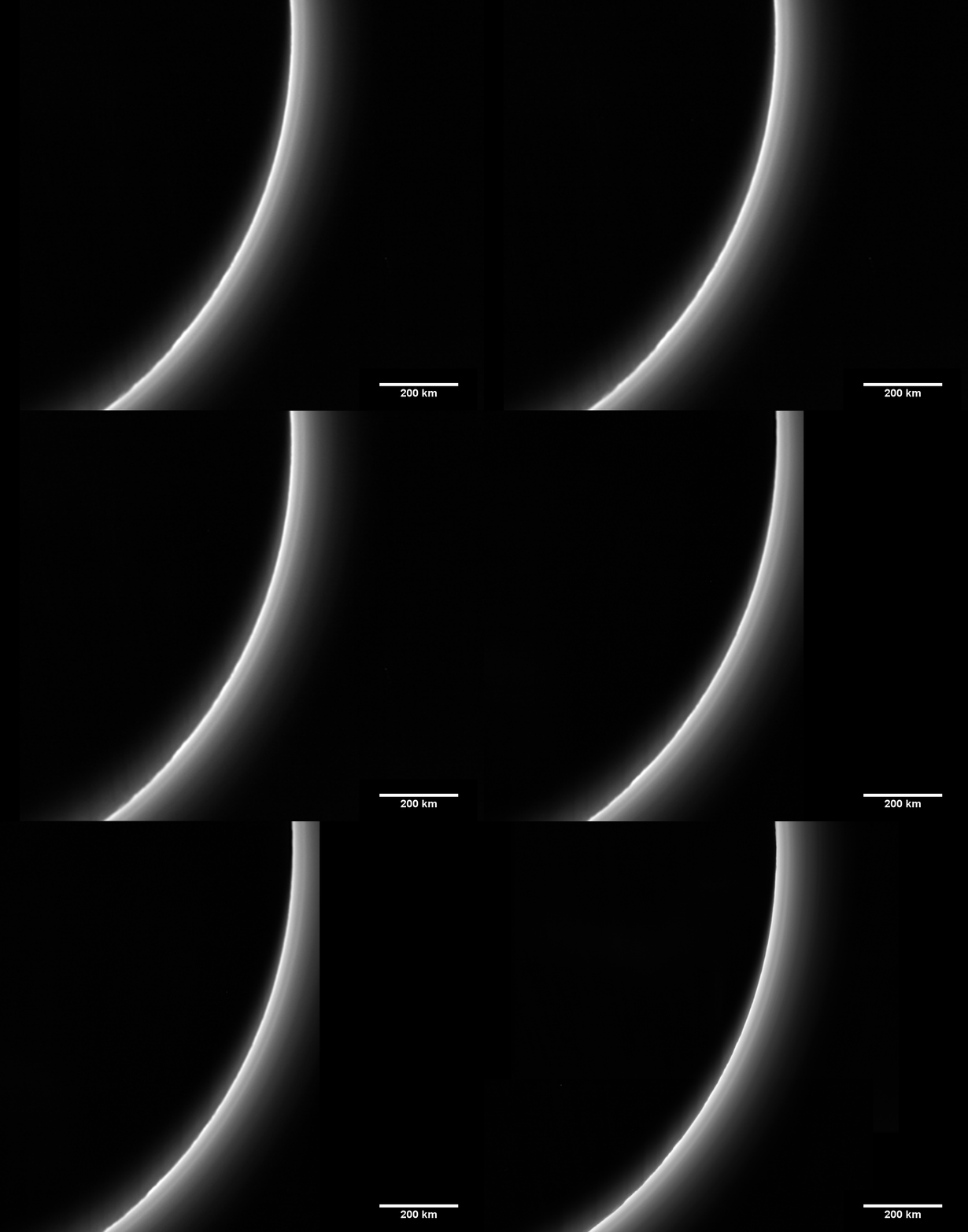
    Pluto’s Haze Varies in Brightness
    Mission scientists have discovered that the layers of haze in Pluto’s nitrogen atmosphere vary in brightness depending on illumination and viewpoint.

    New images from NASA’s New Horizons Spacecraft reveal that Pluto’s haze varies in brightness.

    Scientists on NASA’s New Horizons mission team are learning more about the structure and behavior of Pluto’s complex atmosphere by discovering new attributes of its extensive haze layers. The hazes were first discovered by New Horizons in July, as the spacecraft swept past Pluto and made its historic first exploration of the mysterious world.

    Mission scientists have discovered that the layers of haze in Pluto’s nitrogen atmosphere vary in brightness depending on illumination and viewpoint, yet the haze itself maintains its overall vertical structure. The brightness variations may be due to buoyancy waves – what atmospheric scientists also call gravity waves – which are typically launched by the flow of air over mountain ranges. Atmospheric gravity waves are known to occur on Earth, Mars and now, likely, Pluto as well.

    Pluto’s haze layers are best seen in images taken by NASA’s New Horizons spacecraft with the sun behind Pluto. New Horizons obtained a series of these backlit images as it departed from Pluto on July 14, 2015. In these observations, from New Horizons’ Long Range Reconnaissance Imager (LORRI), the haze layers over particular geographic locations on Pluto were imaged several times, at time intervals of 2 to just over 5 hours. The brightness in the layers varied by about 30 percent, though the height of the layers above the surface remained the same.

    “Pluto is simply amazing,” said Andy Cheng, LORRI principal investigator from the Johns Hopkins University Applied Physics Laboratory in Laurel, Maryland. “When I first saw these images and the haze structures that they reveal, I knew we had a new clue to the nature of Pluto’s hazes. The fact that we don’t see the haze layers moving up or down will be important to future modeling efforts.”

    Never miss a breakthrough: Join the SciTechDaily newsletter.
    Follow us on Google and Google News.

    Astronomy NASA New Horizons Planetary Science Pluto
    Share. Facebook Twitter Pinterest LinkedIn Email Reddit

    Related Articles

    New Horizons Reveals Signs of Pluto’s Geology

    NASA’s New Horizons Pluto Flyby Begins

    New Horizons Reflectance and Color Map of Pluto

    The Latest New Horizons Images of Dwarf Planet Pluto

    Dwarf Planet Pluto: The ‘Other’ Red Planet

    New Horizons Spacecraft Reveals Series of Spots on Pluto That Fascinate

    New Horizons Spacecraft Awakens for Encounter with Pluto System

    New ScienceCast Video Previews What New Horizons May See on Pluto

    New ScienceCast Video – Countdown to Pluto

    Leave A Reply Cancel Reply

    • Facebook
    • Twitter
    • Pinterest
    • YouTube

    Don't Miss a Discovery

    Subscribe for the Latest in Science & Tech!

    Trending News

    Tea or Coffee? Your Daily Choice Could Affect Osteoporosis Risk

    Vitamin C May Fight Cancer in a Surprising Way

    Hidden Earthquake Threat: Oregon’s Fault May Be Closer to the Surface Than Scientists Thought

    Scientists Discover Hidden Sleep Switch That Boosts Brainpower, Builds Muscle, and Burns Fat

    Ancient Mega-Floods Once Ripped Across Mars and Left This Giant Scar

    Scientists Discover Cheap, Natural Remedy for High Blood Pressure

    Earth’s Upper Atmosphere Is Cooling Fast and Scientists Finally Know Why

    32,000 Olympic Pools of Magma Nearly Erupted Beneath Atlantic Island

    Follow SciTechDaily
    • Facebook
    • Twitter
    • YouTube
    • Pinterest
    • Newsletter
    • RSS
    SciTech News
    • Biology News
    • Chemistry News
    • Earth News
    • Health News
    • Physics News
    • Science News
    • Space News
    • Technology News
    Recent Posts
    • The Simple Habit That Could Lower Your Cancer Risk
    • New AI Blood Test Predicts Stroke, Heart Failure, and More up to 15 Years in Advance
    • The Secret to Living Past 100 May Be Hidden in Your Blood
    • Ancient Roman Gold Mines Discovered in Spain’s Pyrenees
    • Ancient DNA Reveals How Farming Spread and Nearly Broke a Civilization
    Copyright © 1998 - 2026 SciTechDaily. All Rights Reserved.
    • Science News
    • About
    • Contact
    • Editorial Board
    • Privacy Policy
    • Terms of Use

    Type above and press Enter to search. Press Esc to cancel.