
Close Menu
    Facebook X (Twitter) Instagram
    SciTechDaily
    • Biology
    • Chemistry
    • Earth
    • Health
    • Physics
    • Science
    • Space
    • Technology
    Facebook X (Twitter) Pinterest YouTube RSS
    SciTechDaily
    Home»Biology»New Imaging Technique Could Lead to Better Treatment of Cancers and Viral Infections
    Biology

    New Imaging Technique Could Lead to Better Treatment of Cancers and Viral Infections

    By University of HoustonMarch 11, 2022No Comments2 Mins Read
    Facebook Twitter Pinterest Telegram LinkedIn WhatsApp Email Reddit
    Share
    Facebook Twitter LinkedIn Pinterest Telegram Email Reddit
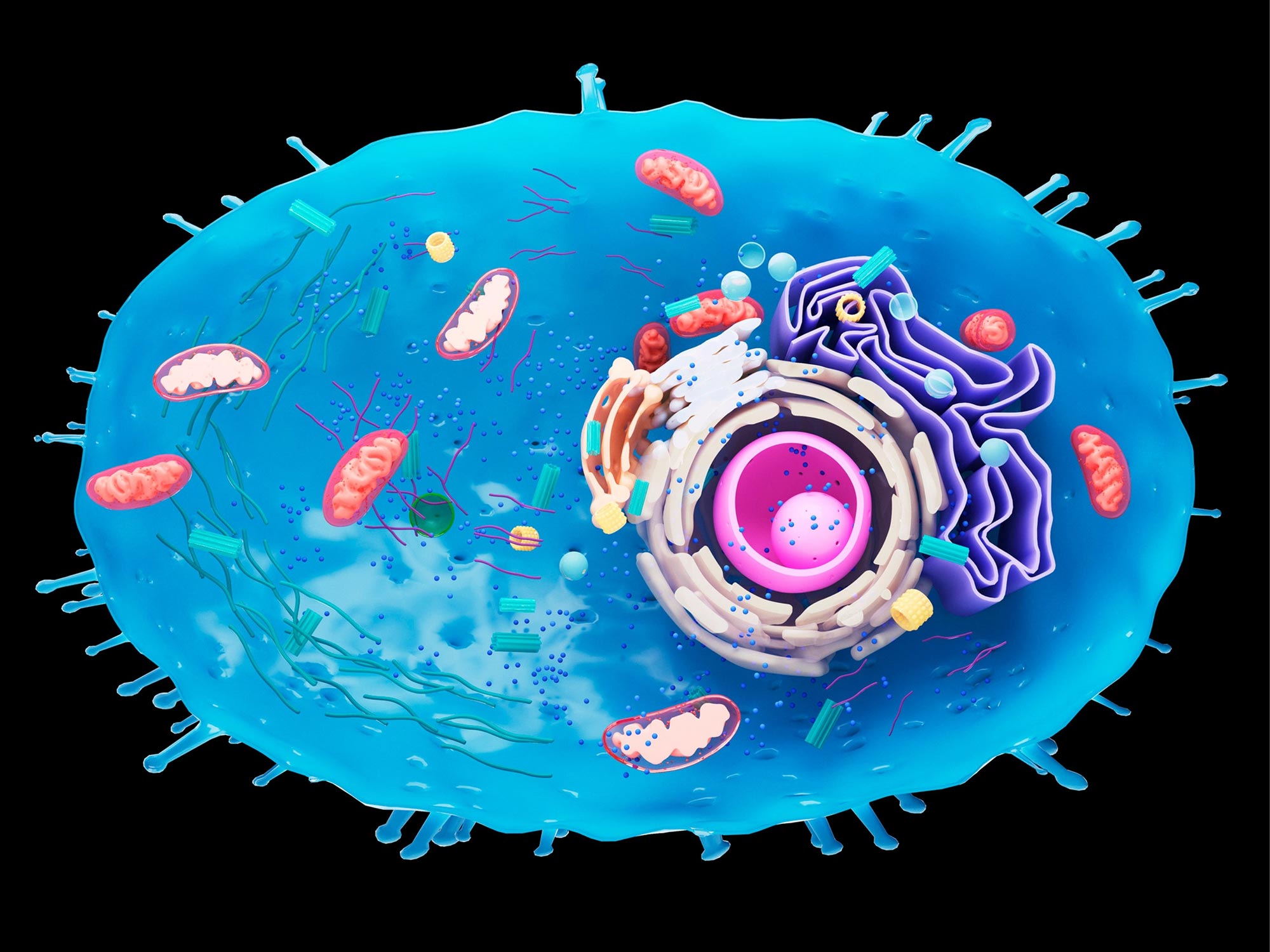
    Illustration of a Human Cell Cross-Section
    Illustration of a human cell cross-section.

    UH Researchers Receive $1.2 Million Grant to Peer into Ribosomes

    Two University of Houston researchers are developing a type of spectroscopy to help understand how ribosomes make proteins deep within cells, the discovery of which could potentially guide drug design to treat cancers and viral infections. Spectroscopy measures the interaction between light and matter to determine characteristics and volume of cellular matter.

    Ribosomes in Protein Assembly

    In cellular biology, ribosomes are work horses, veritable factories inside cells, whose job is to make proteins. The instructions that tell the ribosome how to work come from messenger RNA, which contains codes on making proteins, actually called codons. One mistake in defining an upstream codon will be propagated to the rest of the messenger like the domino effect, which spells disaster to the cell.

    During protein assembly, the ribosome must be precise in moving from one codon to the next, a process known as translocation. On the other hand, many viruses contain genomic sequences that are designed to slip on certain codons to re-define the protein composition after that codon, in a process called frameshifting.

    Yuhong Wang and Shoujun Xu
    Yuhong Wang, professor of biology and biochemistry and Shoujun Xu, professor of chemistry, are developing a new imaging technique with super-resolution to peer into ribosomes. Credit: UH

    “We are developing a multiplexed super-resolution force spectroscopy to investigate high-fidelity and frameshifting translocations,” said Yuhong Wang, professor of biology and biochemistry. Wang and Shoujun Xu, professor of chemistry, received a $1.2 million grant from the National Institute of General Medical Sciences to support their research.

    “We will measure the power strokes from elongation factors (EF-G) and their mutants, which are the enzymes to interact with ribosome during translocation, on normal and viral mRNA sequences and in the presence of antibiotics,” said Xu. “Our research will provide new methodology that can be applied to other biological systems.”

    Potential Applications in Drug Design

    Scientifically, the team is building a new model of ribosome translocation with sub-codon steps and providing potential drug targets for related diseases.

    “For example, by tuning down and up the EF-G’s activity in cancer cells and low-functioning neuron cells, the diseases can be treated, anti-viral drugs can be designed that only target the specific viral frameshifting motifs,” said Wang.

    Never miss a breakthrough: Join the SciTechDaily newsletter.
    Follow us on Google and Google News.

    Biochemistry Cancer Infectious Diseases Medical Imaging University of Houston Virology
    Share. Facebook Twitter Pinterest LinkedIn Email Reddit

    Related Articles

    COVID-19: Achilles’ Heel of SARS-CoV-2 Viral RNA Identified

    Scientists Have Discovered an Achilles Heel of the Coronavirus

    Mosquito Protein Discovery Could Lead to Treatments Against Life-Threatening Viruses

    New Research Finds SARS-CoV-2 (the Virus That Causes COVID-19) Jumped From Bats to Humans Without Much Change

    First Global Atlas of How the COVID Coronavirus Interacts With Human Cells

    Genetic Material From SARS-CoV-2 – The COVID-19 Coronavirus – Detected in Untreated Wastewater From Louisiana

    Fast-Acting Virus Targets Most Melanoma Tumors

    Natural Toxins Combined With Synthetic Drugs Could Disarm Cancer, Drug-Resistant Bacteria

    DNA Sequencing Technologies Help Characterized the Mutational Landscape of Melanoma

    Leave A Reply Cancel Reply

    • Facebook
    • Twitter
    • Pinterest
    • YouTube

    Don't Miss a Discovery

    Subscribe for the Latest in Science & Tech!

    Trending News

    Scientists Discover How Coffee Impacts Memory, Mood, and Gut Health

    Why Did the Neanderthals Disappear? Scientists Reveal Humans Had a Hidden Advantage

    Physicists Propose Strange Experiment Where Time Goes Quantum

    Magnesium Magic: New Drug Melts Fat Even on a High-Fat, High-Sugar Diet

    Weight-Loss Drugs Like Ozempic May Come With an Unexpected Cost

    Mezcal “Worm” in a Bottle Mystery: DNA Testing Reveals a Surprise

    New Research Reveals That Your Morning Coffee Activates an Ancient Longevity Switch

    This Is What Makes You Irresistible to Mosquitoes

    Follow SciTechDaily
    • Facebook
    • Twitter
    • YouTube
    • Pinterest
    • Newsletter
    • RSS
    SciTech News
    • Biology News
    • Chemistry News
    • Earth News
    • Health News
    • Physics News
    • Science News
    • Space News
    • Technology News
    Recent Posts
    • Harvard Scientists Reveal Secret Structure Behind How You Smell
    • Scientists Just Discovered the Hidden Trick That Keeps Your Cells Alive
    • This Simple Movement Could Be Secretly Cleaning Your Brain
    • Male Birth Control Breakthrough: Scientists Find Way To Turn Sperm Production Off and Back On
    • A Common Vitamin Could Hold the Key to Treating Fatty Liver Disease
    Copyright © 1998 - 2026 SciTechDaily. All Rights Reserved.
    • Science News
    • About
    • Contact
    • Editorial Board
    • Privacy Policy
    • Terms of Use

    Type above and press Enter to search. Press Esc to cancel.